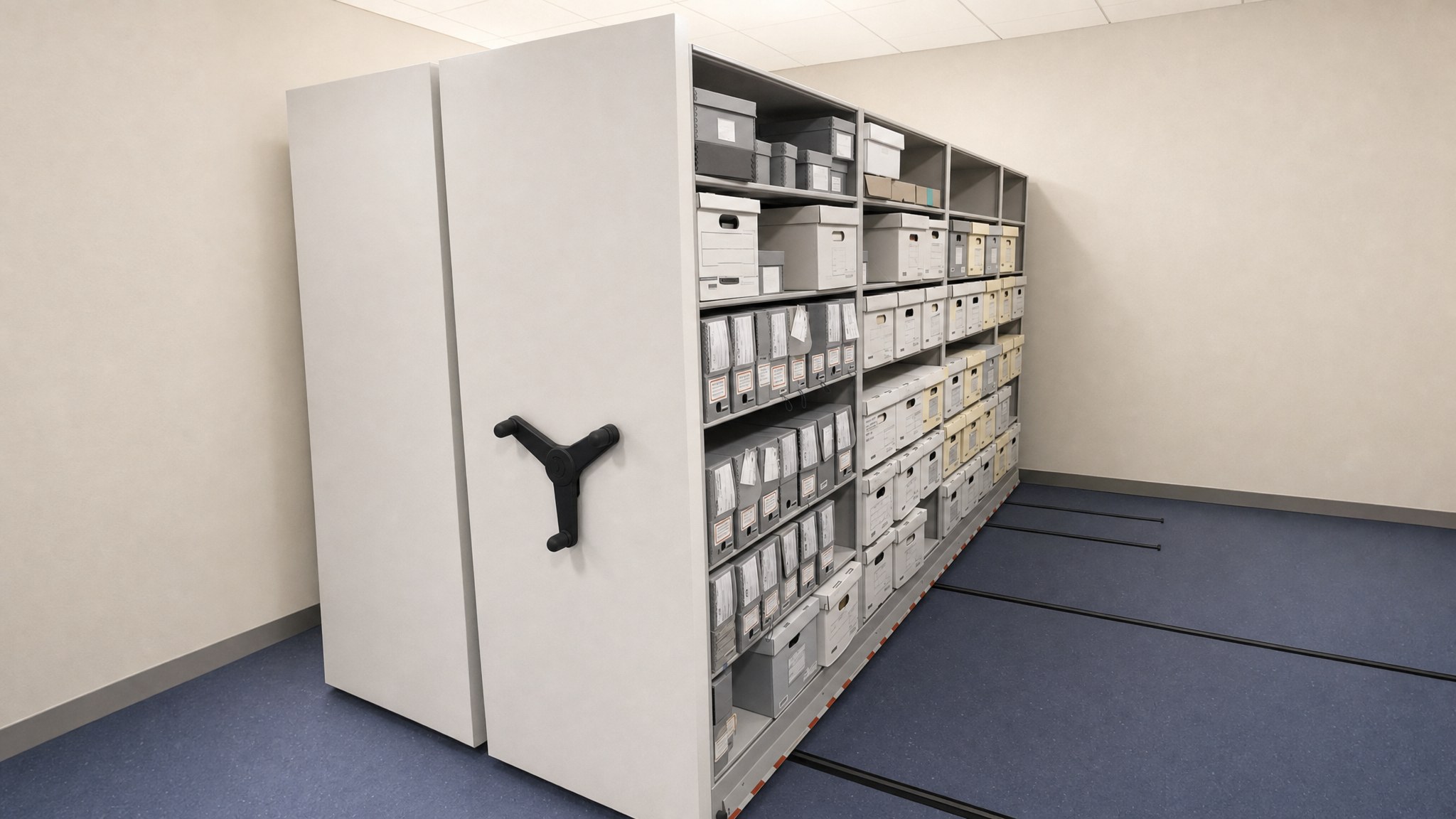
Rolling Archive Shelves for Compact Archive Storage
Rolling archive shelves use rail-mounted compact shelving to store archive boxes, records, media, rare books, and collection materials in less floor space. Southwest Solutions Group helps museums, libraries, and archives plan layouts around collection formats, staff access, and future growth.
What Are Rolling Archive Shelves?
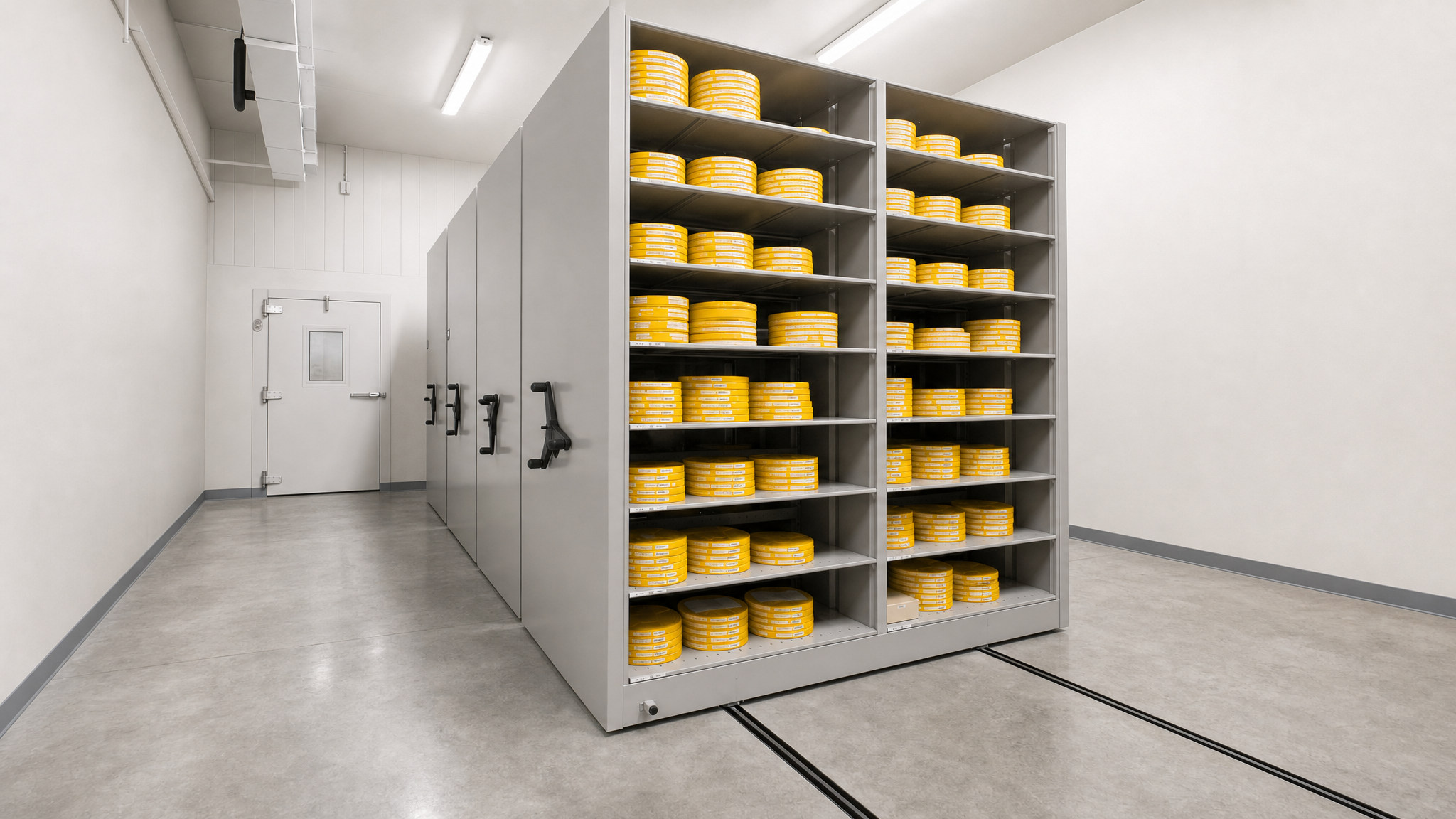
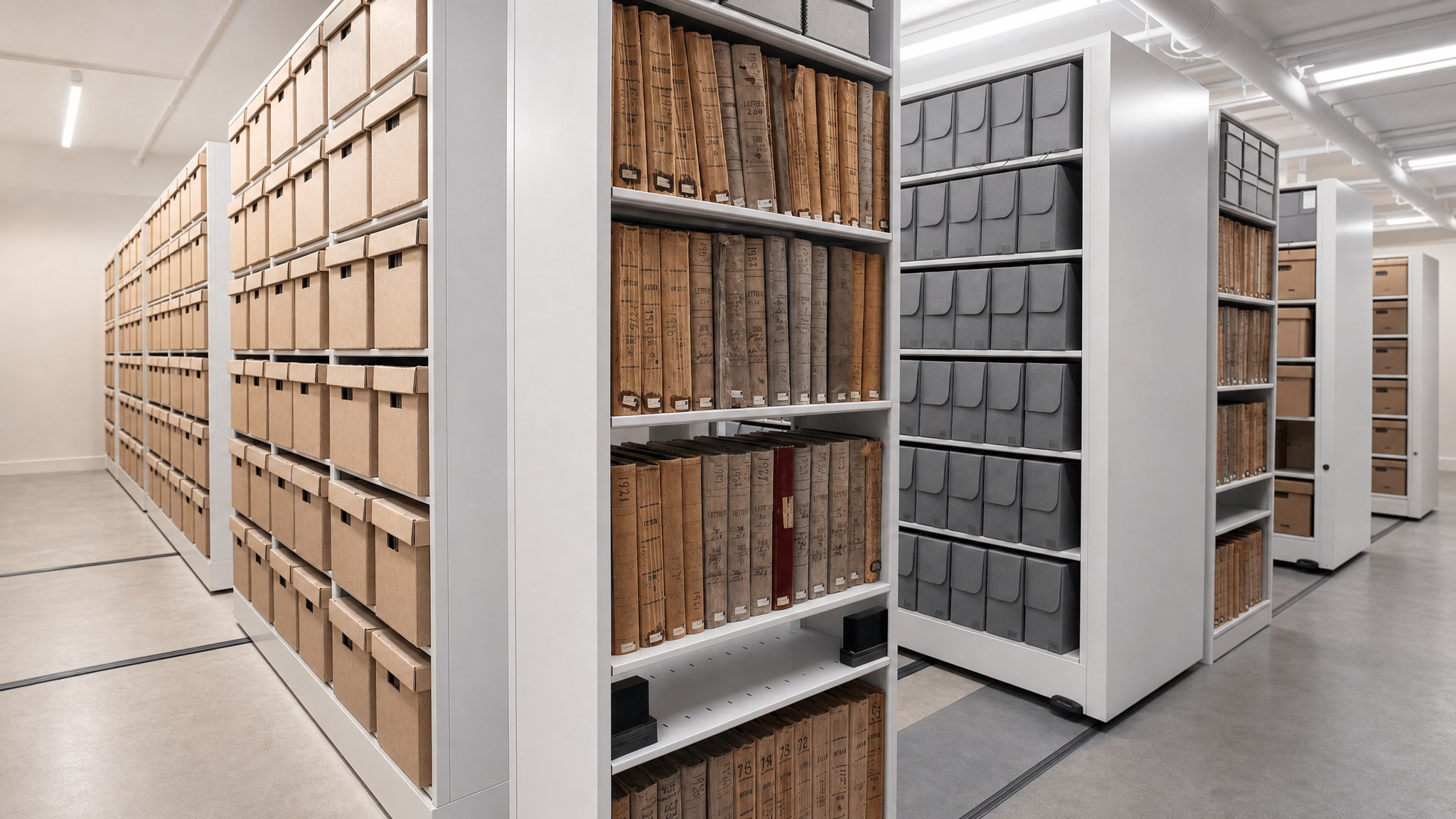
Rolling archive shelves are rail-mounted compact shelving systems that place rows of archival shelving, cabinets, or racks on movable platforms. These platforms travel along floor tracks, allowing users to open a single access aisle where materials are needed. This design helps store, organize, and retrieve archive boxes, records, manuscripts, rare books, audio and video media, artwork, and other collection materials in environments where space is limited and collections need to remain accessible.
- This rail-mounted archive shelving is different from caster shelving and general public library stacks because it uses shared-aisle movement on floor tracks.
Sizing Archive Shelves Around Boxes, Media, and Room Constraints
Proper planning for rolling archive shelves starts with an inventory of your collection formats and storage needs. Since each archive room and collection is unique, system sizing depends on box dimensions, record carton sizes, rare book and manuscript formats, and the quantities of each. Room length, width, ceiling height, and floor conditions must also be reviewed to ensure a fit with your facility’s layout and future growth plans.
- Separate standard archive boxes from oversized, media, manuscript, and artwork-related materials so shelf openings can be planned correctly.
- Identify how often staff retrieve each collection group to determine where higher-use materials should be located.
- Note doors, columns, sprinklers, lights, mechanical obstructions, and other room conditions that may affect track and carriage layout.
- Review collection environment, growth projections, and future renovation plans before finalizing the compact archive shelving system.
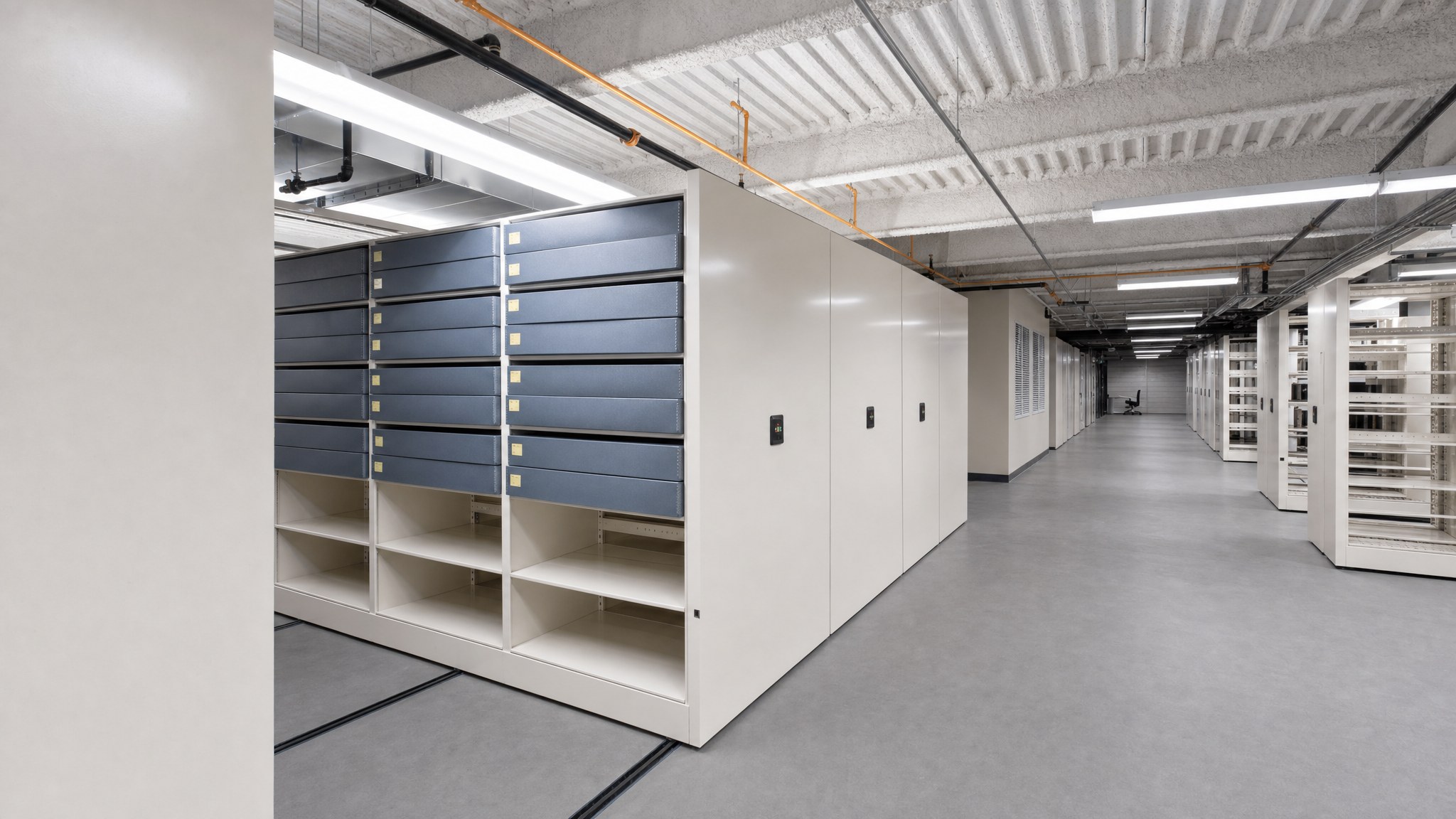
Manual and Powered Rolling Archive Shelving Options
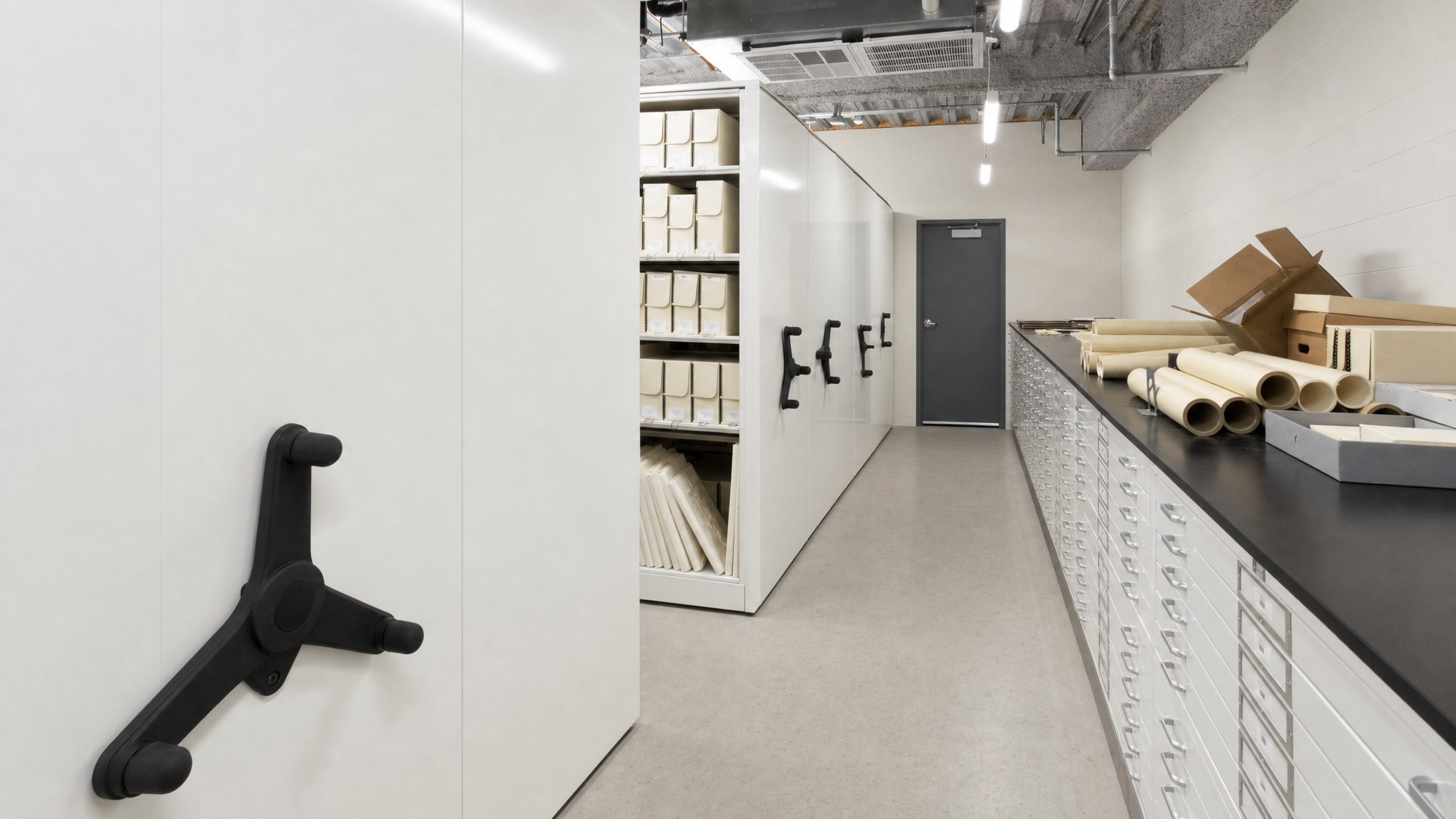
The movement method for rolling archive shelves should match the room layout, retrieval demand, staff preferences, and how materials are handled during daily use. Lighting coordination, access controls, expansion, and relocation needs can also be reviewed during project planning.
- Manual hand-wheel controls for mechanical movement of shelving rows.
- Powered push-button controls for electrically operated movement.
Where Rolling Archive Shelves Fit into Facility Workflows
Rolling archive shelves are used in museums, archives, libraries, records departments, public safety agencies, healthcare facilities, and offices that need to store and organize archival materials. The rail-mounted, shared-aisle design supports staff-managed retrieval and refiling in rooms where floor space and collection organization both matter.
For a real-world example of archive organization with high-density shelving, see The Holt Research Center at the Haley Memorial Library & History Center case study.
- Museum archive storage for boxes, records, manuscripts, rare books, media, and collection materials.
- Library special collections and research archives that are managed by staff rather than browsed as public stacks.
- Records and file archive rooms in offices, public safety departments, and healthcare administrative areas.
- Compact archival storage areas that need organized access without converting the room to high-bay archive storage.
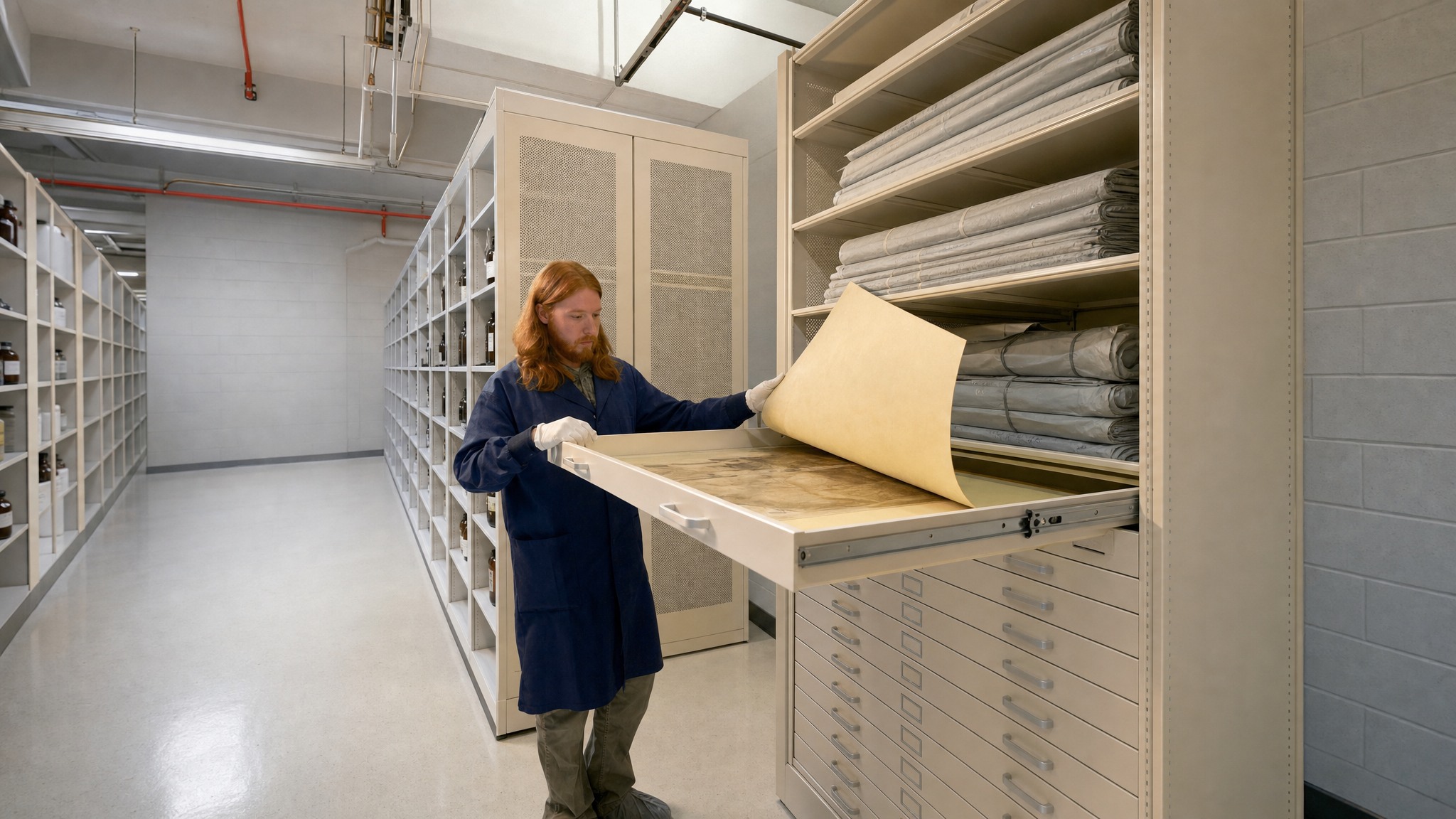
Planning a Rolling Archive Shelving Project
To prepare for a rolling archive shelving project, buyers should inventory their archive materials, document room dimensions, and review floor conditions. Consider whether existing shelving can be reused, what access and control preferences are needed, and how future growth or renovation might affect the system. Consultation is recommended to review track layout, floor loads, and collection handling requirements.
- Inventory archive boxes, media, and collection formats with their dimensions and quantities.
- Measure room size, ceiling height, and note obstructions, doors, access points, and service clearances.
- Review floor type and load capacity with a project specialist.
- Discuss manual or powered movement, lighting coordination, access control needs, and future expansion.
Museum Archive Collections

Museum staff use rolling archive shelves to keep boxed collections, manuscripts, rare books, media, artwork-related materials, and historical records in a compact archive room. The shared-aisle layout helps staff retrieve collection materials without dedicating a fixed aisle to every row of museum shelving.
- Expandable and relocatable designs can be reviewed when a museum anticipates renovation, relocation, or collection growth.


Planning Rolling Archive Shelves for Your Collection
Use this guide to organize the main decisions before requesting a layout. Most projects combine several of these considerations rather than choosing only one.
| Planning Decision | Why It Matters | What to Confirm |
|---|---|---|
| Collection Format Inventory | Museums, archives, libraries, and records rooms with boxes, documents, rare books, media, and mixed collection materials. | Confirm container sizes, quantities, item formats, and special handling needs before shelf openings and row layouts are designed. |
| Shared-Aisle Access Plan | Archive rooms where staff need compact storage while still retrieving and refiling materials throughout the day. | Review retrieval frequency, staffing patterns, and access points so the movable aisle supports actual use of the room. |
| Movement Control Review | Projects comparing mechanical and powered movement for archival shelving rows. | Evaluate the control method against room layout, collection weight, staff preferences, and how often materials are retrieved. |
| Floor, Growth, and Renovation Review | Facilities planning archive storage systems around existing rooms, future expansion, or possible relocation. | Confirm floor conditions, load considerations, ceiling height, obstructions, and whether future reconfiguration should be part of the design. |
| Online Compact Shelving Research | Buyers who want to review compact mobile shelving options before discussing an archive-specific layout. | Use the online path for product research, then confirm archive box sizes, room conditions, and collection requirements during consultation. |
Relevant Customer Feedback

“Southwest Solutions Group is an amazing company made so much better by having Daryl at the helm of Museum and Library storage space saving designs in the NW. Daryl is not only an expert in high density shelving systems, but he consistently tunes into optimizing long term solutions to complex storage needs and pliable projects. Always reliable and knowledgeable, Daryl and his Spacesaver's team have been indispensable partners in our world of cultural preservation.”
Southwest Solutions Near You
With 7 offices in Texas, Oklahoma, Kansas and Colorado, plus teams covering every major metro area nationwide, Southwest Solutions Group provides expert sales, design, installation, and maintenance support for rolling archive shelves wherever you need it.
Rolling Archive Shelves Service Areas
Texas
- Dallas
- Austin
- Houston
- San Antonio
- Waco
- Tyler
- Amarillo
- Lubbock
- El Paso
- Ft Worth
- Corpus Christi
- Midland
Oklahoma
- Oklahoma City
- Tulsa
- Norman
- Lawton
- Enid
- Stillwater
- McAlester
- Muskogee
- Guymon
Kansas
- Wichita
- Overland Park
- Topeka
- Kansas City
- Lawrence
- Manhattan
- Salina
- Hays
- Dodge City
- Garden City
Colorado
- Denver
- Colorado Springs
- Fort Collins
- Grand Junction
- Pueblo
- Durango
- Alamosa
- Steamboat Springs
- Greeley
Alabama
- Huntsville
- Birmingham
- Montgomery
- Mobile
- Tuscaloosa
- Hoover
- Dothan
- Decatur
Alaska
- Anchorage
- Fairbanks
- Juneau
- Sitka
- Ketchikan
- Kodiak
- Bethel
- Nome
Arizona
- Phoenix
- Tucson
- Flagstaff
- Yuma
- Prescott
- Lake Havasu City
- Sierra Vista
- Kingman
Arkansas
- Little Rock
- Fayetteville
- Fort Smith
- Jonesboro
- Hot Springs
- Pine Bluff
- Texarkana
- Bentonville
- Arkadelphia
California
- Los Angeles
- San Diego
- San Francisco
- Sacramento
- Fresno
- Redding
- Bakersfield
- San Bernardino
- San Jose
Connecticut
- Hartford
- New Haven
- Stamford
- Bridgeport
Delaware
- Wilmington
- Dover
- Newark
- Rehoboth Beach
Florida
- Jacksonville
- Tallahassee
- Orlando
- Tampa
- Miami
- West Palm Beach
- Fort Myers
- Pensacola
Georgia
- Atlanta
- Savannah
- Augusta
- Columbus
- Macon
- Athens
- Valdosta
- Gainesville
- Albany
Hawaii
- Honolulu
- Hilo
- Kahului
- Kailua-Kona
- Lihue
Idaho
- Boise
- Coeur d'Alene
- Twin Falls
- Idaho Falls
- Pocatello
- Lewiston
- McCall
- Sandpoint
- Moscow
Illinois
- Chicago
- Springfield
- Rockford
- Peoria
- Champaign
- Bloomington
- Carbondale
- Moline
- Quincy
Indiana
- Indianapolis
- Fort Wayne
- South Bend
- Evansville
- Lafayette
- Bloomington
- Terre Haute
- Gary
- Muncie
Iowa
- Des Moines
- Cedar Rapids
- Davenport
- Sioux City
- Iowa City
- Waterloo
- Council Bluffs
- Ames
- Mason City
Kentucky
- Louisville
- Lexington
- Bowling Green
- Owensboro
- Covington
- Paducah
- Ashland
- Richmond
- Frankfort
- Pikeville
- Florence
Louisiana
- New Orleans
- Baton Rouge
- Shreveport
- Lafayette
- Lake Charles
- Monroe
- Alexandria
- Houma
Maine
- Portland
- Bangor
- Augusta
- Lewiston
- Waterville
- Presque Isle
- Bar Harbor
- Biddeford
- Rockland
Maryland
- Baltimore
- Annapolis
- Frederick
- Hagerstown
- Salisbury
Massachusetts
- Boston
- Worcester
- Springfield
- Pittsfield
Michigan
- Detroit
- Grand Rapids
- Lansing
- Ann Arbor
- Flint
- Traverse City
- Marquette
- Kalamazoo
- Saginaw
Minnesota
- Minneapolis
- St. Paul
- Duluth
- Rochester
- Mankato
- St. Cloud
- Bemidji
- Moorhead
Mississippi
- Jackson
- Gulfport
- Hattiesburg
- Biloxi
- Southaven
- Meridian
- Tupelo
- Natchez
- Greenville
- Oxford
Missouri
- Jefferson City
- St. Louis
- Kansas City
- Springfield
- Columbia
- Joplin
- Cape Girardeau
- St. Joseph
- Rolla
Montana
- Helena
- Billings
- Missoula
- Great Falls
- Bozeman
- Kalispell
- Havre
- Miles City
Nebraska
- Lincoln
- Omaha
- Grand Island
- Kearney
- Scottsbluff
- Norfolk
- North Platte
- Fremont
- South Sioux City
Nevada
- Las Vegas
- Reno
- Carson City
- Elko
- Pahrump
- Henderson
- Winnemucca
- Mesquite
- Fallon
New Hampshire
- Concord
- Manchester
- Portsmouth
- Keene
- Nashua
New Jersey
- Newark
- Jersey City
- Trenton
- Atlantic City
New Mexico
- Santa Fe
- Albuquerque
- Las Cruces
- Roswell
- Farmington
- Gallup
- Carlsbad
- Clovis
New York
- Albany
- New York City
- Buffalo
- Rochester
- Syracuse
- Binghamton
- Ithaca
- Plattsburgh
North Carolina
- Raleigh
- Charlotte
- Greensboro
- Asheville
- Wilmington
- Fayetteville
- Boone
- Greenville
North Dakota
- Bismarck
- Fargo
- Grand Forks
- Minot
- Dickinson
- Williston
- Jamestown
- Devils Lake
Ohio
- Columbus
- Cleveland
- Cincinnati
- Toledo
- Dayton
- Akron
- Youngstown
- Athens
Oregon
- Portland
- Salem
- Eugene
- Hermiston
- Baker City
- Medford
- Bend
- Klamath Falls
Pennsylvania
- Harrisburg
- Philadelphia
- Pittsburgh
- Erie
- Scranton
- State College
- Allentown
- Williamsport
Rhode Island
- Providence
- Warwick
- Newport
- Woonsocket
South Carolina
- Columbia
- Charleston
- Greenville
- Myrtle Beach
- Hilton Head Island
- Spartanburg
- Florence
- Rock Hill
South Dakota
- Pierre
- Sioux Falls
- Rapid City
- Aberdeen
- Watertown
- Brookings
- Mitchell
- Yankton
Tennessee
- Memphis
- Jackson
- Nashville
- Clarksville
- Cookeville
- Chattanooga
- Knoxville
- Johnson City
Utah
- Salt Lake City
- Ogden
- Logan
- Provo
- St. George
- Cedar City
- Moab
- Vernal
Vermont
- Montpelier
- Burlington
- Rutland
- Brattleboro
Virginia
- Richmond
- Norfolk
- Virginia Beach
- Roanoke
- Lynchburg
- Harrisonburg
- Fredericksburg
- Bristol
Washington
- Olympia
- Seattle
- Spokane
- Yakima
- Bellingham
- Wenatchee
- Kennewick
- Vancouver
West Virginia
- Charleston
- Huntington
- Morgantown
- Wheeling
- Parkersburg
- Beckley
- Martinsburg
- Bluefield
Wisconsin
- Madison
- Milwaukee
- Green Bay
- Eau Claire
- La Crosse
- Wausau
- Appleton
- Superior
Wyoming
- Cheyenne
- Casper
- Laramie
- Gillette
- Sheridan
- Rock Springs
- Jackson
- Cody
District of Columbia
- Washington D.C.
Rolling Archive Shelves Case Studies
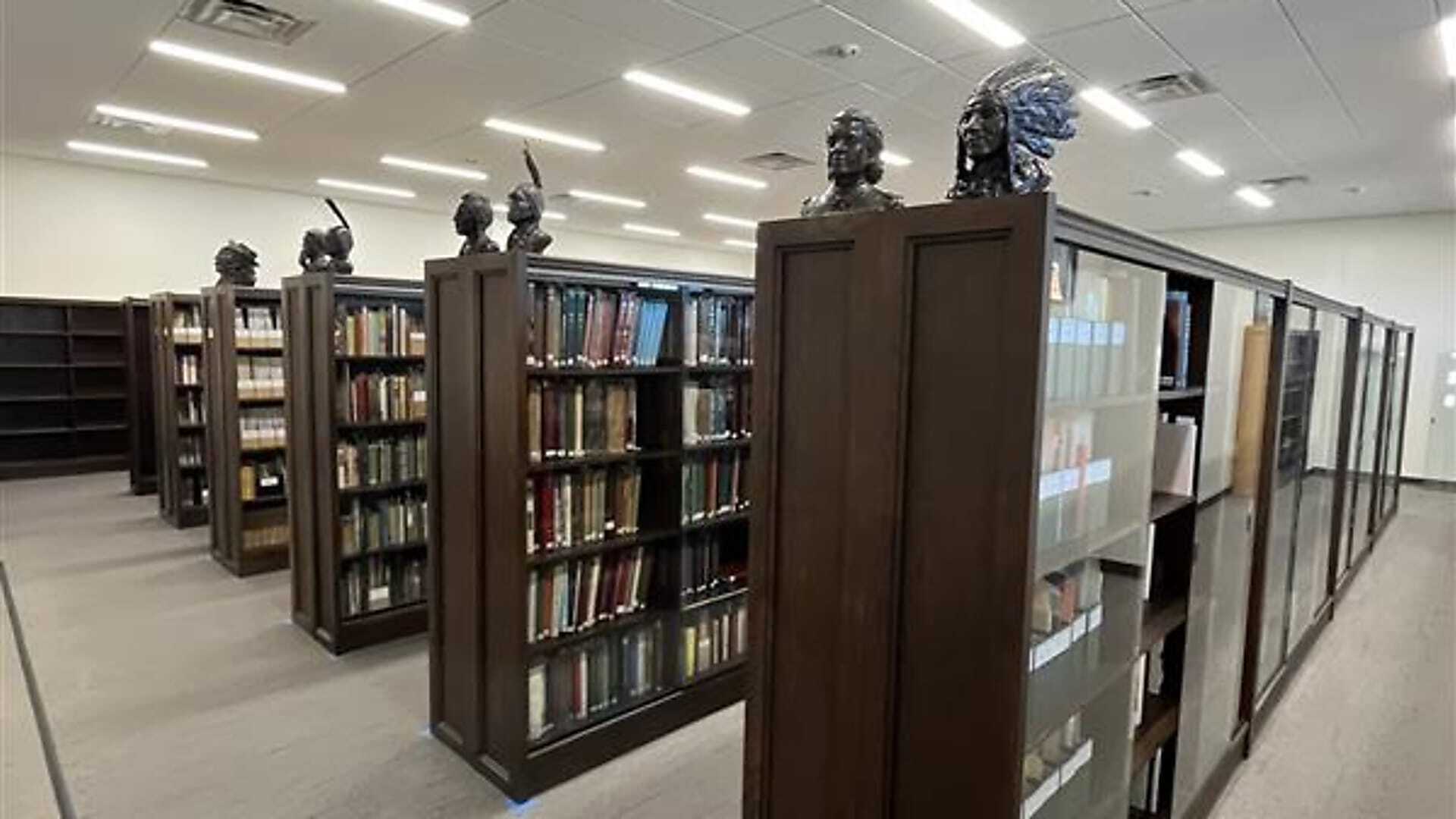
The Holt Research Center at the Haley Memorial Library & History Center Centralizes Collection Storage with High-Density Shelving
Centralizing the collection improved organization, strengthened access control, and reduced the time needed to locate and retrieve requested items.
Read Case StudyFrequently Asked Questions
Rolling archive shelves are rail-mounted compact shelving systems that allow shelving, cabinets, or racks to move on tracks, creating a movable access aisle for storing and retrieving archive boxes, records, media, rare books, manuscripts, and collection materials.
Rolling archive shelves use platforms on floor tracks to create shared-aisle access within an installed compact shelving system. Caster shelving moves on wheels and is better understood as portable storage rather than rail-mounted archival compact shelving.
Archival compact shelving can support boxes, record cartons, manuscripts, documents, rare books, audio and video media, artwork-related materials, and other mixed archive formats when the system is planned around the collection.
Manual hand-wheel controls and powered push-button controls are both supported options. The best choice depends on staff workflow, retrieval frequency, room layout, collection handling, and access needs.
Prepare box dimensions and quantities, media and collection formats, room dimensions, access points, retrieval frequency, floor conditions, and future growth expectations before requesting a layout.
Yes. Rolling archive shelves are used in libraries for special collections and research archives as well as in museums. They are designed for staff-managed archive storage rather than general public stack shelving.
An existing archive room can be evaluated for a compact archive shelving system. A project review can determine whether the room layout, floor conditions, existing shelving, and access requirements are suitable for rail-mounted archive shelving.
Gallery
Product image gallery

Explore More High-Density Storage Products
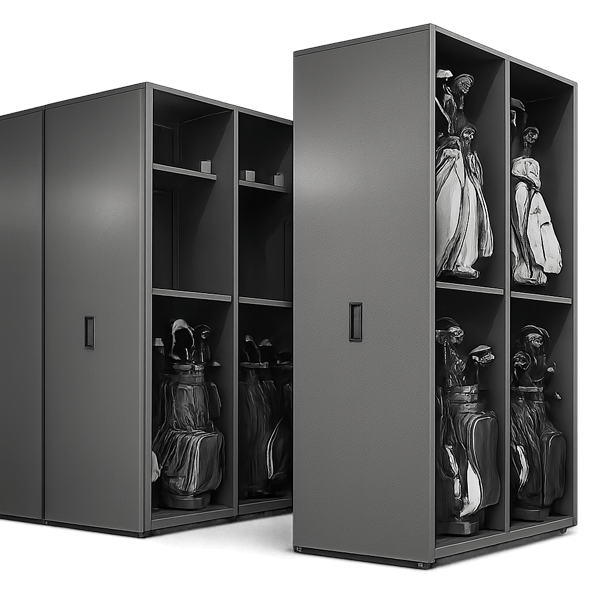
Golf Bag Racks
High-density racks organize up to 12 golf bags per unit for clubs, schools, and athletic facilities.
Explore Golf Bag Racks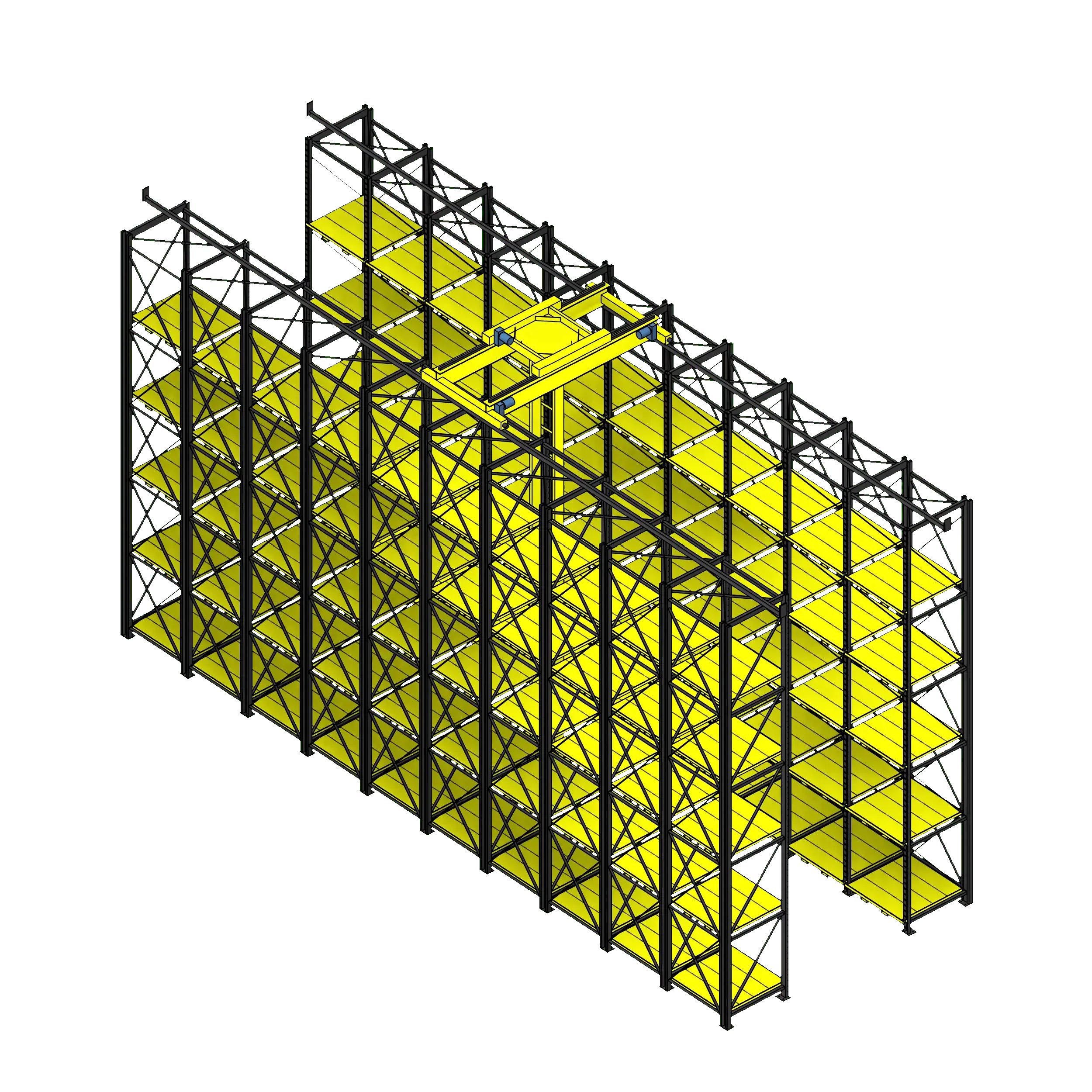
High Bay Shelving
Use your vertical space with shelving systems that reach 30 feet or more and are ideal for archival or backstock storage.
Explore High Bay Shelving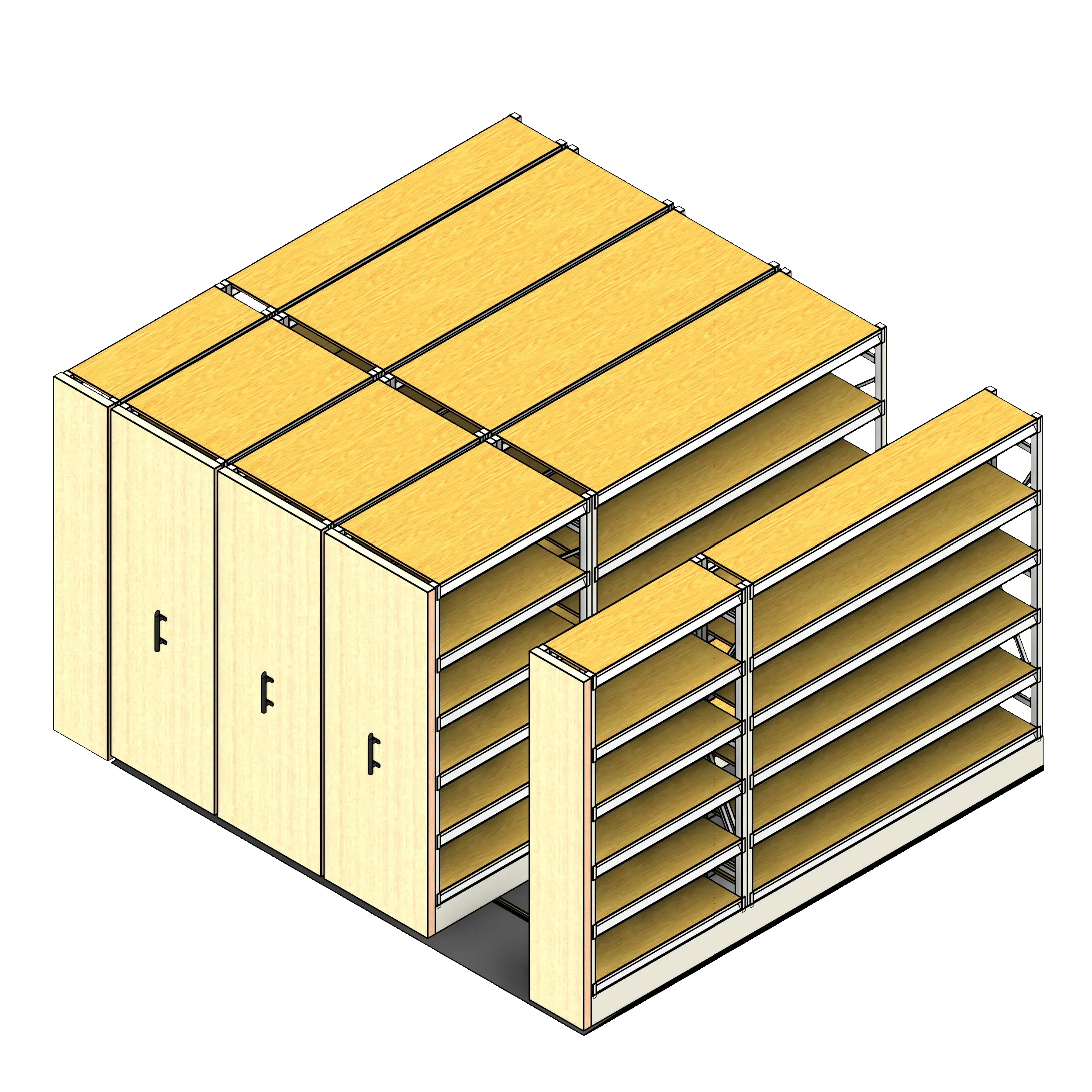
High-Density Mobile Shelving
Reduce fixed aisles and increase file, equipment, or supply storage within the same footprint using mobile shelving on floor tracks.
Explore High-Density Mobile Shelving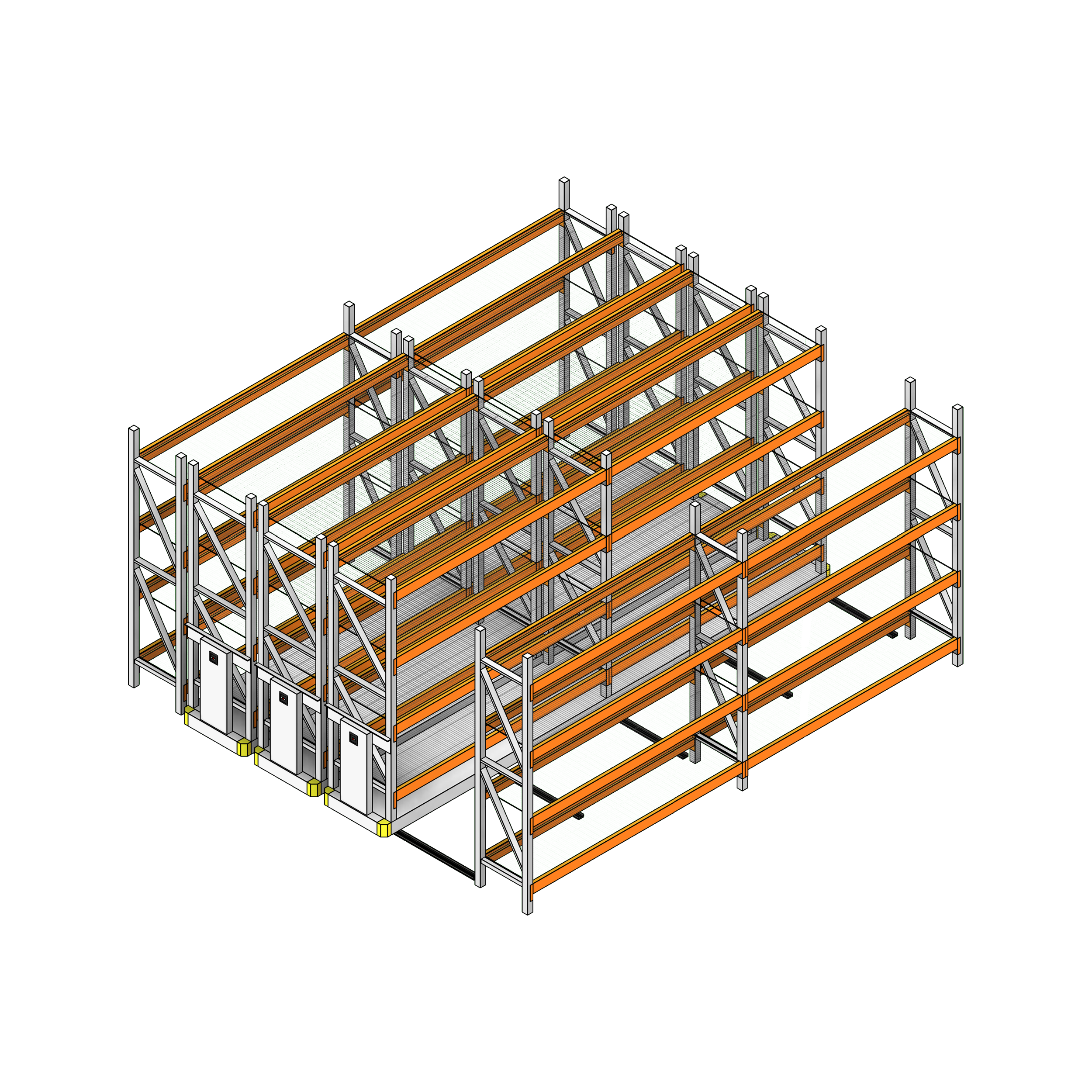
Mobile Racking
Store more palletized goods using mobile carriages that increase warehouse capacity without adding square footage.
Explore Mobile Racking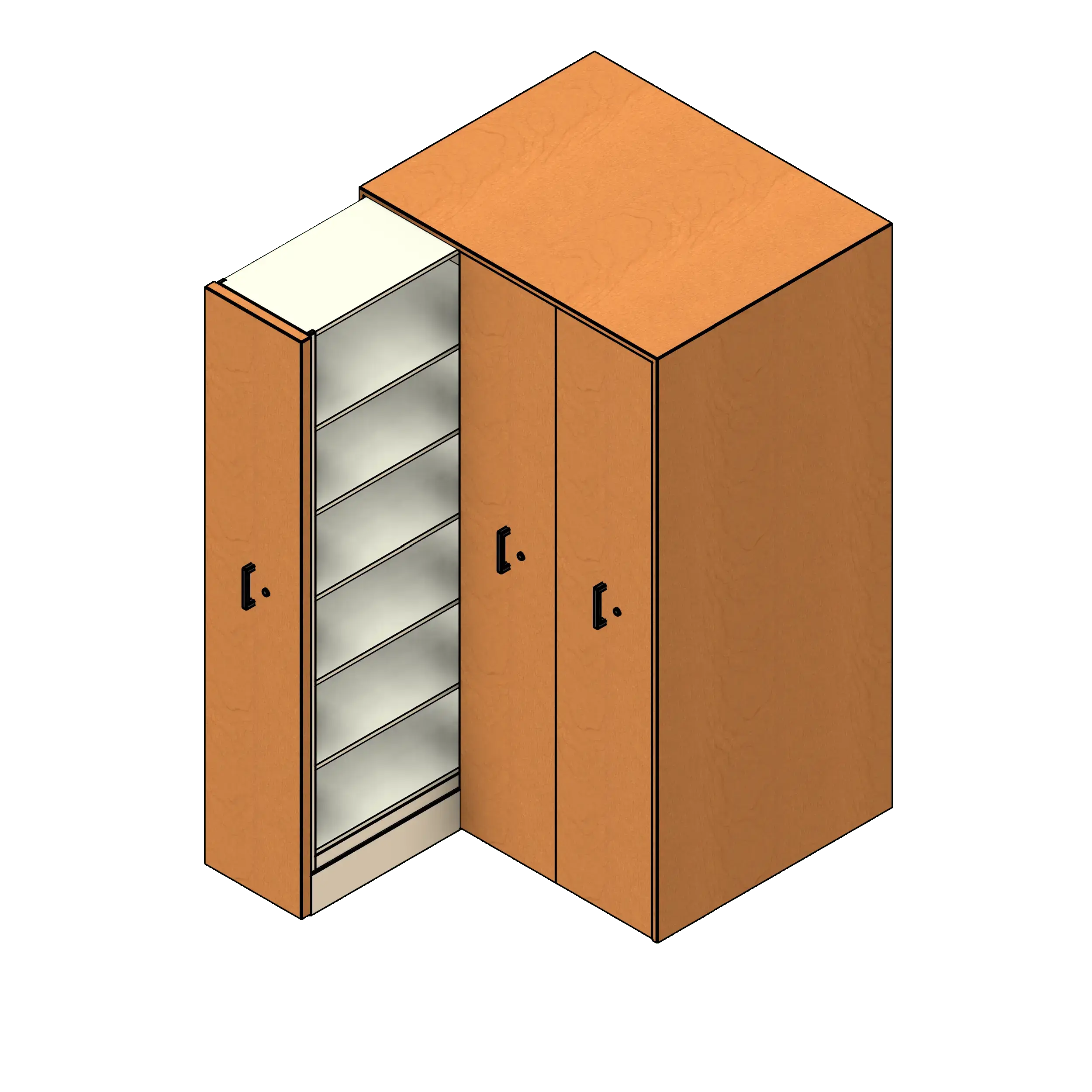
Pull-Out Bookshelf
Full-extension sliding cabinets that reduce strain and improve storage density for archives, collections, or inventory.
Explore Pull-Out Bookshelf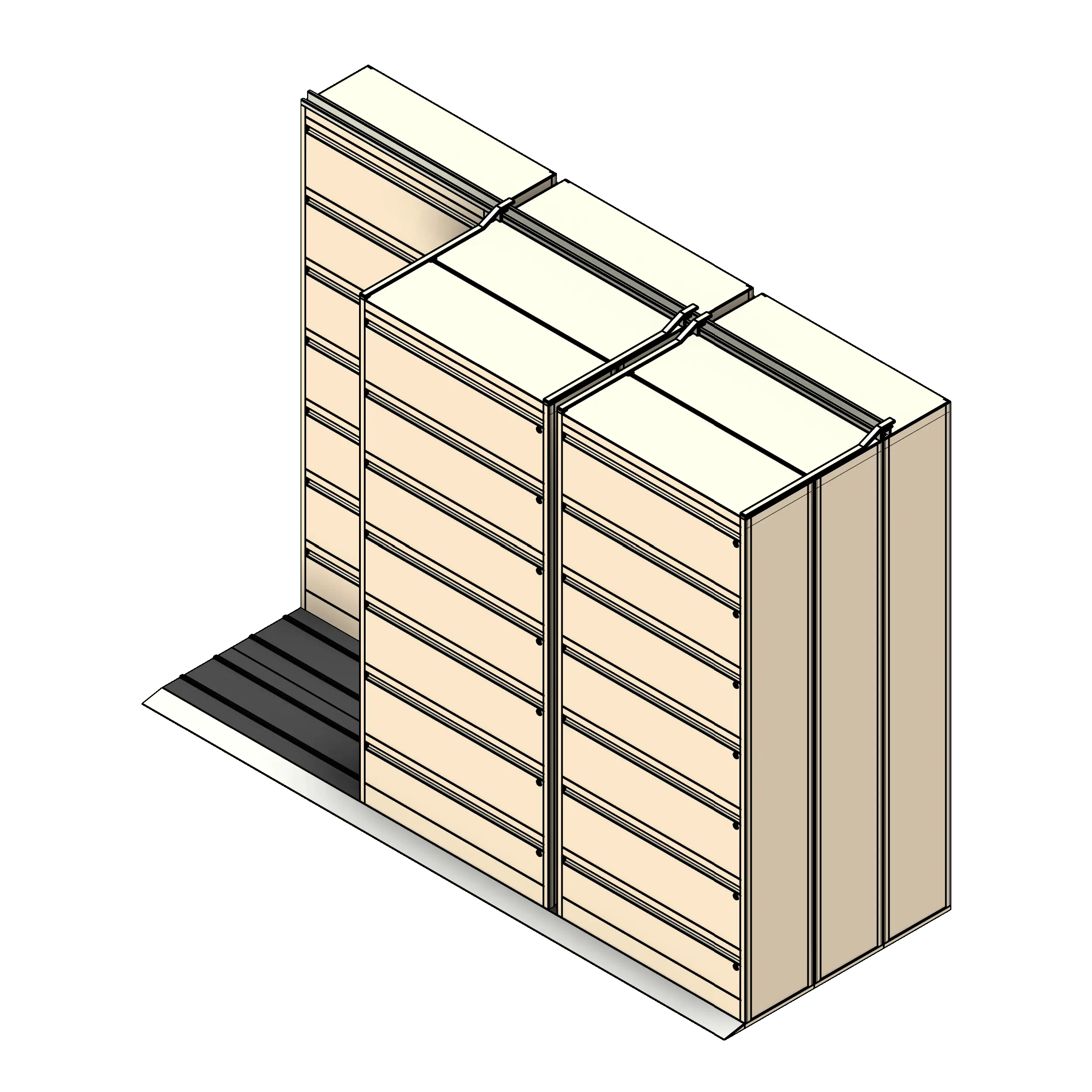
Sliding Storage Shelves
Side-to-side shelving systems that save aisle space while keeping files, supplies, or boxes accessible in tight areas.
Explore Sliding Storage Shelves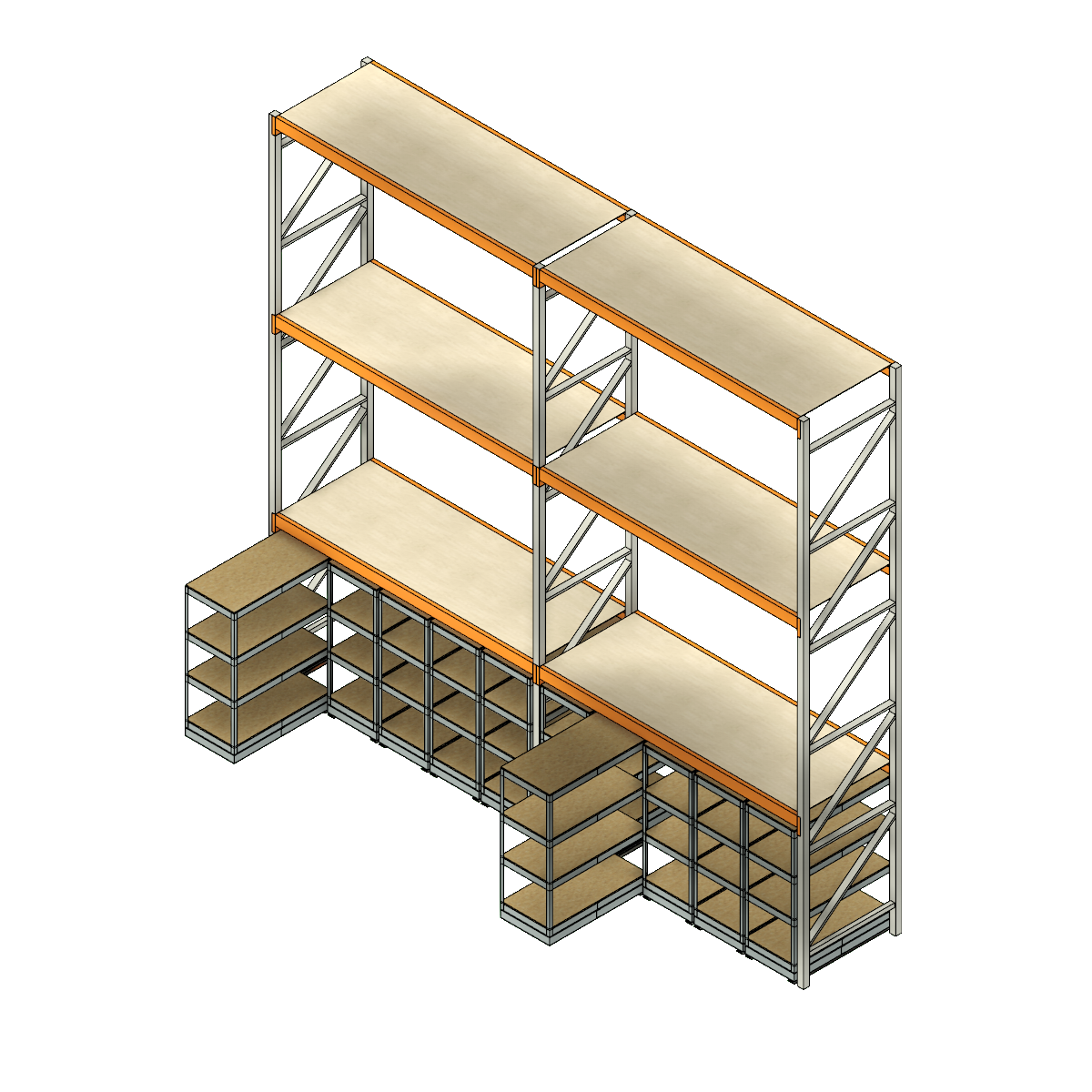
Under Pallet Rack Storage
Turn unused space under pallet racks into pull-out shelving that boosts storage capacity, speeds picks, and keeps warehouse aisles clear.
Explore Under Pallet Rack Storage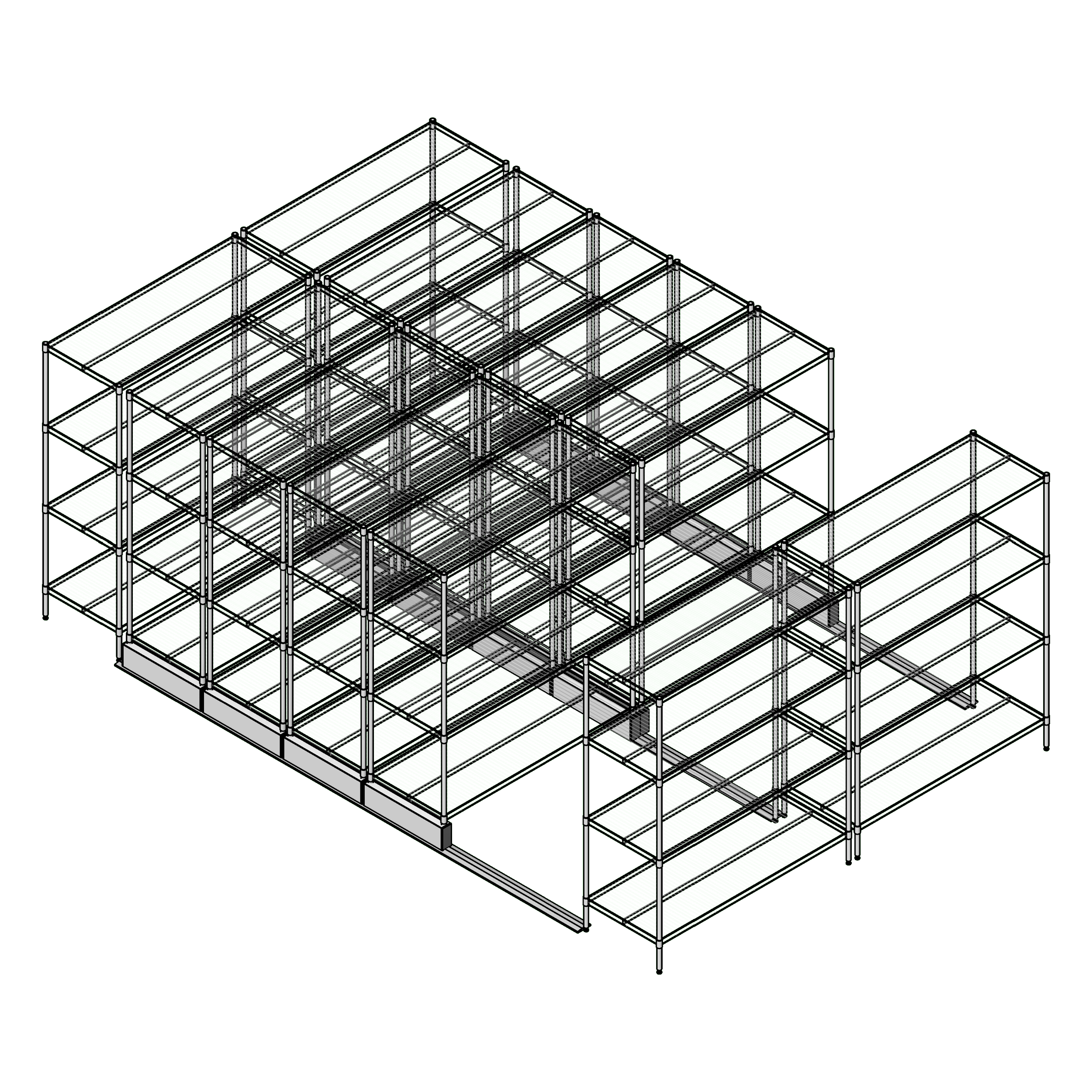
Vertical Grow Racks
Mobile grow racks organize canopy space around airflow, lighting, and access requirements in licensed cannabis facilities.
Explore Vertical Grow RacksPlan Rolling Archive Shelves for Your Collection
Share your archive box sizes, collection formats, room dimensions, and retrieval needs to start your project. Southwest Solutions Group can help plan rail-mounted archive shelving around your materials and space.
Discuss manual or powered movement, access preferences, floor conditions, and future growth so the system fits both today’s collection and tomorrow’s changes.
Call us at (800) 803-1083 or Contact Us to schedule your free consultation today.
Request a Rolling Archive Shelving Consultation