
Best-In-Class Vertical Farming Solutions
SSG Horticulture guides indoor vertical farming teams through the systems that shape productive, controlled food production environments. From AGEYE automated indoor grow systems and vertical racks to benching, carts, modular rooms, storage, and BIM-supported planning, our team builds around crop goals, workflow, access, utilities, sanitation, and long-term expansion.
Compare Indoor Vertical Farming Systems by How They Support the Facility
SSG evaluates crop goals, room dimensions, utility coordination, workflow, access requirements, and production targets to recommend the right automation, racking, benching, cart, modular room, and storage plan for the facility.
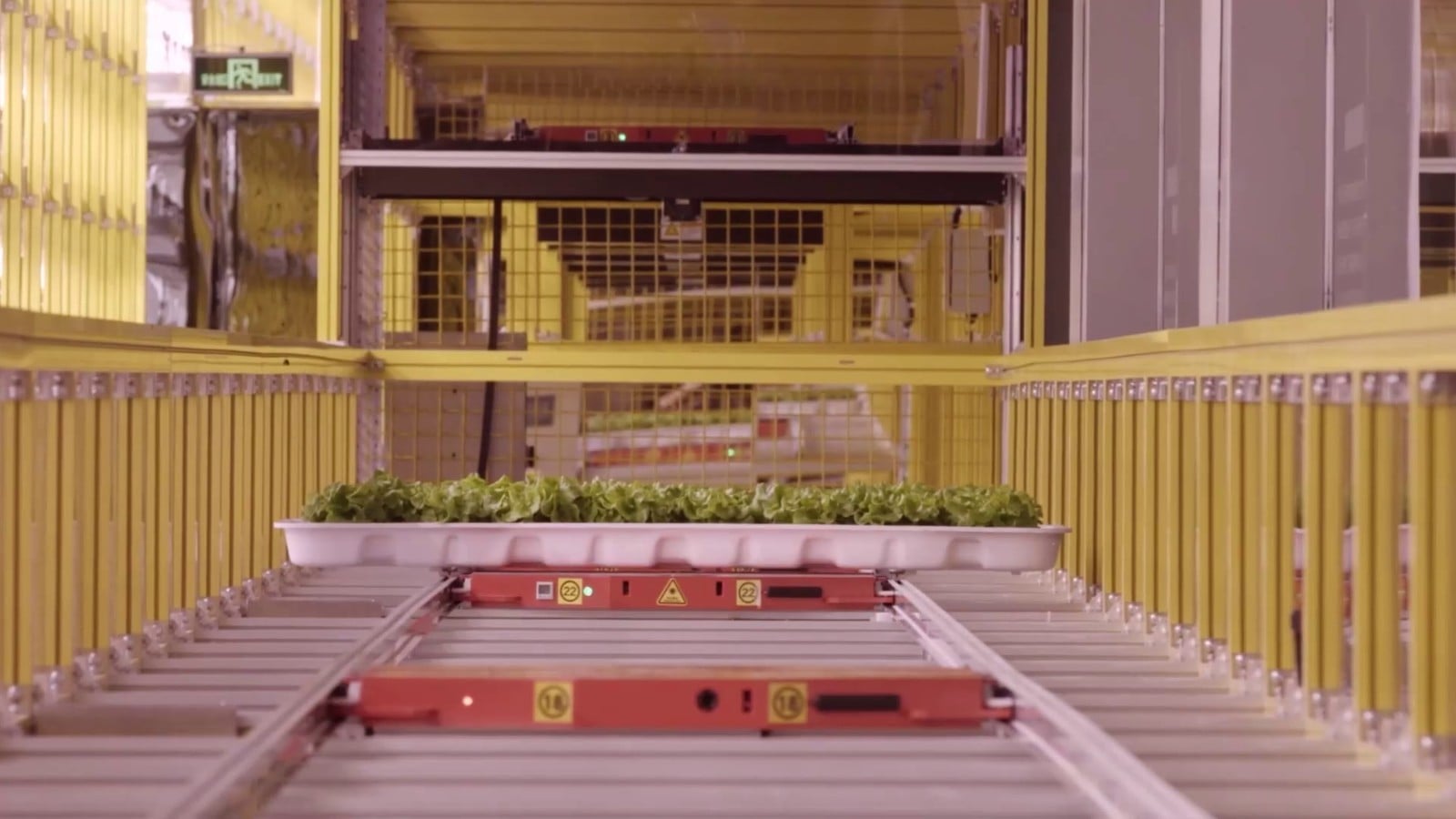
AGEYE Automated Indoor Grow Systems
A strong fit when indoor farming operations need equipment, controls, software, and crop-management tools working together to improve consistency, labor efficiency, and scalable production.
- Connects crop movement, controls, and production planning into one system path
- Supports repeatable crop cycles and cleaner operational visibility
- Reduces manual handling where automation can improve consistency
- Best fit when the facility needs a high-impact production model
.jpg)
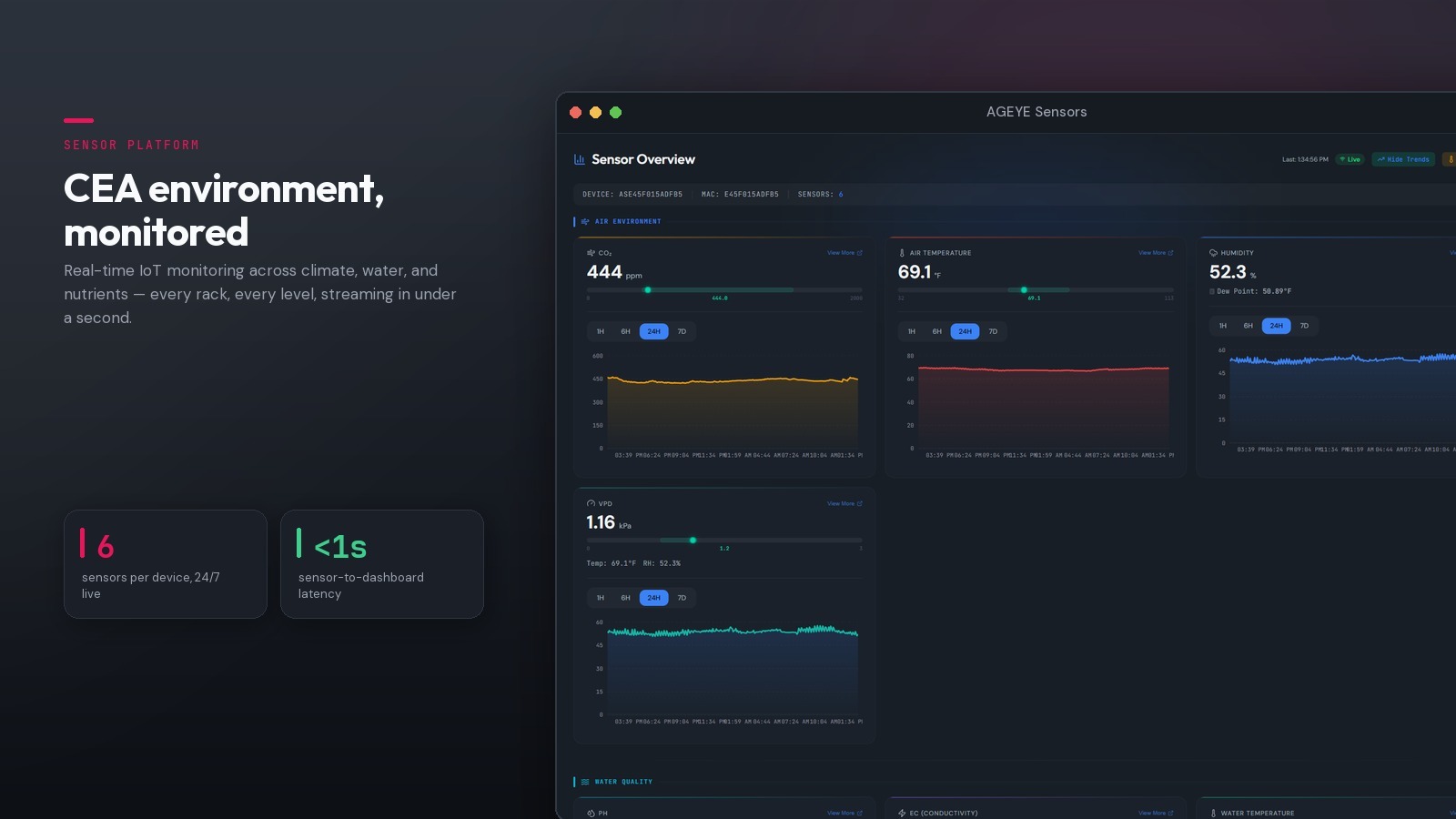
AGEYE Controls & Data Collection
The intelligence layer of the farm. AGEYE's HYVE control platform pairs in-room sensors with centralized automation, giving growers real-time visibility and repeatable control over every room.
- Real-time environmental and crop data from every room
- Centralized control of lighting, irrigation, and climate
- Data that drives consistency, labor savings, and better decisions
- Scales as rooms, crops, and automation are added
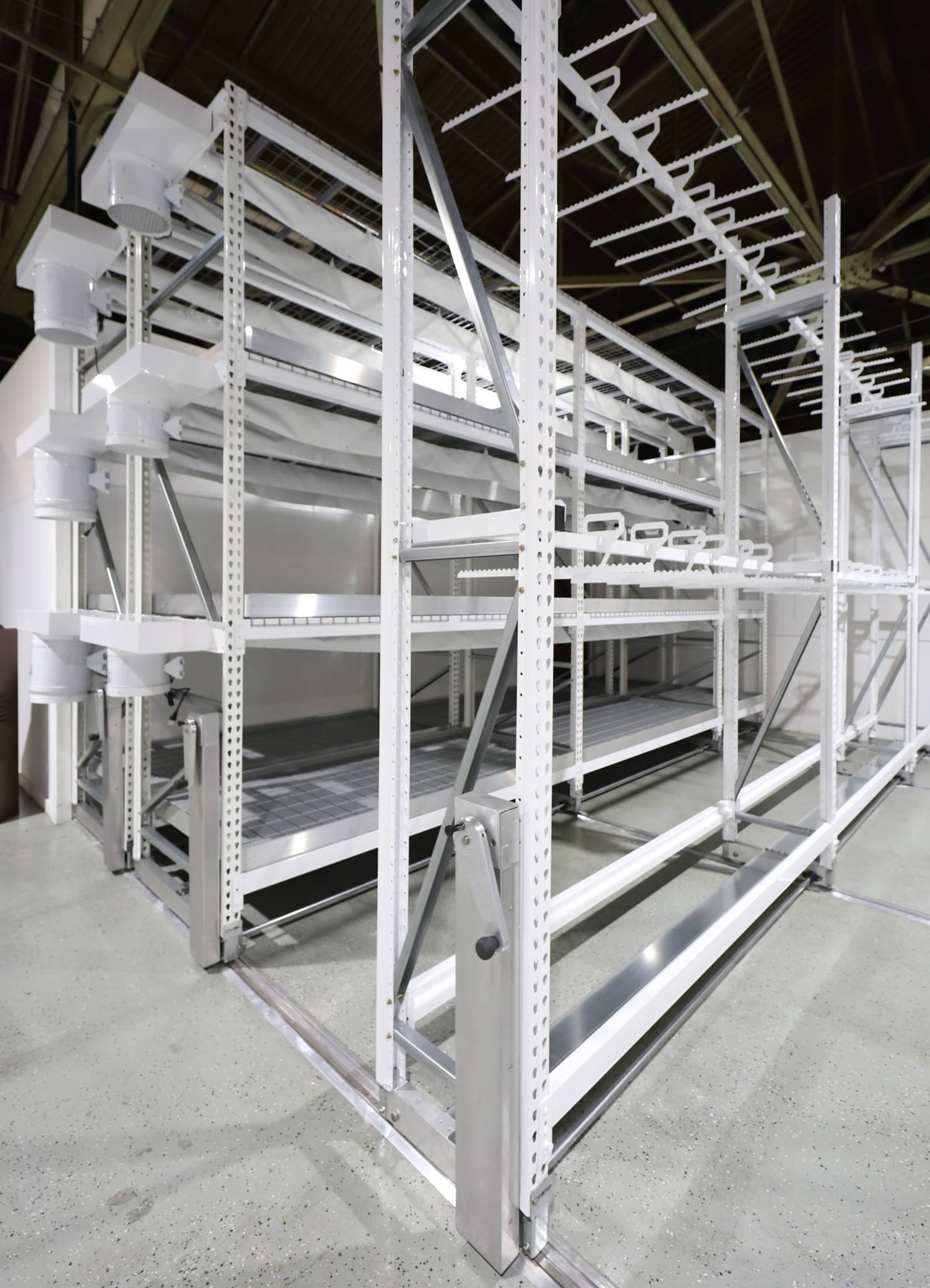
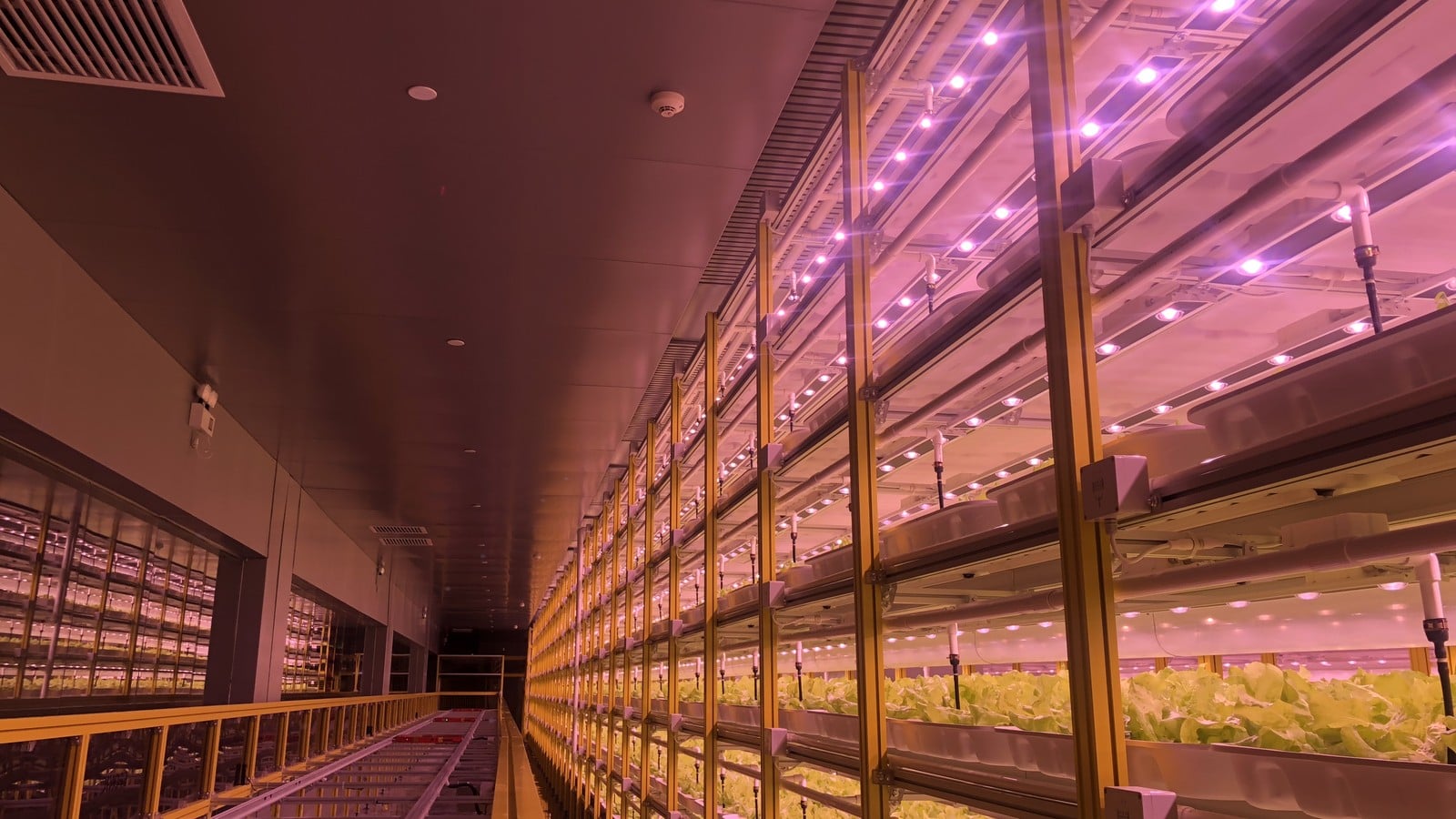
Vertical Grow Racks: Mobile & Fixed
Multi-tier racking is the strongest way to add usable production area inside the same room footprint. SSG plans both mobile and fixed vertical systems so the rack strategy fits the room, the workflow, and the airflow and sanitation the crop needs every day.
Mobile vertical racking closes unused aisles and opens an aisle
only where staff are working, for the biggest density gain when floor space is the
constraint and crews still need full access.
Fixed vertical
racking delivers a stable multi-tier layout for rooms that want the added
tiers without rack movement or aisle-on-demand.
- Models stronger growing density inside the same room footprint
- Mobile carriages open an aisle only where it's needed for maximum space gain
- Fixed tiers give a stable multi-level layout without rack movement
- Keeps crop work, inspection, and maintenance routes reachable at every tier
- Connects rack strategy with airflow paths, sanitation, and room systems
- Best fit when the facility needs the strongest spatial impact
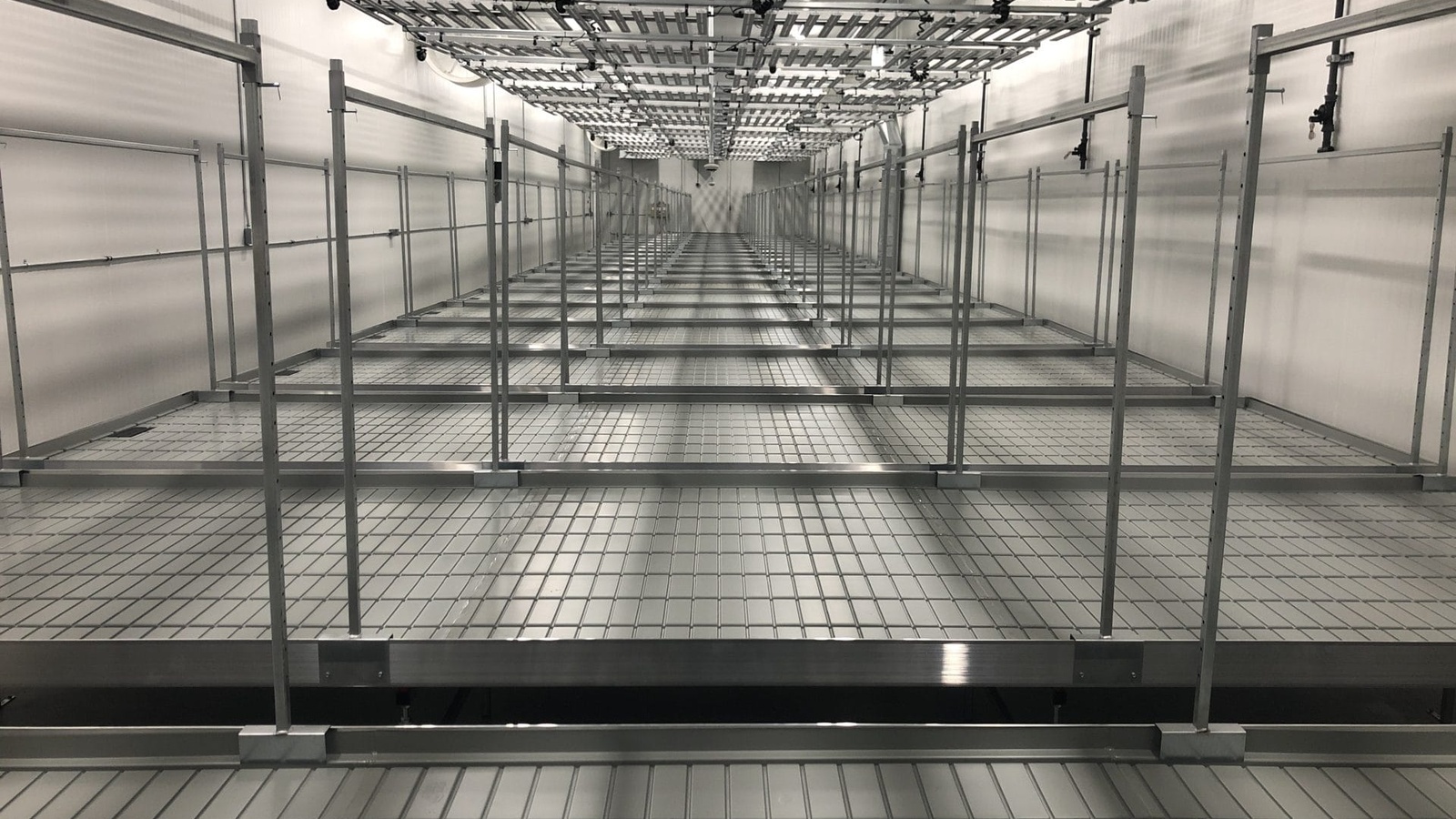
Rolling & Tracked Benching
A bench-based system path for propagation, nursery, greenhouse, and indoor growing spaces that need better aisle control, usable working area, and daily crop access.
- Improves production area by reducing fixed aisle waste
- Supports cleaner movement for crop care, harvest, and maintenance
- Tracked systems add stronger aisle control when the room needs more density
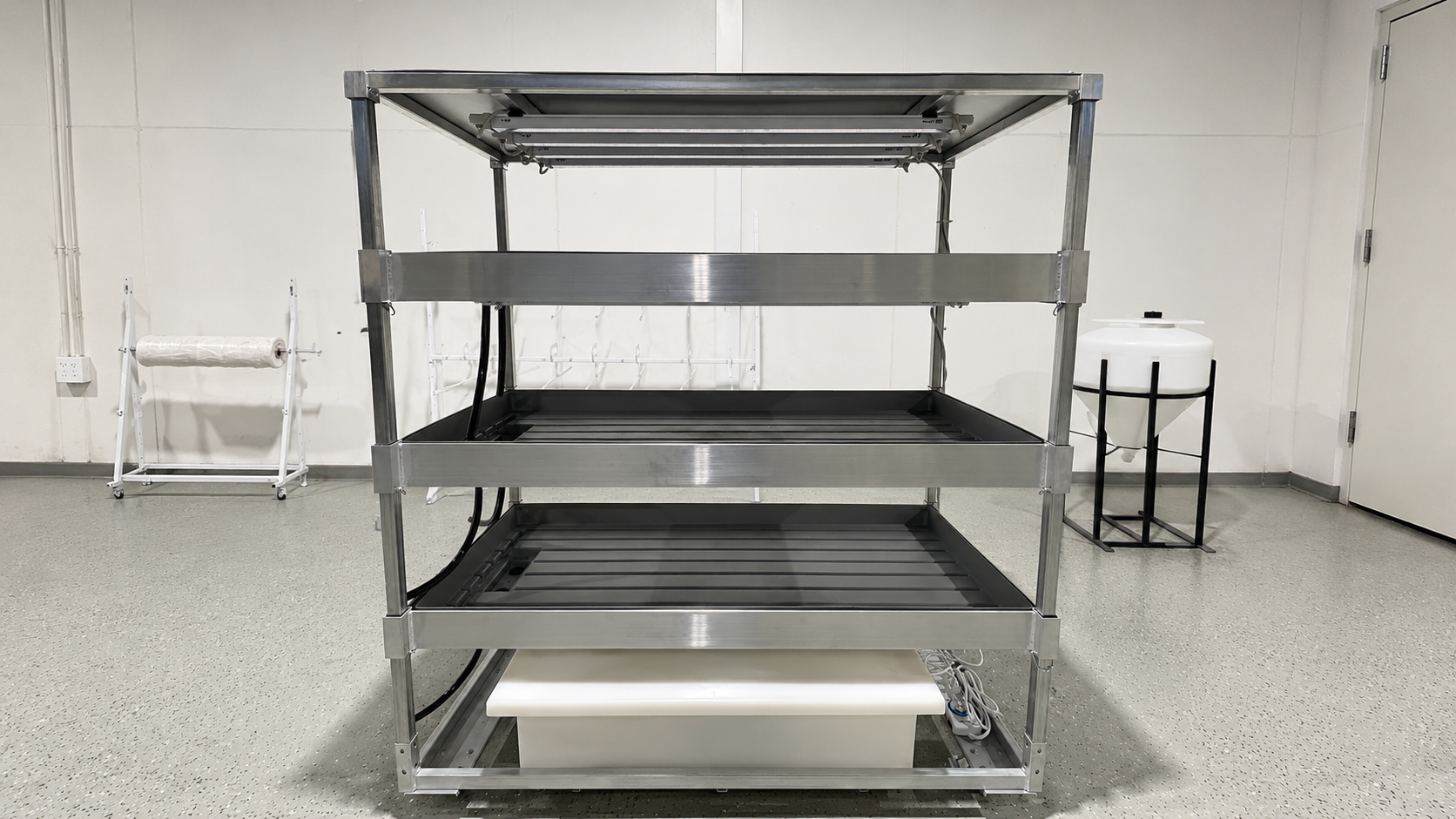
Grow Carts & Workflow Equipment
Support equipment for plant movement, propagation, staging, harvest, processing, and handoff points as crops move through the facility.
- Supports movement between propagation, production, harvest, and packing areas
- Reduces friction between grow rooms and support zones
- Keeps carts, staging, and material flow connected to the larger facility plan
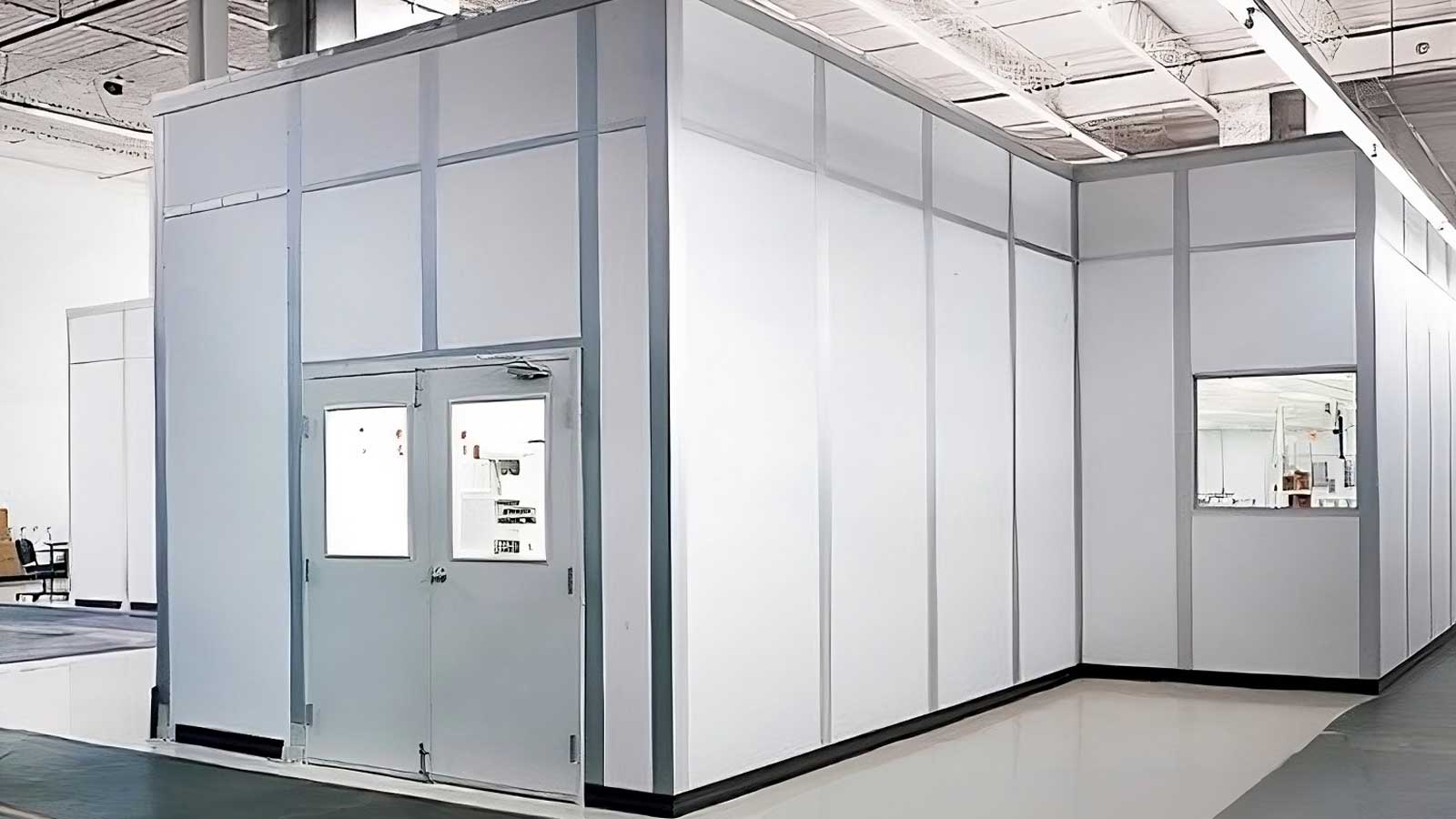
Modular Grow Rooms
Modular room environments can define cleaner cultivation, propagation, processing, research, or support spaces inside larger buildings as indoor farming programs expand or change.
- Defines controlled areas for specialized crop or production needs
- Supports cleaner room segmentation and expansion planning
- Extends the facility plan beyond equipment alone
Turnkey Grow Containers
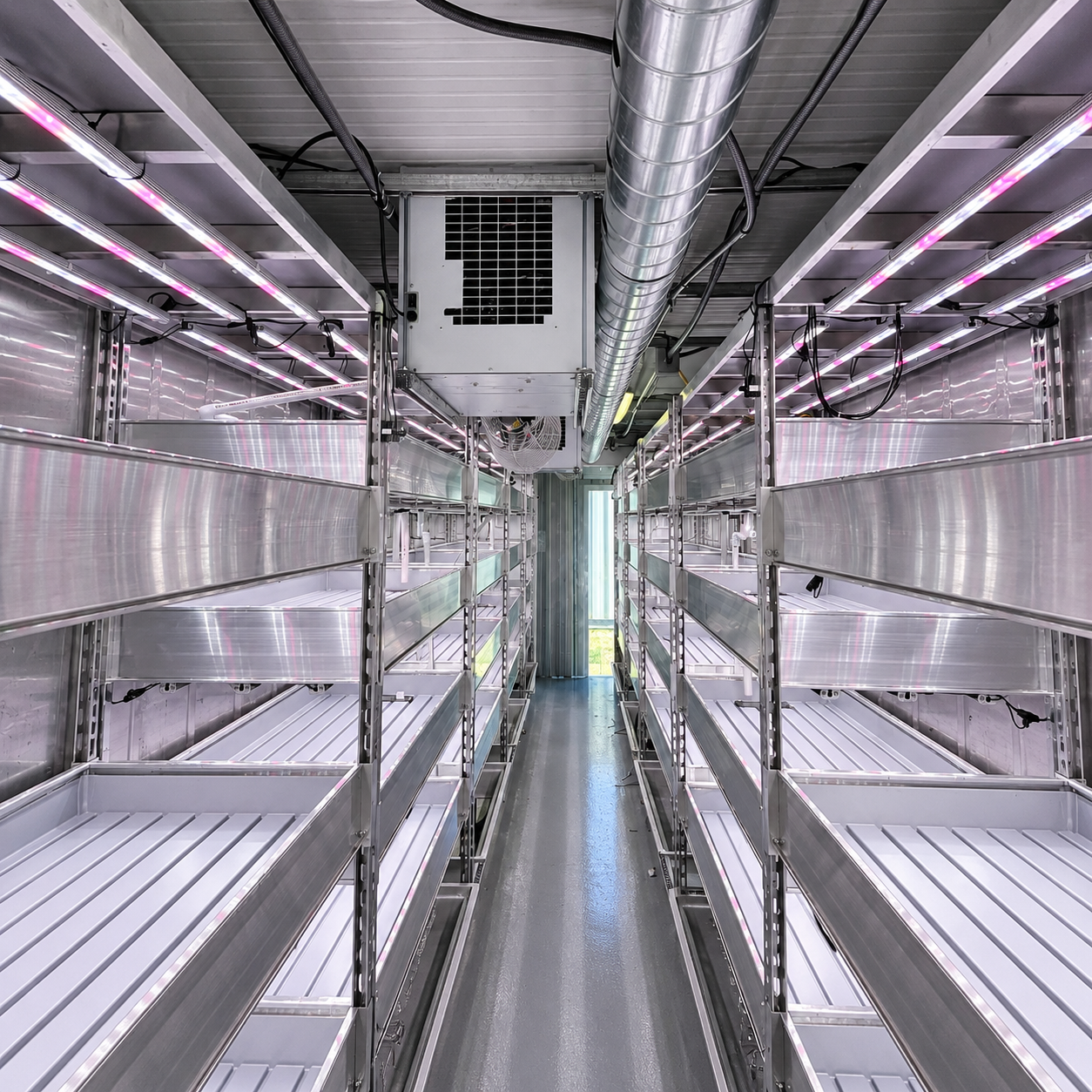
Factory-built 40' grow containers drop a finished, climate-controlled grow room onto the site in Standard, Veg/Prop, and Flower configurations. Each unit ships with built-in HVAC, dehumidification, filtration, power, plumbing, and lighting, so operators can add sealed capacity fast without new construction.
- Standard, Veg/Prop, and Flower units matched to each growth stage
- Integrated climate, power, and plumbing arrive built and tested
- Adds or relocates sealed grow capacity on constrained or remote sites
Biosecurity & Sanitation
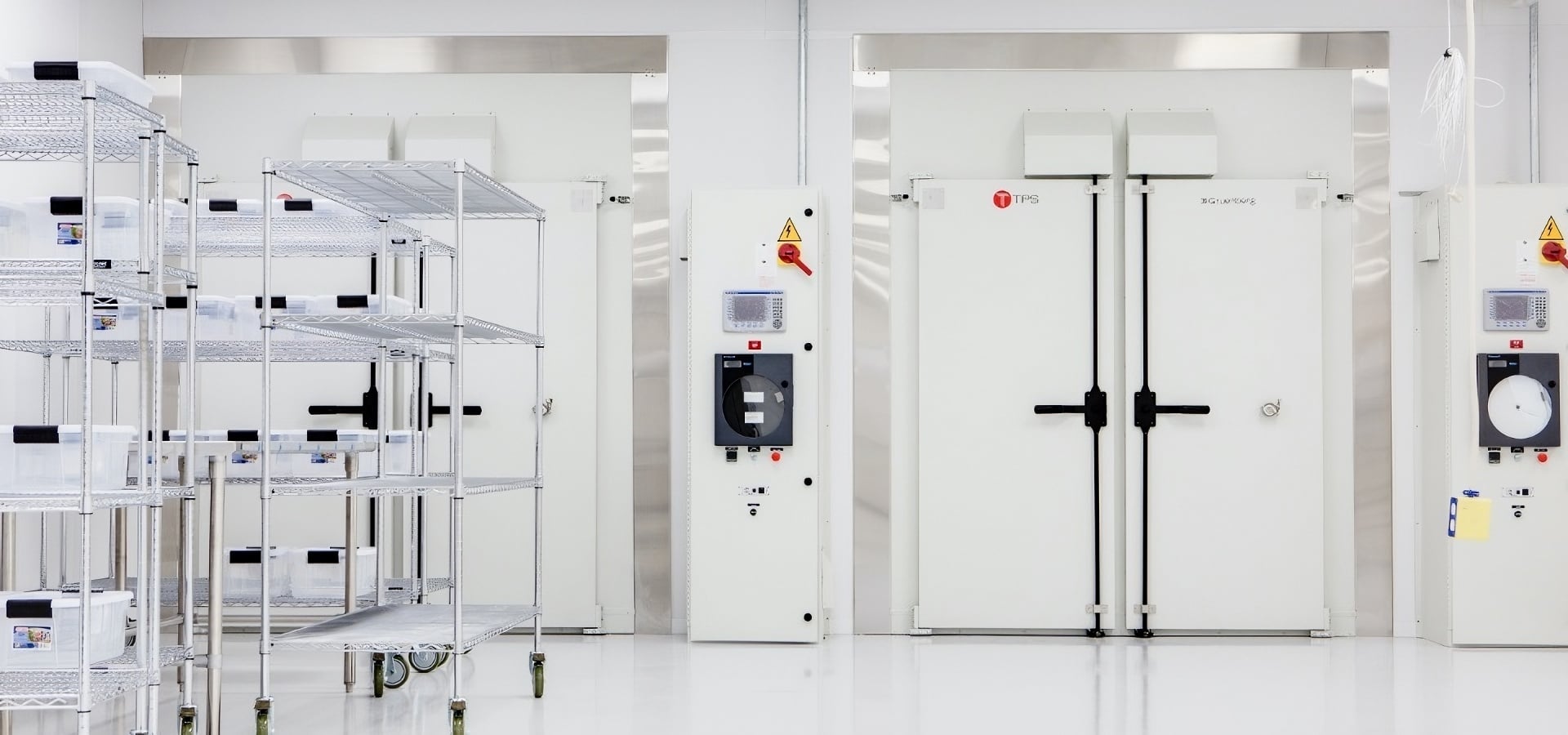
Protect crops, product, and people by planning biosecurity and sanitation into the facility from the start. SSG helps coordinate gowning and hygiene stations, footwear sanitation, hand-wash and glove points, pass-through and material control, and clean and dirty zoning so contamination control is built into daily workflow instead of bolted on later.
- Gowning, hygiene, and footwear-sanitation stations at room and zone entries
- Clean and dirty zoning with controlled material movement between rooms
- Pass-throughs, supply control, and sanitation points planned into the layout
- Supports cleaner crop work and stronger contamination control as the operation scales
Not Sure Which System Fits?
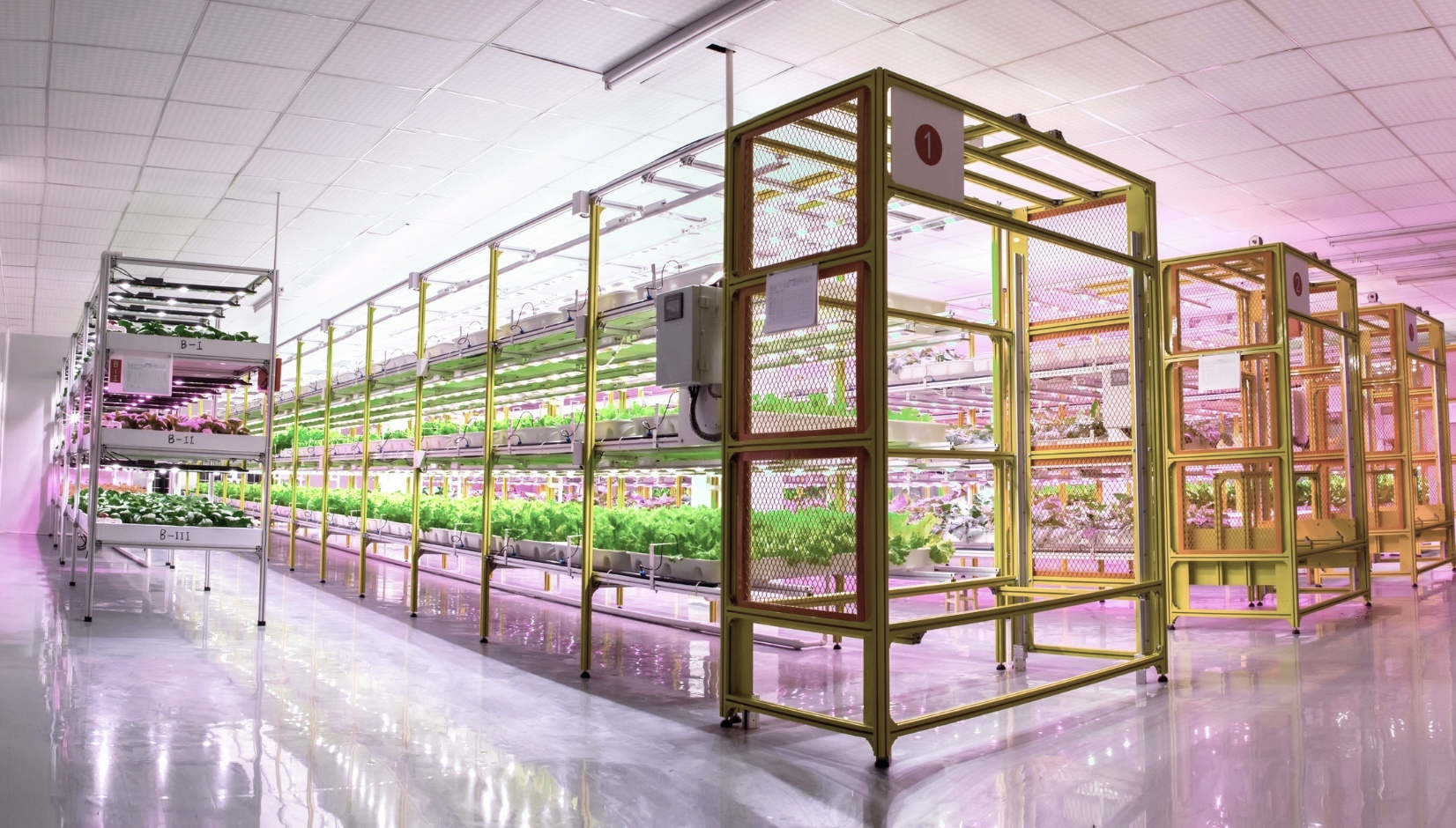
Start with the crop, the production goal, and the building. From there, SSG can compare system paths against access, utilities, labor flow, sanitation, storage, and expansion needs.
- Compare automation, racking, benching, carts, rooms, and storage against the actual layout
- Connect production, support, and facility-planning needs
- Choose a best-fit direction for the current scope and next phase
Helping Vertical Farming Teams Move From Production Goals to Expansion-Ready Plans
SSG Horticulture turns crop goals, room dimensions, production targets, access needs, and support-space requirements into a clearer facility strategy before equipment decisions are locked in.
The goal is an indoor farming environment that performs as a connected system: production density, crop movement, airflow paths, utilities, workflow, sanitation, storage, and future growth planned together.
Our Role Is to Connect the Indoor Farming Facility
SSG carries the project from system comparison through layout and design coordination, implementation planning, and long-term support. Our team connects crop strategy, production density, daily crop access, automation readiness, carts, storage, support spaces, and future growth into one coordinated facility plan.
Plan the Full Cycle: Propagate, Grow, Harvest, Pack, Store, and Expand
From seed and propagation through production, harvest, packout, storage, and future expansion, each stage creates different space, access, movement, and support needs. SSG connects those stages so the full facility is easier to operate as production scales.

We give propagation the clean, organized staging your starts need.
Our carts, benching, and staging keep young plants moving from germination into production with minimal handling, so starts stay healthy and your crews stay efficient from day one.

We design production rooms for maximum density without sacrificing daily access.
Our team plans every layout around crop care, inspection, irrigation, lighting access, cleaning, and repeatable harvest cycles before a single rack or bench is set, so you get the most canopy per square foot in rooms your crews can actually work.
We build harvest, wash, and packout flow into the facility from the start.
Our carts, staging zones, and movement paths are planned right alongside the grow rooms, so harvest, cleaning, packing, and handoff move cleanly instead of turning into a post-harvest bottleneck.

We plan storage and support to run on the same plan as your grow rooms.
From supplies and packaging to spare parts, cold storage, and finished goods, our team organizes the back of the facility so it keeps pace with production instead of slowing it down.

AGEYE is built to expand with your operation.
AGEYE automation scales room by room, so you can start with the capacity you need now and add crops, rooms, and throughput later without re-engineering the facility. SSG plans the first buildout so every expansion after it is a repeatable step instead of a rebuild.
SSG Horticulture Carries Vertical Farming Projects From Early Layout Planning Through Long-Term Facility Support
Our role is to clarify the production goal, evaluate the building, compare the right system path, coordinate layout and design details, support implementation planning, and keep future rooms, workflow changes, and replacement needs in view.
Support that moves from early production decisions to installed systems and future rooms.
-
01
Discovery
Uncover business goals, crop mix, production targets, room constraints, budget, labor model, operating priorities, and growth plans.
Output: facility goal brief -
02
Layout and Design Coordination
Translate building dimensions into grow zones, aisles, rack or bench movement, automation areas, carts, storage, airflow clearance, sanitation access, and support-room workflow.
Output: room strategy -
03
System Recommendation
Compare automated indoor grow systems, fixed and mobile vertical racking, rolling and tracked benches, carts, modular rooms, and storage against the facility plan.
Output: system fit recommendation -
04
Implementation Planning
Account for equipment, access routes, site readiness, install timing, room constraints, utility coordination, and project handoff needs before implementation begins.
Output: coordinated implementation path -
05
Long-Term Growth
Plan for future rooms, crop changes, automation upgrades, storage needs, workflow changes, expansions, and support upgrades so the system path can keep making sense over time.
Output: expansion-ready facility thinking
Which system creates the most business impact for indoor vertical farming?+
Automated indoor grow systems are often the strongest path when the operation needs crop management, controls, equipment, and production workflow tied together. Vertical racking and benching can also create major impact when density, access, and room performance are the primary constraints.
Explore automation systemsWhen do automated indoor grow systems make sense?+
Automation makes sense when crop volume, labor model, consistency goals, and production economics justify a more integrated system. SSG starts by comparing the operating model against the building, crop mix, utility constraints, and growth plan.
View AGEYE systemsHow should vertical racks or benches be planned around utilities?+
We plan racking and benching alongside lighting, irrigation, HVAC, drainage, airflow, sanitation, and maintenance access, coordinating around those systems so the room works as one. We design and supply the cultivation systems themselves rather than the building utilities.
Explore rack systemsIs this only for new indoor farming facilities?+
No. We support new builds, expansions, retrofits, and facility upgrades, because the right layout and system improvements create value at every stage of growth.
Request a planning conversationApplications Across Commercial Horticulture
SSG Horticulture supports cultivation systems across cannabis, greenhouse, indoor farming, research, specialty growing, and controlled environment agriculture facilities. Each market has different production goals, but all depend on efficient space use, reliable access, organized workflow, security, and systems that can support long-term growth.
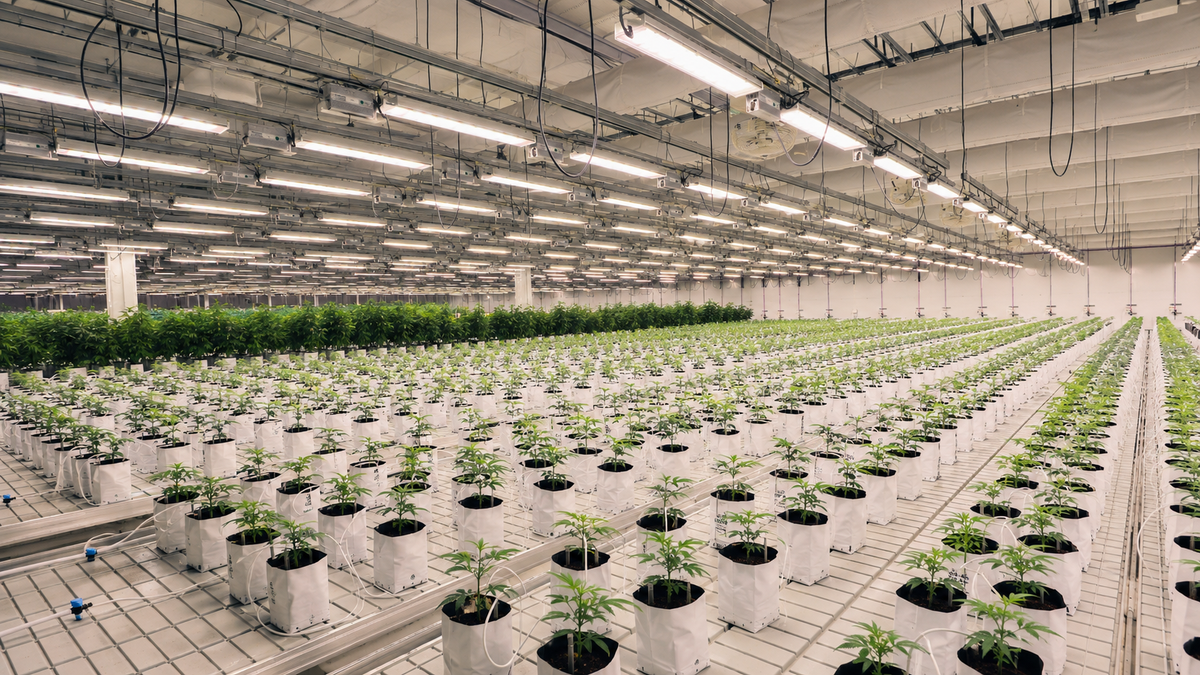
Cannabis Cultivation
Support indoor and greenhouse cannabis cultivation with systems planned around canopy density, airflow, access, drying, storage, workflow, and facility performance.
Explore Cannabis Solutions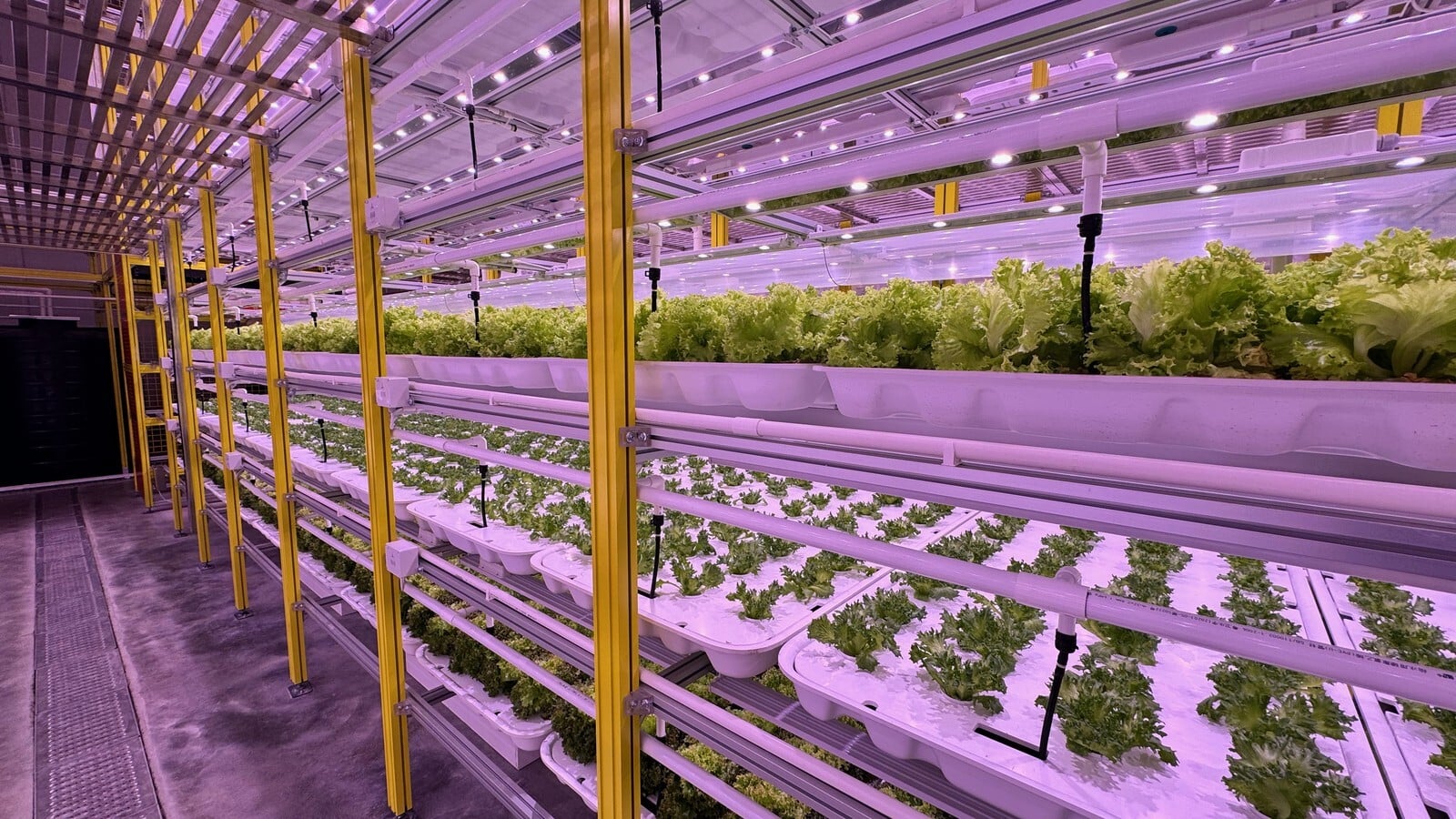
Vertical Food Production
Support leafy greens, microgreens, herbs, and strawberries with systems built for space efficiency, crop handling, automation readiness, and consistency.
Explore Vertical Food Production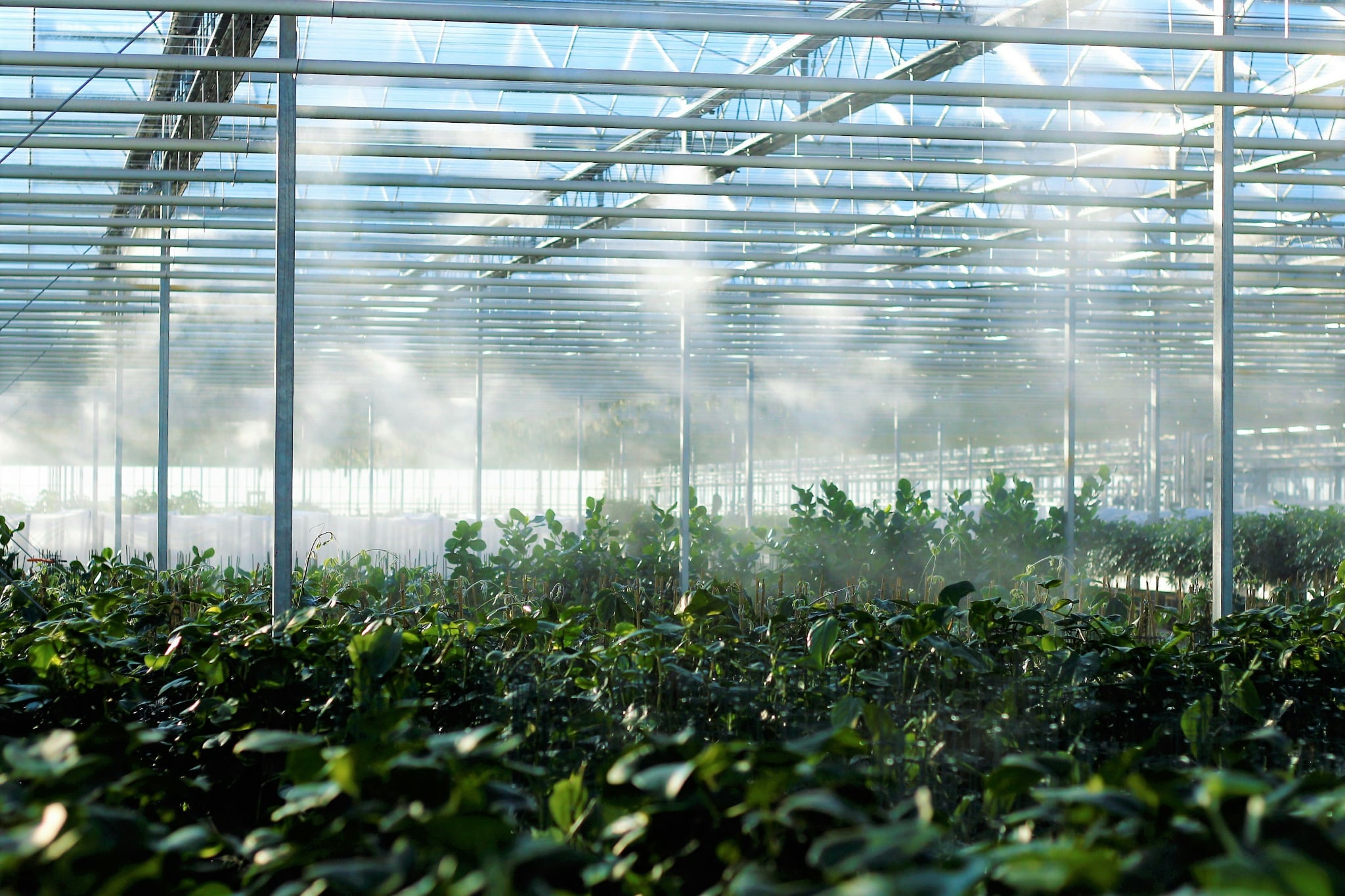
Conventional Greenhouse Growing
Improve canopy, access, movement, and workflow for vegetable, floriculture, nursery, ornamental, and specialty greenhouse crop operations.
Request a Free Consultation
Research & Specialty Grow Environments
Create flexible, controlled, and organized growing spaces for research, education, specialty crops, and evolving CEA applications.
Request a Free ConsultationSupporting Indoor Vertical Farming Projects Across Regions, Facility Types, and Growth Stages
SSG supports indoor farming operators through new builds, expansions, retrofits, controlled food production projects, research spaces, and facility upgrades across a broad national service footprint.
Southwest Solutions Near You
Explore office locations and supported service markets across the U.S. for indoor vertical farming facilities, controlled food production projects, research spaces, and facility support environments.
Southwest Solutions Service Areas
Texas
- Dallas
- Austin
- Houston
- San Antonio
- Waco
- Tyler
- Amarillo
- Lubbock
- El Paso
- Ft Worth
- Corpus Christi
- Midland
Oklahoma
- Oklahoma City
- Tulsa
- Norman
- Lawton
- Enid
- Stillwater
- McAlester
- Muskogee
Kansas
- Wichita
- Overland Park
- Topeka
- Kansas City
- Lawrence
- Manhattan
- Salina
- Hays
- Dodge City
- Garden City
Colorado
- Denver
- Colorado Springs
- Fort Collins
- Grand Junction
- Pueblo
- Durango
- Alamosa
- Steamboat Springs
Alabama
- Huntsville
- Birmingham
- Montgomery
- Mobile
- Tuscaloosa
- Hoover
- Dothan
- Decatur
Alaska
- Anchorage
- Fairbanks
- Juneau
- Sitka
- Ketchikan
- Kodiak
- Bethel
- Nome
Arizona
- Phoenix
- Tucson
- Flagstaff
- Yuma
- Prescott
- Lake Havasu City
- Sierra Vista
- Kingman
Arkansas
- Little Rock
- Fayetteville
- Fort Smith
- Jonesboro
- Hot Springs
- Pine Bluff
- Texarkana
- Bentonville
California
- Los Angeles
- San Diego
- San Francisco
- Sacramento
- Fresno
- Redding
- Bakersfield
- San Bernardino
Connecticut
- Hartford
- New Haven
- Stamford
- Bridgeport
Delaware
- Wilmington
- Dover
- Newark
- Rehoboth Beach
Florida
- Jacksonville
- Tallahassee
- Orlando
- Tampa
- Miami
- West Palm Beach
- Fort Myers
- Pensacola
Georgia
- Atlanta
- Savannah
- Augusta
- Columbus
- Macon
- Athens
- Valdosta
- Gainesville
Hawaii
- Honolulu
- Hilo
- Kahului
- Kailua-Kona
Idaho
- Boise
- Coeur d'Alene
- Twin Falls
- Idaho Falls
- Pocatello
- Lewiston
- McCall
- Sandpoint
Illinois
- Chicago
- Springfield
- Rockford
- Peoria
- Champaign
- Bloomington
- Carbondale
- Moline
Indiana
- Indianapolis
- Fort Wayne
- South Bend
- Evansville
- Lafayette
- Bloomington
- Terre Haute
- Gary
Iowa
- Des Moines
- Cedar Rapids
- Davenport
- Sioux City
- Iowa City
- Waterloo
- Council Bluffs
- Ames
Kentucky
- Louisville
- Lexington
- Bowling Green
- Owensboro
- Covington
- Paducah
- Ashland
- Richmond
Louisiana
- New Orleans
- Baton Rouge
- Shreveport
- Lafayette
- Lake Charles
- Monroe
- Alexandria
- Houma
Maine
- Portland
- Bangor
- Augusta
- Lewiston
- Waterville
- Presque Isle
- Bar Harbor
- Biddeford
Maryland
- Baltimore
- Annapolis
- Frederick
- Hagerstown
Massachusetts
- Boston
- Worcester
- Springfield
- Pittsfield
Michigan
- Detroit
- Grand Rapids
- Lansing
- Ann Arbor
- Flint
- Traverse City
- Marquette
- Kalamazoo
Minnesota
- Minneapolis
- St. Paul
- Duluth
- Rochester
- Mankato
- St. Cloud
- Bemidji
- Moorhead
Mississippi
- Jackson
- Gulfport
- Hattiesburg
- Biloxi
- Southaven
- Meridian
- Tupelo
- Natchez
Missouri
- Jefferson City
- St. Louis
- Kansas City
- Springfield
- Columbia
- Joplin
- Cape Girardeau
- St. Joseph
Montana
- Helena
- Billings
- Missoula
- Great Falls
- Bozeman
- Kalispell
- Havre
- Miles City
Nebraska
- Lincoln
- Omaha
- Grand Island
- Kearney
- Scottsbluff
- Norfolk
- North Platte
- Fremont
Nevada
- Las Vegas
- Reno
- Carson City
- Elko
- Pahrump
- Henderson
- Winnemucca
- Mesquite
New Hampshire
- Concord
- Manchester
- Portsmouth
- Keene
New Jersey
- Newark
- Jersey City
- Trenton
- Atlantic City
New Mexico
- Santa Fe
- Albuquerque
- Las Cruces
- Roswell
- Farmington
- Gallup
- Carlsbad
- Clovis
New York
- Albany
- New York City
- Buffalo
- Rochester
- Syracuse
- Binghamton
- Ithaca
- Plattsburgh
North Carolina
- Raleigh
- Charlotte
- Greensboro
- Asheville
- Wilmington
- Fayetteville
- Boone
- Greenville
North Dakota
- Bismarck
- Fargo
- Grand Forks
- Minot
- Dickinson
- Williston
- Jamestown
- Devils Lake
Ohio
- Columbus
- Cleveland
- Cincinnati
- Toledo
- Dayton
- Akron
- Youngstown
- Athens
Oregon
- Portland
- Salem
- Eugene
- Hermiston
- Baker City
- Medford
- Bend
- Klamath Falls
Pennsylvania
- Harrisburg
- Philadelphia
- Pittsburgh
- Erie
- Scranton
- State College
- Allentown
- Williamsport
Rhode Island
- Providence
- Warwick
- Newport
- Woonsocket
South Carolina
- Columbia
- Charleston
- Greenville
- Myrtle Beach
- Hilton Head Island
- Spartanburg
- Florence
- Rock Hill
South Dakota
- Pierre
- Sioux Falls
- Rapid City
- Aberdeen
- Watertown
- Brookings
- Mitchell
- Yankton
Tennessee
- Memphis
- Jackson
- Nashville
- Clarksville
- Cookeville
- Chattanooga
- Knoxville
- Johnson City
Utah
- Salt Lake City
- Ogden
- Logan
- Provo
- St. George
- Cedar City
- Moab
- Vernal
Vermont
- Montpelier
- Burlington
- Rutland
- Brattleboro
Virginia
- Richmond
- Norfolk
- Virginia Beach
- Roanoke
- Lynchburg
- Harrisonburg
- Fredericksburg
- Bristol
Washington
- Olympia
- Seattle
- Spokane
- Yakima
- Bellingham
- Wenatchee
- Kennewick
- Vancouver
West Virginia
- Charleston
- Huntington
- Morgantown
- Wheeling
- Parkersburg
- Beckley
- Martinsburg
- Bluefield
Wisconsin
- Madison
- Milwaukee
- Green Bay
- Eau Claire
- La Crosse
- Wausau
- Appleton
- Superior
Wyoming
- Cheyenne
- Casper
- Laramie
- Gillette
- Sheridan
- Rock Springs
- Jackson
- Cody
District of Columbia
- Washington D.C.
Ready To Plan a Vertical Farming Facility That Works From Propagation to Packout?
SSG Horticulture helps indoor farming teams evaluate propagation, production, harvest, packout, storage, and support spaces, then compare automated grow systems, vertical racking, benching, carts, modular rooms, storage, and workflow systems around production goals, daily access, utility coordination, sanitation, and future expansion.