Automated Vertical Farming Systems for Commercial Cultivation
AGEYE delivers turnkey indoor vertical farming infrastructure, from single-rack micro deployments to full-scale commercial operations. HYVE systems combine multi-level growing racks, integrated sensors, automated fertigation, robotic handling, LED lighting, and the Digital Cultivation farm operating system. SSG Horticulture supports facility planning, layout review, and installation coordination for AGEYE deployments nationwide.


Compare Micro, Scale, and Pro configurations by weekly plant capacity, annual output, automation level, and footprint.
Use robotic seeding, transplanting, material handling, harvesting, tray washing, and plant scouting where the operation needs it most.
Digital Cultivation connects crop scheduling, SOPs, fertigation, sensors, inventory, compliance, and AI-driven optimization.
SSG helps review room dimensions, ceiling height, utility needs, workflow, install sequence, expansion plans, and project constraints.
Vertical farming systems designed around output, efficiency, and long-term facility growth.
AGEYE systems are not one-size-fits-all equipment packages. Each configuration is a starting point for a facility conversation around crop mix, yield targets, automation depth, building constraints, ROI goals, and future expansion.
HYVE Micro
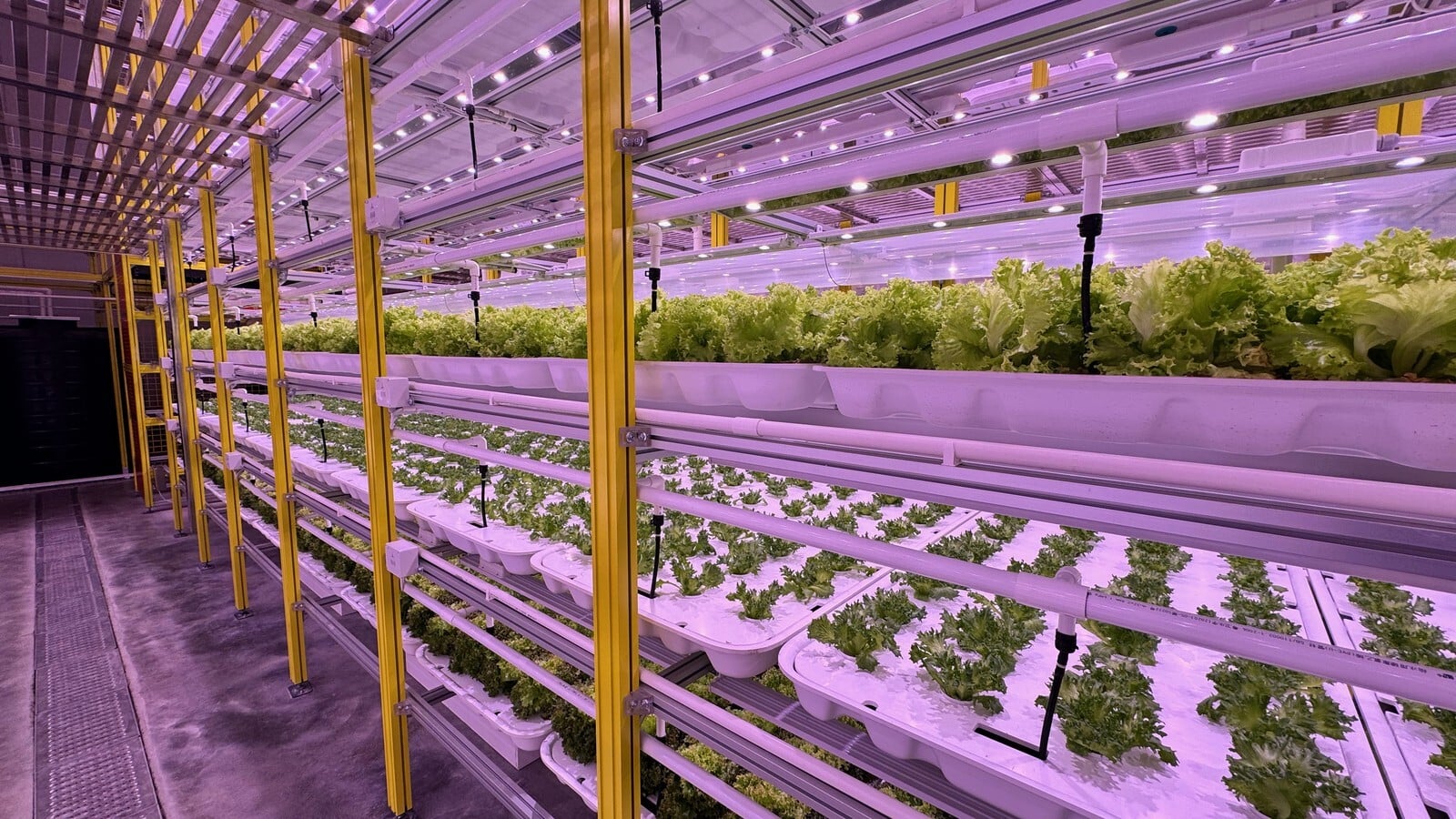
HYVE Micro is built for operators launching first production, validating demand, testing crop economics, or creating a controlled proof-of-concept farm in a compact footprint. The single-rack system gives teams a practical starting point before scaling into larger configurations.
HYVE Scale
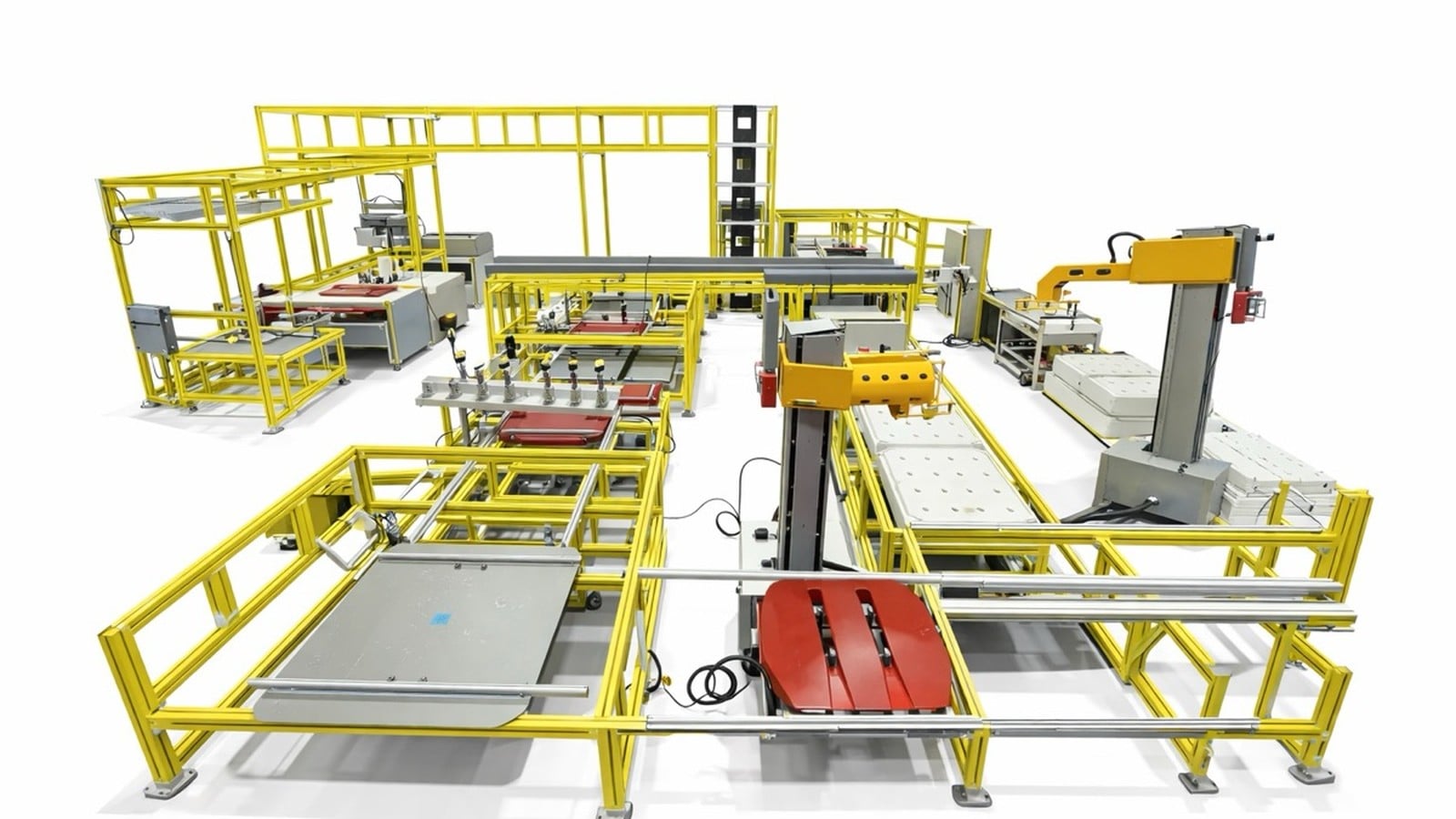
HYVE Scale supports operators moving beyond pilot production into consistent commercial output. It introduces semi-automated workflows while keeping the system modular enough to expand into Pro-scale capacity without starting the facility plan over.
HYVE Pro
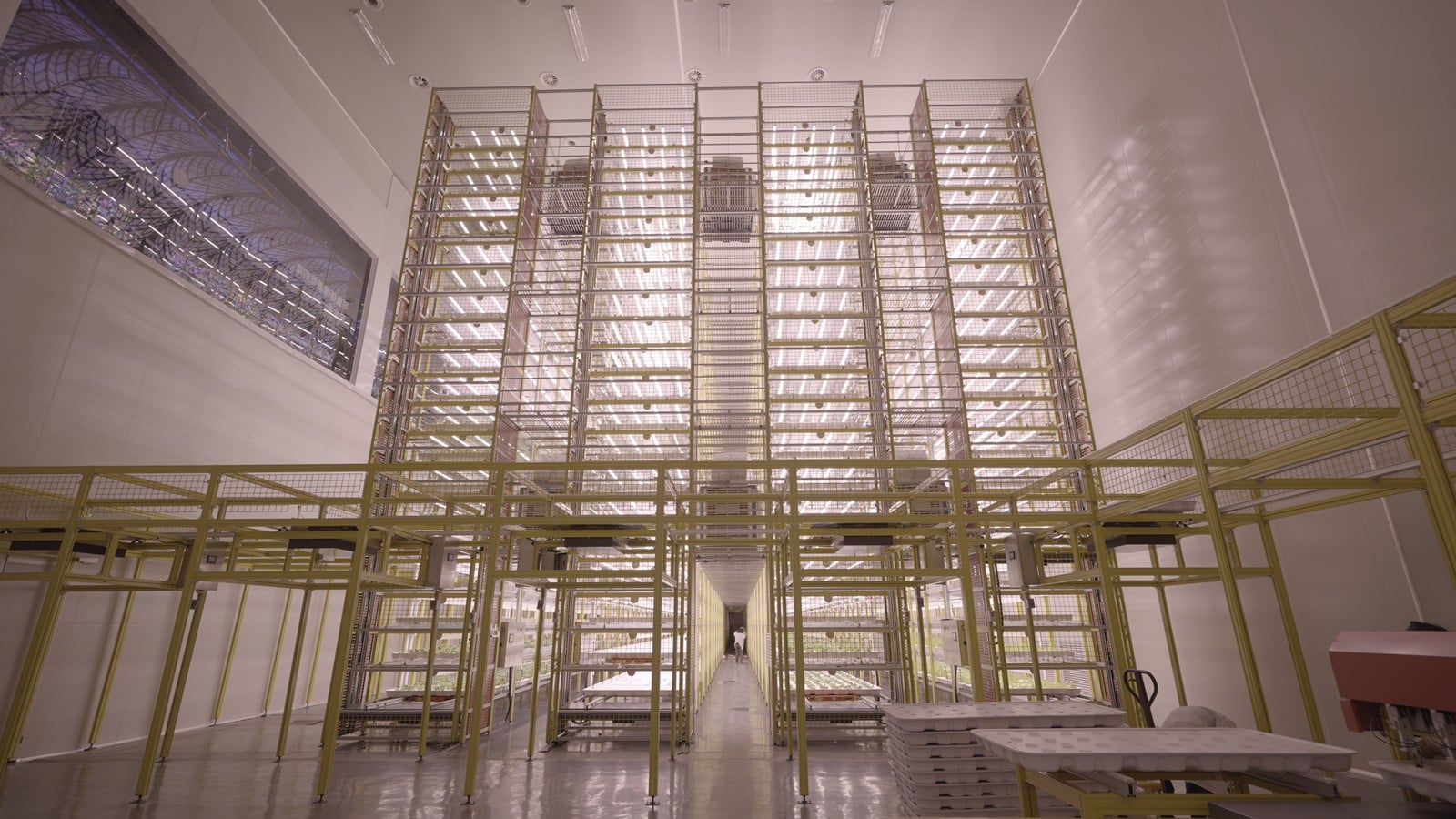
HYVE Pro is the full commercial-scale system for operators targeting large production volume, lower manual labor dependency, and a connected automation floor. It brings racking, fertigation, sensors, robotics, conveyance, plant scouting, and Digital Cultivation into one facility-wide system.
Digital Cultivation Platform
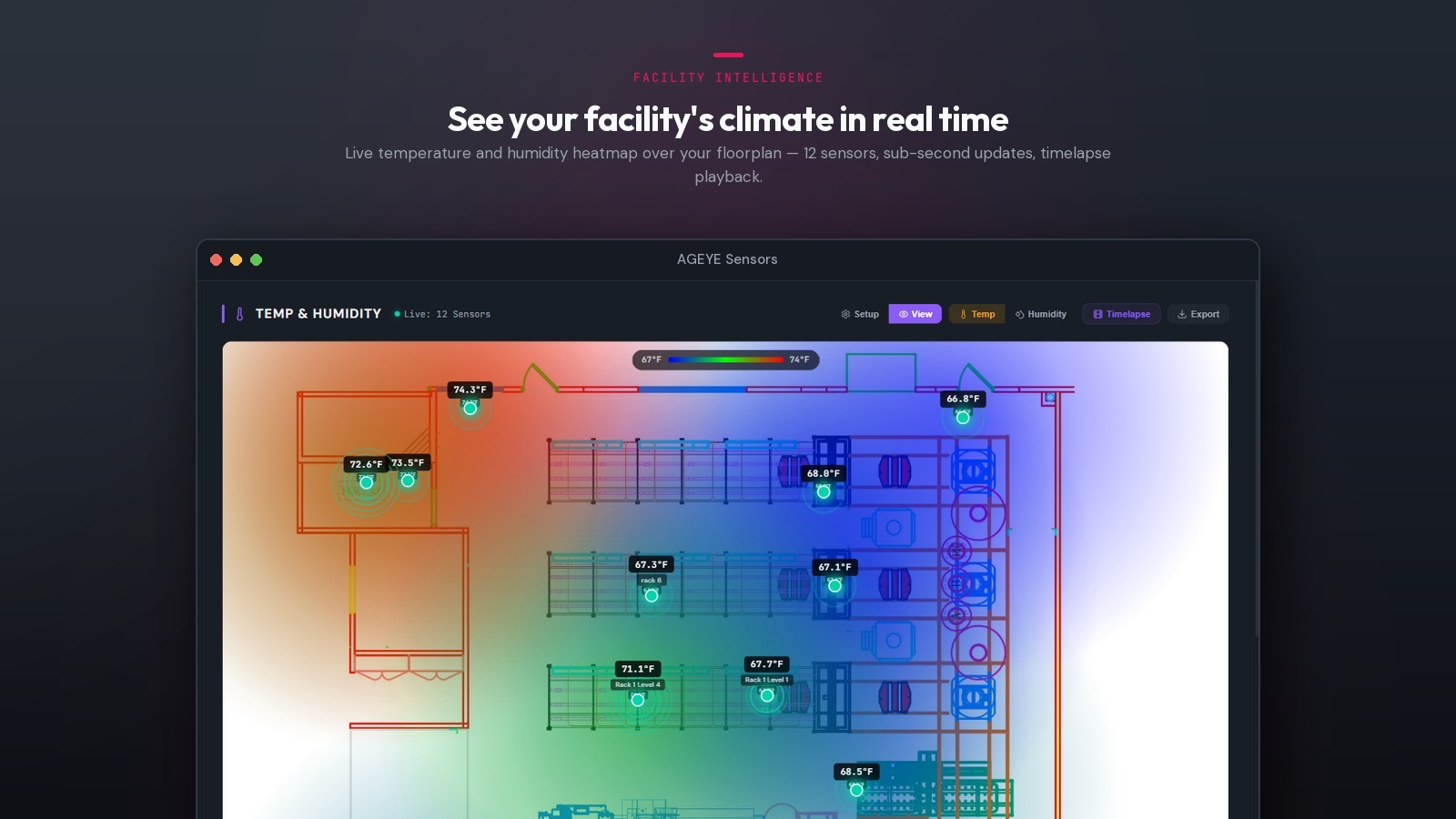
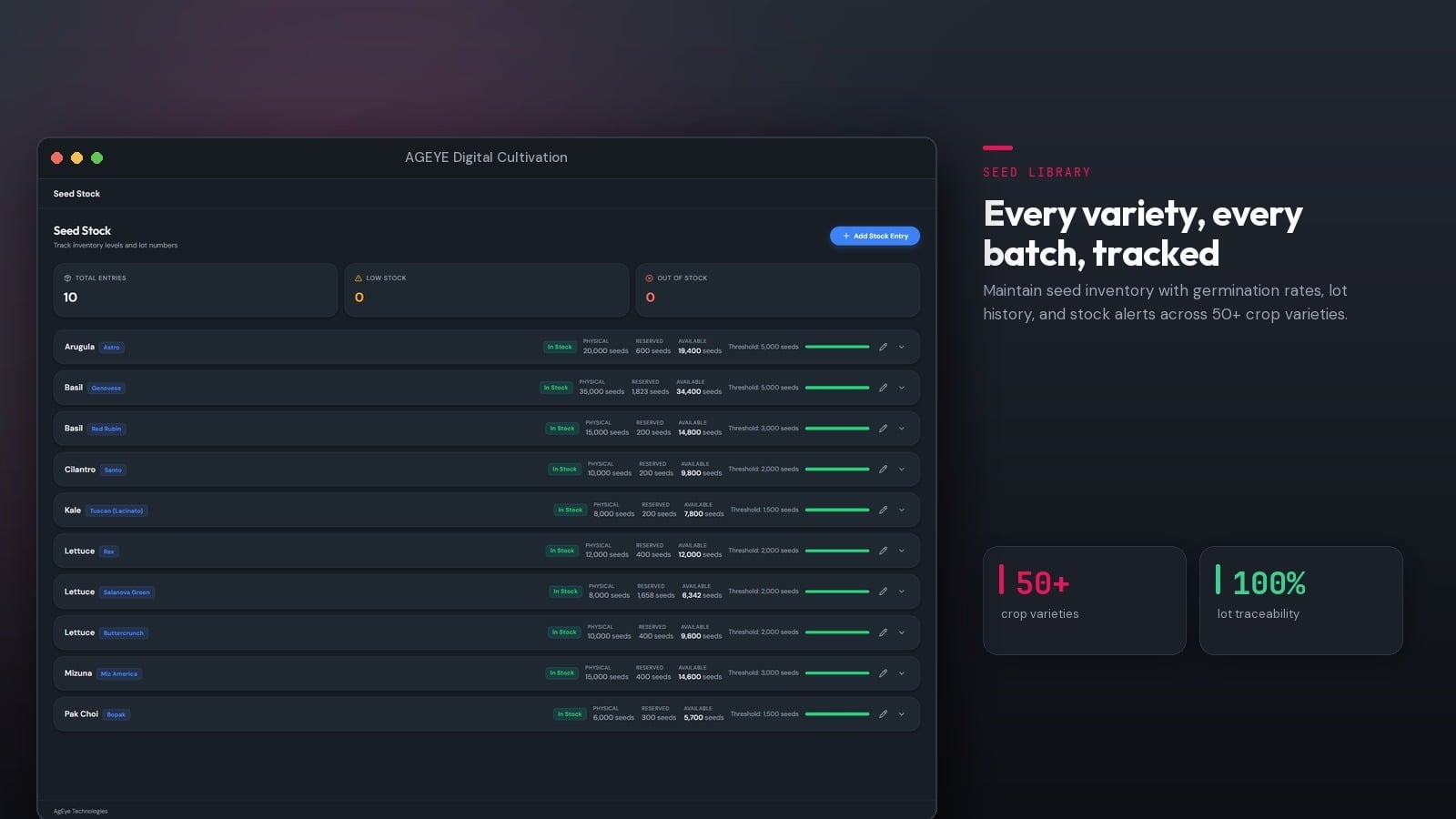
Digital Cultivation is AGEYE's farm ERP and operating system for commercial indoor farming. It can be deployed with HYVE systems or used as standalone SaaS for existing facilities that need better production planning, task orchestration, inventory control, compliance tracking, and AI-assisted decision support.
Start With the Facility, Crop Plan, and Business Model
The right AGEYE path depends on more than the rack count. SSG Horticulture and AGEYE can evaluate room dimensions, ceiling height, workflow requirements, crop mix, automation goals, utility constraints, ROI expectations, and growth targets before recommending a system configuration.
How HYVE Micro, Scale, Pro, and Digital Cultivation differ.
Use this comparison to start the right conversation. Final system fit should be confirmed around crop mix, building constraints, automation level, labor strategy, and ROI goals.
The system should be planned around production, not just equipment.
AGEYE configurations provide a strong starting framework, but the final system needs to match the facility, crop plan, output target, automation strategy, and utility reality. SSG helps keep the conversation grounded in how the room will actually operate.
Capacity and footprint
Reference systems range from compact Micro deployments to full Pro systems with multi-level rack structures, robotic workflows, and full farm operating software.
Lead time and installation
Typical turnkey timelines range from 8 to 16 weeks depending on system scale, site readiness, permitting, local MEP coordination, and commissioning needs.
What needs to be confirmed
Final scope should be verified during facility planning. Dimensions, utilities, crop recipes, automation level, permitting, and local trade coordination can all affect the recommendation.
Hardware, automation, sensing, and software working as one growing platform.
AGEYE is strongest when the physical farm and the operating system are planned together. The goal is not just more equipment. The goal is a connected facility where plans drive tasks, tasks trigger systems, sensors validate conditions, and outcomes improve future cycles.
Integrated Hardware and Robotics
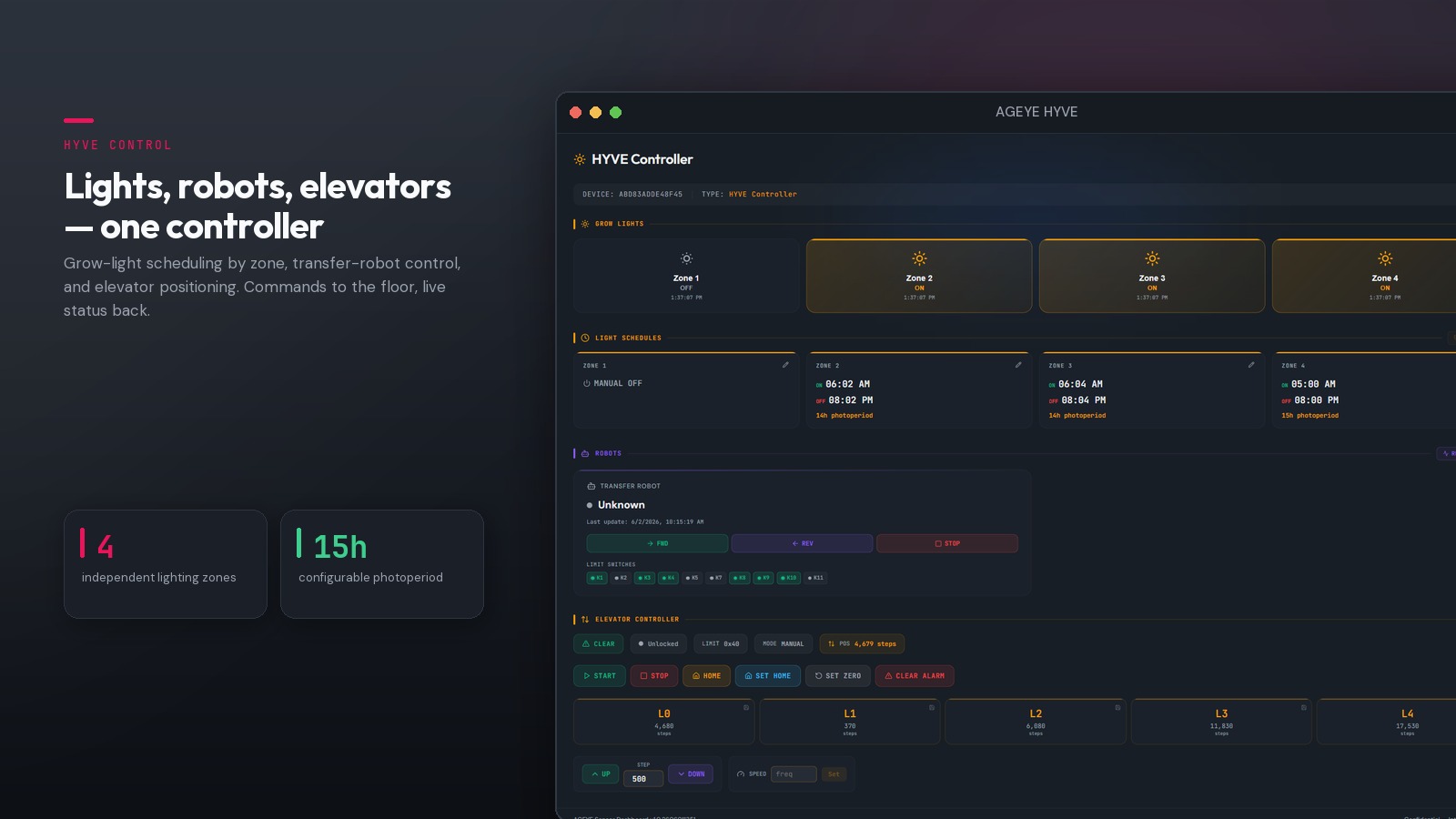
HYVE systems combine the physical production environment with the automation needed to reduce repetitive crop work and keep workflows moving.
- Multi-level racks, LED lighting, sensor arrays, and automated fertigation.
- Robotic seeding, transplanting, material handling, harvesting, and tray washing options.
- ARIS plant scanning and analytics for autonomous scouting and crop intelligence.
Digital Cultivation and CultivAid AI
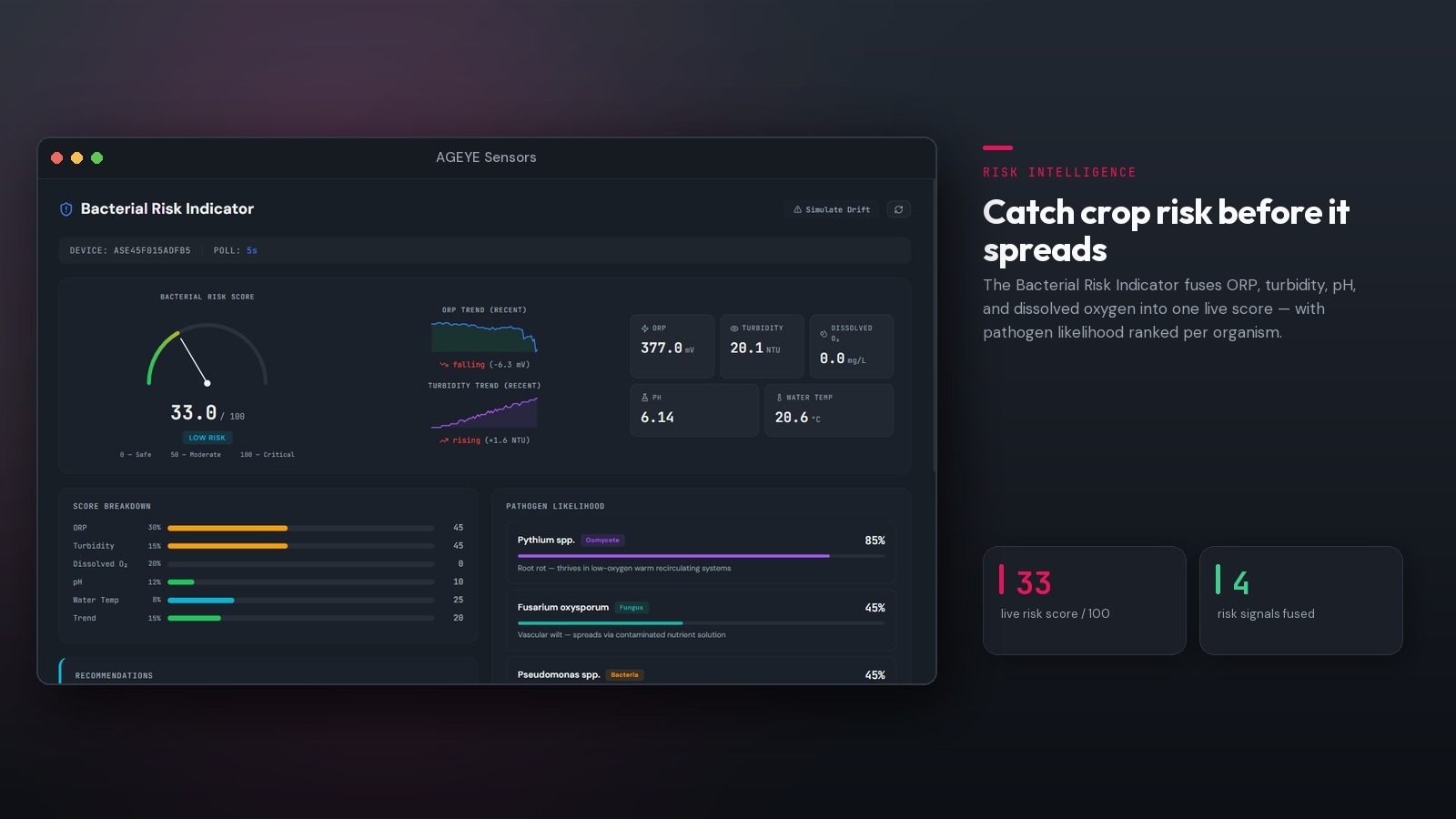
Digital Cultivation acts as the operating system for the farm. It turns production goals into crop schedules, daily tasks, automation triggers, sensor validation, and better decisions over time.
- Production planning, crop scheduling, SOPs, labor coordination, and inventory.
- Cost-per-pound visibility, compliance tracking, predictive harvest forecasting, and fleet reporting.
- CultivAid AI for anomaly detection, root cause analysis, yield prediction, and natural-language farm queries.
These details make the product feel like an integrated farm, not a bundle of equipment.
AGEYE combines the production system, data layer, automation layer, and operating software into a coordinated platform. That gives buyers a clearer path than piecing together separate rack, light, sensor, fertigation, robotics, and software vendors.
HYVE Growing Racks
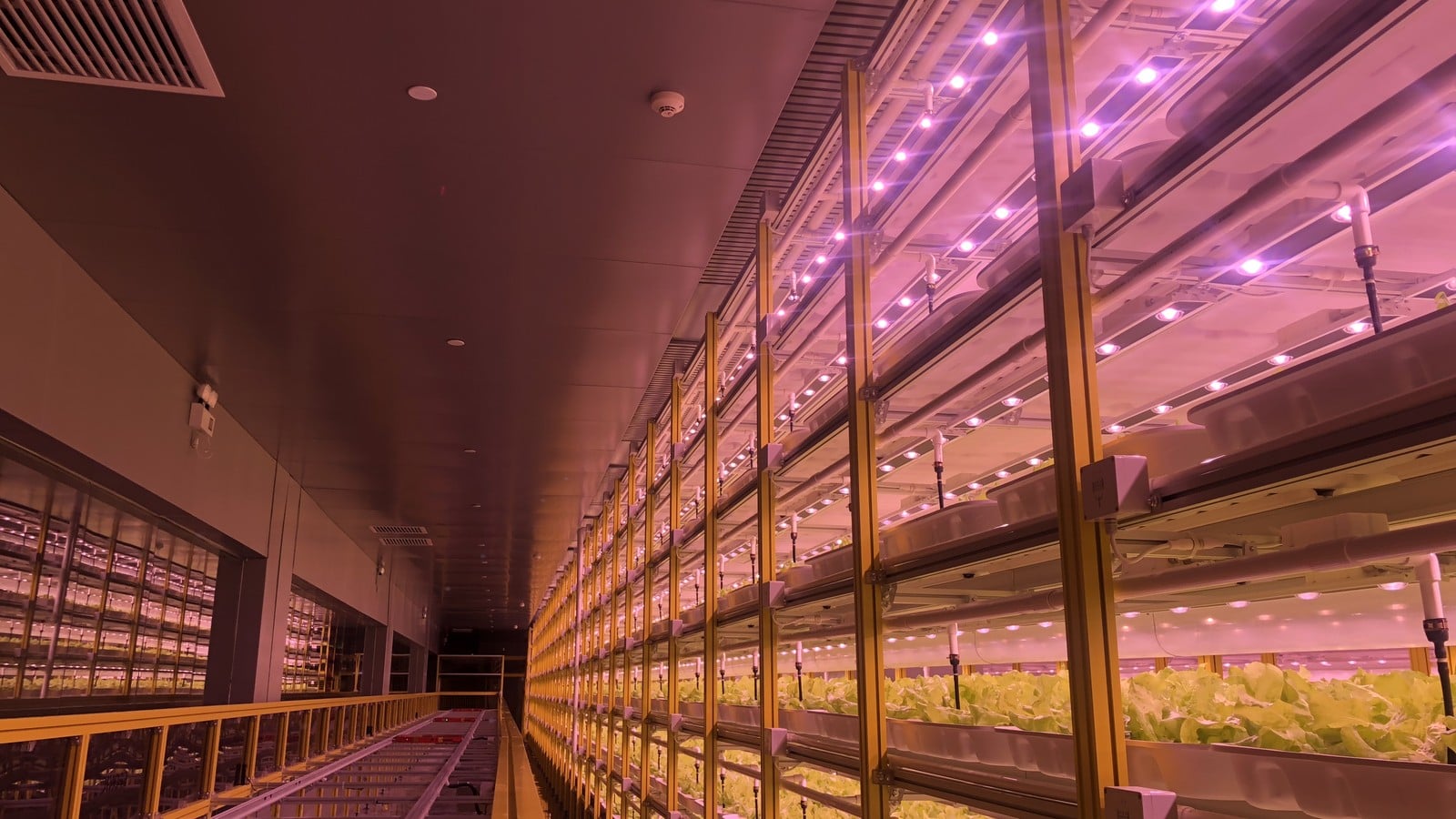
Multi-level rack structures provide the production platform for Micro, Scale, Pro, and custom configurations.
Integrated LED Lighting
Lighting is planned with the crop recipe and rack configuration instead of treated as a disconnected purchase.
Automated Fertigation
Automated nutrient dosing and irrigation routines help manage pH, EC, dissolved oxygen, and watering schedules.
Environmental Sensors
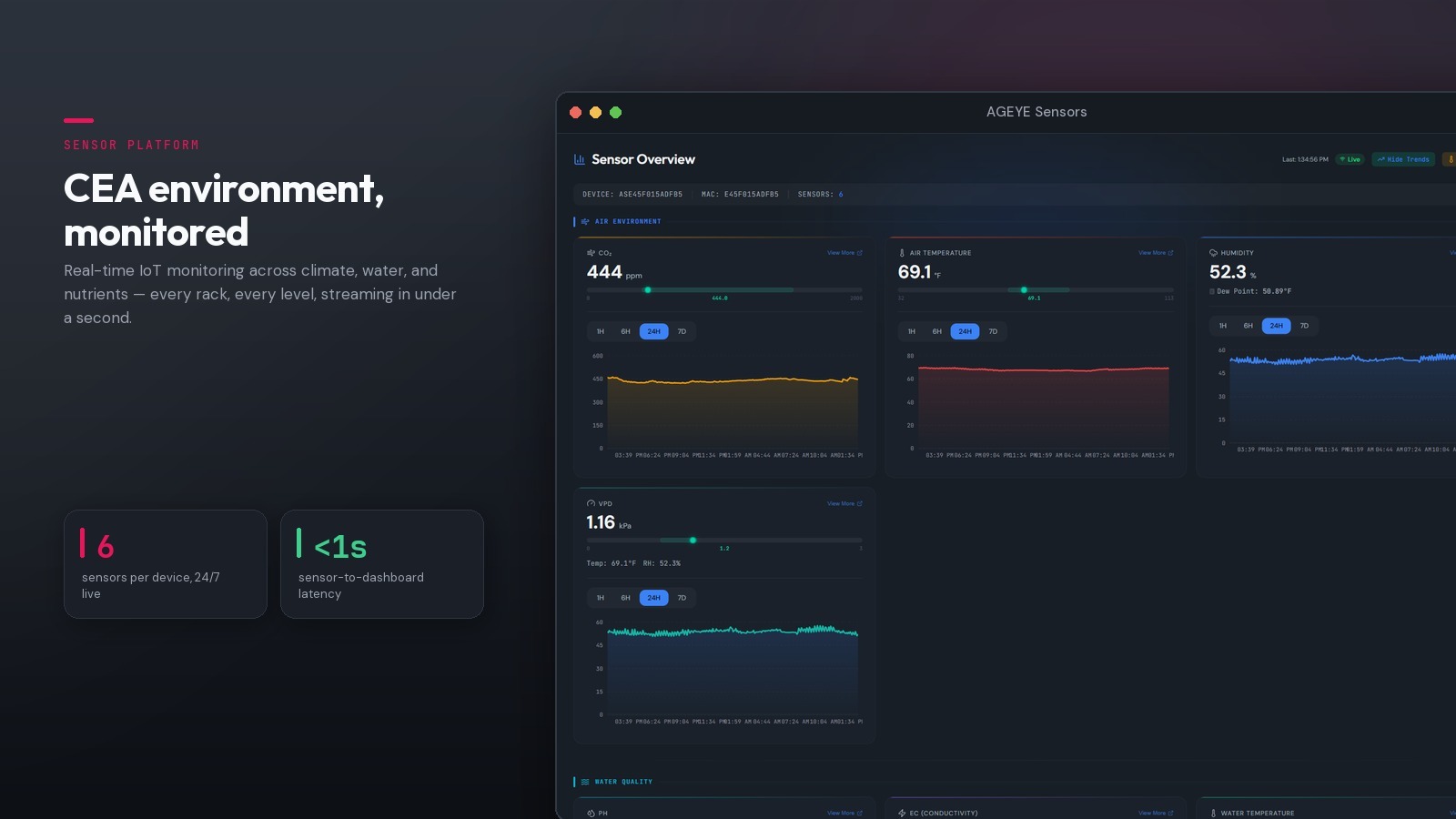
Temperature, humidity, CO2, VPD, DLI, water quality, nutrient, and imaging data feed the operating platform.
Robotic Seeding
Automated seeding reduces repetitive labor and helps trigger production activity from the crop schedule.
Robotic Transplanting
Seedlings can move from nursery to grow positions with less manual handling and better timing control.
Material Handling
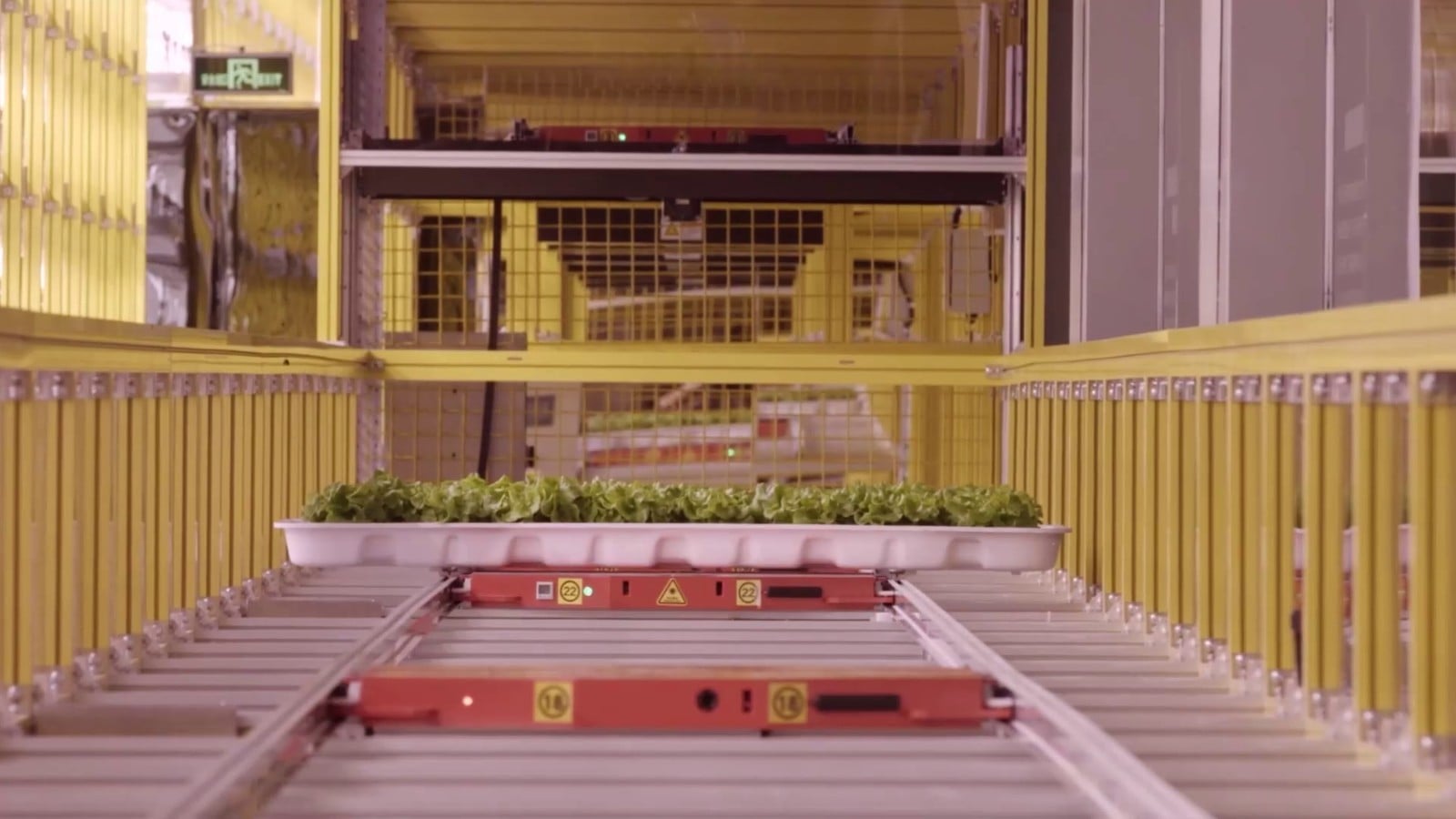
Tray transport and automation movement help connect seeding, nursery, grow, harvest, wash, and packaging zones.
Harvest and Tray Washing
Automated harvesting, root cutting, and tray washing options reduce labor in repetitive post-harvest tasks.
ARIS Plant Scouting
Autonomous plant scouting and analytics support plant health review, anomaly detection, and crop intelligence.
Digital Cultivation
The farm operating system connects crop plans, tasks, automation, sensors, inventory, compliance, and AI insights.
What SSG reviews before recommending an AGEYE path.
The right answer depends on the building and the business model. SSG helps move the conversation beyond product selection and into layout planning: crop mix, output targets, clear height, MEP coordination, automation zones, service access, workflow, installation phasing, and future growth.
AGEYE systems support commercial food production, research, and controlled grow environments.
AGEYE is optimized for food crop economics, especially leafy greens, herbs, microgreens, and specialty crops. The same planning approach can also support research, education, existing farm upgrades, and broader controlled environment agriculture needs.
Commercial Food Production
Leafy greens, herbs, microgreens, and specialty crops where consistent output, labor efficiency, and predictable unit economics matter.
Explore Vertical Farming Solutions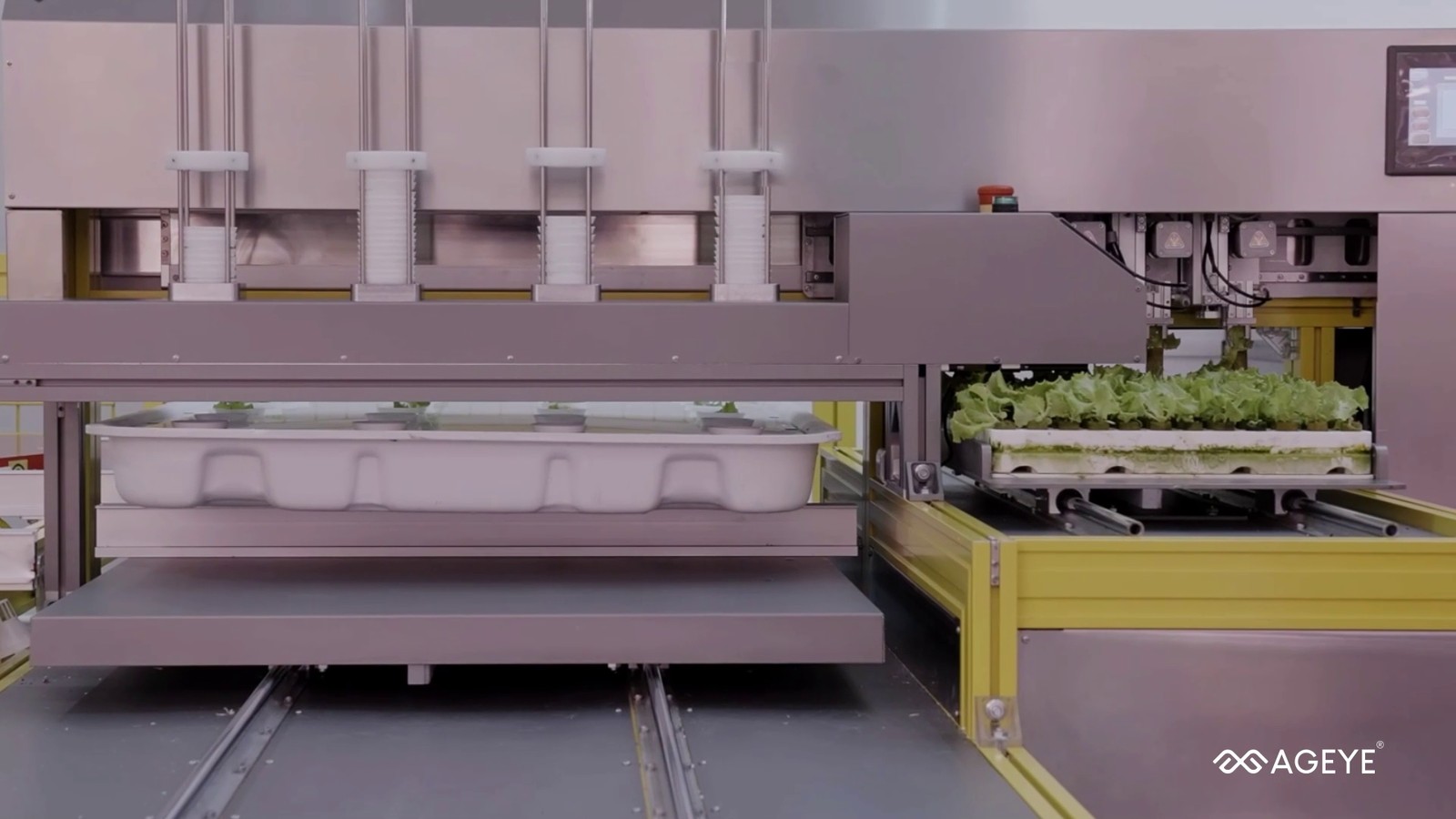
Grocery and Foodservice Supply
Regional supply programs where operators want ultra-fresh production closer to distribution, restaurants, campuses, hotels, or foodservice customers.
Discuss Supply Goals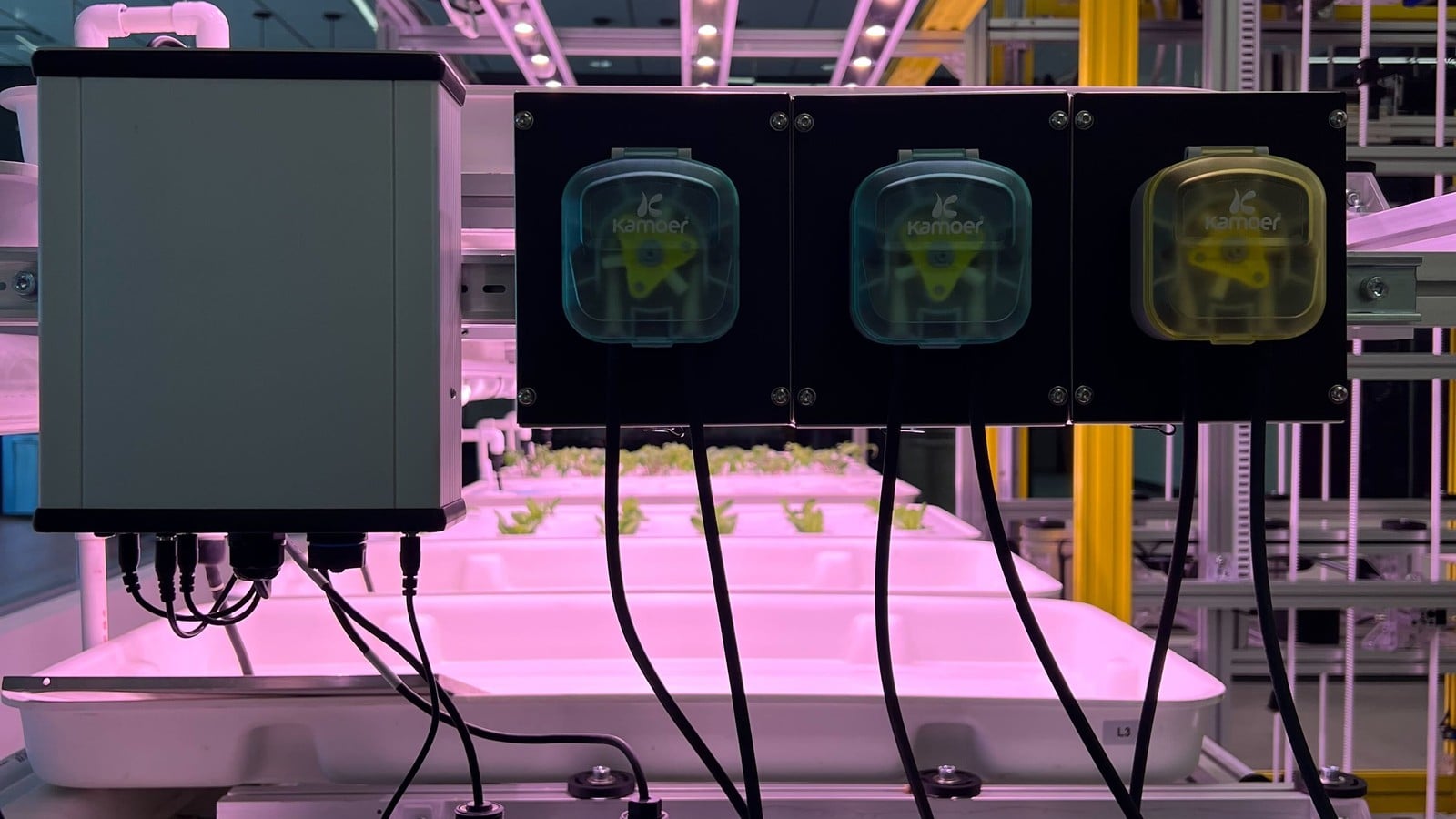
Research and Universities
Pilot farms, R&D environments, teaching facilities, and controlled crop trials where data, consistency, and recipe control are critical.
Request a Free Consultation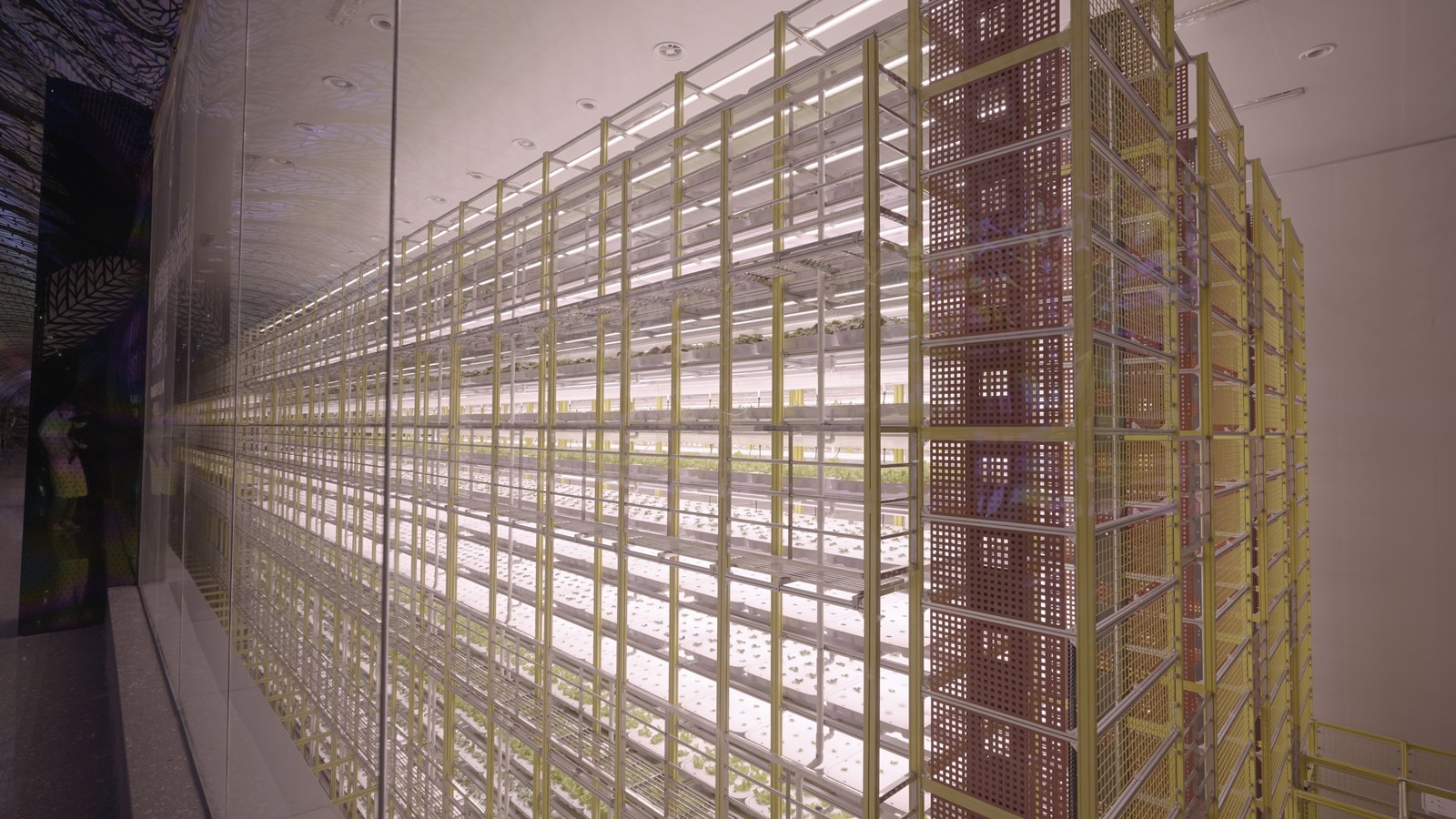
Existing Indoor Farms
Facilities that may not need a full HYVE hardware package but need better sensors, software, scheduling, automation, and operational visibility.
Review Retrofit OptionsWhat crops can AGEYE systems grow?+
AGEYE systems are optimized for leafy greens, lettuces, herbs, microgreens, and specialty crops. The platform supports more than 50 crop varieties with customizable growth recipes, including crops such as basil, cilantro, mint, arugula, kale, spinach, strawberries, tomatoes, peppers, and hemp depending on the system plan.
Can Digital Cultivation be used without buying HYVE hardware?+
Yes. Digital Cultivation is available as standalone SaaS for existing farms. It can connect with third-party sensors, equipment, control systems, and business platforms through an API-first architecture, so facilities do not need to re-platform their entire operation.
How long does a turnkey installation take?+
Typical timelines range from 8 to 16 weeks depending on system scale, site readiness, local permitting, and MEP coordination. The customer generally provides the building space, licensed plumbing and electrical work, local MEP contractor coordination, and required permits.
What ROI can I expect from automation?+
AGEYE positions its automation around faster payback than traditional indoor farming automation. ROI depends on facility scope, crop mix, production goals, labor market, utility costs, and automation depth, so the best next step is a system plan and ROI conversation.
What is included in a HYVE system?+
HYVE systems can include rack systems, LED lighting, fertigation, sensors, Digital Cultivation, CultivAid AI, ARIS plant scanning, robotic automation, installation support, and commissioning. The exact scope depends on whether the project is Micro, Scale, Pro, or custom.
Which HYVE configuration is right for my facility?+
Micro is often the starting point for pilots and compact deployments. Scale fits early commercial production. Pro fits full commercial deployment with end-to-end automation. The right recommendation should be confirmed around crop mix, yield target, labor plan, building constraints, ROI goals, and expansion plans.
Is this only for new indoor farms?+
No. AGEYE supports turnkey indoor farm systems, but Digital Cultivation, sensors, controls, and automation conversations can also apply to existing facilities that need better operational visibility or targeted automation upgrades.
How does SSG Horticulture help?+
SSG helps frame the facility conversation before product selection. That includes reviewing room dimensions, output goals, workflow, utility constraints, MEP coordination, service access, installation phasing, and how AGEYE systems fit into the broader facility plan.
Supporting AGEYE System Projects Across Regions, Facility Types, and Growth Stages
SSG can support AGEYE system conversations for new builds, expansions, retrofits, indoor farming facilities, research environments, greenhouse projects, and controlled production environments across a broad national service footprint.
Southwest Solutions Near You
Explore office locations and supported service markets across the U.S. for automated vertical farming systems, cultivation facilities, greenhouse projects, research spaces, and controlled production environments.
Southwest Solutions Service Areas
Texas
- Dallas
- Austin
- Houston
- San Antonio
- Waco
- Tyler
- Amarillo
- Lubbock
- El Paso
- Ft Worth
- Corpus Christi
- Midland
Oklahoma
- Oklahoma City
- Tulsa
- Norman
- Lawton
- Enid
- Stillwater
- McAlester
- Muskogee
Kansas
- Wichita
- Overland Park
- Topeka
- Kansas City
- Lawrence
- Manhattan
- Salina
- Hays
- Dodge City
- Garden City
Colorado
- Denver
- Colorado Springs
- Fort Collins
- Grand Junction
- Pueblo
- Durango
- Alamosa
- Steamboat Springs
Alabama
- Huntsville
- Birmingham
- Montgomery
- Mobile
- Tuscaloosa
- Hoover
- Dothan
- Decatur
Alaska
- Anchorage
- Fairbanks
- Juneau
- Sitka
- Ketchikan
- Kodiak
- Bethel
- Nome
Arizona
- Phoenix
- Tucson
- Flagstaff
- Yuma
- Prescott
- Lake Havasu City
- Sierra Vista
- Kingman
Arkansas
- Little Rock
- Fayetteville
- Fort Smith
- Jonesboro
- Hot Springs
- Pine Bluff
- Texarkana
- Bentonville
California
- Los Angeles
- San Diego
- San Francisco
- Sacramento
- Fresno
- Redding
- Bakersfield
- San Bernardino
Connecticut
- Hartford
- New Haven
- Stamford
- Bridgeport
Delaware
- Wilmington
- Dover
- Newark
- Rehoboth Beach
Florida
- Jacksonville
- Tallahassee
- Orlando
- Tampa
- Miami
- West Palm Beach
- Fort Myers
- Pensacola
Georgia
- Atlanta
- Savannah
- Augusta
- Columbus
- Macon
- Athens
- Valdosta
- Gainesville
Hawaii
- Honolulu
- Hilo
- Kahului
- Kailua-Kona
Idaho
- Boise
- Coeur d'Alene
- Twin Falls
- Idaho Falls
- Pocatello
- Lewiston
- McCall
- Sandpoint
Illinois
- Chicago
- Springfield
- Rockford
- Peoria
- Champaign
- Bloomington
- Carbondale
- Moline
Indiana
- Indianapolis
- Fort Wayne
- South Bend
- Evansville
- Lafayette
- Bloomington
- Terre Haute
- Gary
Iowa
- Des Moines
- Cedar Rapids
- Davenport
- Sioux City
- Iowa City
- Waterloo
- Council Bluffs
- Ames
Kentucky
- Louisville
- Lexington
- Bowling Green
- Owensboro
- Covington
- Paducah
- Ashland
- Richmond
Louisiana
- New Orleans
- Baton Rouge
- Shreveport
- Lafayette
- Lake Charles
- Monroe
- Alexandria
- Houma
Maine
- Portland
- Bangor
- Augusta
- Lewiston
- Waterville
- Presque Isle
- Bar Harbor
- Biddeford
Maryland
- Baltimore
- Annapolis
- Frederick
- Hagerstown
Massachusetts
- Boston
- Worcester
- Springfield
- Pittsfield
Michigan
- Detroit
- Grand Rapids
- Lansing
- Ann Arbor
- Flint
- Traverse City
- Marquette
- Kalamazoo
Minnesota
- Minneapolis
- St. Paul
- Duluth
- Rochester
- Mankato
- St. Cloud
- Bemidji
- Moorhead
Mississippi
- Jackson
- Gulfport
- Hattiesburg
- Biloxi
- Southaven
- Meridian
- Tupelo
- Natchez
Missouri
- Jefferson City
- St. Louis
- Kansas City
- Springfield
- Columbia
- Joplin
- Cape Girardeau
- St. Joseph
Montana
- Helena
- Billings
- Missoula
- Great Falls
- Bozeman
- Kalispell
- Havre
- Miles City
Nebraska
- Lincoln
- Omaha
- Grand Island
- Kearney
- Scottsbluff
- Norfolk
- North Platte
- Fremont
Nevada
- Las Vegas
- Reno
- Carson City
- Elko
- Pahrump
- Henderson
- Winnemucca
- Mesquite
New Hampshire
- Concord
- Manchester
- Portsmouth
- Keene
New Jersey
- Newark
- Jersey City
- Trenton
- Atlantic City
New Mexico
- Santa Fe
- Albuquerque
- Las Cruces
- Roswell
- Farmington
- Gallup
- Carlsbad
- Clovis
New York
- Albany
- New York City
- Buffalo
- Rochester
- Syracuse
- Binghamton
- Ithaca
- Plattsburgh
North Carolina
- Raleigh
- Charlotte
- Greensboro
- Asheville
- Wilmington
- Fayetteville
- Boone
- Greenville
North Dakota
- Bismarck
- Fargo
- Grand Forks
- Minot
- Dickinson
- Williston
- Jamestown
- Devils Lake
Ohio
- Columbus
- Cleveland
- Cincinnati
- Toledo
- Dayton
- Akron
- Youngstown
- Athens
Oregon
- Portland
- Salem
- Eugene
- Hermiston
- Baker City
- Medford
- Bend
- Klamath Falls
Pennsylvania
- Harrisburg
- Philadelphia
- Pittsburgh
- Erie
- Scranton
- State College
- Allentown
- Williamsport
Rhode Island
- Providence
- Warwick
- Newport
- Woonsocket
South Carolina
- Columbia
- Charleston
- Greenville
- Myrtle Beach
- Hilton Head Island
- Spartanburg
- Florence
- Rock Hill
South Dakota
- Pierre
- Sioux Falls
- Rapid City
- Aberdeen
- Watertown
- Brookings
- Mitchell
- Yankton
Tennessee
- Memphis
- Jackson
- Nashville
- Clarksville
- Cookeville
- Chattanooga
- Knoxville
- Johnson City
Utah
- Salt Lake City
- Ogden
- Logan
- Provo
- St. George
- Cedar City
- Moab
- Vernal
Vermont
- Montpelier
- Burlington
- Rutland
- Brattleboro
Virginia
- Richmond
- Norfolk
- Virginia Beach
- Roanoke
- Lynchburg
- Harrisonburg
- Fredericksburg
- Bristol
Washington
- Olympia
- Seattle
- Spokane
- Yakima
- Bellingham
- Wenatchee
- Kennewick
- Vancouver
West Virginia
- Charleston
- Huntington
- Morgantown
- Wheeling
- Parkersburg
- Beckley
- Martinsburg
- Bluefield
Wisconsin
- Madison
- Milwaukee
- Green Bay
- Eau Claire
- La Crosse
- Wausau
- Appleton
- Superior
Wyoming
- Cheyenne
- Casper
- Laramie
- Gillette
- Sheridan
- Rock Springs
- Jackson
- Cody
District of Columbia
- Washington D.C.
AGEYE system visuals from farm layout to software-driven operation.
See AGEYE systems in action, from HYVE multi-level racks and robotic automation to the Digital Cultivation software and full facility installations.
Ready to Plan an AGEYE Automated Growing System?
Every indoor farming project has different crop goals, labor needs, facility constraints, utility requirements, and ROI expectations. SSG Horticulture can help you compare HYVE Micro, Scale, Pro, Digital Cultivation, and custom system paths around the way your facility needs to perform.