Configurable Assembly Tables for Production Work
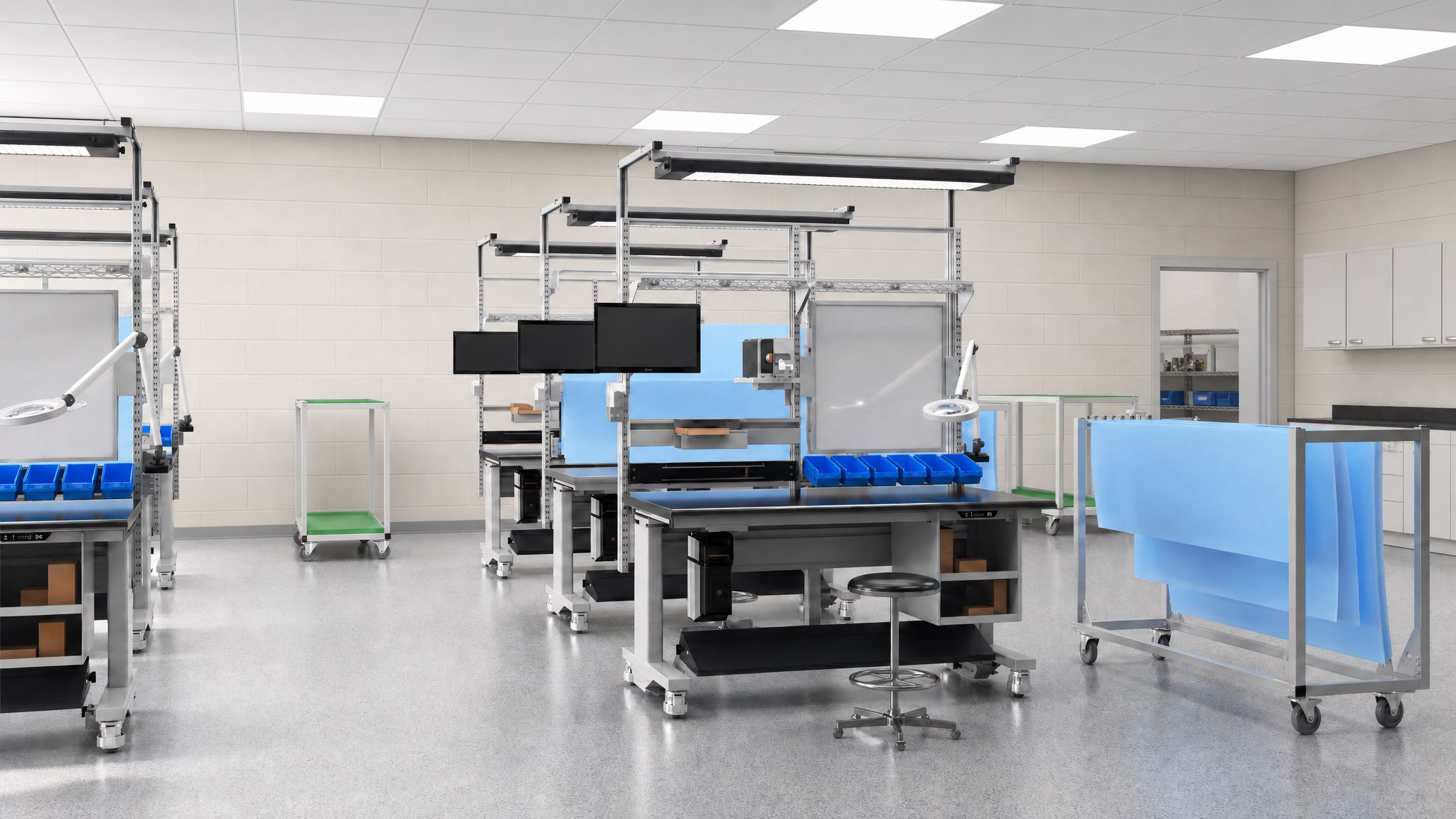
Assembly tables provide a practical work surface for positioning parts, tools, and supplies during assembly, testing, or repair tasks. Our team helps plan the right workstation layout, surface, accessories, and mobility approach for your space and operators.
What Are Assembly Tables?
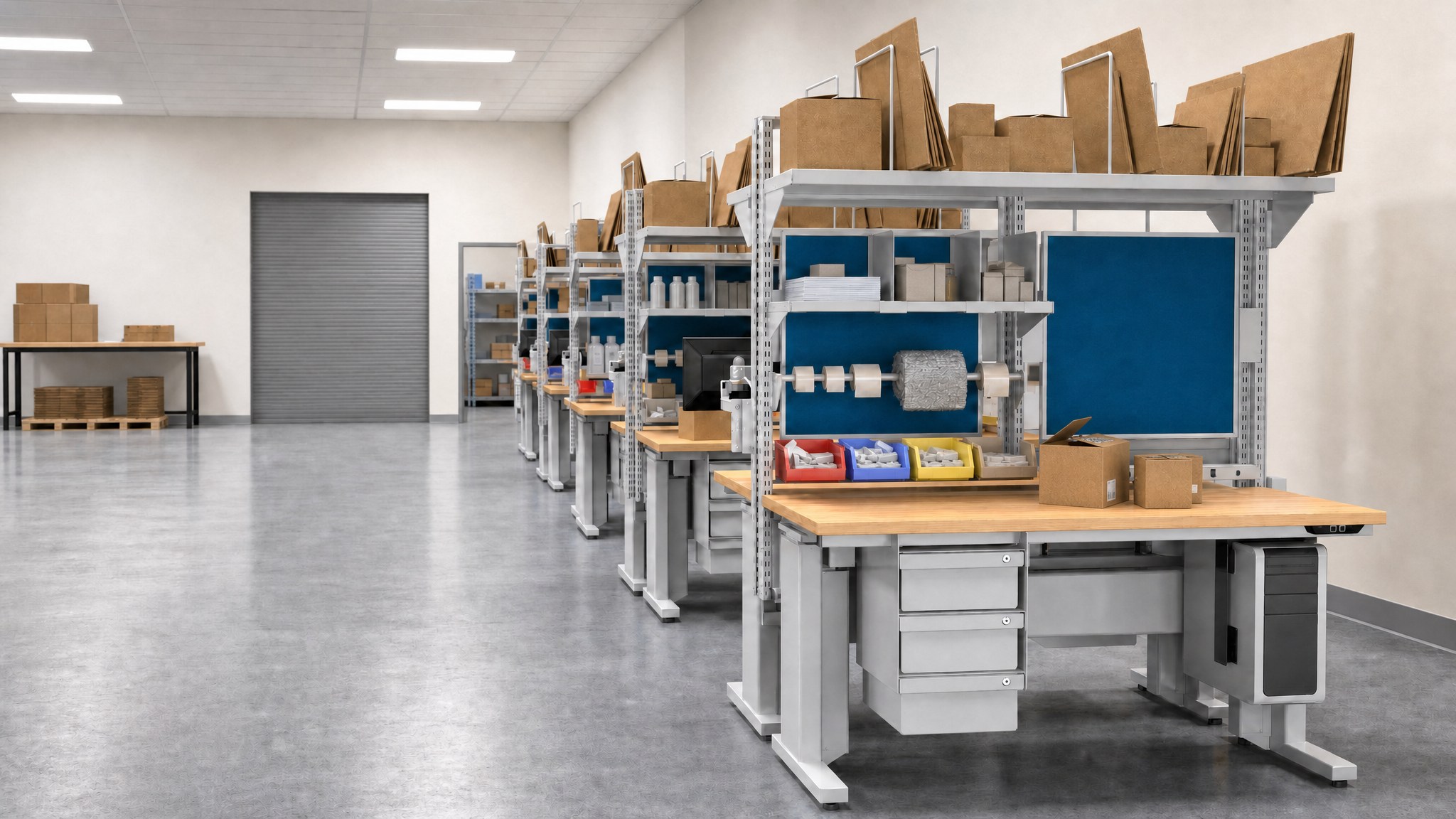
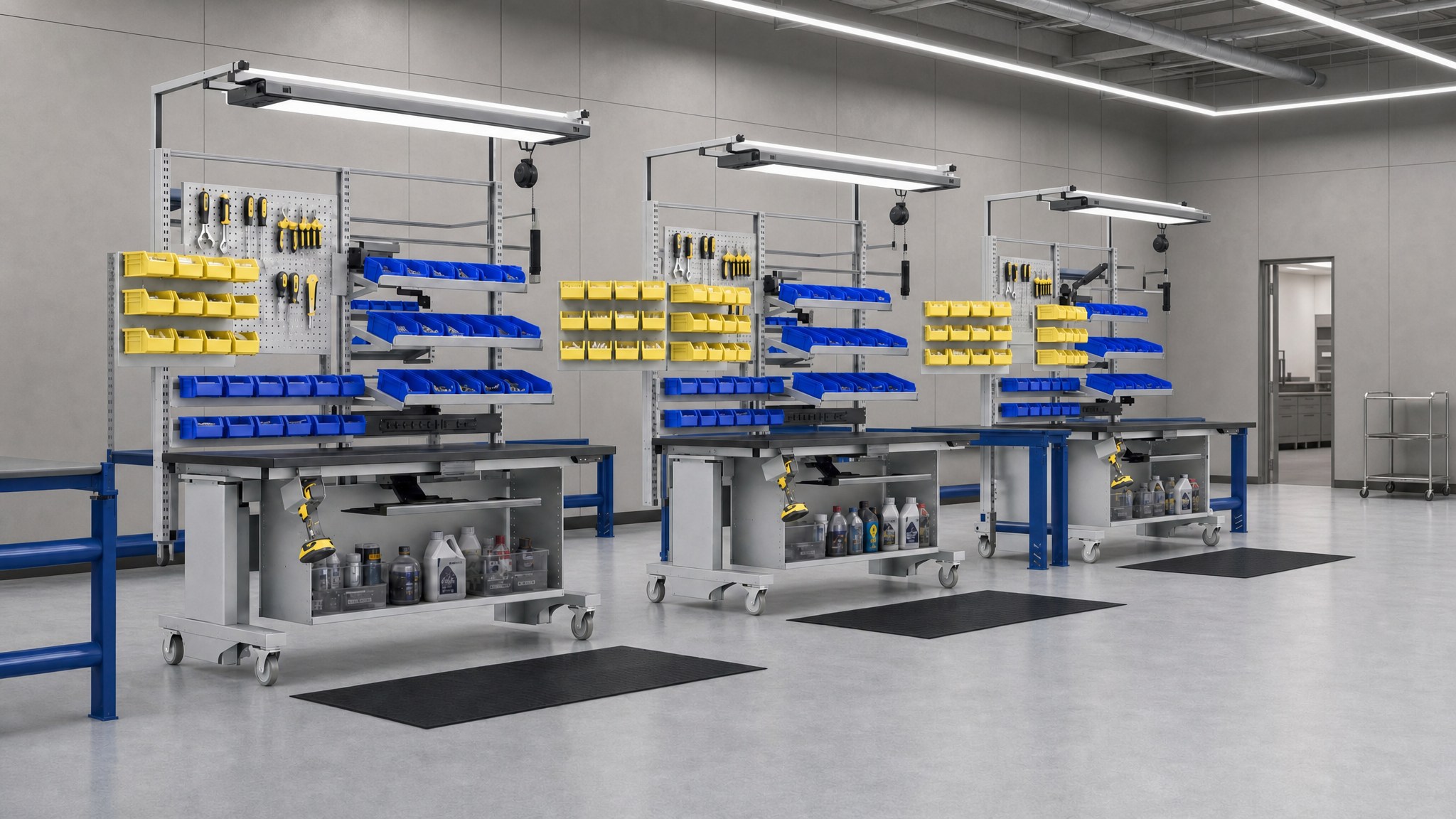
Assembly tables are configurable production work surfaces that support product assembly, testing, and repair by organizing workpieces, tools, and supplies around a defined task sequence. They can be tailored with frame, worktop, height adjustment, and accessory choices for manufacturing, warehouse, and production environments.
- Can be planned as a standalone assembly work table or as part of an assembly line table layout.
- Can support one operator or multiple users when the layout, height, and reach requirements are planned in advance.
How to Plan Table Size, Load Needs, and Layout
The right assembly table depends on the parts being handled, the available space, and how operators move through the task. Confirm whether the station will remain fixed or need to be repositioned, since mobility, stability, and load distribution should be reviewed together.
- Workpiece dimensions and the combined weight of parts, tools, and accessories.
- Whether weight will be evenly distributed or concentrated in one area of the work surface.
- Task sequence, operator reach zones, number of users, and sit-stand requirements.
- Available footprint, aisle clearance, and stationary or mobile use.
Assembly Table Options, Features, and Materials
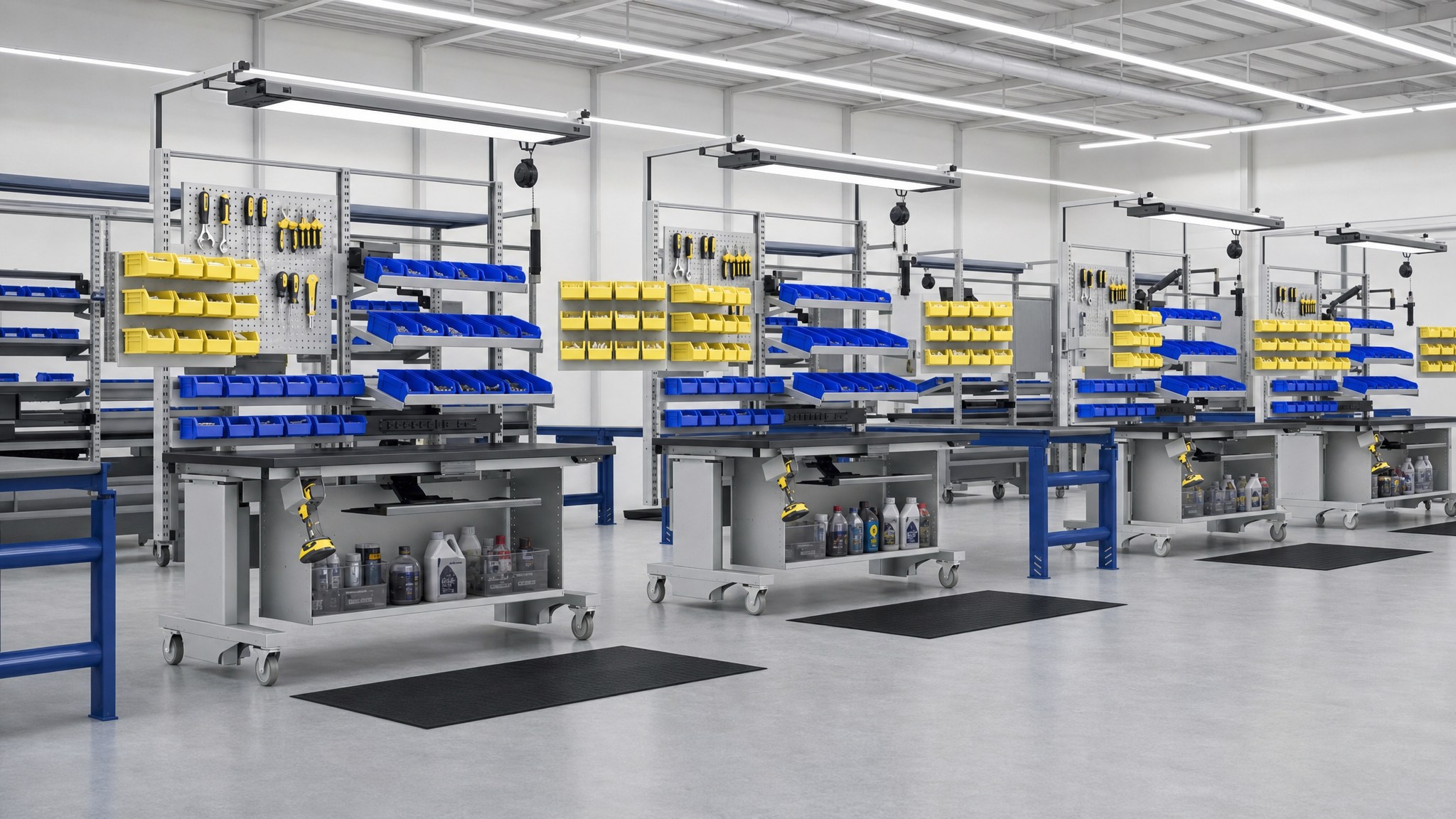
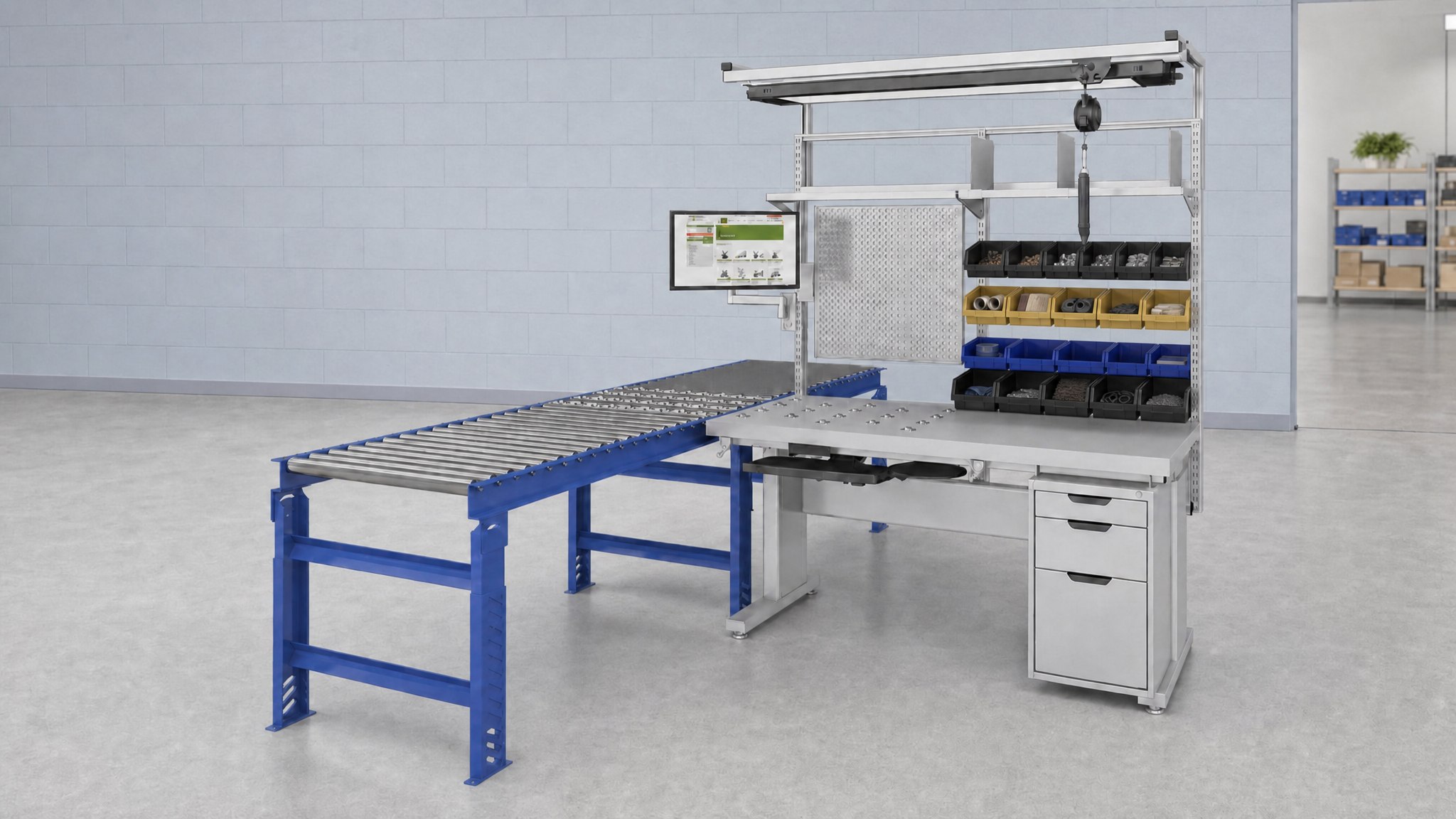
Assembly table design should start with the task, then add surfaces and accessories that place high-use items where operators can reach them comfortably. Manual or powered height adjustment may be available depending on the selected model, and stationary or mobile bases should be matched to the way the station will be used.
- Worktop materials such as laminate, stainless steel, steel, wood, ESD, and specialty surfaces.
- Optional drawers, shelves, bins, pegboard panels, lighting, electrical outlets, and cabinet consoles.
- Levelers for mostly stationary stations or casters for stations that may be moved or repositioned.
- Accessory placement based on task sequence, reach zones, and frequently used tools or parts.
Where Assembly Tables Fit in Production Areas
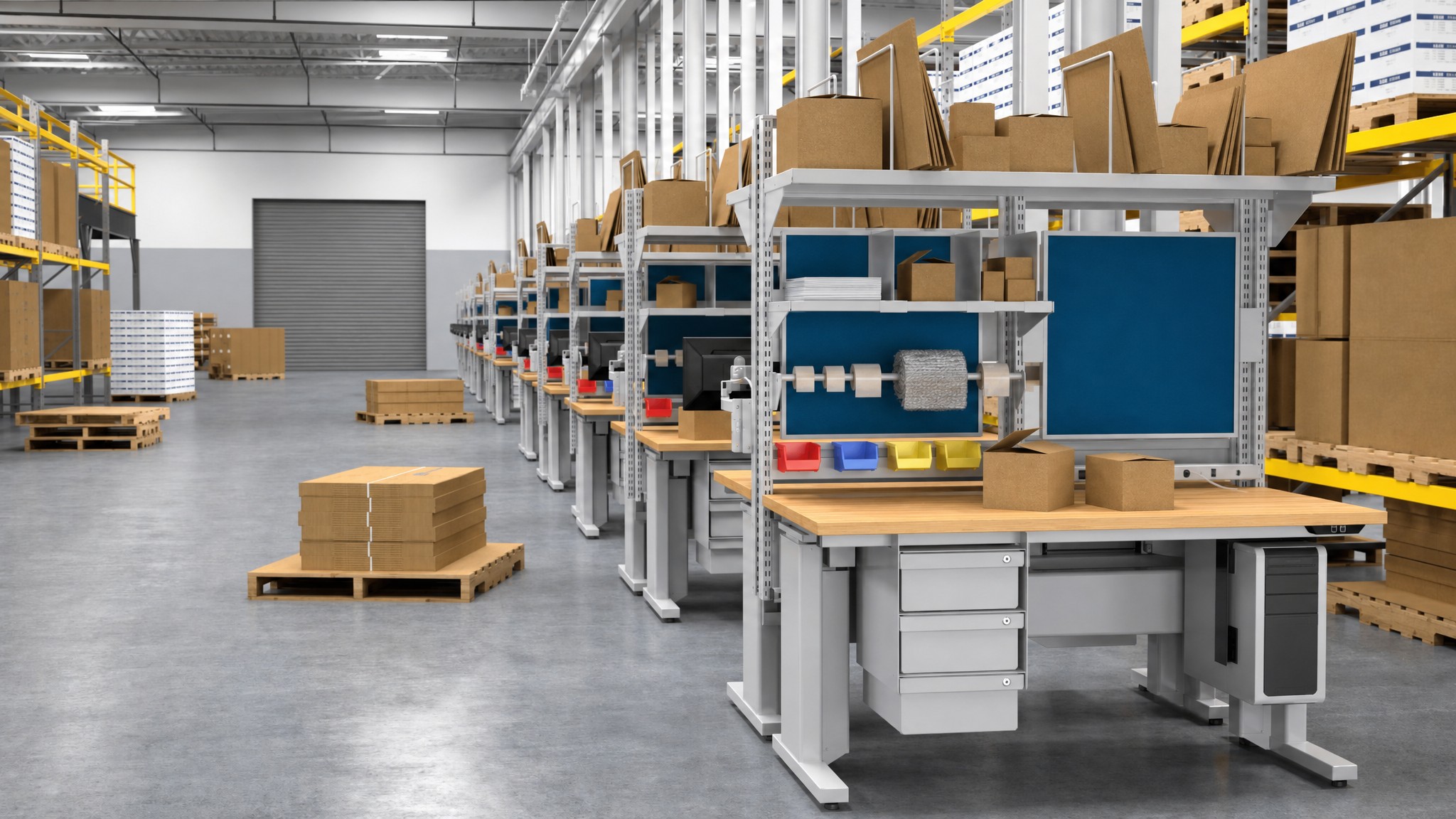
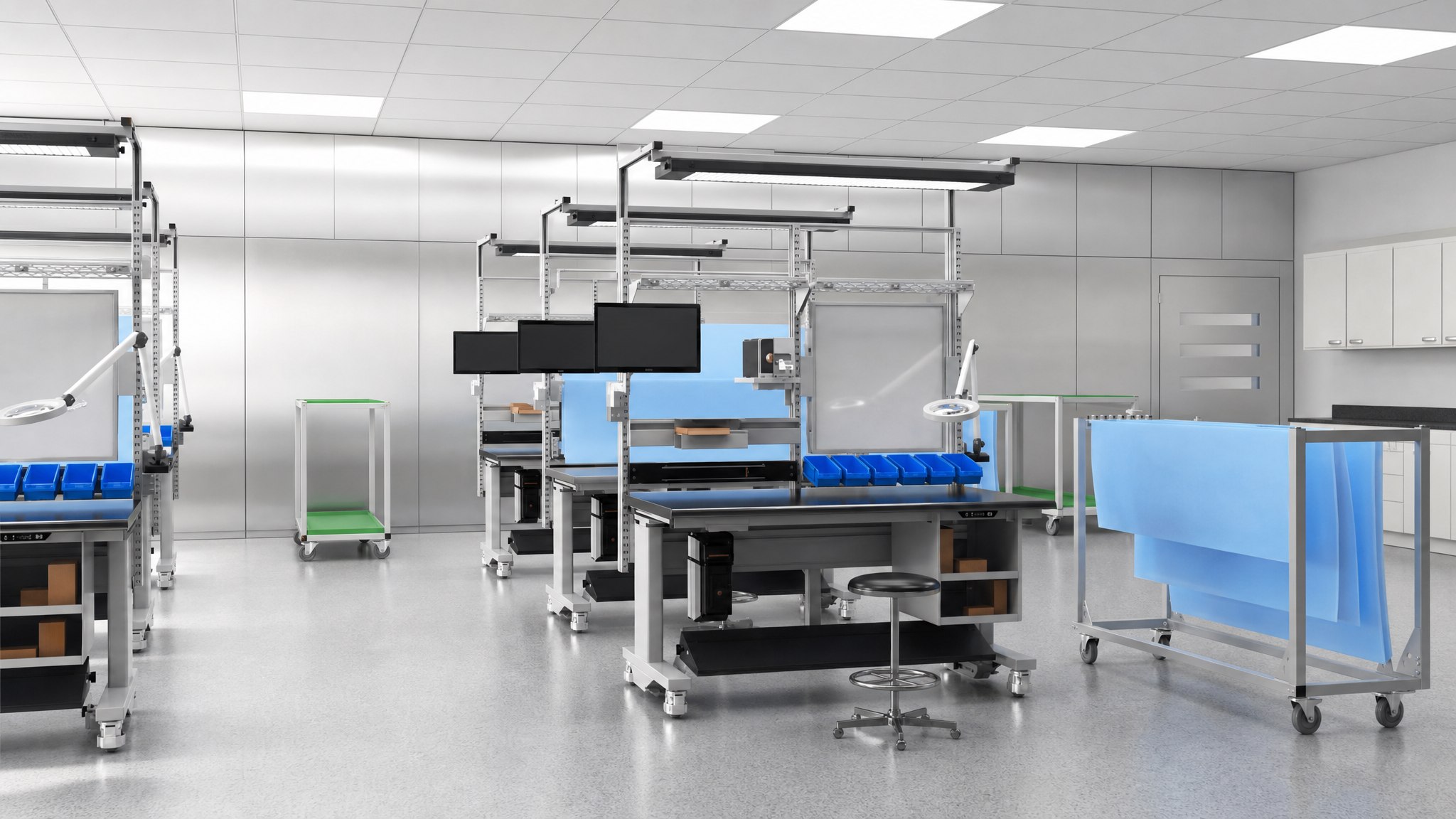
Assembly tables fit production areas where hands-on work requires a defined surface for parts, tools, instructions, and in-process materials. Manufacturing teams use them in assembly cells and production lines, warehouse teams use them for kitting and value-added tasks, and maintenance or quality teams use them for repair, inspection, and basic testing support.
What to Confirm Before Requesting a Quote
A clear quote request helps narrow the assembly table design, worktop, accessories, and mobility choices before drawings or layouts are finalized. Southwest Solutions Group offers free consultations to review your application and help plan a practical assembly workstation for your operation.
- Workpiece dimensions, combined weight, and task sequence.
- Operator reach zones, number of users, and sitting or standing requirements.
- Preferred worktop material, storage, lighting, utility access, and accessory needs.
- Stationary or mobile use, plus any height-adjustment preference.
Manufacturing Assembly Cells
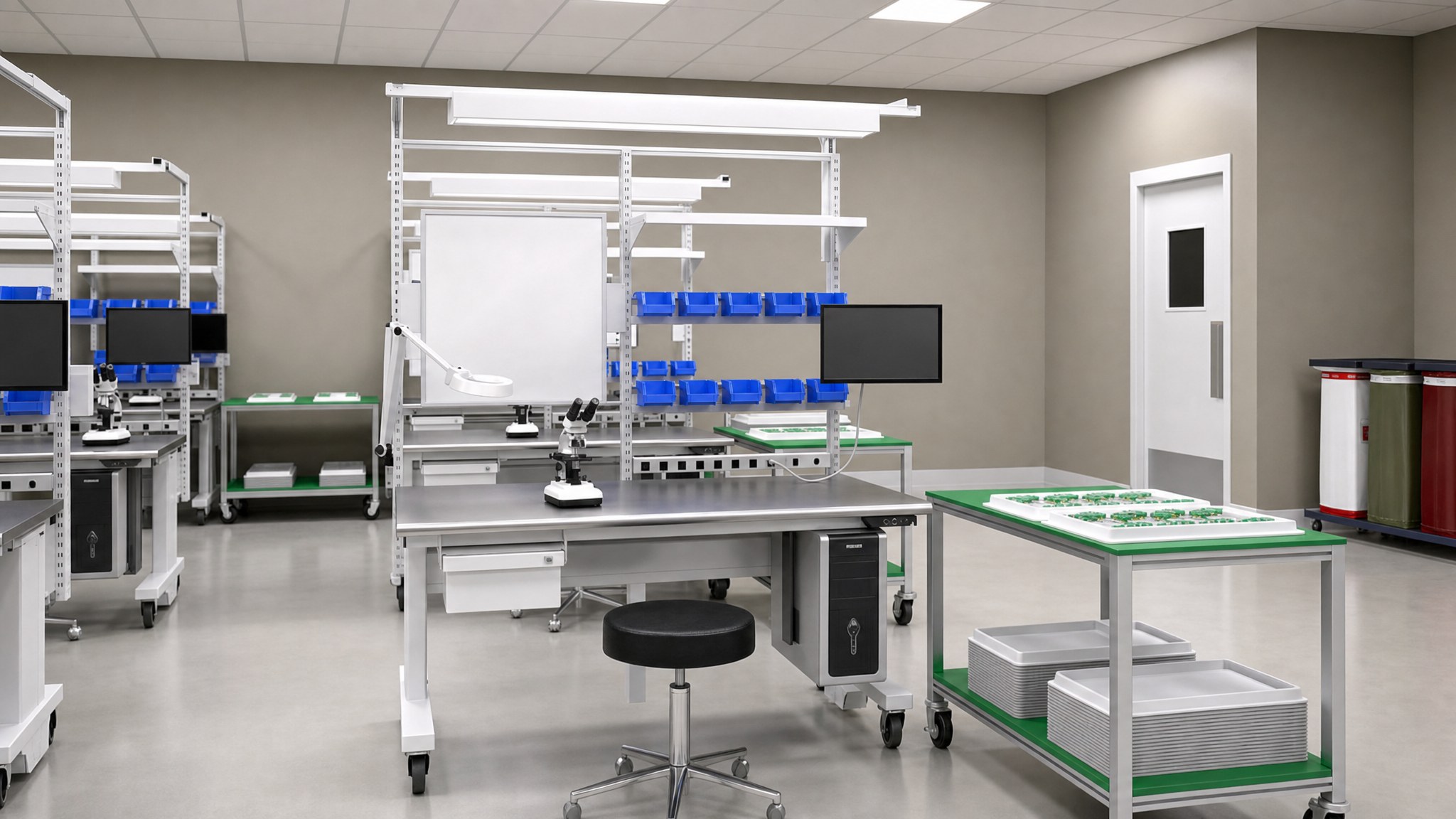
Manufacturing teams use assembly tables to place components, hand tools, parts bins, and work instructions around a repeatable production sequence. The layout can be planned around operator reach zones so frequent-use items stay close to the active work area.
- Supports defined assembly steps within a production cell.
- Helps separate high-use, medium-use, and storage-only items by reach zone.
- Can be planned for one-sided or two-sided task access when the selected configuration supports it.


Planning Your Assembly Table Configuration
Use these planning decisions to prepare for an assembly table quote. Most projects combine several choices, including surface material, height approach, accessories, mobility, and layout.
| Planning Decision | Why It Matters | What to Confirm |
|---|---|---|
| Work Surface Requirements | Applications where the surface must match the parts, tools, substances, or handling conditions | Confirm whether laminate, stainless steel, steel, wood, ESD, or another specialty surface is appropriate for the task. |
| Height Adjustment | Shared stations, changing tasks, or workflows that alternate between sitting and standing | Determine whether fixed height is sufficient or whether manual or powered adjustment should be reviewed for the selected model. |
| Storage and Accessories | Assembly work that uses nearby tools, parts, bins, shelves, drawers, lighting, or utility access | Map accessories around the task sequence and reach zones so the active work surface remains available. |
| Stationary or Mobile Use | Production areas that either need a fixed station or occasional workstation movement | Review levelers, casters, load distribution, and stability based on how often the table will be repositioned. |
| Layout and Operator Access | Single-user stations, shared stations, and assembly line table production layouts | Confirm whether the task requires one-sided access, two-sided access, aisle clearance, or multiple operator positions. |
Southwest Solutions Near You
With 7 offices in Texas, Oklahoma, Kansas and Colorado, plus teams covering every major metro area nationwide, Southwest Solutions Group delivers expert assembly tables sales, design, installation, and maintenance support wherever you need it.
Assembly Tables Service Areas
Texas
- Dallas
- Austin
- Houston
- San Antonio
- Waco
- Tyler
- Amarillo
- Lubbock
- El Paso
- Ft Worth
- Corpus Christi
- Midland
Oklahoma
- Oklahoma City
- Tulsa
- Norman
- Lawton
- Enid
- Stillwater
- McAlester
- Muskogee
- Guymon
Kansas
- Wichita
- Overland Park
- Topeka
- Kansas City
- Lawrence
- Manhattan
- Salina
- Hays
- Dodge City
- Garden City
Colorado
- Denver
- Colorado Springs
- Fort Collins
- Grand Junction
- Pueblo
- Durango
- Alamosa
- Steamboat Springs
- Greeley
Alabama
- Huntsville
- Birmingham
- Montgomery
- Mobile
- Tuscaloosa
- Hoover
- Dothan
- Decatur
Alaska
- Anchorage
- Fairbanks
- Juneau
- Sitka
- Ketchikan
- Kodiak
- Bethel
- Nome
Arizona
- Phoenix
- Tucson
- Flagstaff
- Yuma
- Prescott
- Lake Havasu City
- Sierra Vista
- Kingman
Arkansas
- Little Rock
- Fayetteville
- Fort Smith
- Jonesboro
- Hot Springs
- Pine Bluff
- Texarkana
- Bentonville
- Arkadelphia
California
- Los Angeles
- San Diego
- San Francisco
- Sacramento
- Fresno
- Redding
- Bakersfield
- San Bernardino
- San Jose
Connecticut
- Hartford
- New Haven
- Stamford
- Bridgeport
Delaware
- Wilmington
- Dover
- Newark
- Rehoboth Beach
Florida
- Jacksonville
- Tallahassee
- Orlando
- Tampa
- Miami
- West Palm Beach
- Fort Myers
- Pensacola
Georgia
- Atlanta
- Savannah
- Augusta
- Columbus
- Macon
- Athens
- Valdosta
- Gainesville
- Albany
Hawaii
- Honolulu
- Hilo
- Kahului
- Kailua-Kona
- Lihue
Idaho
- Boise
- Coeur d'Alene
- Twin Falls
- Idaho Falls
- Pocatello
- Lewiston
- McCall
- Sandpoint
- Moscow
Illinois
- Chicago
- Springfield
- Rockford
- Peoria
- Champaign
- Bloomington
- Carbondale
- Moline
- Quincy
Indiana
- Indianapolis
- Fort Wayne
- South Bend
- Evansville
- Lafayette
- Bloomington
- Terre Haute
- Gary
- Muncie
Iowa
- Des Moines
- Cedar Rapids
- Davenport
- Sioux City
- Iowa City
- Waterloo
- Council Bluffs
- Ames
- Mason City
Kentucky
- Louisville
- Lexington
- Bowling Green
- Owensboro
- Covington
- Paducah
- Ashland
- Richmond
- Frankfort
- Pikeville
- Florence
Louisiana
- New Orleans
- Baton Rouge
- Shreveport
- Lafayette
- Lake Charles
- Monroe
- Alexandria
- Houma
Maine
- Portland
- Bangor
- Augusta
- Lewiston
- Waterville
- Presque Isle
- Bar Harbor
- Biddeford
- Rockland
Maryland
- Baltimore
- Annapolis
- Frederick
- Hagerstown
- Salisbury
Massachusetts
- Boston
- Worcester
- Springfield
- Pittsfield
Michigan
- Detroit
- Grand Rapids
- Lansing
- Ann Arbor
- Flint
- Traverse City
- Marquette
- Kalamazoo
- Saginaw
Minnesota
- Minneapolis
- St. Paul
- Duluth
- Rochester
- Mankato
- St. Cloud
- Bemidji
- Moorhead
Mississippi
- Jackson
- Gulfport
- Hattiesburg
- Biloxi
- Southaven
- Meridian
- Tupelo
- Natchez
- Greenville
- Oxford
Missouri
- Jefferson City
- St. Louis
- Kansas City
- Springfield
- Columbia
- Joplin
- Cape Girardeau
- St. Joseph
- Rolla
Montana
- Helena
- Billings
- Missoula
- Great Falls
- Bozeman
- Kalispell
- Havre
- Miles City
Nebraska
- Lincoln
- Omaha
- Grand Island
- Kearney
- Scottsbluff
- Norfolk
- North Platte
- Fremont
- South Sioux City
Nevada
- Las Vegas
- Reno
- Carson City
- Elko
- Pahrump
- Henderson
- Winnemucca
- Mesquite
- Fallon
New Hampshire
- Concord
- Manchester
- Portsmouth
- Keene
- Nashua
New Jersey
- Newark
- Jersey City
- Trenton
- Atlantic City
New Mexico
- Santa Fe
- Albuquerque
- Las Cruces
- Roswell
- Farmington
- Gallup
- Carlsbad
- Clovis
New York
- Albany
- New York City
- Buffalo
- Rochester
- Syracuse
- Binghamton
- Ithaca
- Plattsburgh
North Carolina
- Raleigh
- Charlotte
- Greensboro
- Asheville
- Wilmington
- Fayetteville
- Boone
- Greenville
North Dakota
- Bismarck
- Fargo
- Grand Forks
- Minot
- Dickinson
- Williston
- Jamestown
- Devils Lake
Ohio
- Columbus
- Cleveland
- Cincinnati
- Toledo
- Dayton
- Akron
- Youngstown
- Athens
Oregon
- Portland
- Salem
- Eugene
- Hermiston
- Baker City
- Medford
- Bend
- Klamath Falls
Pennsylvania
- Harrisburg
- Philadelphia
- Pittsburgh
- Erie
- Scranton
- State College
- Allentown
- Williamsport
Rhode Island
- Providence
- Warwick
- Newport
- Woonsocket
South Carolina
- Columbia
- Charleston
- Greenville
- Myrtle Beach
- Hilton Head Island
- Spartanburg
- Florence
- Rock Hill
South Dakota
- Pierre
- Sioux Falls
- Rapid City
- Aberdeen
- Watertown
- Brookings
- Mitchell
- Yankton
Tennessee
- Memphis
- Jackson
- Nashville
- Clarksville
- Cookeville
- Chattanooga
- Knoxville
- Johnson City
Utah
- Salt Lake City
- Ogden
- Logan
- Provo
- St. George
- Cedar City
- Moab
- Vernal
Vermont
- Montpelier
- Burlington
- Rutland
- Brattleboro
Virginia
- Richmond
- Norfolk
- Virginia Beach
- Roanoke
- Lynchburg
- Harrisonburg
- Fredericksburg
- Bristol
Washington
- Olympia
- Seattle
- Spokane
- Yakima
- Bellingham
- Wenatchee
- Kennewick
- Vancouver
West Virginia
- Charleston
- Huntington
- Morgantown
- Wheeling
- Parkersburg
- Beckley
- Martinsburg
- Bluefield
Wisconsin
- Madison
- Milwaukee
- Green Bay
- Eau Claire
- La Crosse
- Wausau
- Appleton
- Superior
Wyoming
- Cheyenne
- Casper
- Laramie
- Gillette
- Sheridan
- Rock Springs
- Jackson
- Cody
District of Columbia
- Washington D.C.
Frequently Asked Questions
Start by measuring your largest workpieces, estimating the combined weight of parts and tools, and considering the task sequence and operator reach. Confirm the available floor space and whether the table will be used by one or multiple users. This information helps configure an assembly table that fits your workflow without over- or under-sizing.
Provide your workpiece dimensions, approximate combined loads, preferred worktop material, storage and accessory needs, lighting or utility requirements, mobility preferences, and available space. These details help our team recommend the right assembly table configuration for your application.
Yes, assembly tables can be configured with optional shelves, drawers, bins, pegboard panels, lighting, and power outlets. Accessory compatibility depends on the selected model and your workflow needs, so discuss your requirements during the planning process.
Consider a height-adjustable assembly workstation for applications with multiple users, tasks that alternate between sitting and standing, or processes that need height changes. Manual or powered adjustment should be confirmed for the selected model.
Worktop options typically include laminate, stainless steel, steel, wood, ESD, and specialty surfaces. Select a material based on durability, the substances used in your assembly process, and any special handling requirements.
Decide based on how often the table will be moved. Stationary tables can use levelers for stability, while mobile tables require caster planning and review of load distribution. Mobility should be evaluated separately from the table size and surface.
Choose a technical bench for instruments or electronics, a packing station for shipping-supply organization, or a wire-harness fixture for tilting board assembly. Assembly tables are best for general production and assembly tasks that do not require those specialized features.
Product image gallery
Explore More Furniture and Benches
Auditorium Seating
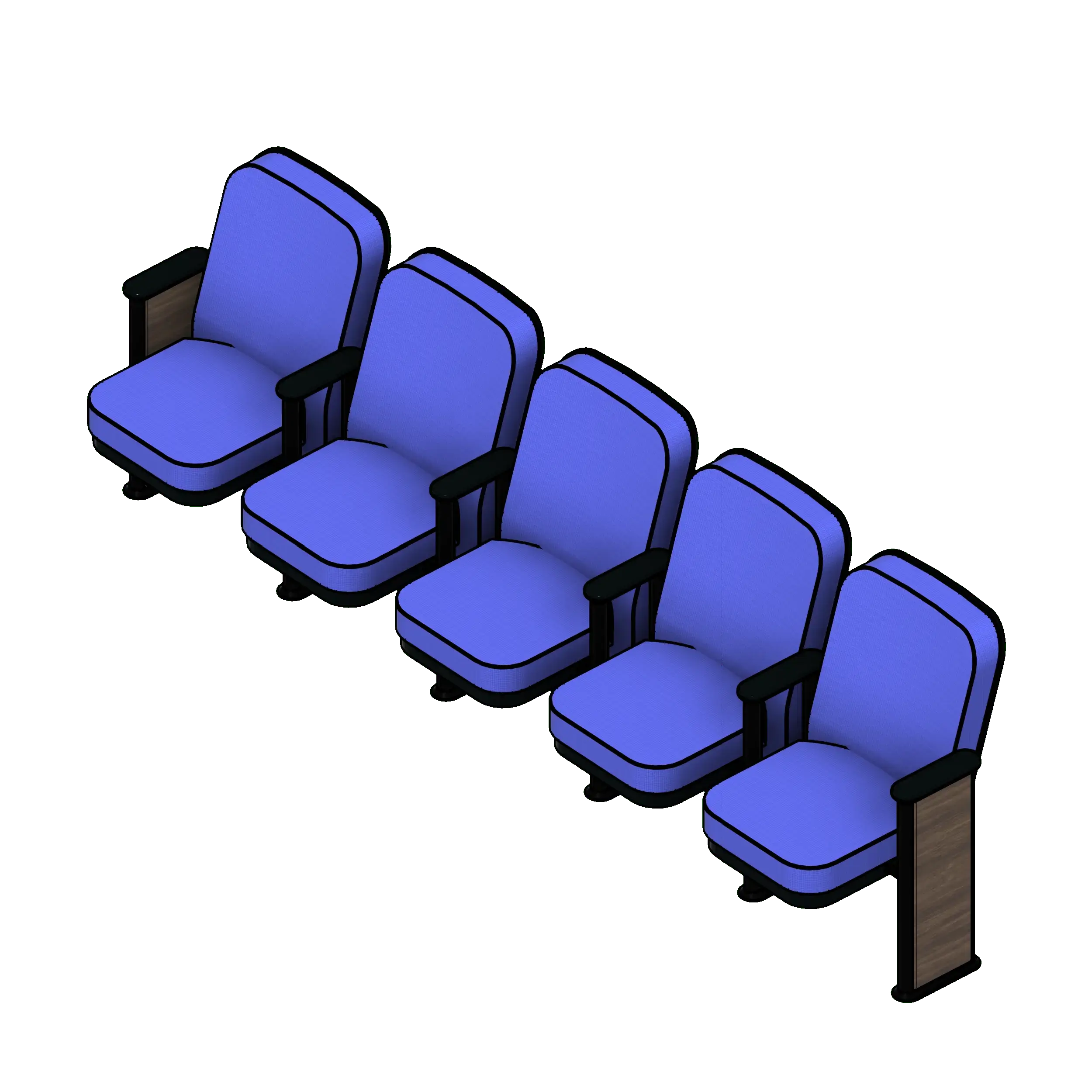
Fixed and fold-down seating for lecture halls, auditoriums, and training rooms, designed for comfort, ADA compliance, and clean aesthetics.
Explore Auditorium Seating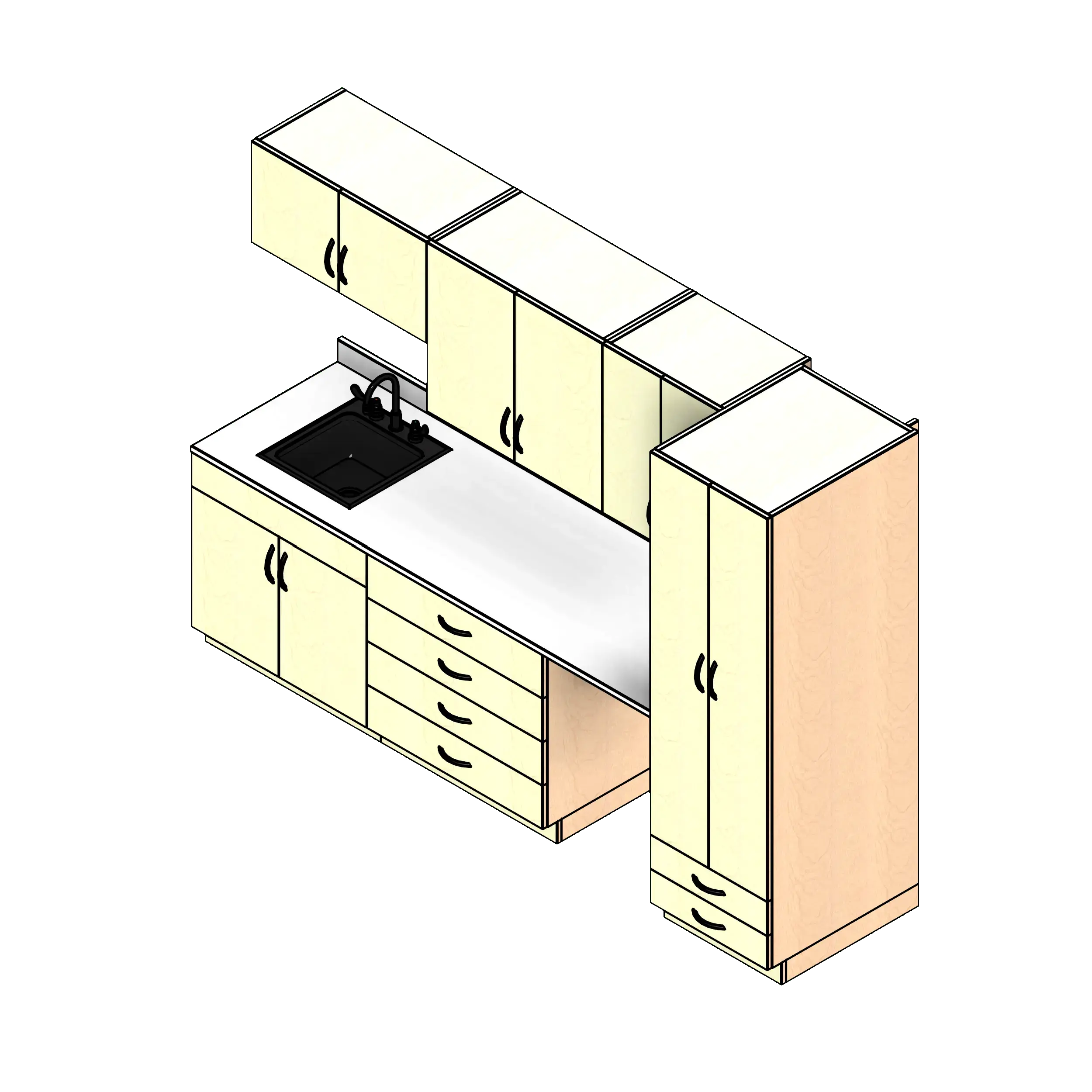
Breakroom Furniture
Tables and seating for lounges, cafes, and team areas. Easy-clean surfaces and commercial finishes built for daily use and lasting comfort.
Explore Breakroom Furniture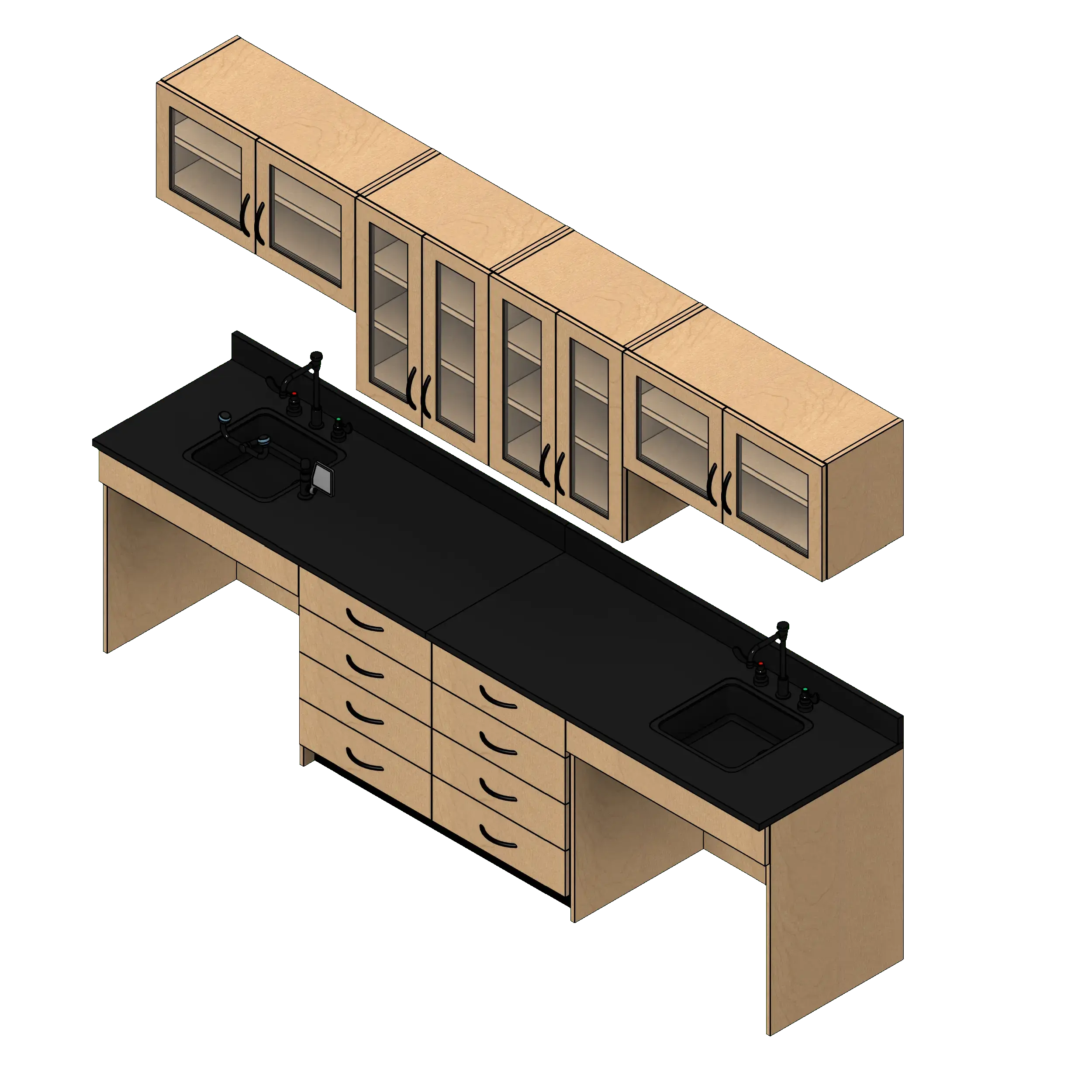
Lab Benches
Durable, chemical-resistant benches and modular casework for labs in healthcare, education, and research environments.
Explore Lab Benches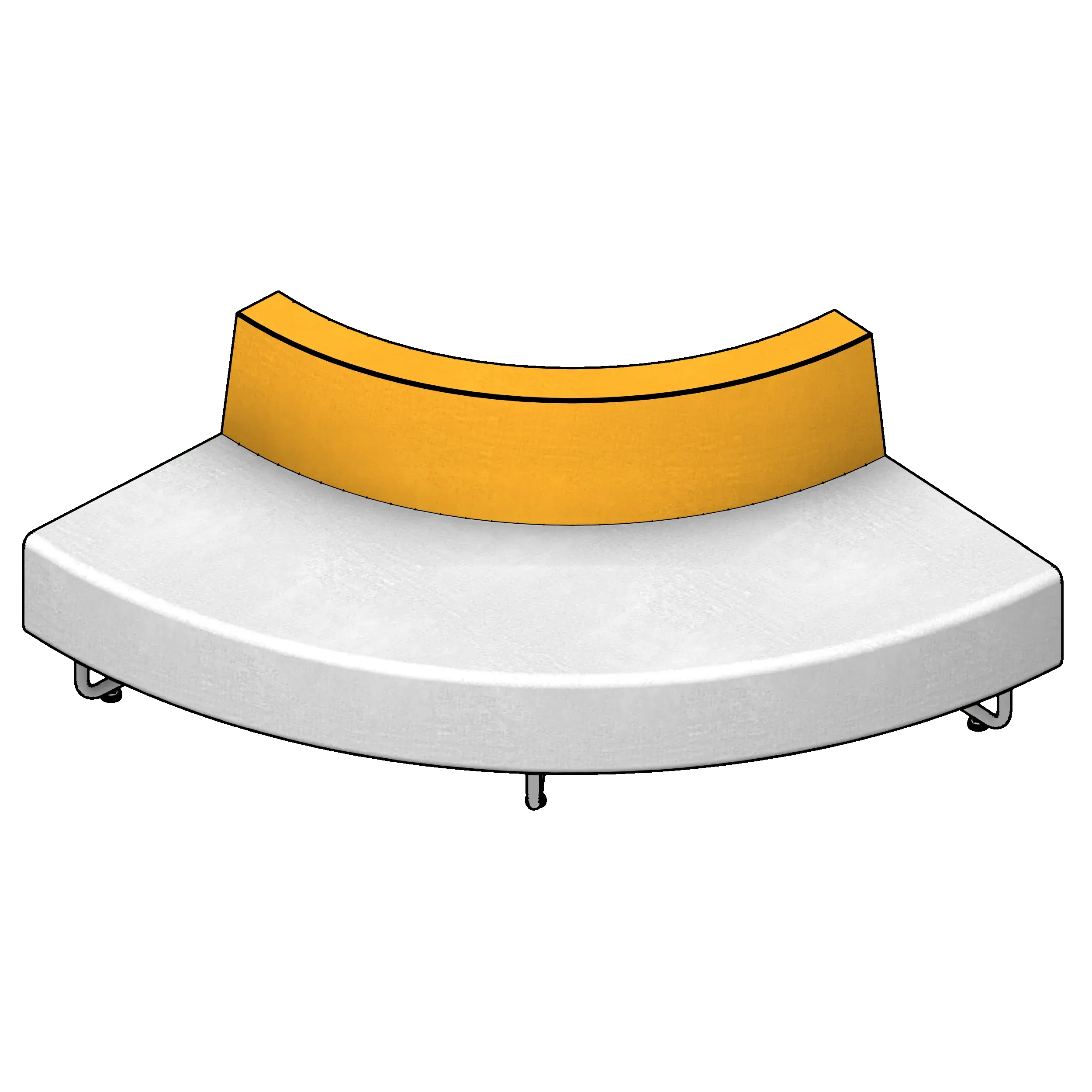
Library Furniture
Classic and tech-integrated furniture for libraries, media centers, and reading spaces in schools, campuses, and public facilities.
Explore Library Furniture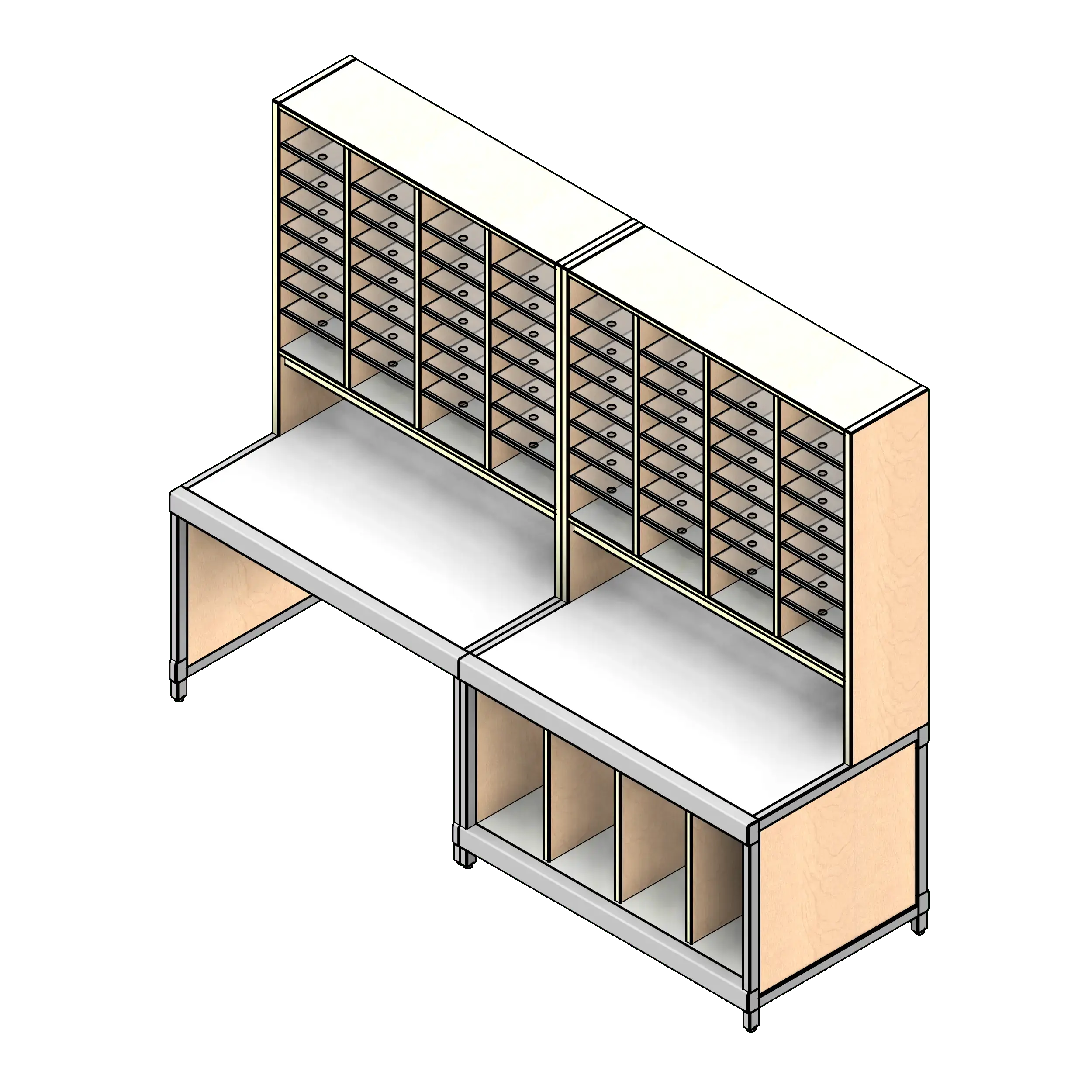
Mail Room Furniture
Organize mail and supplies with modular shelving, sorters, and durable laminate furniture for efficient daily use.
Explore Mail Room Furniture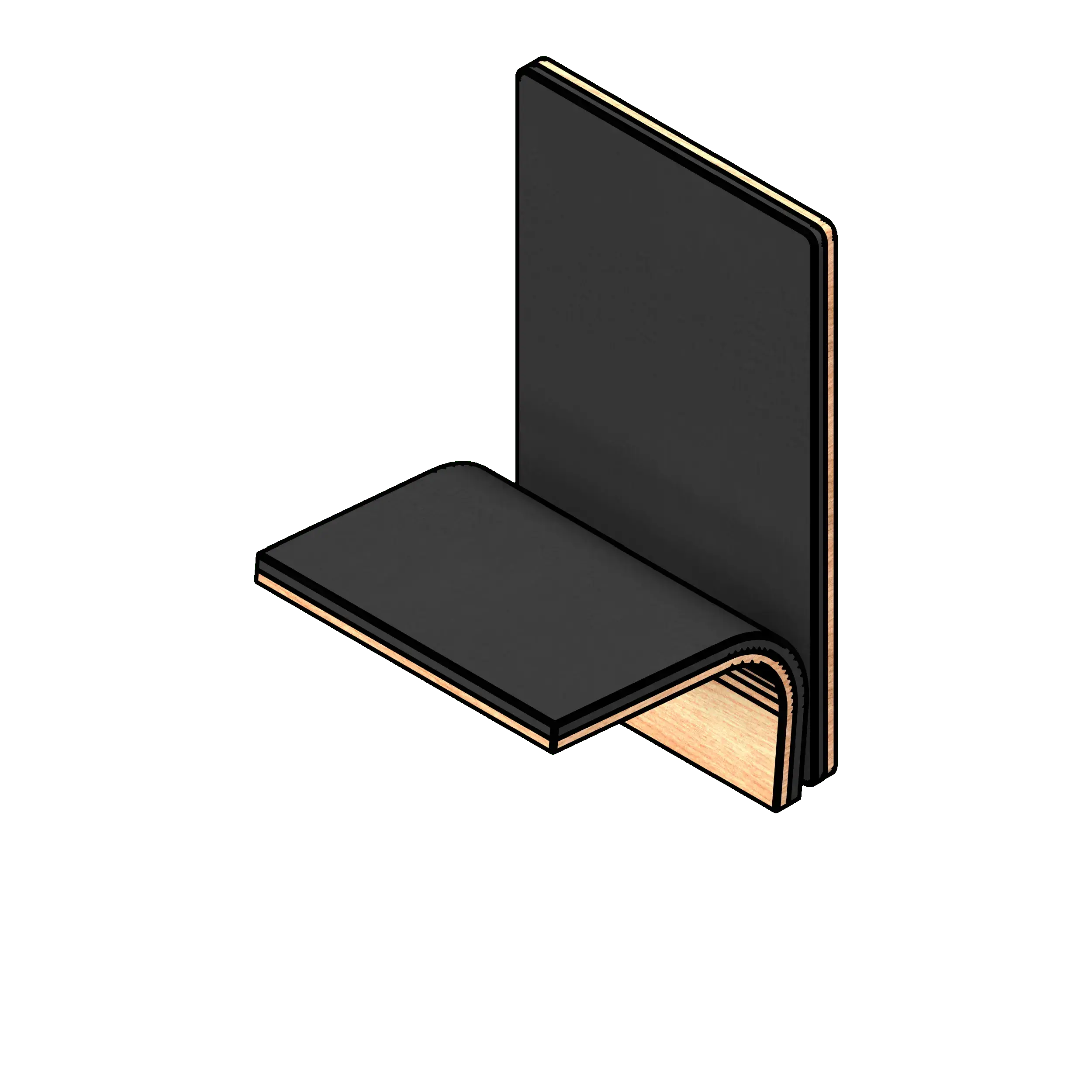
Murphy Chairs
Wall-mounted folding chairs that save space in corridors, classrooms, and multipurpose rooms. Compact, strong, and easy to use.
Explore Murphy Chairs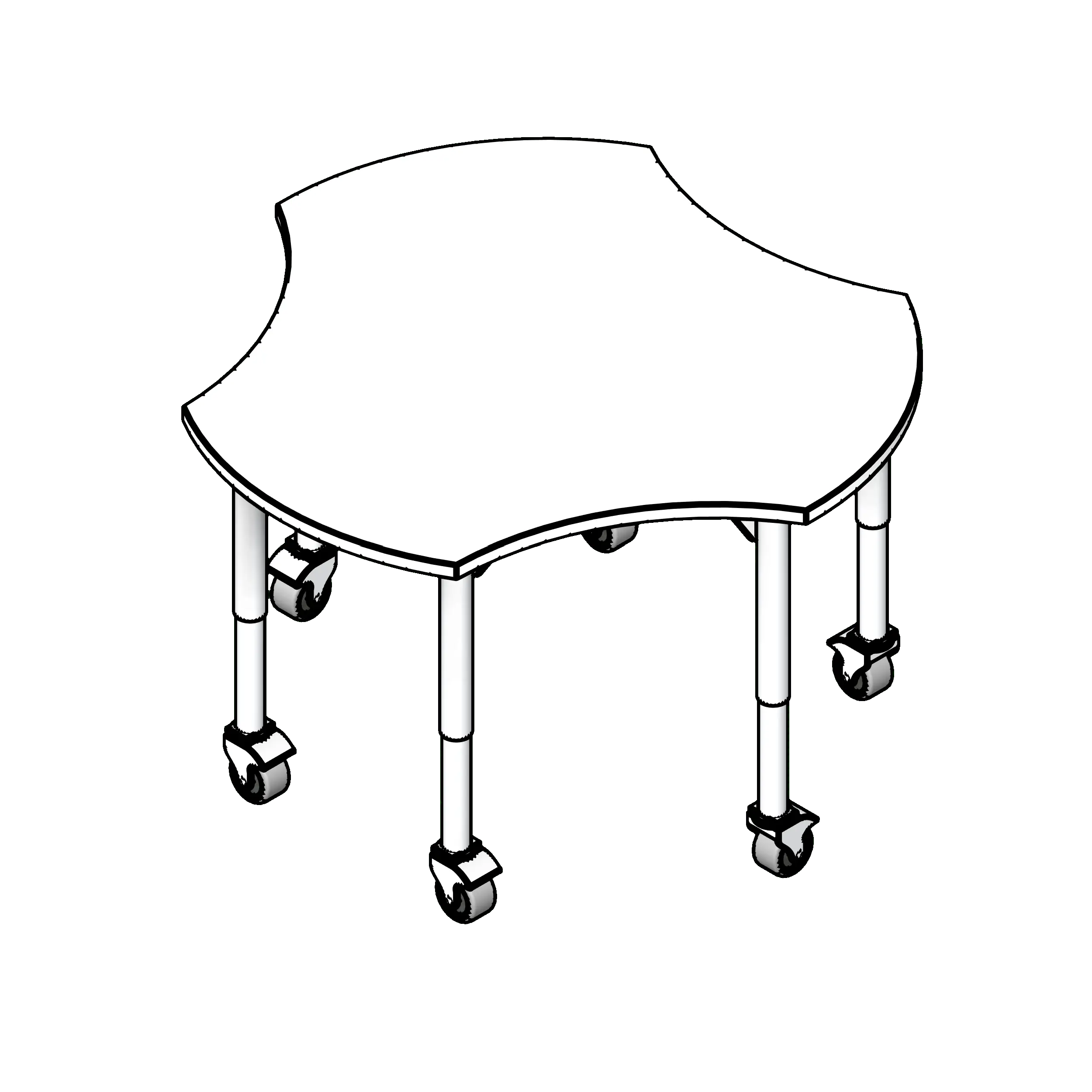
Training Room Tables
Flip-top and modular tables that nest, roll, and reconfigure easily for athletic, corporate, and educational training environments.
Explore Training Room TablesConfigure Assembly Tables for Your Production Workflow
Talk with our team to plan assembly tables around your workpiece size, task sequence, surface, and accessory needs. We can help you compare practical configuration choices for your space.
Request a consultation to review assembly table design options, accessory placement, and mobility planning before your next project.
Call us at (800) 803-1083 or Contact Us to schedule your free consultation today.
Request a Consultation