
National WWI Museum Expands Collection Storage with High-Density Systems
Southwest Solutions Group helped the National World War I Museum and Memorial modernize its collection storage through a phased project focused on preservation, access, public visibility, and future expansion.
Download Case StudyDesigned for a museum collection with varied artifact types and preservation needs.
Completed for a museum facility in the Kansas City metro area.
Storage supported artifacts, library materials, documents, and public-facing collection areas.
A phased storage plan supported current collections while preserving room for future needs.
High-density storage, museum cabinets, specialty racks, flat-file storage, and glass-front shelving supported artifact, document, artwork, and visible storage needs.
The museum needed protected storage for a growing collection while allowing selected artifacts to remain visible to visitors.
Growing Museum Collection Needed Better Storage
The National World War I Museum and Memorial needed museum storage systems that could keep pace with a growing and varied collection. Weapons, uniforms, helmets, posters, library materials, documents, and artwork required different storage methods, while selected artifacts also needed to remain visible to visitors.

Limited Collection Capacity
Existing storage areas were limited, overcrowded, and inefficient for a growing museum collection. The museum needed a better way to use available space while protecting historically significant artifacts.
Mixed Artifact Requirements
The collection included weapons, uniforms, helmets, propaganda posters, library materials, documents, and artwork. These item types required storage systems matched to their size, handling needs, and preservation requirements.
Protected Public Visibility
Some artifacts needed to remain viewable to visitors without being exposed to unnecessary handling. The museum needed visible storage areas that supported public viewing while keeping selected items preserved and protected.
Phased Museum Storage for Preservation and Access
Southwest Solutions Group planned a phased high-density museum storage program for current operations and future collection growth. The scope combined mobile systems, museum cabinets, cantilever shelving, pallet racking, drawers, document flat files, wall-mounted art racks, and glass-front shelving. Each system matched a collection need, from weapon storage and flat documents to artwork and visitor-facing artifact displays.
Collection-Specific Storage Systems
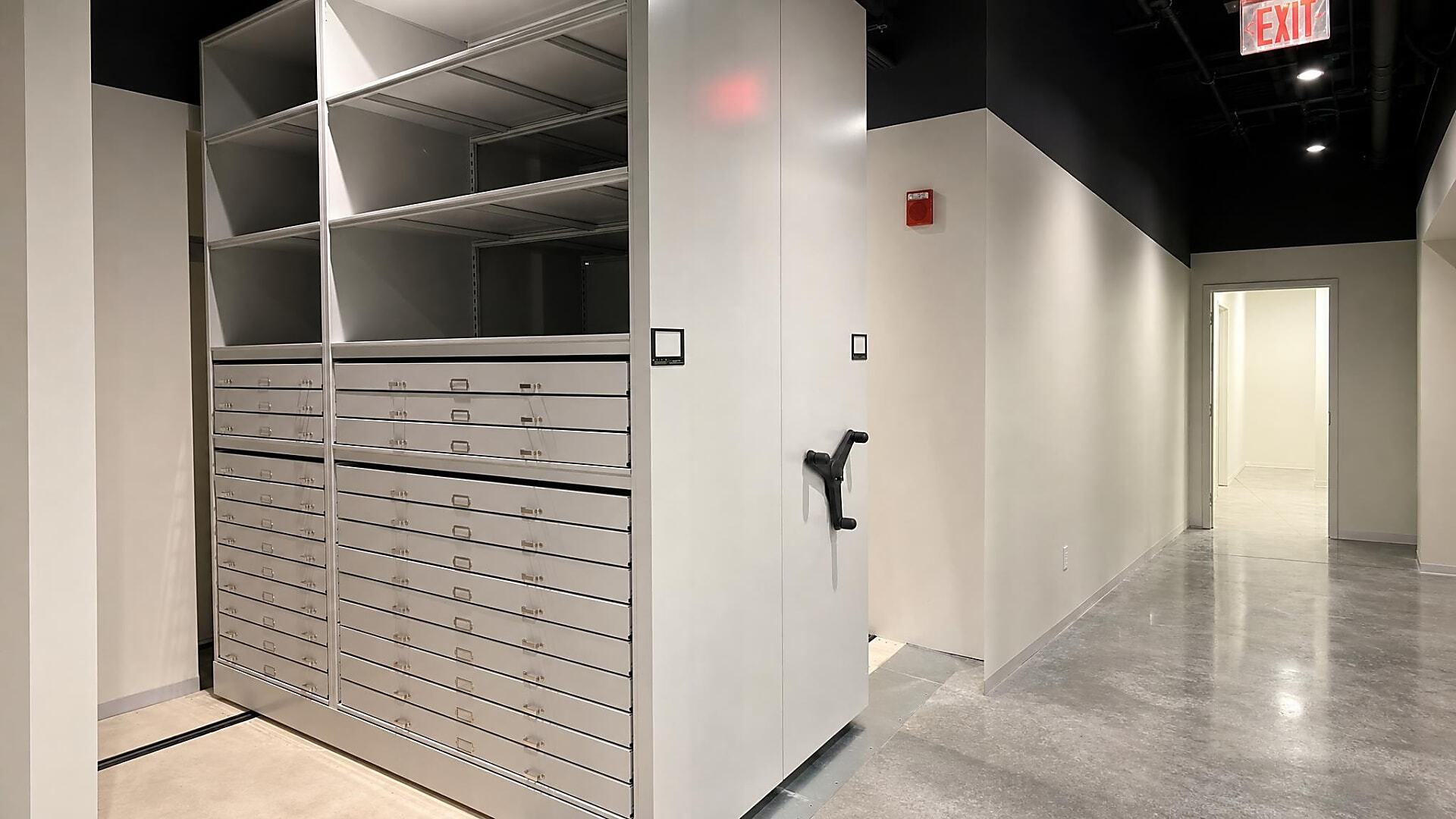
The project included mobile storage systems, museum cabinets, cantilever shelving for weapons, pallet racking, mobile shelving with drawers, document flat files, wall-mounted art racks, high-density storage systems, and glass-front shelving.
A Phased Plan for Changing Collection Needs
A phased plan fit the museum because it served current storage requirements while preserving room for later expansion. It also allowed weapons, documents, posters, artwork, library materials, and artifacts to be housed in systems suited to their form and access needs.
Protected Storage With Visitor Visibility
The storage approach improved artifact protection, use of available space, accessibility, and collection organization. Glass-front visible storage also allowed selected items to be viewed by visitors while remaining protected.
Phased Museum Storage Built Around Collection Growth
The work was carried out in phases as the museum’s storage needs and facility plans changed. Phase 1 established core collection storage with mobile systems, museum cabinets, cantilever shelving for weapons, and pallet racking. Phase 2 followed a funded expansion and remodel, adding mobile shelving for library and document storage, drawers, flat files, wall-mounted art racks, high-density storage, and glass-front shelving.
Reviewed Collection Needs and Storage Goals
Planning focused on collection growth, artifact categories, preservation needs, public visibility goals, and future expansion. Storage areas and access requirements were reviewed so each phase could serve the museum’s day-to-day collection work.
Planned Layouts for Multiple Storage Types
Layouts accounted for mobile storage, museum cabinets, cantilever shelving, pallet racking, art racks, flat files, and visible storage areas. The plan organized storage zones and access paths so each collection type could be housed in an appropriate system.
Confirmed Storage Plans for Collection Areas
Project documentation supported review of the storage systems planned for collection areas. Coordination helped align the installed systems with the phased scope, facility changes, and museum storage requirements.
Sequenced Systems for Each Phase
Storage components were provided according to the phase they supported, beginning with mobile systems, cabinets, cantilever shelving, and pallet racking. Later work added systems tied to the expansion and remodel, including library, document, art, and visible storage solutions.
Installed Storage for Daily Collection Use
Installation placed the storage systems into museum collection areas for active use. The completed systems supported protected storage, organized access, and handling needs across different artifact categories.
Long-Term Support for Collection Growth
The phased relationship helped the museum add storage systems as collection and facility needs changed. This approach supported capacity, access, and system use across a project span of nearly 20 years.
High-Density Museum Storage Improved Capacity and Access
The project modernized the museum’s storage and display systems while improving artifact protection, space use, accessibility, and flexibility for future expansion. Visible storage areas also supported public engagement.
Storage for 80% to 90% of the Collection
The museum now has storage capacity for 80-90% of its collection. The result reflects a long-term storage program built around preservation, access, and collection growth.
Better Access Across Collection Types
Mobile shelving, drawers, flat files, art racks, cabinets, and specialty shelving improved access to different categories of collection materials. The storage approach reduced reliance on overcrowded or inefficient layouts.
Storage Matched to Artifact Needs
The project gave the museum separate storage approaches for weapons, uniforms, helmets, posters, library materials, documents, and artwork. This improved control over how different artifact types were stored, protected, and accessed.
Room for Future Expansion
The phased plan supported immediate collection storage while accounting for later expansion. As the museum’s needs changed, additional systems were added through the funded expansion and remodel.
Museum Collection Storage Before and After
Project images show the museum’s storage conditions and completed systems, including high-density storage and protected collection areas.


Plan Museum Storage Around Preservation, Access, and Growth
Southwest Solutions Group helps museums plan storage systems for diverse collections, limited space, and long-term preservation needs.
If your facility needs high-density storage, museum cabinets, flat files, art racks, mobile shelving, or visible storage, our team can help evaluate the best approach.
One team from planning through project completion.