
Rolling & Tracked Grow Benches for Commercial Cultivation
Increase usable canopy, reduce fixed aisle waste, and create better access for watering, pruning, scouting, IPM, trellising, harvest, cleaning, and daily crop work. SSG Horticulture helps growers compare stationary, standard roll, max roll, manual tracked, and mechanical-assist tracked bench systems around the way the facility actually operates.


Move from permanent aisles to planned work aisles that support more production inside the same footprint.
Preserve the room access teams need for irrigation checks, pruning, scouting, IPM, harvest, and sanitation.
Compare stationary, rolling, max roll, manual tracked, and mechanical-assist tracked layouts.
Account for width, length, floor condition, drainage, carts, trellis needs, loading, and installation sequence.
Choose the bench system around movement, access, and room constraints.
Instead of separating movement theory into another section, each configuration below explains how the bench works, when it fits, what to watch for, and which next step makes sense.
Stationary Ebb & Flow Bench
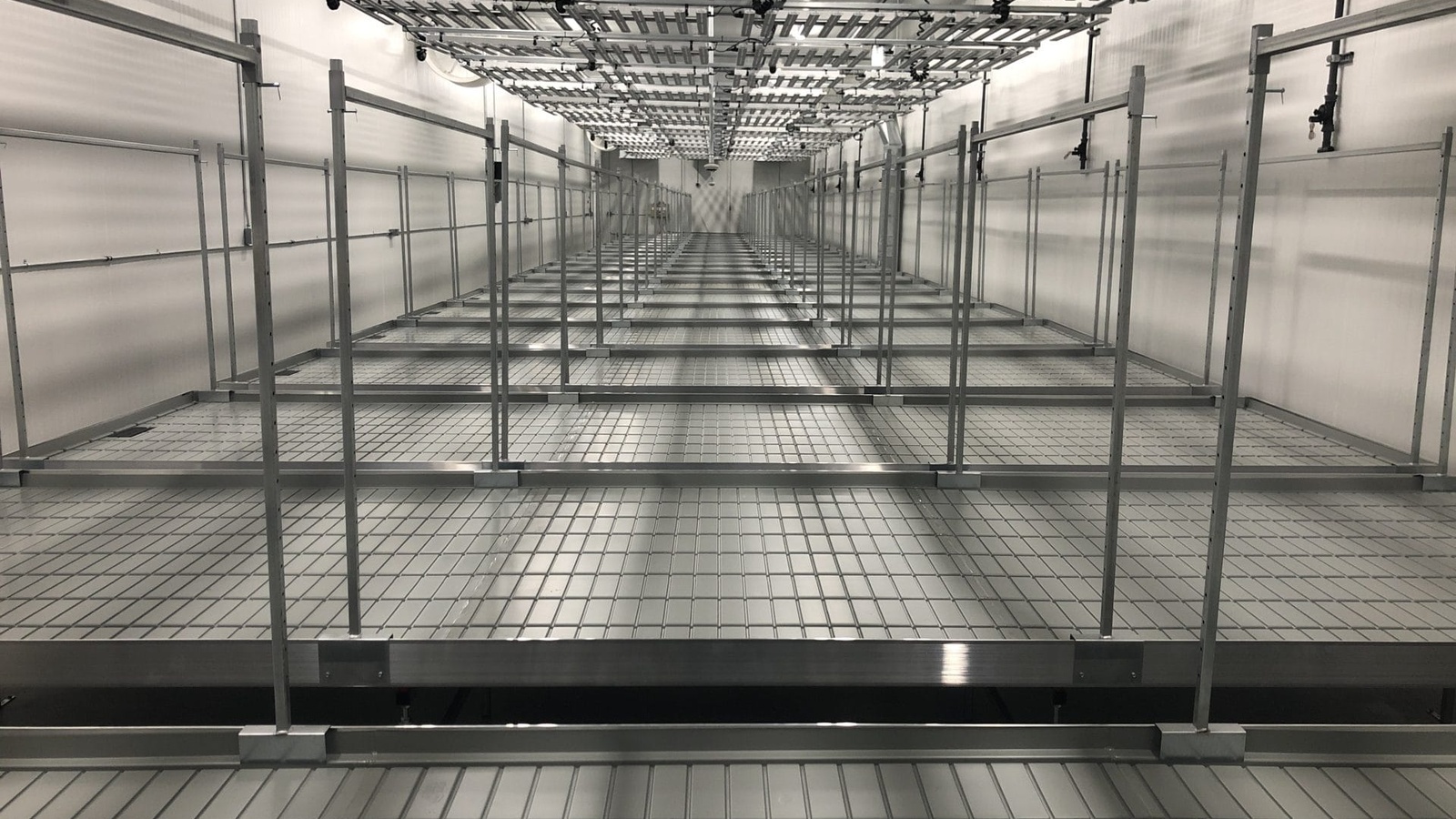
Stationary benches provide a fixed, level growing surface when the room needs stable crop staging more than canopy recovery. They are the simplest bench path for compact rooms, perimeter rows, propagation areas, research spaces, and facilities that need predictable bench placement.
Standard Roll Bench
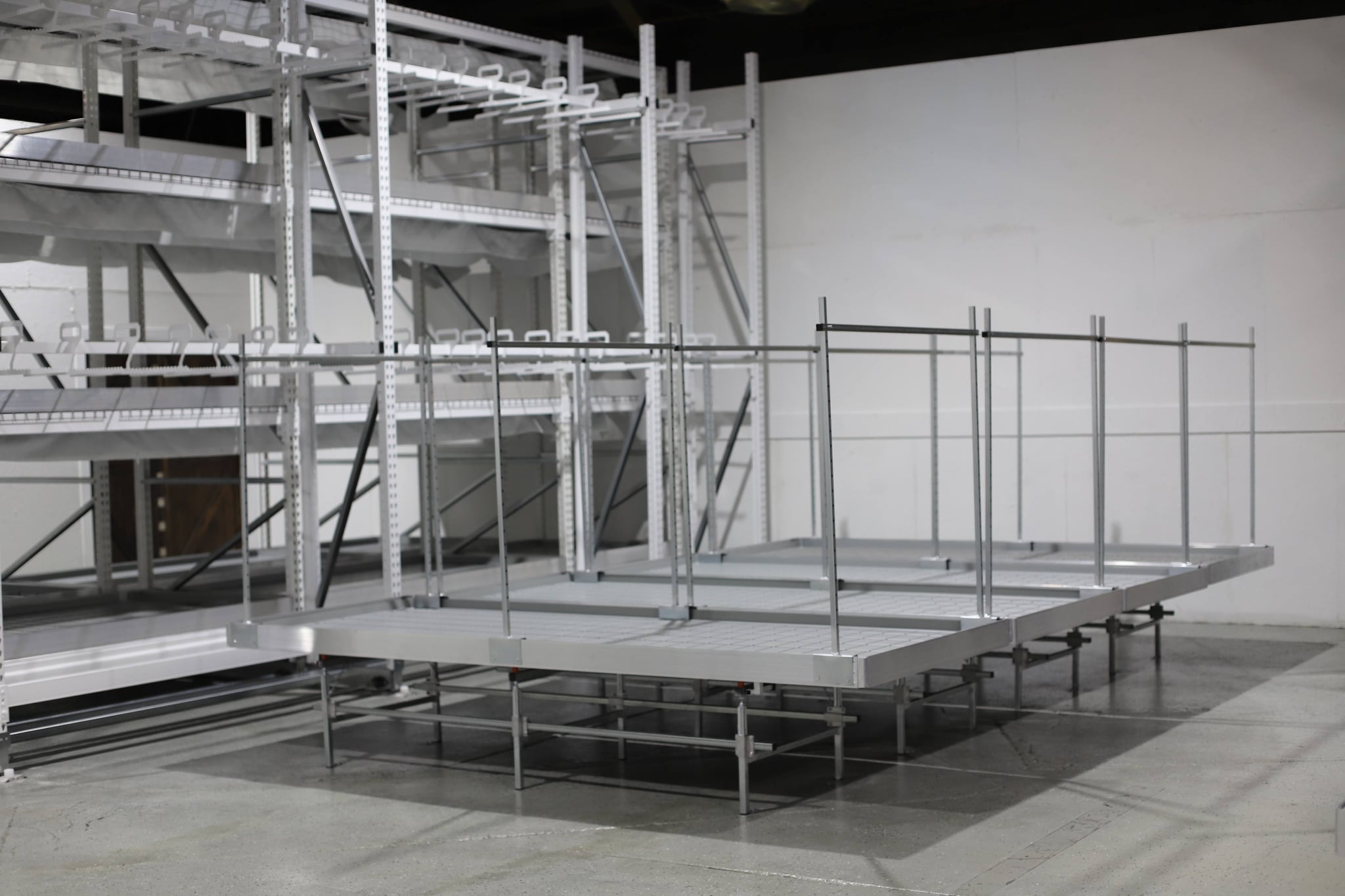
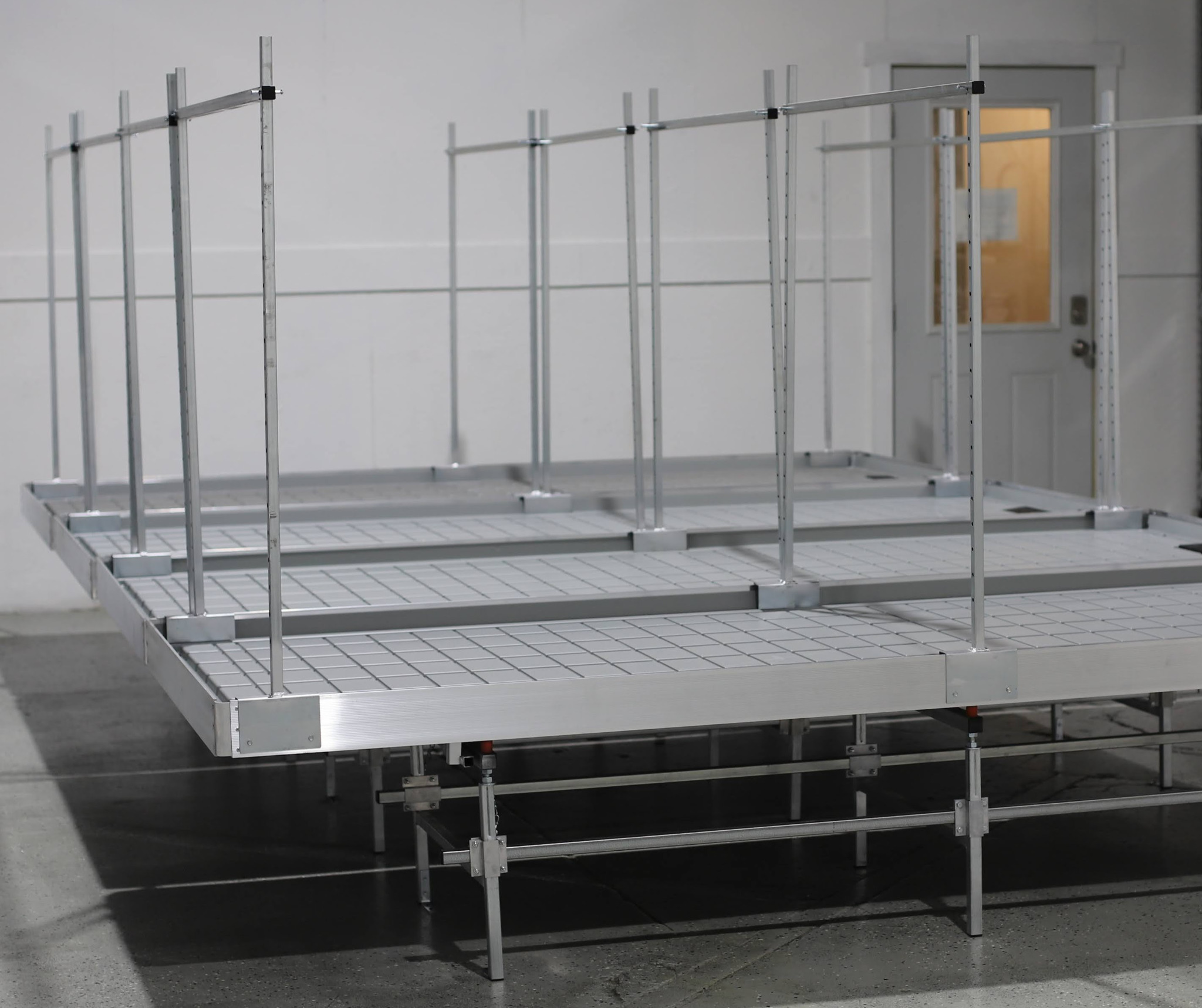
Standard roll benches are the practical path for growers who want more usable canopy without adding a guided track system. Bench tops move laterally to open a work aisle where the team needs access, then shift back into a denser growing layout.
Max Roll Bench
Max Roll benches are used when the room needs more lateral travel and stronger canopy utilization than a standard roll layout can provide. This path is useful when a single-level room needs to push density further while still preserving access.
Manual Tracked Bench
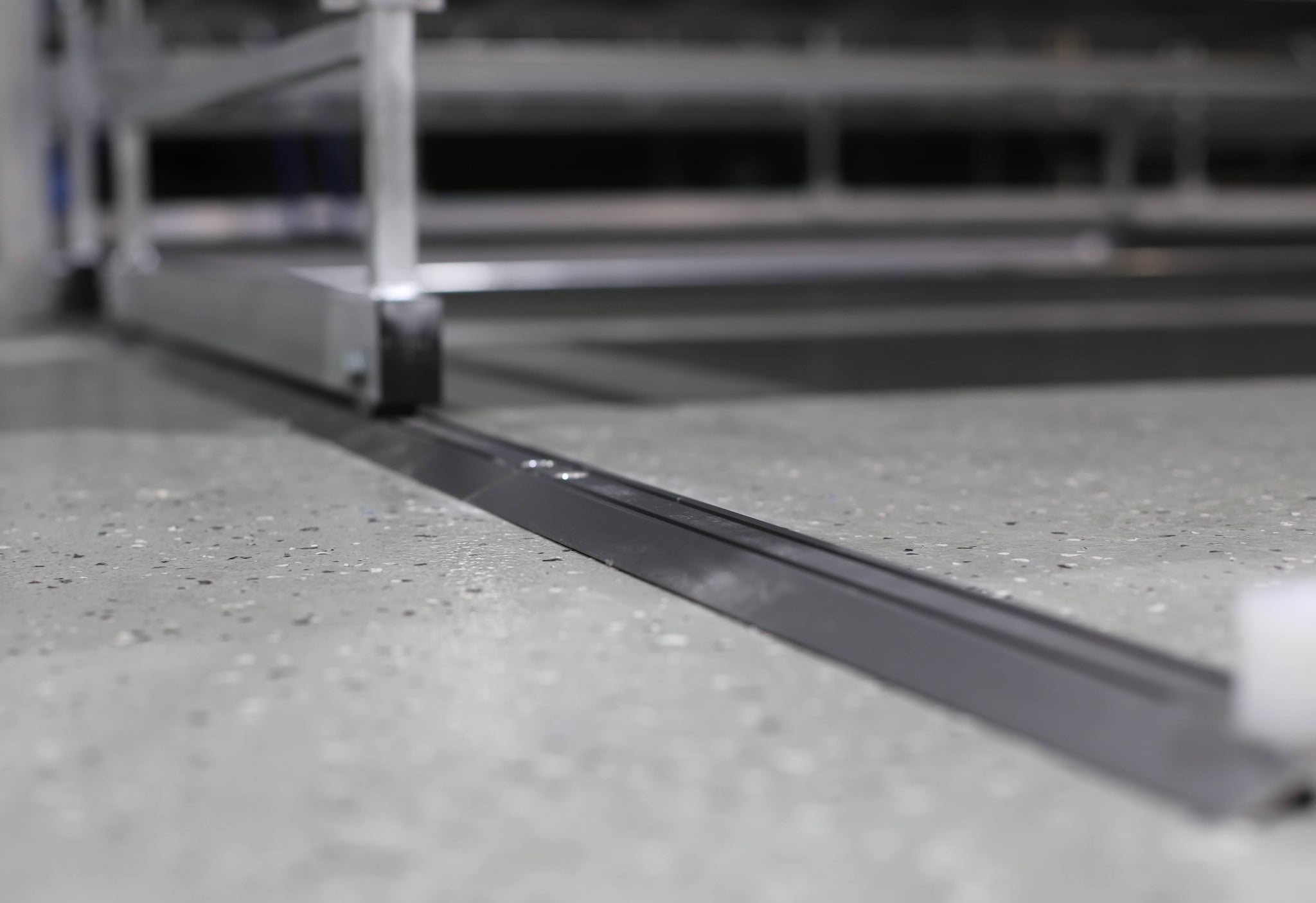
Manual tracked benches help facilities create more controlled movement and repeatable aisle positions. They are a strong path when bench movement needs to stay aligned, aisle openings need to be predictable, or the room layout benefits from a guided system.
Mechanical-Assist Tracked Bench
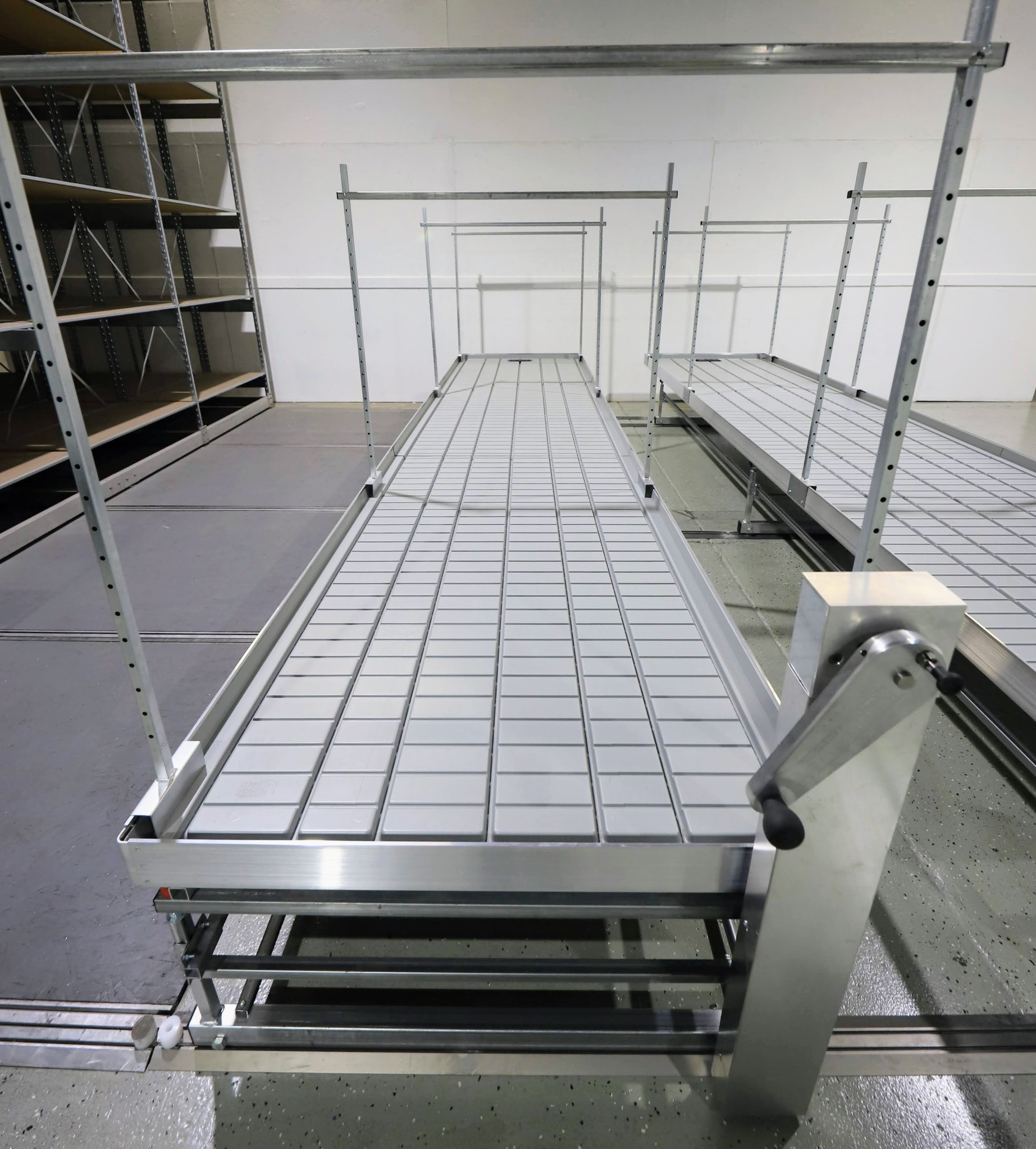
Mechanical-assist tracked systems are considered when bench rows are long, crop loads are heavy, or operators need easier movement. This is not the same as full automation. It is a way to make high-density bench movement more manageable for real cultivation teams.

Ebb & Flow Tray Inserts
Ebb & Flow tray inserts create the molded plastic watering surface used on flood-and-drain bench systems. They are especially useful when a grower needs new benches, replacement tray surfaces, or a tray insert that fits the bench dimensions SSG sells.
How stationary, rolling, max roll, and tracked bench systems differ.
A side-by-side comparison gives buyers a practical framework for deciding which system deserves a layout conversation.
Benches should be made around the room, not forced into it.
SSG does more than quote a generic bench. We help determine which widths, lengths, heights, tops, movement types, and accessories support the room layout and the crop workflow.
American-made construction and tray widths
Ebb & Flow rolling benches are built in the USA from American-made steel and aluminum and made to order. Common stocked tray widths include 1', 2', 3', 4', 4.5', 5', 5.5', and 6'. Additional widths may be available by special order.
Lengths and working heights
Rolling bench lengths are customizable, with a typical minimum length of 7.5'. Stationary bench examples can be configured with selectable working heights from 9" to 36" in 1" increments, depending on the product configuration and room plan.
Standard Roll vs. Max Roll travel
Travel distance should be verified during layout planning. Final fit depends on room width, aisle strategy, bench length, crop load, operator access, floor condition, and whether track systems are being considered.
Choose the top style around irrigation, drainage, cleaning, airflow, and crop handling.
The bench top changes how the room waters, drains, cleans, and handles crops. This is a buyer decision, not a visual preference.
Ebb & Flow Rolling Benches
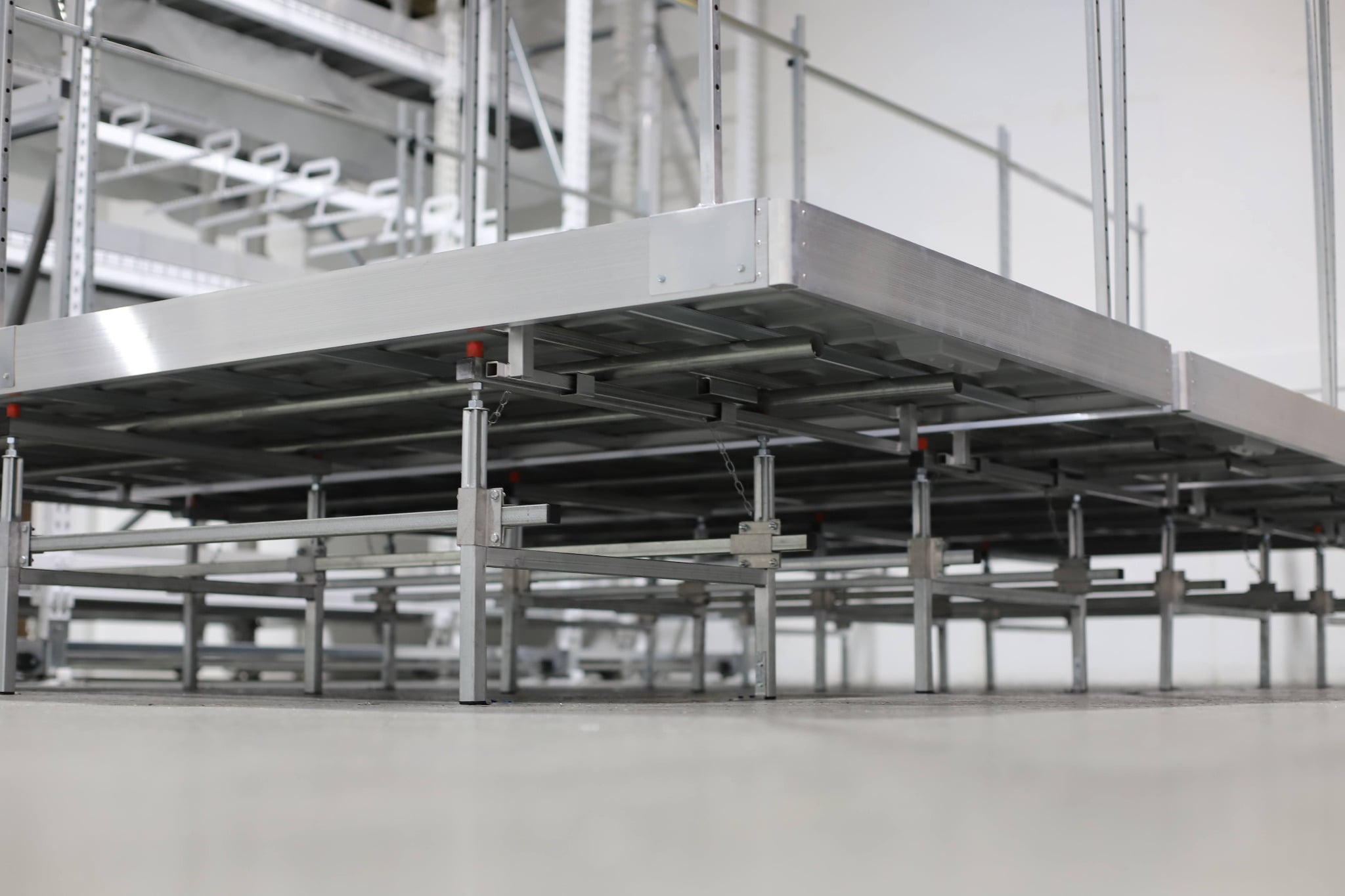
Ebb & Flow bench tops support flood-and-drain watering, sub-irrigation routines, consistent tray performance, and cleaner water movement across the bench surface.
- Good for tray-based irrigation and uniform watering routines.
- Requires proper support, leveling, water load planning, and drain access.
- Useful for cannabis, propagation, nursery, greenhouse, and CEA spaces.

Expanded Metal Benches
Expanded metal benches use a similar bench structure but replace tray inserts with durable expanded metal tops for airflow, drainage, cleaning, and flexible crop staging.
- Good when airflow, sanitation, and simple staging matter.
- Uses similar legs, framework, aluminum side rails, and rounded corners.
- Works well in retail, nursery, propagation, and high-volume grow environments.
These details make the product feel engineered, not generic.
The page should show buyers that the bench system is built for commercial grow environments and that SSG understands the real product details that affect long-term performance.
American Steel and Aluminum
Benches are proudly made in America using American steel and aluminum for a durable domestic product path.
Galvanized 1" Steel Tubing
The bench structure is built from galvanized steel tubing to support cultivation loads and repeated daily use.
1.25" Leveling Header
Leveling headers are constructed from galvanized tubing with up to 2" of adjustment for real facility floors.
Anti-Tip Brackets
Max Roll systems include anti-tip planning and brackets where extended travel requires additional stability.
Concrete Floor Brackets
Max Roll layouts use metal brackets to secure selected bench legs to concrete floors.
Extruded Aluminum Side Rails
Side rails define the bench edge, help contain trays, and create a cleaner commercial bench profile.
Rounded Corners
Rounded bench corners reduce snag points and help the system feel cleaner in busy cultivation rooms.
Molded Tray Inserts
Replacement molded polystyrene Ebb & Flow inserts help restore cracked, broken, or worn tray surfaces without replacing the entire bench system.
Barbed Hose Connection
Bench connector options can support connection to 3/4" hose where tray plumbing requires it.
Pre-Drilled Components
Components are pre-drilled, pre-punched, pre-cut, and prepared for assembly to reduce field fabrication.
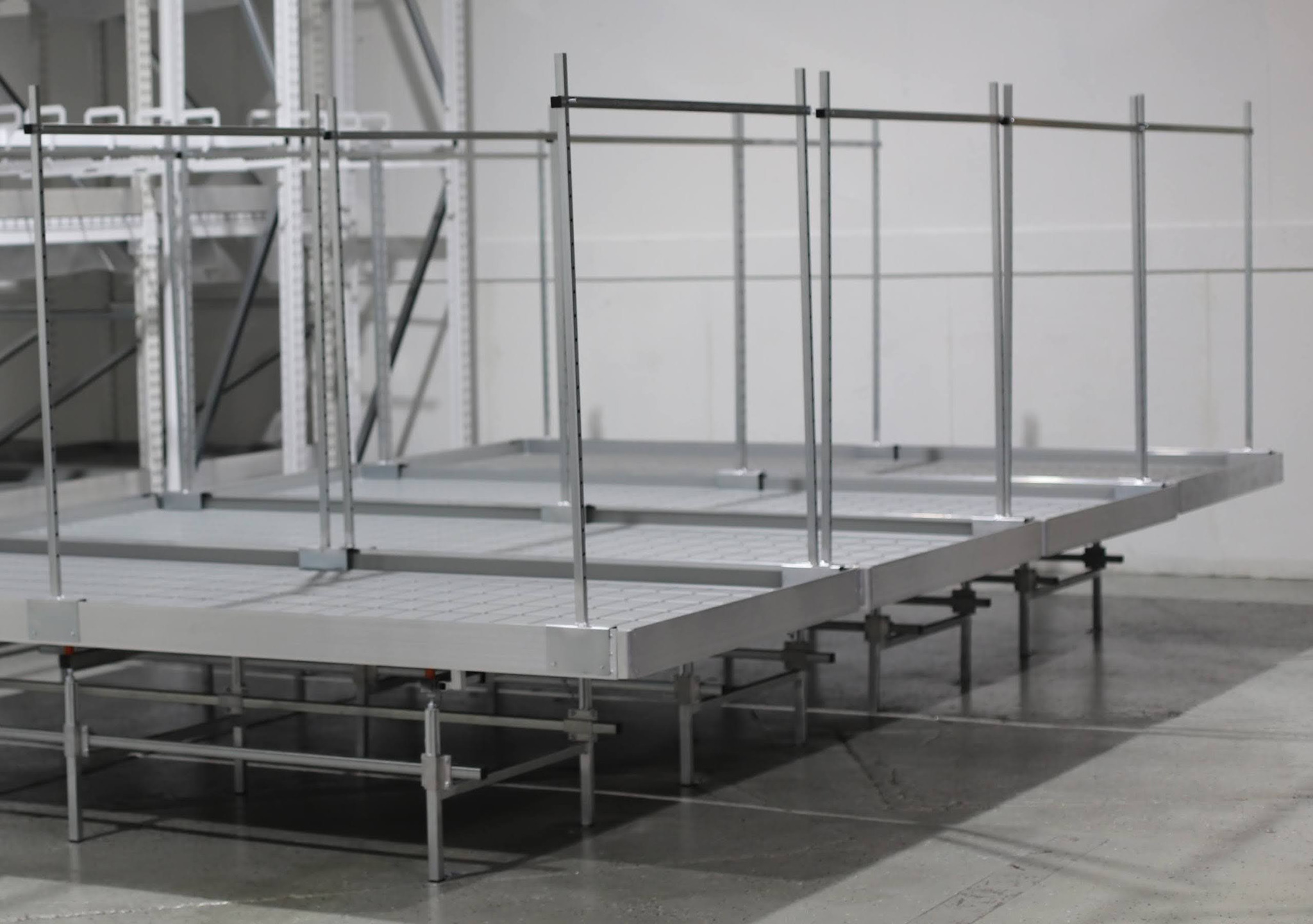
What SSG reviews before recommending a bench path.
The right answer depends on the room. SSG helps move the conversation away from simple product selection and into layout planning: how the room will be grown, accessed, cleaned, irrigated, loaded, and expanded.
Bench systems support every core SSG Horticulture market.
Rolling and tracked bench systems are especially useful where usable canopy, crop access, and daily workflow all need to be balanced.
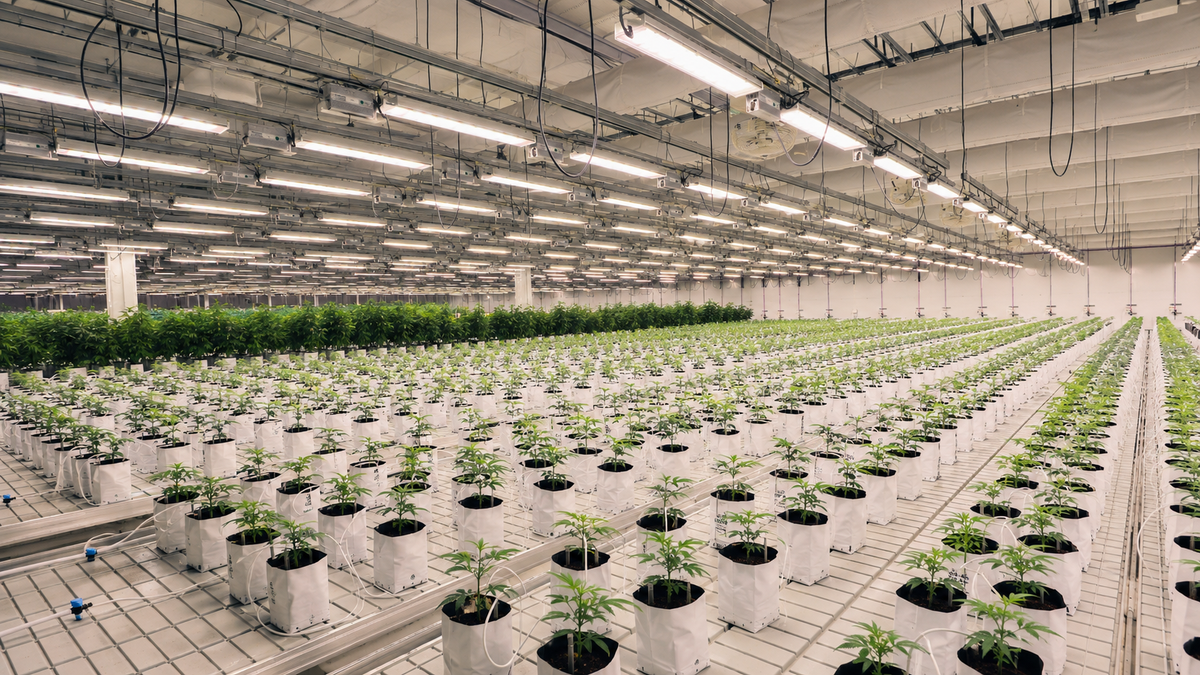
Cannabis Cultivation
Propagation, veg, and flower rooms where canopy coverage, irrigation layout, trellising, plant access, and harvest paths directly affect production capacity.
Explore Cannabis Solutions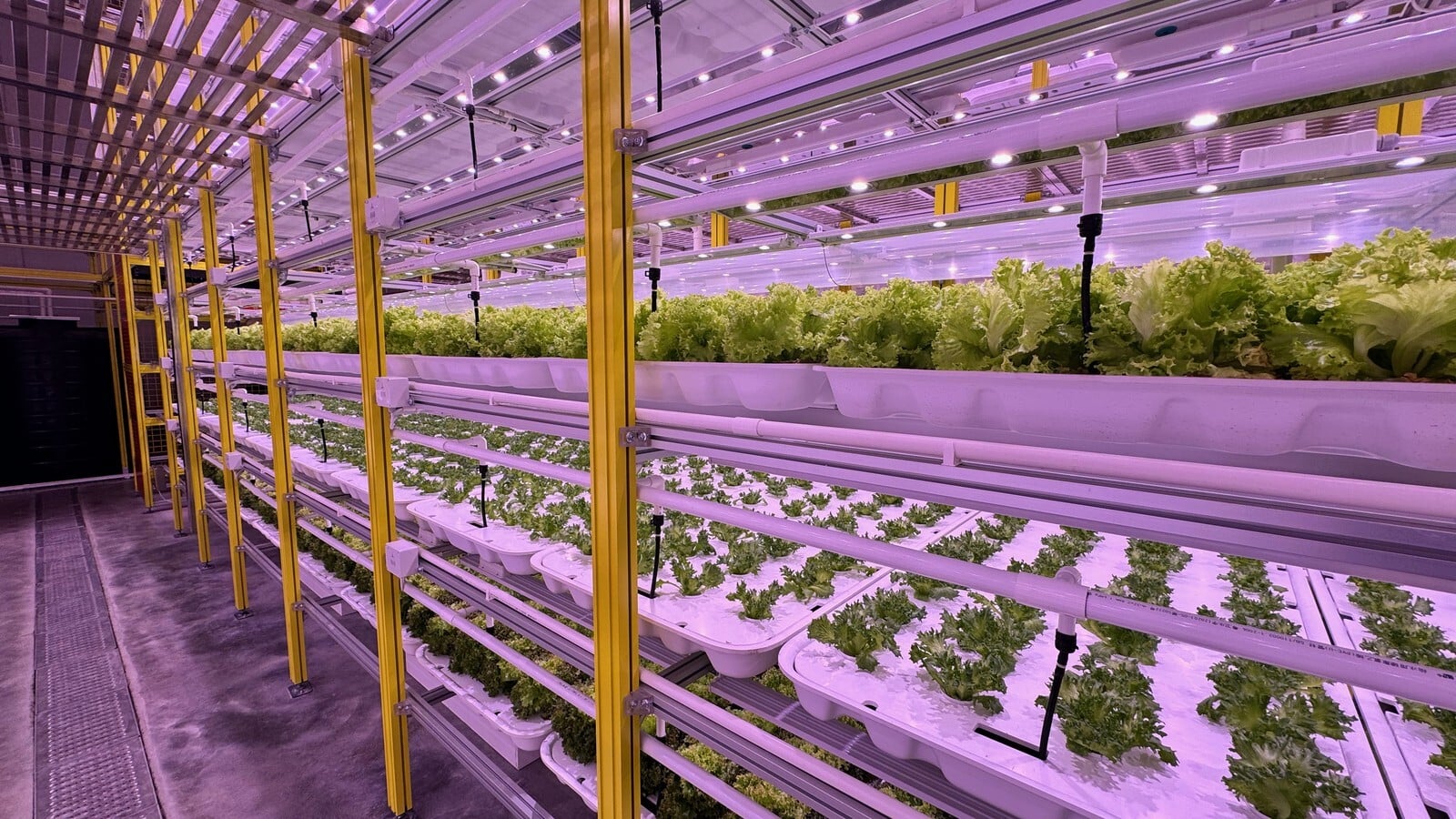
Vertical Farming
Controlled indoor production environments where tray movement, access paths, harvest flow, and efficient production rooms matter.
Explore Vertical Farming Solutions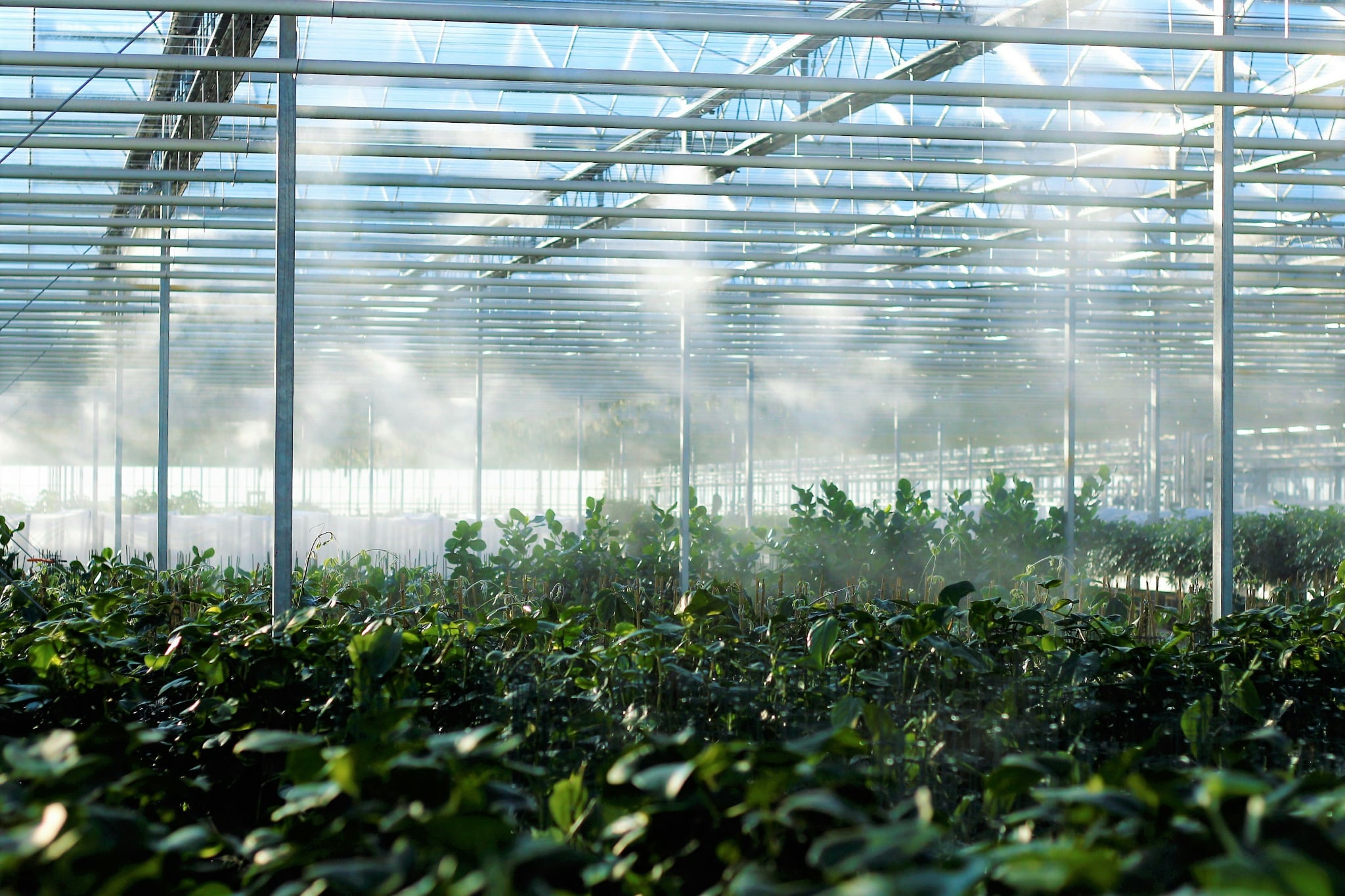
Greenhouse Growing
Greenhouse bays, starts, leafy greens, herbs, nursery production, and specialty crops that need better bench density and flexible access.
Request a Free Consultation
Research & Specialty Grow
Plant science labs, universities, research rooms, teaching environments, specialty crops, and flexible CEA applications.
Request a Free ConsultationWhat is the difference between rolling and tracked benches?+
Rolling benches shift laterally to create aisle-on-demand access. Tracked benches use a guided track layout to support more controlled movement, repeatable aisle positioning, longer runs, heavier layouts, or mechanical assist.
Can rolling benches be used on tracks?+
Yes. In the right facility, rolling bench tops can be combined with tracked layouts so growers get guided movement, controlled aisle positioning, and rolling-top access in the same system plan.
When is standard roll enough?+
Standard roll is often enough when the room needs flexible aisle access, bench movement is manageable, the layout does not require guided tracks, and the primary goal is improved space utilization without added track complexity.
When does Max Roll make sense?+
Max Roll makes sense when standard roll does not provide enough travel or canopy coverage. It is designed for concrete floor installation and selected legs are anchored to prevent tipping.
When does mechanical assist make sense?+
Mechanical assist makes sense when bench rows are long, crop loads are heavy, or operators need easier movement. It is especially useful in larger high-density rooms where repeated movement becomes labor intensive.
Are tracked benches automated?+
Not by default. This page treats tracked benches as guided manual or mechanical-assist movement systems, not fully automated bench systems.
What information is needed for pricing?+
Useful inputs include room dimensions, crop type, bench widths and lengths, target working height, irrigation method, top style, aisle requirements, floor condition, desired travel, load expectations, and whether rolling, max roll, tracked, or hybrid layouts are being considered.
Are these benches only for cannabis?+
No. Bench systems can support cannabis, vertical farming, greenhouse growing, nursery crops, floriculture, herbs, microgreens, propagation, research spaces, and controlled environment agriculture facilities.
Supporting Bench Projects Across Regions, Facility Types, and Growth Stages
SSG can support cultivation operators through new builds, expansions, retrofits, greenhouse projects, indoor farming facilities, research environments, and bench system upgrades across a broad national service footprint.
Southwest Solutions Near You
Explore office locations and supported service markets across the U.S. for benching systems, cultivation facilities, greenhouse projects, research spaces, and controlled production environments.
Southwest Solutions Service Areas
Texas
- Dallas
- Austin
- Houston
- San Antonio
- Waco
- Tyler
- Amarillo
- Lubbock
- El Paso
- Ft Worth
- Corpus Christi
- Midland
Oklahoma
- Oklahoma City
- Tulsa
- Norman
- Lawton
- Enid
- Stillwater
- McAlester
- Muskogee
Kansas
- Wichita
- Overland Park
- Topeka
- Kansas City
- Lawrence
- Manhattan
- Salina
- Hays
- Dodge City
- Garden City
Colorado
- Denver
- Colorado Springs
- Fort Collins
- Grand Junction
- Pueblo
- Durango
- Alamosa
- Steamboat Springs
Alabama
- Huntsville
- Birmingham
- Montgomery
- Mobile
- Tuscaloosa
- Hoover
- Dothan
- Decatur
Alaska
- Anchorage
- Fairbanks
- Juneau
- Sitka
- Ketchikan
- Kodiak
- Bethel
- Nome
Arizona
- Phoenix
- Tucson
- Flagstaff
- Yuma
- Prescott
- Lake Havasu City
- Sierra Vista
- Kingman
Arkansas
- Little Rock
- Fayetteville
- Fort Smith
- Jonesboro
- Hot Springs
- Pine Bluff
- Texarkana
- Bentonville
California
- Los Angeles
- San Diego
- San Francisco
- Sacramento
- Fresno
- Redding
- Bakersfield
- San Bernardino
Connecticut
- Hartford
- New Haven
- Stamford
- Bridgeport
Delaware
- Wilmington
- Dover
- Newark
- Rehoboth Beach
Florida
- Jacksonville
- Tallahassee
- Orlando
- Tampa
- Miami
- West Palm Beach
- Fort Myers
- Pensacola
Georgia
- Atlanta
- Savannah
- Augusta
- Columbus
- Macon
- Athens
- Valdosta
- Gainesville
Hawaii
- Honolulu
- Hilo
- Kahului
- Kailua-Kona
Idaho
- Boise
- Coeur d'Alene
- Twin Falls
- Idaho Falls
- Pocatello
- Lewiston
- McCall
- Sandpoint
Illinois
- Chicago
- Springfield
- Rockford
- Peoria
- Champaign
- Bloomington
- Carbondale
- Moline
Indiana
- Indianapolis
- Fort Wayne
- South Bend
- Evansville
- Lafayette
- Bloomington
- Terre Haute
- Gary
Iowa
- Des Moines
- Cedar Rapids
- Davenport
- Sioux City
- Iowa City
- Waterloo
- Council Bluffs
- Ames
Kentucky
- Louisville
- Lexington
- Bowling Green
- Owensboro
- Covington
- Paducah
- Ashland
- Richmond
Louisiana
- New Orleans
- Baton Rouge
- Shreveport
- Lafayette
- Lake Charles
- Monroe
- Alexandria
- Houma
Maine
- Portland
- Bangor
- Augusta
- Lewiston
- Waterville
- Presque Isle
- Bar Harbor
- Biddeford
Maryland
- Baltimore
- Annapolis
- Frederick
- Hagerstown
Massachusetts
- Boston
- Worcester
- Springfield
- Pittsfield
Michigan
- Detroit
- Grand Rapids
- Lansing
- Ann Arbor
- Flint
- Traverse City
- Marquette
- Kalamazoo
Minnesota
- Minneapolis
- St. Paul
- Duluth
- Rochester
- Mankato
- St. Cloud
- Bemidji
- Moorhead
Mississippi
- Jackson
- Gulfport
- Hattiesburg
- Biloxi
- Southaven
- Meridian
- Tupelo
- Natchez
Missouri
- Jefferson City
- St. Louis
- Kansas City
- Springfield
- Columbia
- Joplin
- Cape Girardeau
- St. Joseph
Montana
- Helena
- Billings
- Missoula
- Great Falls
- Bozeman
- Kalispell
- Havre
- Miles City
Nebraska
- Lincoln
- Omaha
- Grand Island
- Kearney
- Scottsbluff
- Norfolk
- North Platte
- Fremont
Nevada
- Las Vegas
- Reno
- Carson City
- Elko
- Pahrump
- Henderson
- Winnemucca
- Mesquite
New Hampshire
- Concord
- Manchester
- Portsmouth
- Keene
New Jersey
- Newark
- Jersey City
- Trenton
- Atlantic City
New Mexico
- Santa Fe
- Albuquerque
- Las Cruces
- Roswell
- Farmington
- Gallup
- Carlsbad
- Clovis
New York
- Albany
- New York City
- Buffalo
- Rochester
- Syracuse
- Binghamton
- Ithaca
- Plattsburgh
North Carolina
- Raleigh
- Charlotte
- Greensboro
- Asheville
- Wilmington
- Fayetteville
- Boone
- Greenville
North Dakota
- Bismarck
- Fargo
- Grand Forks
- Minot
- Dickinson
- Williston
- Jamestown
- Devils Lake
Ohio
- Columbus
- Cleveland
- Cincinnati
- Toledo
- Dayton
- Akron
- Youngstown
- Athens
Oregon
- Portland
- Salem
- Eugene
- Hermiston
- Baker City
- Medford
- Bend
- Klamath Falls
Pennsylvania
- Harrisburg
- Philadelphia
- Pittsburgh
- Erie
- Scranton
- State College
- Allentown
- Williamsport
Rhode Island
- Providence
- Warwick
- Newport
- Woonsocket
South Carolina
- Columbia
- Charleston
- Greenville
- Myrtle Beach
- Hilton Head Island
- Spartanburg
- Florence
- Rock Hill
South Dakota
- Pierre
- Sioux Falls
- Rapid City
- Aberdeen
- Watertown
- Brookings
- Mitchell
- Yankton
Tennessee
- Memphis
- Jackson
- Nashville
- Clarksville
- Cookeville
- Chattanooga
- Knoxville
- Johnson City
Utah
- Salt Lake City
- Ogden
- Logan
- Provo
- St. George
- Cedar City
- Moab
- Vernal
Vermont
- Montpelier
- Burlington
- Rutland
- Brattleboro
Virginia
- Richmond
- Norfolk
- Virginia Beach
- Roanoke
- Lynchburg
- Harrisonburg
- Fredericksburg
- Bristol
Washington
- Olympia
- Seattle
- Spokane
- Yakima
- Bellingham
- Wenatchee
- Kennewick
- Vancouver
West Virginia
- Charleston
- Huntington
- Morgantown
- Wheeling
- Parkersburg
- Beckley
- Martinsburg
- Bluefield
Wisconsin
- Madison
- Milwaukee
- Green Bay
- Eau Claire
- La Crosse
- Wausau
- Appleton
- Superior
Wyoming
- Cheyenne
- Casper
- Laramie
- Gillette
- Sheridan
- Rock Springs
- Jackson
- Cody
District of Columbia
- Washington D.C.
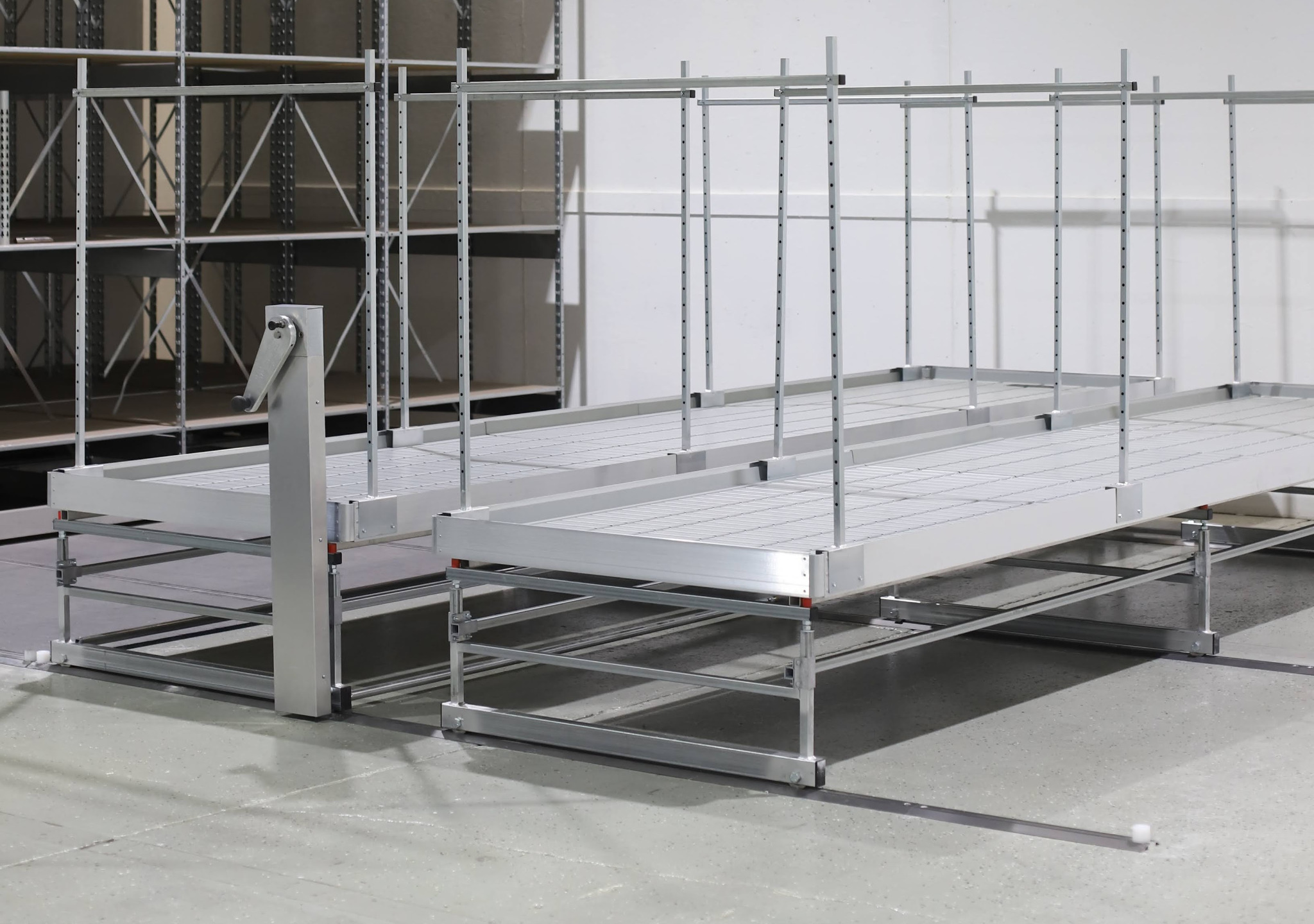
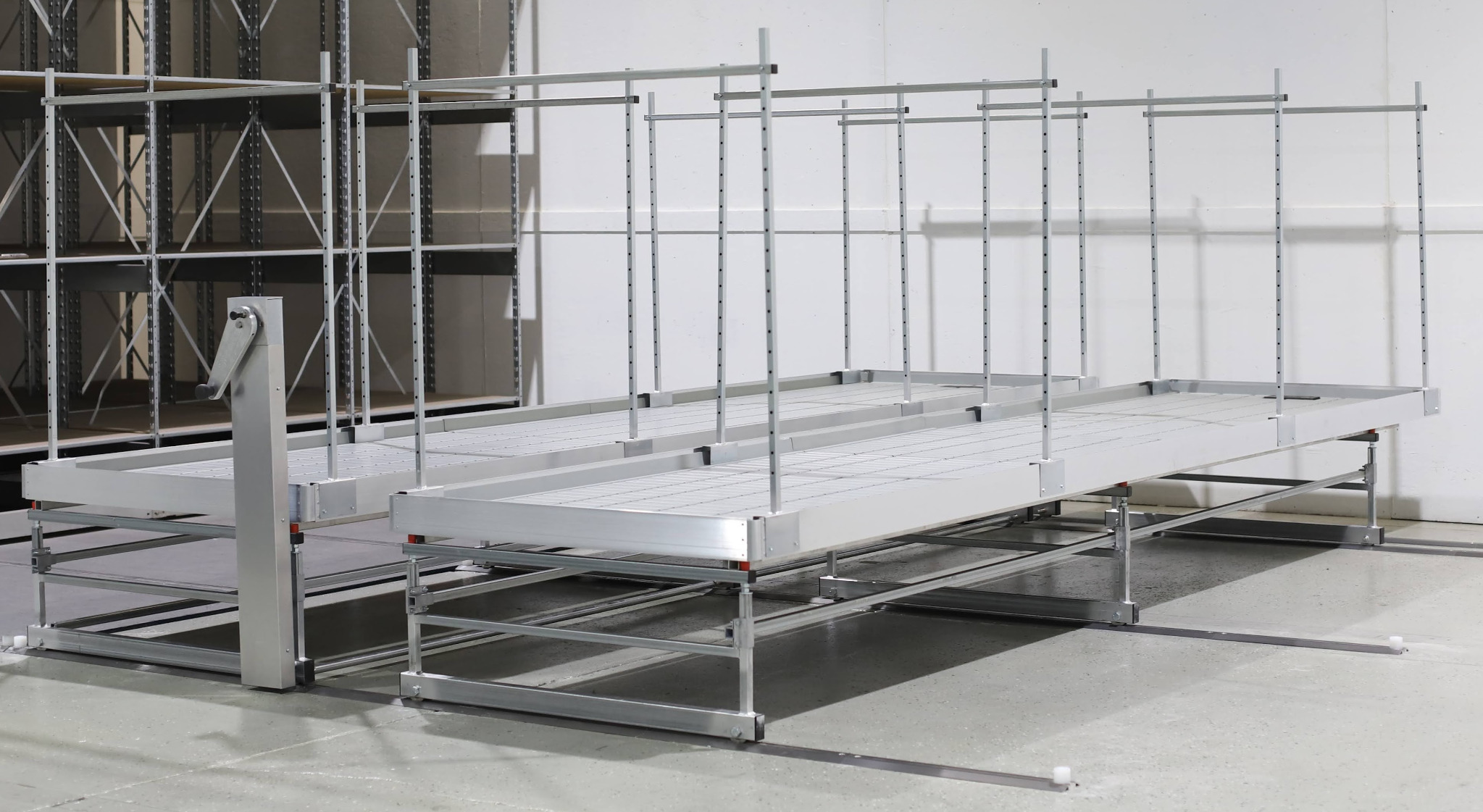
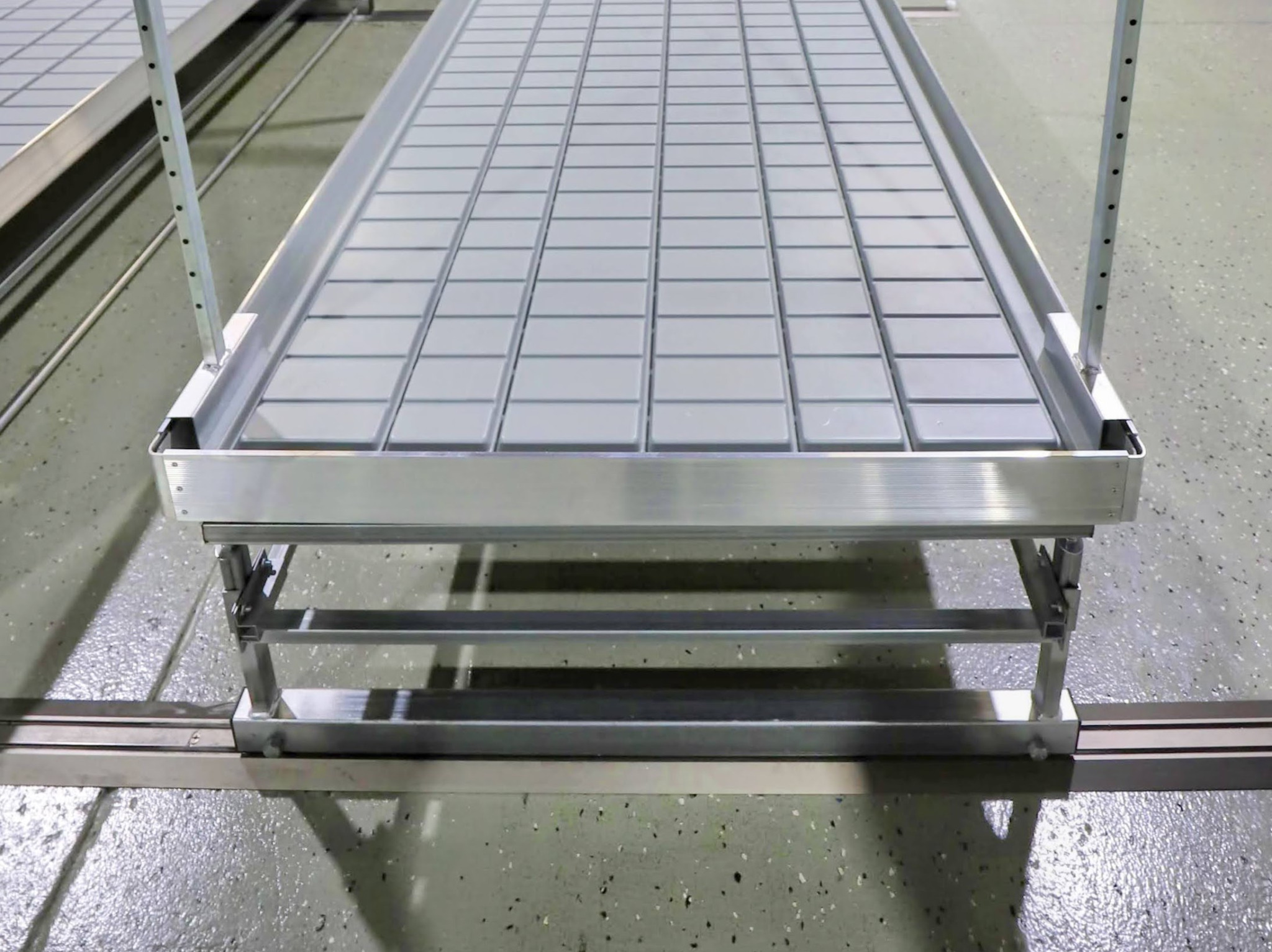
Rolling and tracked bench systems from room scale to product detail.
See rolling and tracked bench systems at every scale, from full cultivation rooms and aisle travel to bench tops, hardware detail, and finished installations.
Ready to Compare Rolling and Tracked Bench Layouts?
Every growing environment has different canopy goals, workflow needs, load requirements, and facility constraints. SSG Horticulture can help you compare stationary, rolling, max roll, manual tracked, and mechanical-assist tracked bench options around the way your room actually operates.