Case and Tote Conveyors for Reliable Material Flow
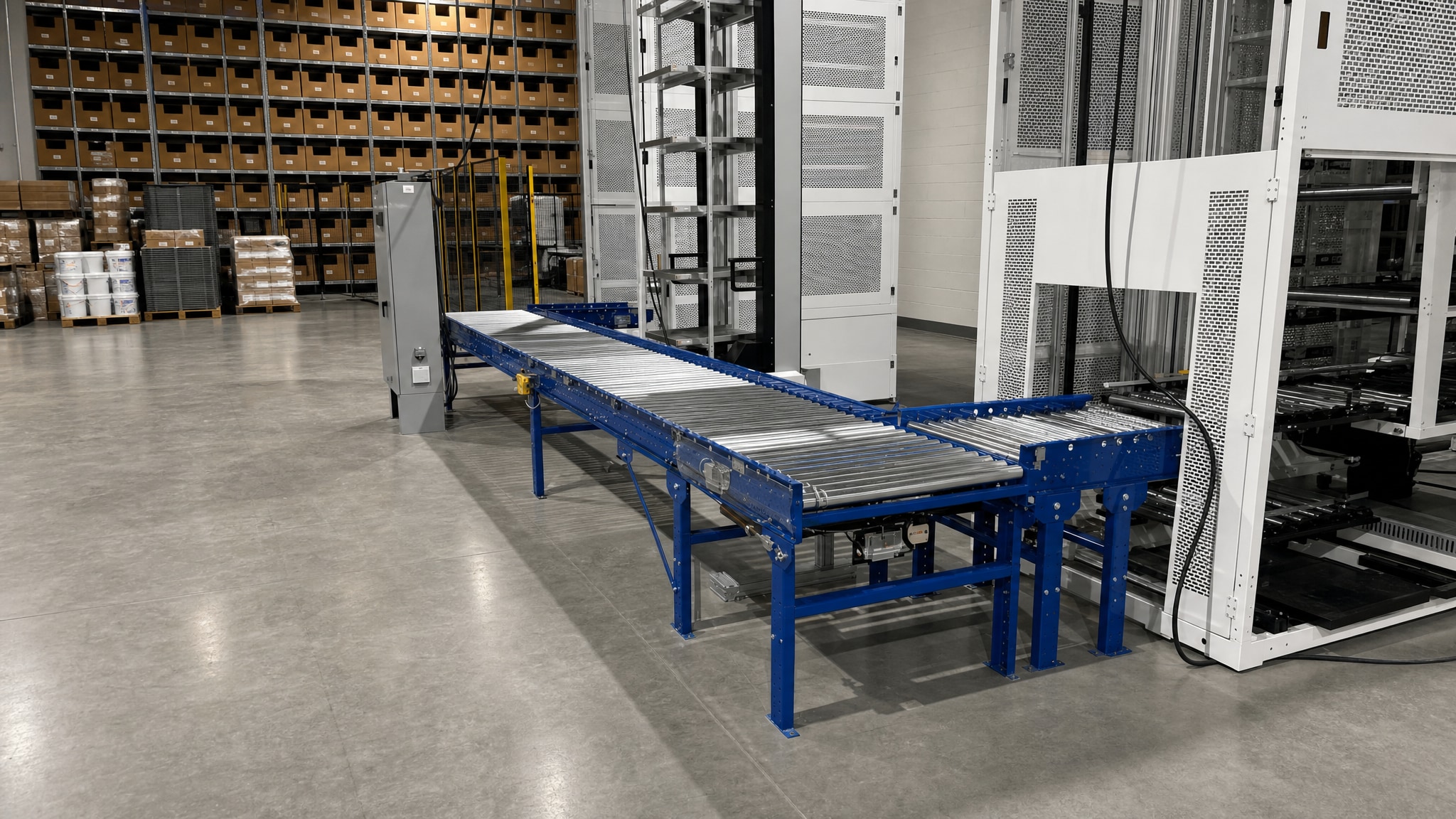
Case and tote conveyors move cartons, cases, and reusable totes between facility work areas with less manual transport. Southwest Solutions Group helps plan roller, belt, accumulation, and transfer configurations around your containers, layout, and handling goals.
What Are Case and Tote Conveyors?
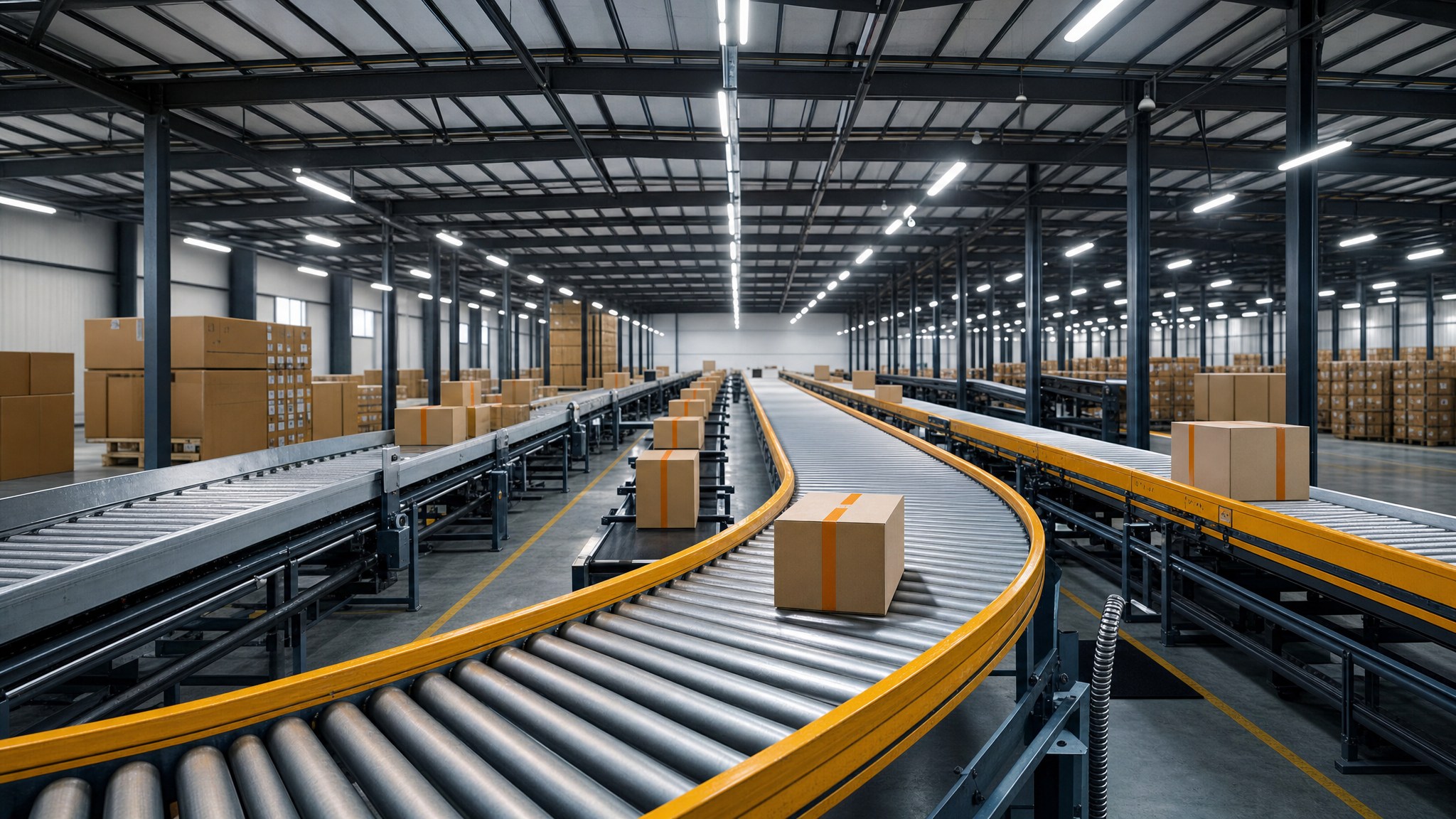
Case and tote conveyors are material handling systems that move cases, cartons, and totes between defined points in a warehouse, distribution center, or manufacturing facility. A case conveyor or tote conveyor may be designed for direct transport, controlled accumulation, routing, or transfer between work areas depending on the containers being handled.
- Moving containers between receiving, storage, picking, packing, production, and shipping areas.
- Temporarily holding items in accumulation zones so downstream work areas can receive them in a controlled sequence.
- Connecting conveyor runs or workstations through transfer points that match the layout.
- Supporting sortation or routing when products need to move to different destinations.
Planning Around Case Size, Tote Fit, and Loads
The right case and tote conveyor system starts with the containers, loads, and route. Confirm the length, width, height, and bottom style of each case, carton, or tote, then review typical and maximum item weights, load stability, orientation requirements, transfer points, available floor space, and staging needs.
- Container dimensions and bottom shape for each case, carton, or tote.
- Typical and peak load weights per item.
- Transfer requirements between conveyor runs, equipment, elevations, or work areas.
- Accumulation needs, staging locations, and available floor space.
Roller, Belt, Accumulation, and Transfer Options
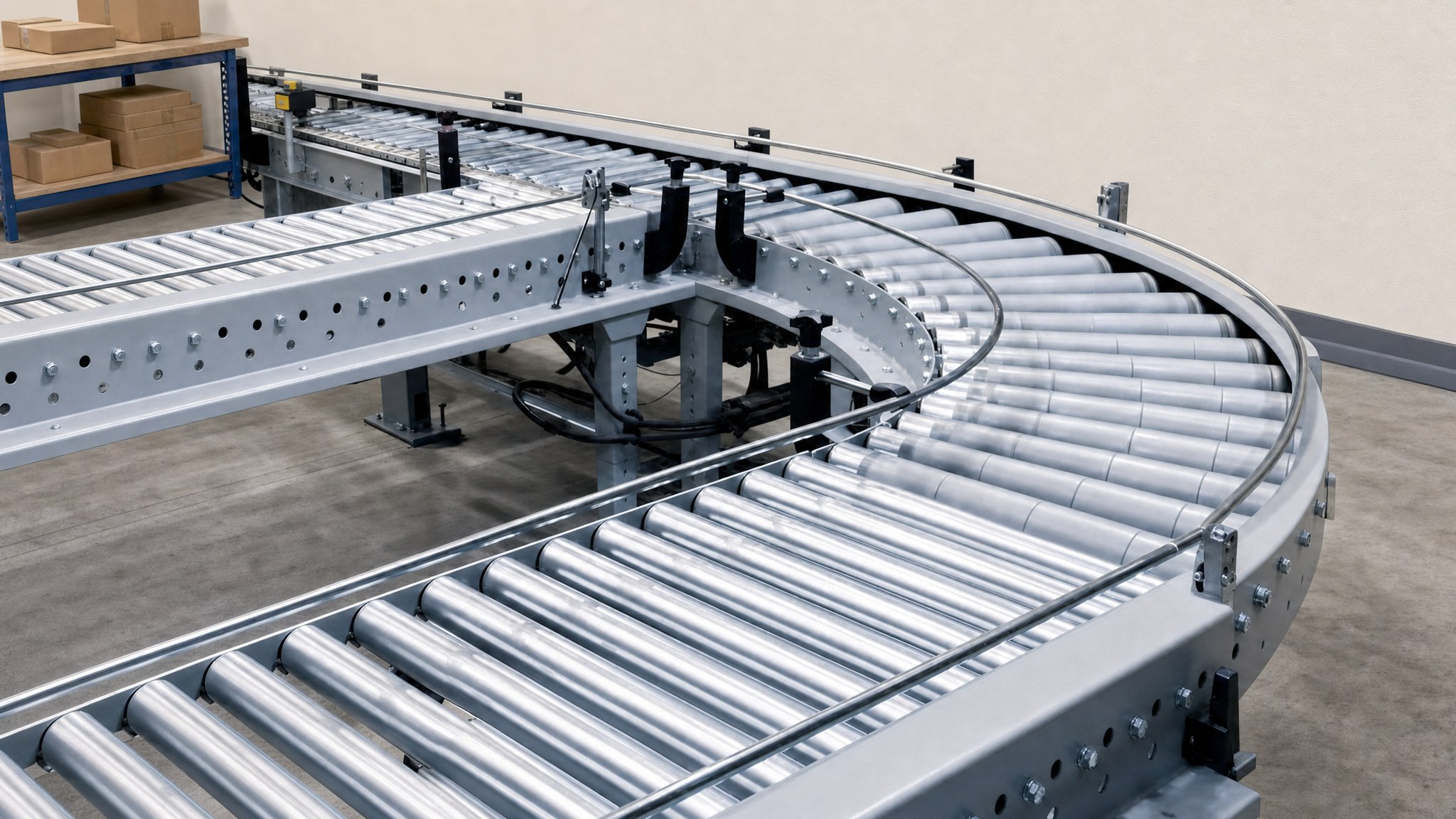
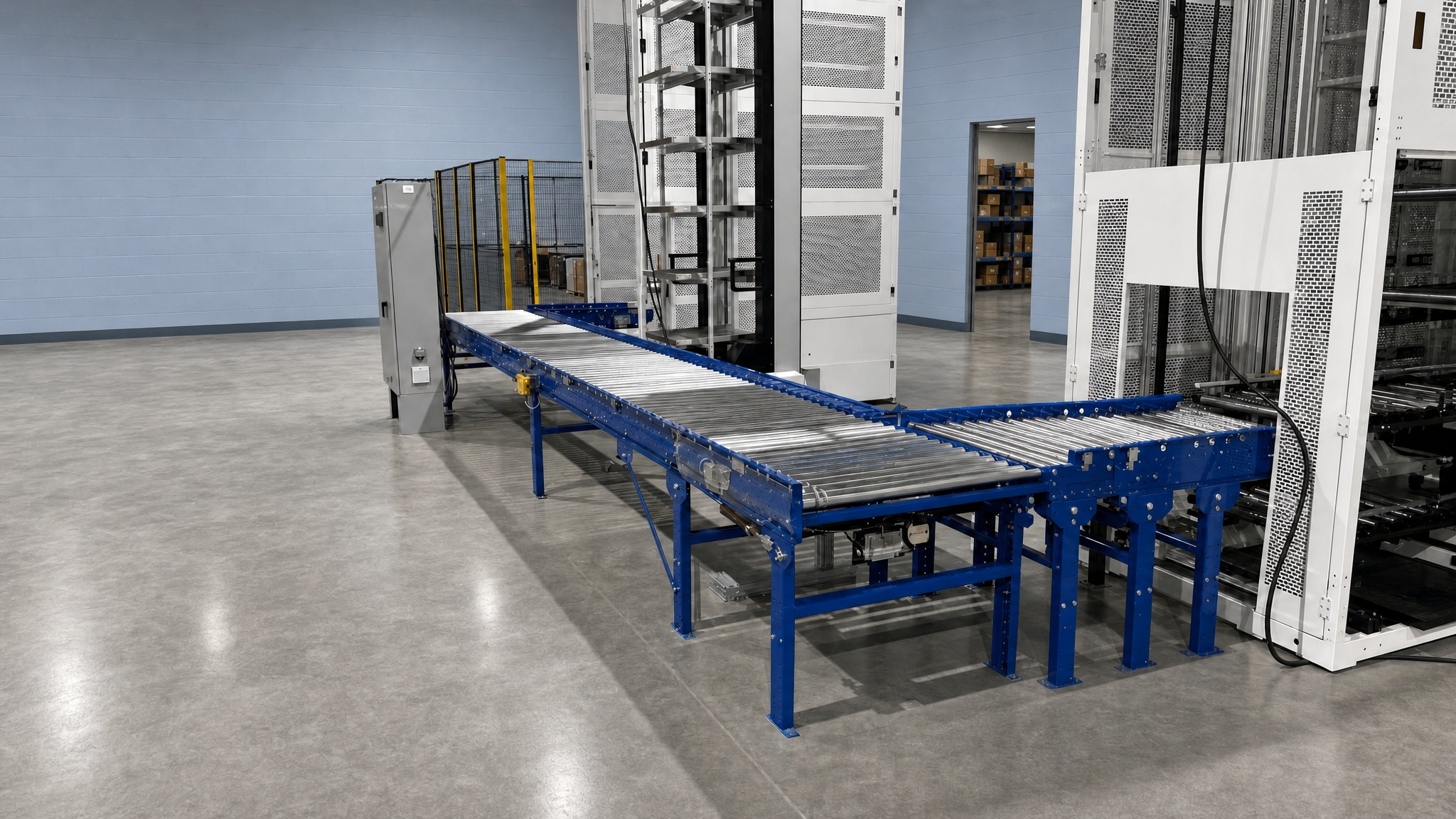
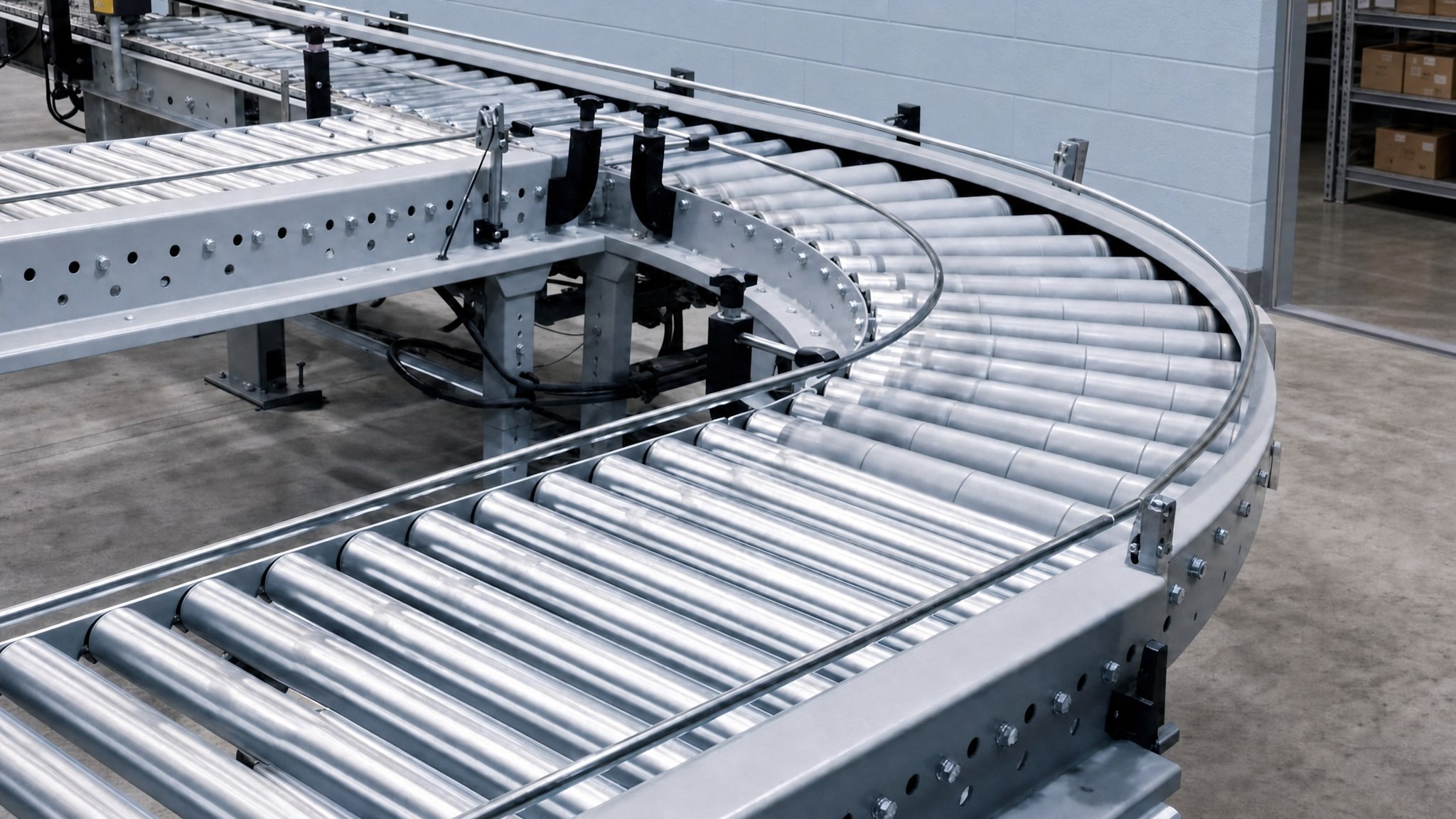
Case and tote conveyors can be configured with roller sections, belt sections, accumulation zones, and transfer points. Roller conveyors are often used when the container base is compatible with roller contact, while belt conveyors may be selected when the item needs more continuous surface support or different transfer conditions.
Accumulation sections temporarily hold items to control flow between process steps. Transfer points connect conveyor runs, workstations, or other equipment, and vertical routing should be reviewed separately when incline, decline, or spiral movement is required.
- Roller or belt conveying surface based on container base, load behavior, and transfer needs.
- Accumulation zones for controlled staging between process areas.
- Transfer points and equipment interfaces that match the facility layout.
- Incline, decline, or spiral routing review when the conveyor path changes elevation.
Where Case and Tote Conveyors Fit in Facilities
Case and tote conveyors are used in warehouses, distribution centers, and manufacturing plants where teams need repeatable movement between receiving, storage, picking, packing, production, and shipping. They reduce hand-carrying between zones and support tote handling conveyor routes for fulfillment, replenishment, staging, and empty tote return.
- Direct transport between receiving, storage, packing, and shipping zones.
- Staging products before packing, labeling, shipment, or another production step.
- Tote-based order picking and replenishment workflows.
- Empty tote return routes for reuse within the facility.
How to Plan a Case and Tote Conveyor Project
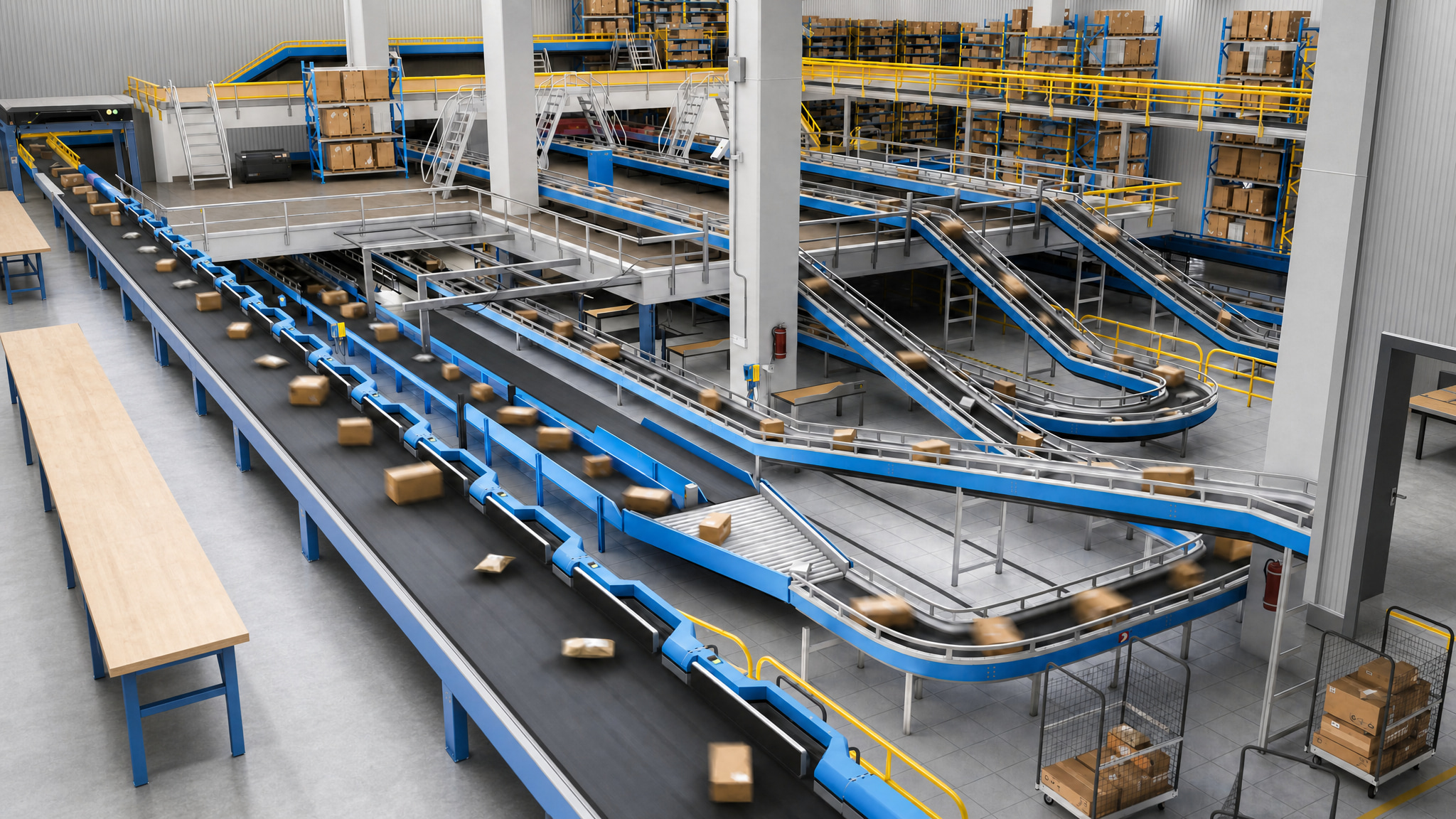
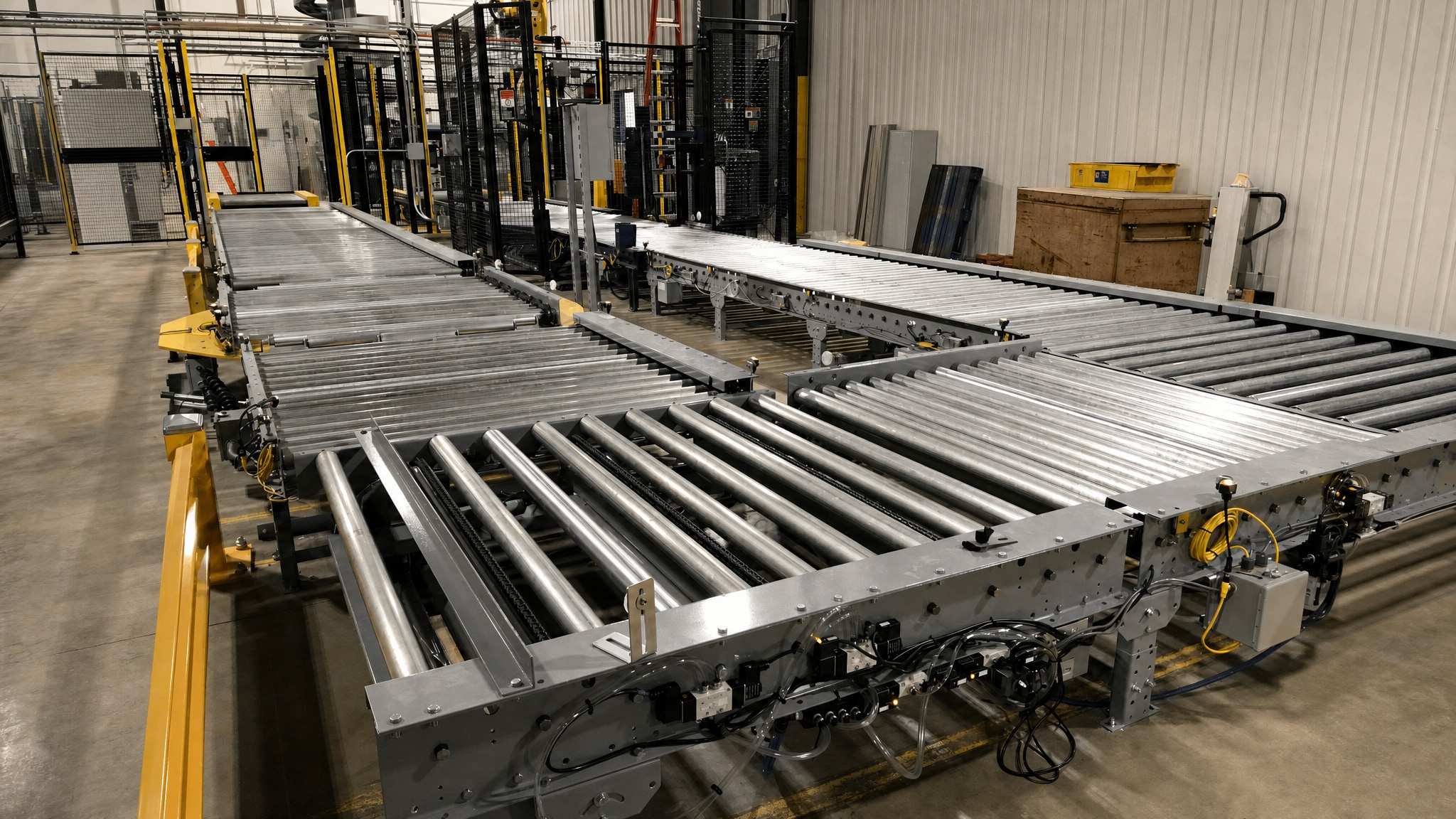
Before requesting a quote or consultation, prepare a layout or sketch that shows conveyor start points, end points, key process zones, transfer locations, and available floor space. Document container dimensions, bottom styles, load information, staging requirements, and any equipment interfaces that the conveyor must connect to.
Southwest Solutions Group can help evaluate layout planning, installation needs, maintenance options, and team training for a conveyor system that fits your facility.
- Facility layout with start points, end points, and major work areas.
- Case, carton, and tote dimensions, bottom shape, and load details.
- Required accumulation areas, transfer points, and equipment interfaces.
- Floor space, clearances, and any incline, decline, or vertical routing requirements.
Distribution Center Case Movement
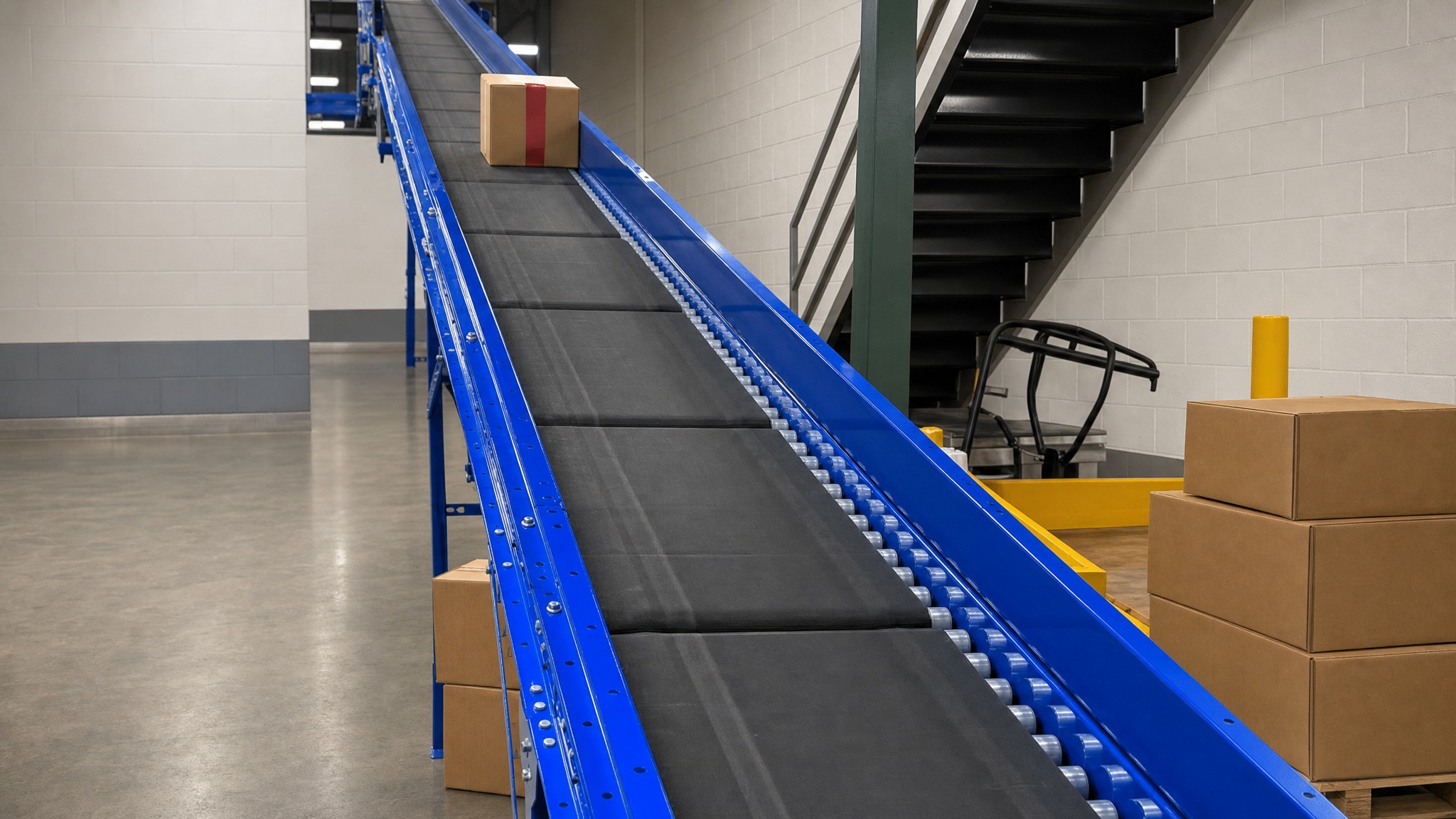
Distribution center teams use case conveyors to move cartons from dock receiving to storage, packing, and outbound shipping areas. The layout is planned around transfer points and process zones so employees are not repeatedly carrying cases between high-traffic work areas.
- Creates defined conveyor paths between dock, storage, packing, and shipping points.
- Supports controlled transfers where cartons change direction or move to a workstation.


Planning Your Case and Tote Conveyor System
Use these planning decisions to prepare for a conveyor design discussion. Most projects combine several of these considerations rather than choosing only one.
| Planning Decision | Why It Matters | What to Confirm |
|---|---|---|
| Container Fit | Confirming that cases, cartons, and totes can move reliably on the selected conveyor sections. | Review container length, width, height, bottom shape, load weight, and load stability before selecting the conveyor surface. |
| Conveyor Surface | Choosing between roller and belt sections based on how each item contacts the conveyor. | Roller sections depend on compatible container contact, while belt sections provide a different support surface for specific handling or transfer needs. |
| Accumulation Needs | Facilities that need to stage items before picking, packing, production, labeling, or shipping steps. | Confirm where items must pause, how flow should be controlled, and which downstream work areas need staged product. |
| Transfers and Interfaces | Layouts with multiple conveyor runs, workstations, equipment touchpoints, or routing changes. | Identify each point where items change direction, move to another process, or interface with facility equipment. |
| Vertical Routing | Facilities that need incline, decline, or spiral movement between elevations. | Confirm elevation changes early so the appropriate vertical routing configuration can be reviewed with the overall layout. |
Southwest Solutions Near You
With 7 offices in Texas, Oklahoma, Kansas and Colorado, plus teams covering every major metro area nationwide, Southwest Solutions Group delivers expert case and tote conveyors sales, design, installation, and maintenance support wherever you need it.
Case and Tote Conveyors Service Areas
Texas
- Dallas
- Austin
- Houston
- San Antonio
- Waco
- Tyler
- Amarillo
- Lubbock
- El Paso
- Ft Worth
- Corpus Christi
- Midland
Oklahoma
- Oklahoma City
- Tulsa
- Norman
- Lawton
- Enid
- Stillwater
- McAlester
- Muskogee
- Guymon
Kansas
- Wichita
- Overland Park
- Topeka
- Kansas City
- Lawrence
- Manhattan
- Salina
- Hays
- Dodge City
- Garden City
Colorado
- Denver
- Colorado Springs
- Fort Collins
- Grand Junction
- Pueblo
- Durango
- Alamosa
- Steamboat Springs
- Greeley
Alabama
- Huntsville
- Birmingham
- Montgomery
- Mobile
- Tuscaloosa
- Hoover
- Dothan
- Decatur
Alaska
- Anchorage
- Fairbanks
- Juneau
- Sitka
- Ketchikan
- Kodiak
- Bethel
- Nome
Arizona
- Phoenix
- Tucson
- Flagstaff
- Yuma
- Prescott
- Lake Havasu City
- Sierra Vista
- Kingman
Arkansas
- Little Rock
- Fayetteville
- Fort Smith
- Jonesboro
- Hot Springs
- Pine Bluff
- Texarkana
- Bentonville
- Arkadelphia
California
- Los Angeles
- San Diego
- San Francisco
- Sacramento
- Fresno
- Redding
- Bakersfield
- San Bernardino
- San Jose
Connecticut
- Hartford
- New Haven
- Stamford
- Bridgeport
Delaware
- Wilmington
- Dover
- Newark
- Rehoboth Beach
Florida
- Jacksonville
- Tallahassee
- Orlando
- Tampa
- Miami
- West Palm Beach
- Fort Myers
- Pensacola
Georgia
- Atlanta
- Savannah
- Augusta
- Columbus
- Macon
- Athens
- Valdosta
- Gainesville
- Albany
Hawaii
- Honolulu
- Hilo
- Kahului
- Kailua-Kona
- Lihue
Idaho
- Boise
- Coeur d'Alene
- Twin Falls
- Idaho Falls
- Pocatello
- Lewiston
- McCall
- Sandpoint
- Moscow
Illinois
- Chicago
- Springfield
- Rockford
- Peoria
- Champaign
- Bloomington
- Carbondale
- Moline
- Quincy
Indiana
- Indianapolis
- Fort Wayne
- South Bend
- Evansville
- Lafayette
- Bloomington
- Terre Haute
- Gary
- Muncie
Iowa
- Des Moines
- Cedar Rapids
- Davenport
- Sioux City
- Iowa City
- Waterloo
- Council Bluffs
- Ames
- Mason City
Kentucky
- Louisville
- Lexington
- Bowling Green
- Owensboro
- Covington
- Paducah
- Ashland
- Richmond
- Frankfort
- Pikeville
- Florence
Louisiana
- New Orleans
- Baton Rouge
- Shreveport
- Lafayette
- Lake Charles
- Monroe
- Alexandria
- Houma
Maine
- Portland
- Bangor
- Augusta
- Lewiston
- Waterville
- Presque Isle
- Bar Harbor
- Biddeford
- Rockland
Maryland
- Baltimore
- Annapolis
- Frederick
- Hagerstown
- Salisbury
Massachusetts
- Boston
- Worcester
- Springfield
- Pittsfield
Michigan
- Detroit
- Grand Rapids
- Lansing
- Ann Arbor
- Flint
- Traverse City
- Marquette
- Kalamazoo
- Saginaw
Minnesota
- Minneapolis
- St. Paul
- Duluth
- Rochester
- Mankato
- St. Cloud
- Bemidji
- Moorhead
Mississippi
- Jackson
- Gulfport
- Hattiesburg
- Biloxi
- Southaven
- Meridian
- Tupelo
- Natchez
- Greenville
- Oxford
Missouri
- Jefferson City
- St. Louis
- Kansas City
- Springfield
- Columbia
- Joplin
- Cape Girardeau
- St. Joseph
- Rolla
Montana
- Helena
- Billings
- Missoula
- Great Falls
- Bozeman
- Kalispell
- Havre
- Miles City
Nebraska
- Lincoln
- Omaha
- Grand Island
- Kearney
- Scottsbluff
- Norfolk
- North Platte
- Fremont
- South Sioux City
Nevada
- Las Vegas
- Reno
- Carson City
- Elko
- Pahrump
- Henderson
- Winnemucca
- Mesquite
- Fallon
New Hampshire
- Concord
- Manchester
- Portsmouth
- Keene
- Nashua
New Jersey
- Newark
- Jersey City
- Trenton
- Atlantic City
New Mexico
- Santa Fe
- Albuquerque
- Las Cruces
- Roswell
- Farmington
- Gallup
- Carlsbad
- Clovis
New York
- Albany
- New York City
- Buffalo
- Rochester
- Syracuse
- Binghamton
- Ithaca
- Plattsburgh
North Carolina
- Raleigh
- Charlotte
- Greensboro
- Asheville
- Wilmington
- Fayetteville
- Boone
- Greenville
North Dakota
- Bismarck
- Fargo
- Grand Forks
- Minot
- Dickinson
- Williston
- Jamestown
- Devils Lake
Ohio
- Columbus
- Cleveland
- Cincinnati
- Toledo
- Dayton
- Akron
- Youngstown
- Athens
Oregon
- Portland
- Salem
- Eugene
- Hermiston
- Baker City
- Medford
- Bend
- Klamath Falls
Pennsylvania
- Harrisburg
- Philadelphia
- Pittsburgh
- Erie
- Scranton
- State College
- Allentown
- Williamsport
Rhode Island
- Providence
- Warwick
- Newport
- Woonsocket
South Carolina
- Columbia
- Charleston
- Greenville
- Myrtle Beach
- Hilton Head Island
- Spartanburg
- Florence
- Rock Hill
South Dakota
- Pierre
- Sioux Falls
- Rapid City
- Aberdeen
- Watertown
- Brookings
- Mitchell
- Yankton
Tennessee
- Memphis
- Jackson
- Nashville
- Clarksville
- Cookeville
- Chattanooga
- Knoxville
- Johnson City
Utah
- Salt Lake City
- Ogden
- Logan
- Provo
- St. George
- Cedar City
- Moab
- Vernal
Vermont
- Montpelier
- Burlington
- Rutland
- Brattleboro
Virginia
- Richmond
- Norfolk
- Virginia Beach
- Roanoke
- Lynchburg
- Harrisonburg
- Fredericksburg
- Bristol
Washington
- Olympia
- Seattle
- Spokane
- Yakima
- Bellingham
- Wenatchee
- Kennewick
- Vancouver
West Virginia
- Charleston
- Huntington
- Morgantown
- Wheeling
- Parkersburg
- Beckley
- Martinsburg
- Bluefield
Wisconsin
- Madison
- Milwaukee
- Green Bay
- Eau Claire
- La Crosse
- Wausau
- Appleton
- Superior
Wyoming
- Cheyenne
- Casper
- Laramie
- Gillette
- Sheridan
- Rock Springs
- Jackson
- Cody
District of Columbia
- Washington D.C.
Frequently Asked Questions
Case and tote conveyors move cases, cartons, and totes between receiving, storage, picking, packing, production, and shipping areas in warehouses, distribution centers, and manufacturing facilities. They are used when teams need a defined path for containers instead of repeated manual transport.
The choice depends on the container's bottom shape, size, load behavior, and transfer requirements. Roller conveyors are often used for flat, rigid-bottom containers, while belt conveyors may be selected when the item needs more continuous surface support or different transfer conditions.
Prepare container dimensions, bottom style, typical and maximum load weights, a facility layout or sketch, start and end points, accumulation or staging needs, and transfer or interface locations. These details help determine the conveyor configuration and layout.
Yes. Accumulation conveyor sections can temporarily hold cases or totes to control product flow between process steps, such as before packing, labeling, production, or shipping.
Yes. Empty tote conveyor systems can be planned as part of the overall layout to return reusable totes from unloading, packing, or shipping areas back to picking or storage. The route depends on tote fit, transfer points, and available space.
Vertical routing should be reviewed when a layout requires cases or totes to move between elevations. Incline, decline, or spiral movement needs to be evaluated as part of the overall conveyor configuration.
Product image gallery
Explore More Specialty Products

Dumbwaiter
Compact goods-only lift for vertical transfer of supplies, food, documents, and small materials between floors in commercial and residential buildings.
Explore Dumbwaiters
Flat File Dolly
A flat file dolly provides a durable rolling base to safely move compatible flat-file cabinets, enhancing mobility for large artwork, maps, and documents.
Explore Flat File Dolly
Floor Cable Raceways
Floor cable raceways deliver organized power and data routing across floors, ideal for flexible layouts in offices, conference rooms, and public spaces.
Explore Floor Cable Raceways
Freight Elevator
Freight elevators provide a dedicated vertical route for moving equipment, supplies, and materials between floors, streamlining goods transport in commercial and industrial facilities.
Explore Freight Elevators
Vertical Reciprocating Conveyor
Safely move materials between floors with a vertical reciprocating conveyor. Handles loads from boxes to pallets up to 30,000 lbs, customizable for facility layouts.
Explore Vertical Reciprocating Conveyor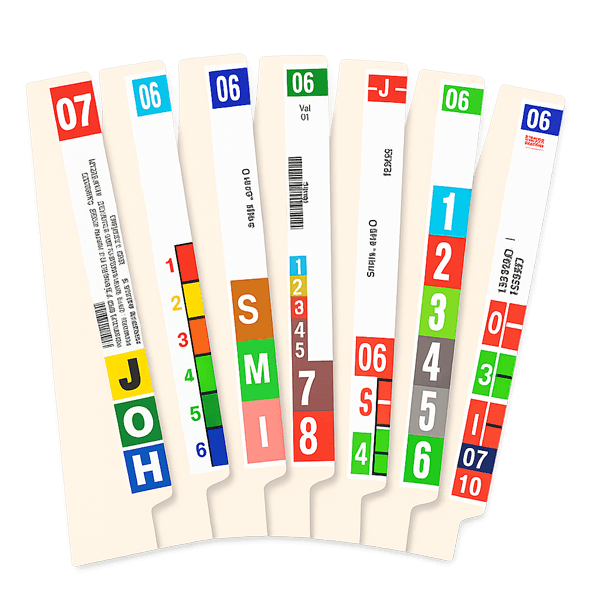
Automated Labeling Systems
Print barcode and RFID labels for files, products, or shipments. Fast, accurate systems that cut manual steps and reduce labeling errors.
Explore Automated Labeling Systems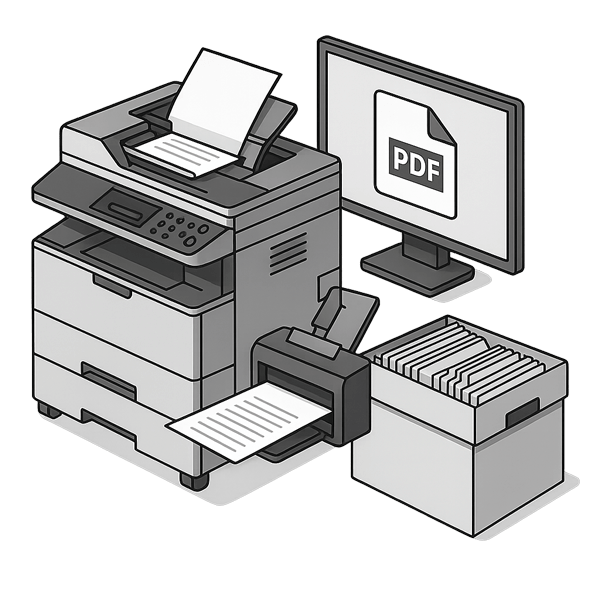
Document Scanning Services
Convert paper records into secure, searchable digital files with professional scanning, indexing, quality checks, and encrypted delivery.
Explore Document Scanning Services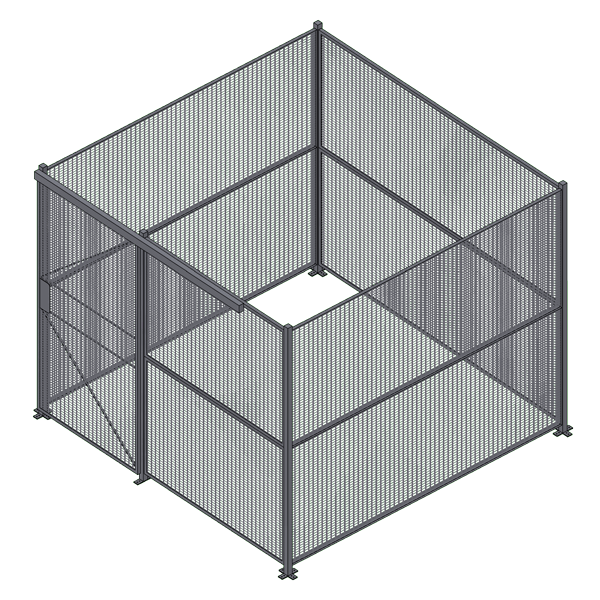
Wire Partition Cages & Lockers
Welded wire enclosures for tools, evidence, or server areas. Modular, secure, and compliant with DEA, IT, and facility safety standards.
Explore Wire Partition Cages & Lockers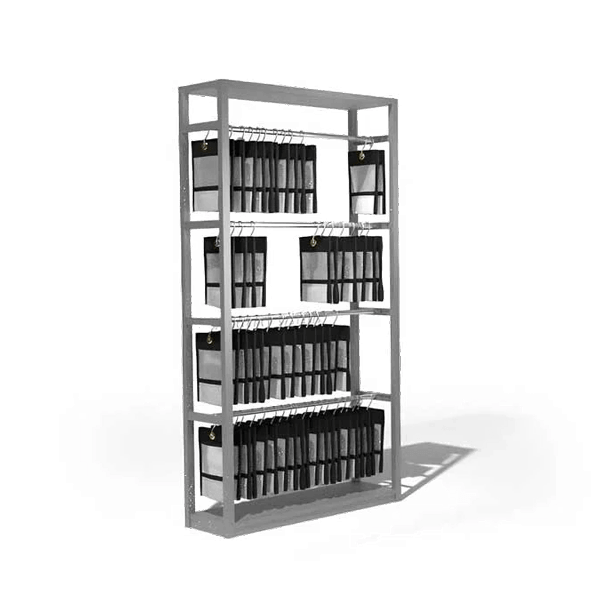
Hanging Gun Bags
Tamper-resistant hanging gun bags provide efficient firearm storage for pistols and rifles. Perfect for evidence handling in police and public safety departments.
Explore Hanging Gun Bags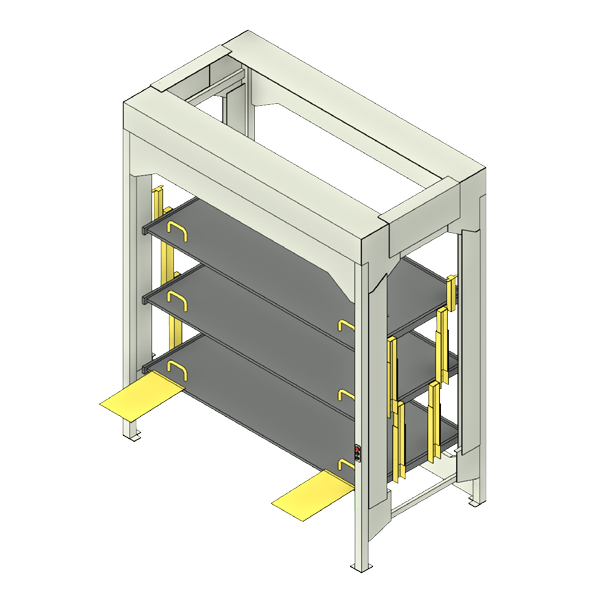
Hospital Bed Lift
Save floor space and reduce hallway clutter by stacking unused hospital beds in a secure vertical lift system for efficient storage and maintenance access.
Explore Hospital Bed Lift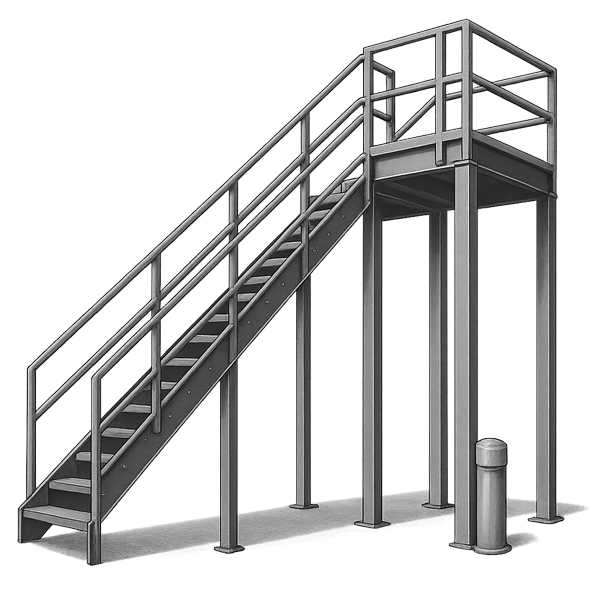
Industrial Stairs
OSHA-compliant industrial stairs and work platforms engineered for safe, modular access to elevated spaces in warehouses, factories, and service facilities.
Explore Industrial Stairs
Inmate Property Bags
Durable inmate property bags with secure zip closures, ID sleeves, and reinforced handles for organized storage on shelves, in bins, or in transport.
Explore Inmate Property Bags
Lab Sterilizers
Safely sanitize mobile devices, lab tools, and office equipment with eco-friendly UVC technology in a sleek, compact cabinet design.
Explore Lab Sterilizers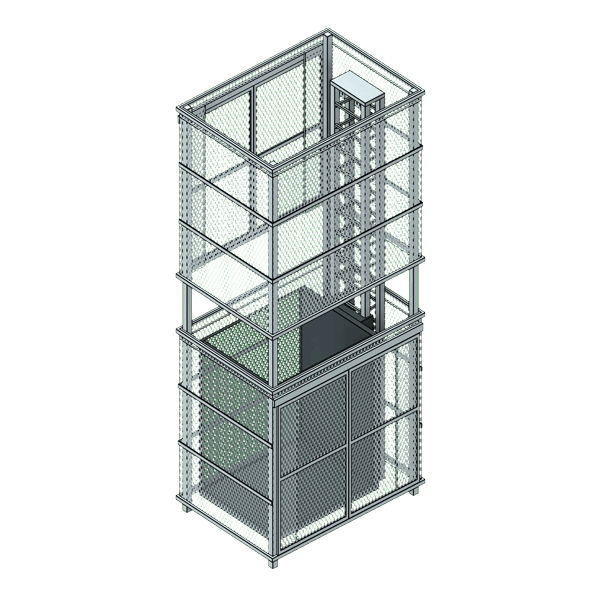
Mezzanine, Material Lifts & Conveyors
Create second-level platforms, move pallets between floors, or automate product flow. Modular and code-compliant systems that scale with you.
Explore Mezzanine, Material Lifts & Conveyors
Raised Access Floor System
Modular raised floors conceal wiring, HVAC, and power underfoot while allowing quick access and easy reconfiguration as your needs change.
Explore Raised Access Floor System
RFID & Barcode Tracking Software
Track inventory, files, or tools with RFID portals and barcode scans. Real-time visibility helps reduce loss and improve efficiency.
Explore RFID & Barcode Tracking Software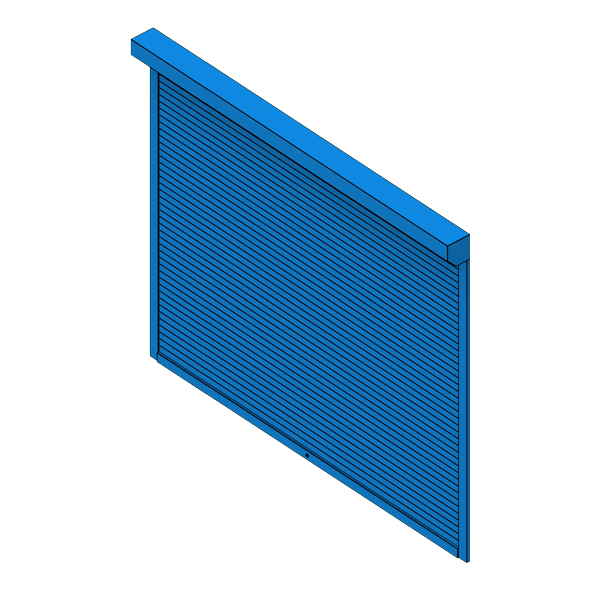
Roll-Down Security Doors
Lockable roll-down shutters for service counters, cabinets, and secure rooms. Available in manual or motorized models with safety features.
Explore Roll-Down Security Doors
Shoe Cover Dispenser
Maintain clean, safe environments with hands-free shoe cover dispensers and durable covers for labs, clinics, cleanrooms, and visitor spaces.
Explore Shoe Cover Dispenser
Solar Canopy
Modular solar canopy systems offering protection and renewable energy for parking, loading docks, and outdoor walkways in commercial facilities.
Explore Solar CanopyPlan a Case and Tote Conveyor Layout for Your Facility
Share your case or tote dimensions, load information, transfer points, and layout goals. Our team will help evaluate the right conveyor configuration for your needs.
Request a custom consultation to start designing a case and tote conveyor system tailored to your facility.
Call us at (800) 803-1083 or Contact Us to schedule your free consultation today.
Request a Conveyor Consultation