Push Back Racking for High-Density LIFO Storage
Push back racking gives you dense pallet positions with predictable, single-aisle handling thats ideal when lane-level LIFO works for your mix of SKUs. By nesting carts on inclined rails, you can store two to six pallets deep per lane, trimming travel time and freeing aisles without sacrificing pick-face access. From food & beverage to 3PL and manufacturing WIP, we’ll help you size lane depths, beam levels, and bay counts to match throughput and rotation rules. Explore specifications, design options, and safety accessories, or request a consultation to start your layout.
How Push Back Pallet Racking Works
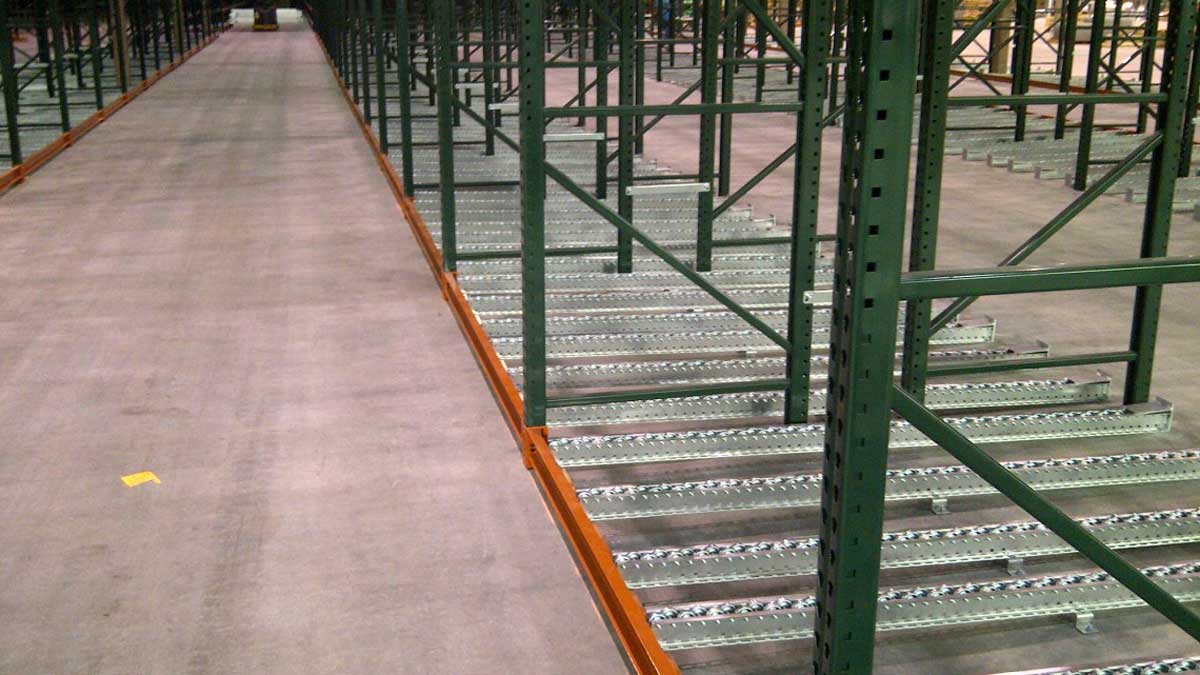
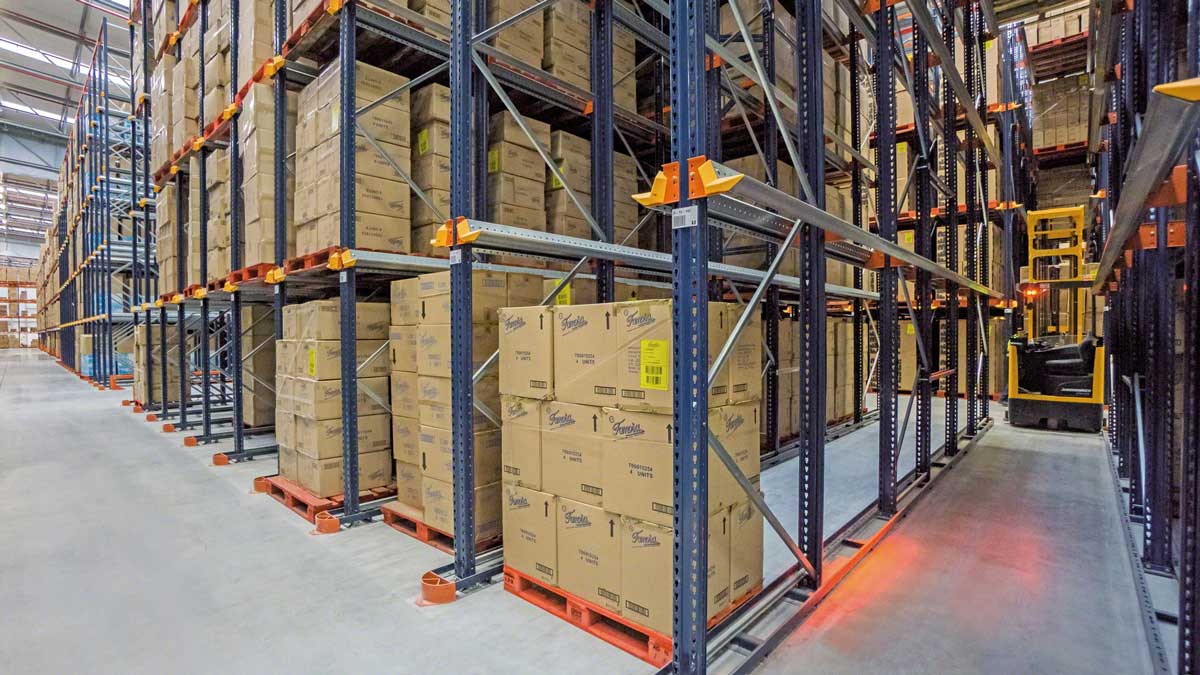
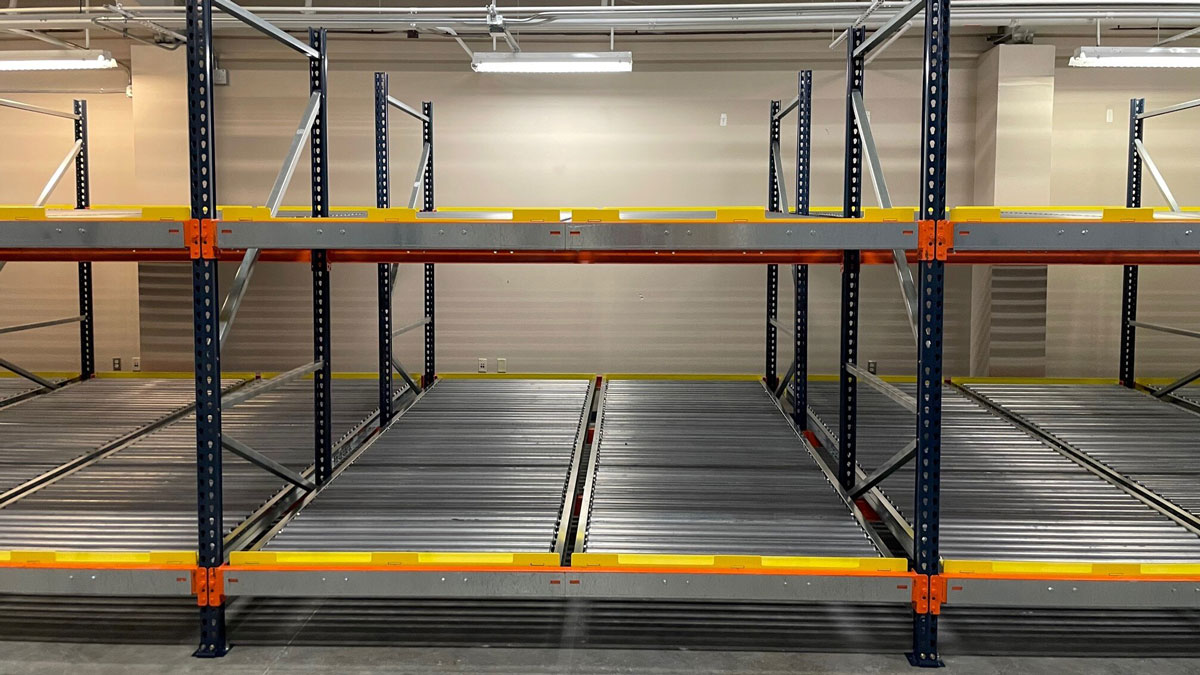
Push back lanes use a series of nested carts that sit on slightly inclined spring rails. The first pallet rests on the top cart, and each new pallet pushes the previous one back. When the front pallet is retrieved, gravity brings the next pallet forward to the pick face, keeping loads ready at the aisle.
Because loading and unloading happen from a single aisle, operators reduce drive time and avoid entering rack tunnels. Lane depths are typically two to six pallets, with multiple beam levels stacked to match clear heights, throughput targets, and SKU velocity.
Easy to Use
- LIFO pallet sequence from one operating aisle
- Nested cart system on inclined rails
- Typical lane depth of two to six pallets
- More pick faces than drive in racking
- Reduced forklift travel in dense zones
Where Push Back Pallet Racking Fits Best
Push back fits operations managing multiple SKUs with several pallets each, where lane level LIFO is acceptable for lot or date rotation. It balances density and selectivity for medium turn items, seasonal products, and batch inventory stored close to shipping or production.
If strict FIFO is required at the pallet level, pallet flow is usually the better choice. If you have very few SKUs with many pallets each and need maximum density, drive in may be considered. Push back sits in the middle, delivering high density with faster access to more SKUs.
Features
- Ideal for multi SKU, medium turn inventory
- Lane level LIFO rotation acceptable
- Higher density than selective racking
- More access faces than drive in racking
- Strong option for coolers and freezers
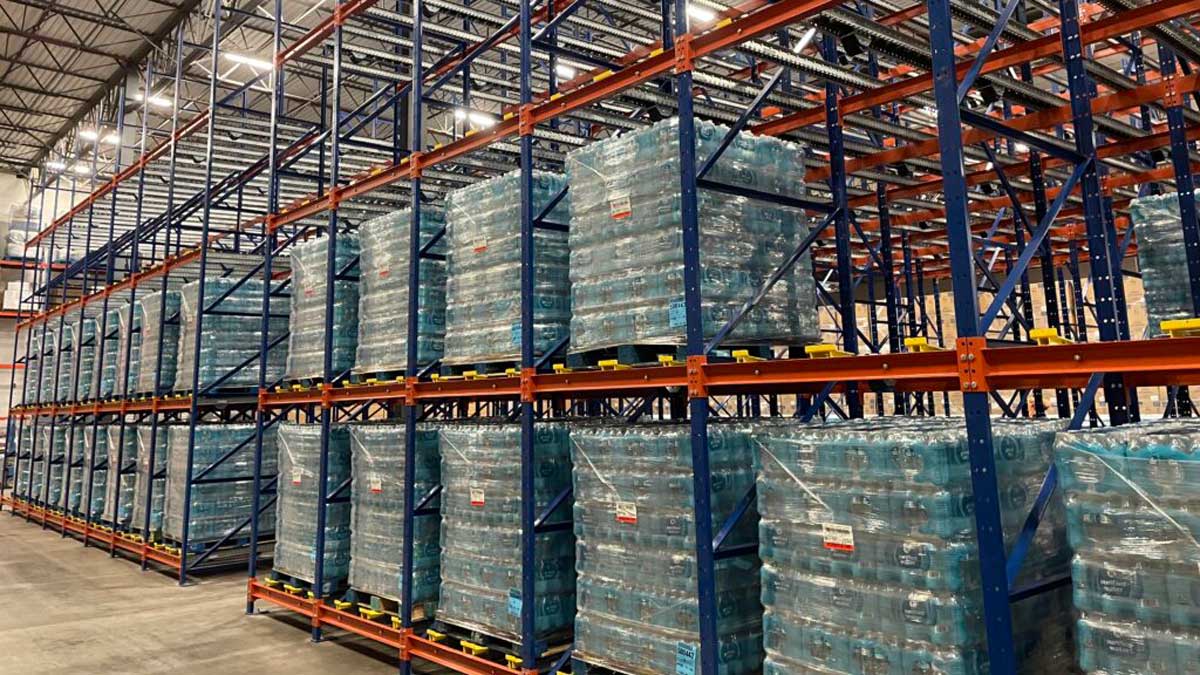
Push Back vs Drive In and Pallet Flow
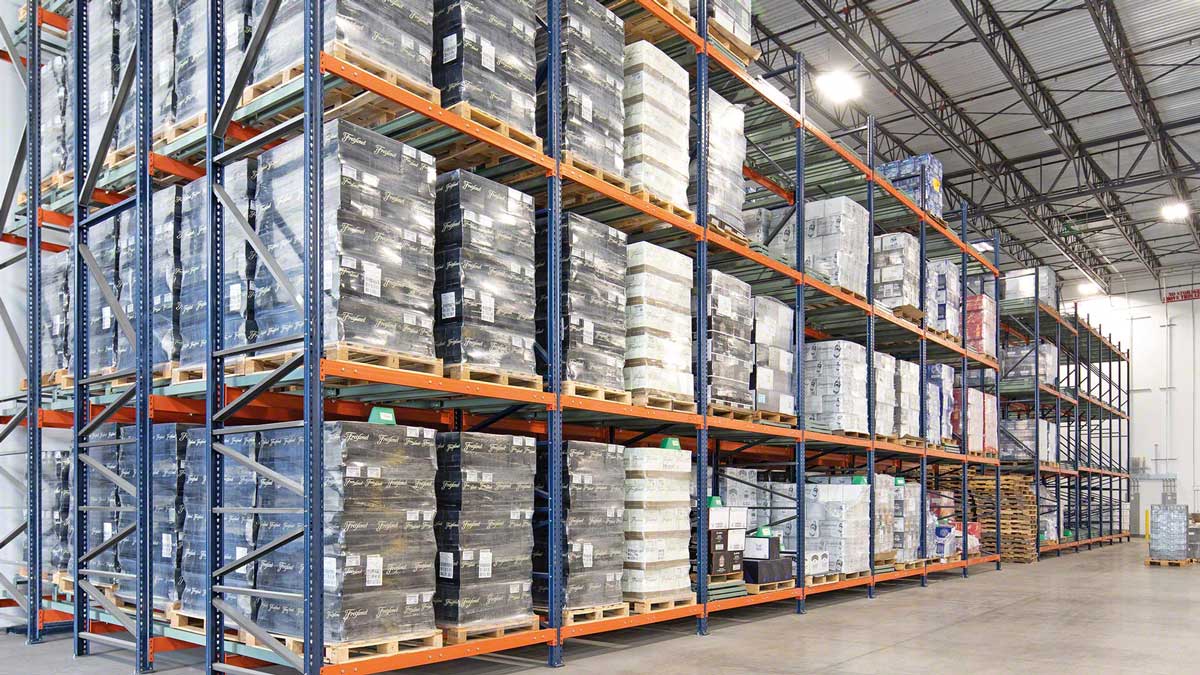
Compared to drive in, push back keeps forklifts in the aisle, increasing pick faces and improving access to multiple SKUs. Compared to pallet flow, push back is simpler to operate and often more cost effective per position, but it does not provide strict FIFO at the pallet level.
Selecting among these systems depends on inventory profile and rotation rules. Drive in is best for very few SKUs with many pallets, pallet flow is best for strict FIFO and high throughput, and push back is best for multi SKU density with reliable access.
Features
- More selectivity than drive in racking
- Lower complexity than pallet flow systems
- LIFO sequence by design
- Single aisle loading and unloading
- Strong balance of density and access
Push Back Pallet Racking for Food & Beverage Batch Rotation
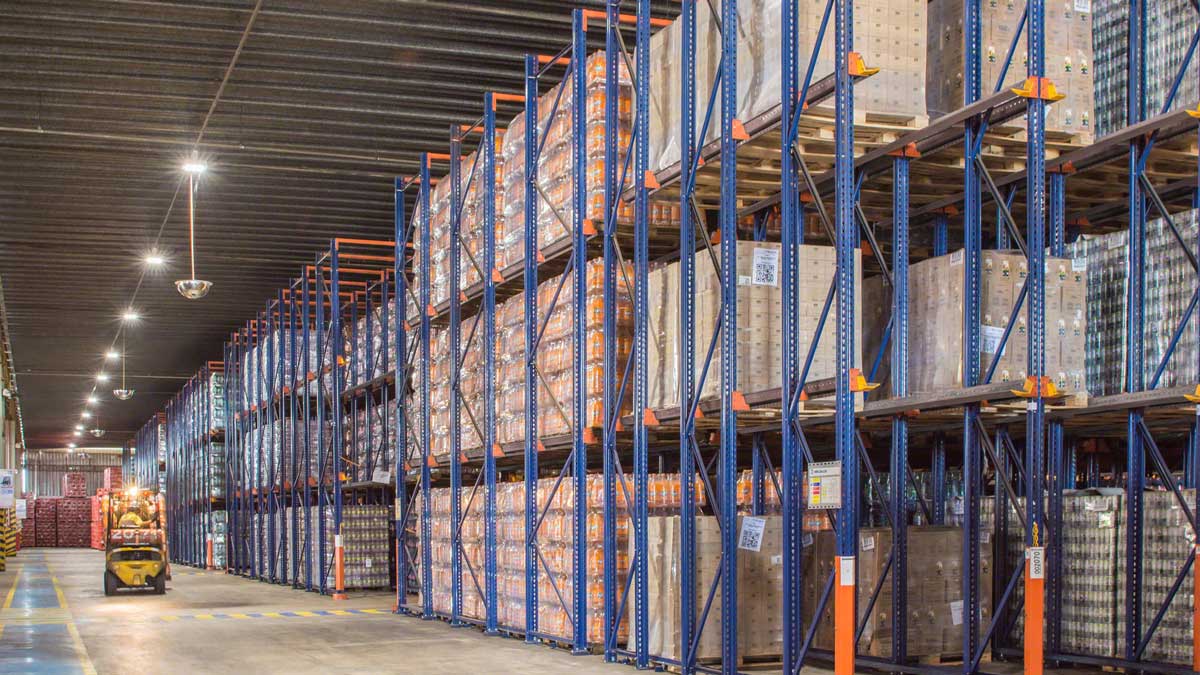
Many food and beverage operations manage several pallets per SKU or lot where lane-level LIFO is acceptable. Push back pallet racking condenses buffer stock near docks or production, keeps pallets at the pick face, and reduces travel time in tight cooler and freezer spaces.
By dedicating each lane to a SKU or lot, teams gain more pick faces than drive-in without committing to full pallet flow. Deeper lanes reduce aisles and conditioned cubic footage while single-aisle access keeps replenishment and picking simple during changeovers.
- Deep lanes for batch & lot storage
- Fewer aisles and reduced travel time
- Performs well in coolers/freezers
Frequently Asked Questions
Nested carts sit on inclined rails. Each new pallet pushes the previous load back, and when the front pallet is removed, gravity returns the next pallet to the pick face.
It is LIFO at the lane level. If strict FIFO is required, consider pallet flow racking.
Most designs range from two to six pallets deep, selected by SKU velocity, load weight, and lift equipment.
Choose push back when you need more pick faces and faster access to multiple SKUs without driving into rack tunnels. Drive in is best for very few SKUs with many pallets each.
Consistent pallet bottom board geometry helps carts track smoothly. Carts and rails are rated for specific load classes and are engineered to your pallet weights.
Yes. By reducing aisles and concentrating pallets at the pick face, push back works well in coolers and freezers where conditioned space is at a premium.
Honest Results
“Thanks for getting our Compact Pallet Rack system completed on time with little disruptions to our operation. Jim did a great job of listening to understand our needs and was able to design a system that works well for us. Kerry and the installation group were great. They were well organized and left the area very clean every day and at the end of the project.”

“Just wanted to reach out and tell you how pleased I am with the renovation. I have been at SMU for quite a long time and for a while I thought that I was destined for inefficient, terrible storage spaces. The transformation that took place was absolutely mind blowing.”

“Together your employees make a magnificent team that portrays good work ethics, dedication, and positive attitude that would make any company proud. The customer service that these gentlemen have given Team Tinker only ensures that we will continue to maintain a partnership with Southwest Solutions Group. Keep up the good work.”
Southwest Solutions Near You
With 7 offices in Texas, Oklahoma, Kansas and Colorado, plus teams covering every major metro area nationwide, Southwest Solutions Group delivers expert push back racking sales, design, installation, and maintenace support wherever you need it.
push back racking Service Areas
Texas
- Dallas
- Austin
- Houston
- San Antonio
- Waco
- Tyler
- Amarillo
- Lubbock
- El Paso
- Ft Worth
- Corpus Christi
- Midland
Oklahoma
- Oklahoma City
- Tulsa
- Norman
- Lawton
- Enid
- Stillwater
- McAlester
- Muskogee
Kansas
- Wichita
- Overland Park
- Topeka
- Kansas City
- Lawrence
- Manhattan
- Salina
- Hays
- Dodge City
- Garden City
Colorado
- Denver
- Colorado Springs
- Fort Collins
- Grand Junction
- Pueblo
- Durango
- Alamosa
- Steamboat Springs
Alabama
- Huntsville
- Birmingham
- Montgomery
- Mobile
- Tuscaloosa
- Hoover
- Dothan
- Decatur
Alaska
- Anchorage
- Fairbanks
- Juneau
- Sitka
- Ketchikan
- Kodiak
- Bethel
- Nome
Arizona
- Phoenix
- Tucson
- Flagstaff
- Yuma
- Prescott
- Lake Havasu City
- Sierra Vista
- Kingman
Arkansas
- Little Rock
- Fayetteville
- Fort Smith
- Jonesboro
- Hot Springs
- Pine Bluff
- Texarkana
- Bentonville
California
- Los Angeles
- San Diego
- San Francisco
- Sacramento
- Fresno
- Redding
- Bakersfield
- San Bernardino
Connecticut
- Hartford
- New Haven
- Stamford
- Bridgeport
Delaware
- Wilmington
- Dover
- Newark
- Rehoboth Beach
Florida
- Jacksonville
- Tallahassee
- Orlando
- Tampa
- Miami
- West Palm Beach
- Fort Myers
- Pensacola
Georgia
- Atlanta
- Savannah
- Augusta
- Columbus
- Macon
- Athens
- Valdosta
- Gainesville
Hawaii
- Honolulu
- Hilo
- Kahului
- Kailua-Kona
Idaho
- Boise
- Coeur d'Alene
- Twin Falls
- Idaho Falls
- Pocatello
- Lewiston
- McCall
- Sandpoint
Illinois
- Chicago
- Springfield
- Rockford
- Peoria
- Champaign
- Bloomington
- Carbondale
- Moline
Indiana
- Indianapolis
- Fort Wayne
- South Bend
- Evansville
- Lafayette
- Bloomington
- Terre Haute
- Gary
Iowa
- Des Moines
- Cedar Rapids
- Davenport
- Sioux City
- Iowa City
- Waterloo
- Council Bluffs
- Ames
Kentucky
- Louisville
- Lexington
- Bowling Green
- Owensboro
- Covington
- Paducah
- Ashland
- Richmond
Louisiana
- New Orleans
- Baton Rouge
- Shreveport
- Lafayette
- Lake Charles
- Monroe
- Alexandria
- Houma
Maine
- Portland
- Bangor
- Augusta
- Lewiston
- Waterville
- Presque Isle
- Bar Harbor
- Biddeford
Maryland
- Baltimore
- Annapolis
- Frederick
- Hagerstown
Massachusetts
- Boston
- Worcester
- Springfield
- Pittsfield
Michigan
- Detroit
- Grand Rapids
- Lansing
- Ann Arbor
- Flint
- Traverse City
- Marquette
- Kalamazoo
Minnesota
- Minneapolis
- St. Paul
- Duluth
- Rochester
- Mankato
- St. Cloud
- Bemidji
- Moorhead
Mississippi
- Jackson
- Gulfport
- Hattiesburg
- Biloxi
- Southaven
- Meridian
- Tupelo
- Natchez
Missouri
- Jefferson City
- St. Louis
- Kansas City
- Springfield
- Columbia
- Joplin
- Cape Girardeau
- St. Joseph
Montana
- Helena
- Billings
- Missoula
- Great Falls
- Bozeman
- Kalispell
- Havre
- Miles City
Nebraska
- Lincoln
- Omaha
- Grand Island
- Kearney
- Scottsbluff
- Norfolk
- North Platte
- Fremont
Nevada
- Las Vegas
- Reno
- Carson City
- Elko
- Pahrump
- Henderson
- Winnemucca
- Mesquite
New Hampshire
- Concord
- Manchester
- Portsmouth
- Keene
New Jersey
- Newark
- Jersey City
- Trenton
- Atlantic City
New Mexico
- Santa Fe
- Albuquerque
- Las Cruces
- Roswell
- Farmington
- Gallup
- Carlsbad
- Clovis
New York
- Albany
- New York City
- Buffalo
- Rochester
- Syracuse
- Binghamton
- Ithaca
- Plattsburgh
North Carolina
- Raleigh
- Charlotte
- Greensboro
- Asheville
- Wilmington
- Fayetteville
- Boone
- Greenville
North Dakota
- Bismarck
- Fargo
- Grand Forks
- Minot
- Dickinson
- Williston
- Jamestown
- Devils Lake
Ohio
- Columbus
- Cleveland
- Cincinnati
- Toledo
- Dayton
- Akron
- Youngstown
- Athens
Oregon
- Portland
- Salem
- Eugene
- Hermiston
- Baker City
- Medford
- Bend
- Klamath Falls
Pennsylvania
- Harrisburg
- Philadelphia
- Pittsburgh
- Erie
- Scranton
- State College
- Allentown
- Williamsport
Rhode Island
- Providence
- Warwick
- Newport
- Woonsocket
South Carolina
- Columbia
- Charleston
- Greenville
- Myrtle Beach
- Hilton Head Island
- Spartanburg
- Florence
- Rock Hill
South Dakota
- Pierre
- Sioux Falls
- Rapid City
- Aberdeen
- Watertown
- Brookings
- Mitchell
- Yankton
Tennessee
- Memphis
- Jackson
- Nashville
- Clarksville
- Cookeville
- Chattanooga
- Knoxville
- Johnson City
Utah
- Salt Lake City
- Ogden
- Logan
- Provo
- St. George
- Cedar City
- Moab
- Vernal
Vermont
- Montpelier
- Burlington
- Rutland
- Brattleboro
Virginia
- Richmond
- Norfolk
- Virginia Beach
- Roanoke
- Lynchburg
- Harrisonburg
- Fredericksburg
- Bristol
Washington
- Olympia
- Seattle
- Spokane
- Yakima
- Bellingham
- Wenatchee
- Kennewick
- Vancouver
West Virginia
- Charleston
- Huntington
- Morgantown
- Wheeling
- Parkersburg
- Beckley
- Martinsburg
- Bluefield
Wisconsin
- Madison
- Milwaukee
- Green Bay
- Eau Claire
- La Crosse
- Wausau
- Appleton
- Superior
Wyoming
- Cheyenne
- Casper
- Laramie
- Gillette
- Sheridan
- Rock Springs
- Jackson
- Cody
District of Columbia
- Washington D.C.
Explore Our Racking
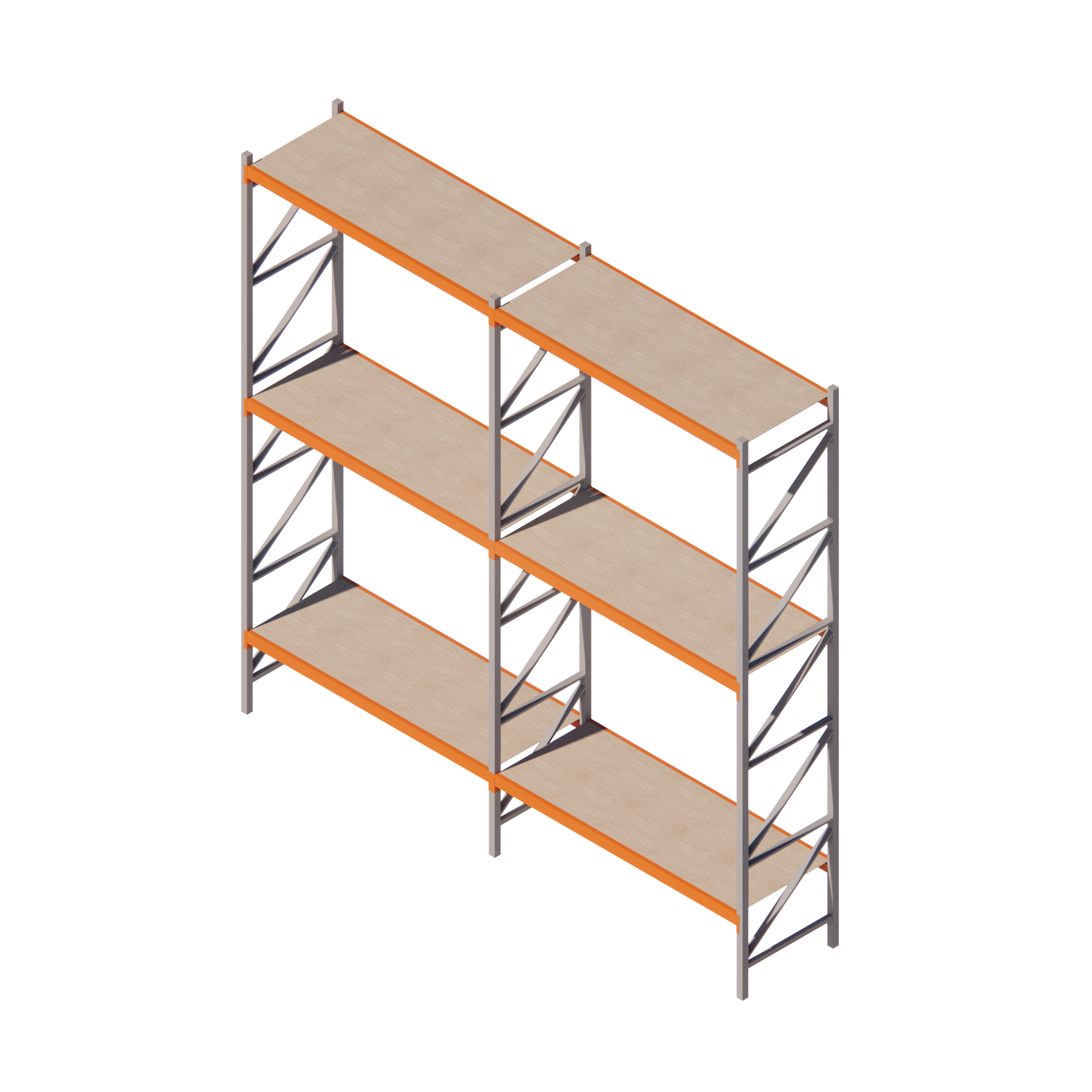
Industrial Pallet Racks
High-capacity warehouse racks designed for pallet storage, forklifts, and fast product access. Structural and roll-formed options available.
Explore PIndustrial Pallet Racks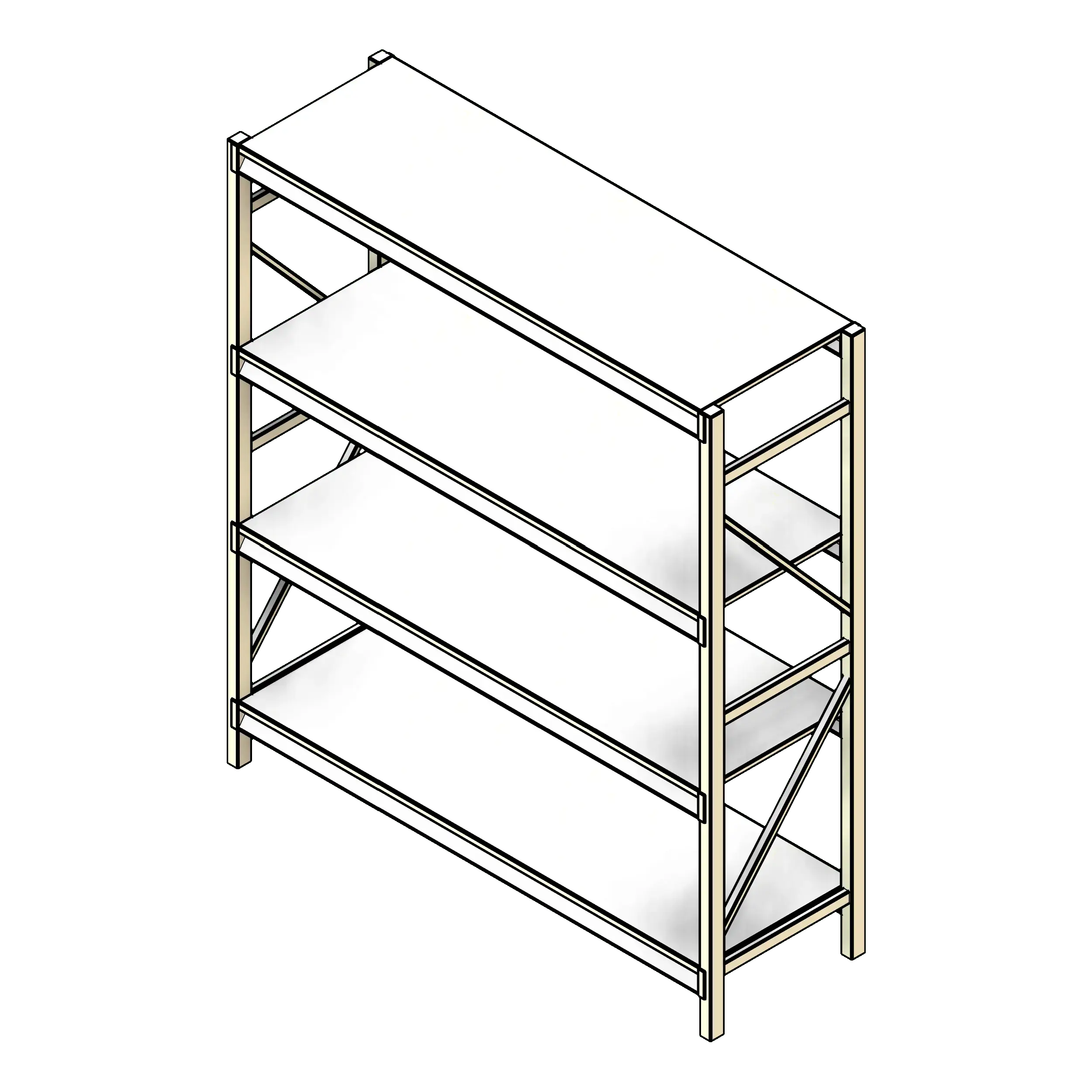
Wide Span Storage Racks
Heavy-duty racks that bridge the gap between shelving and pallet storage. Ideal for hand-loaded bulk items and backroom inventory.
Explore Wide Span Storage Racks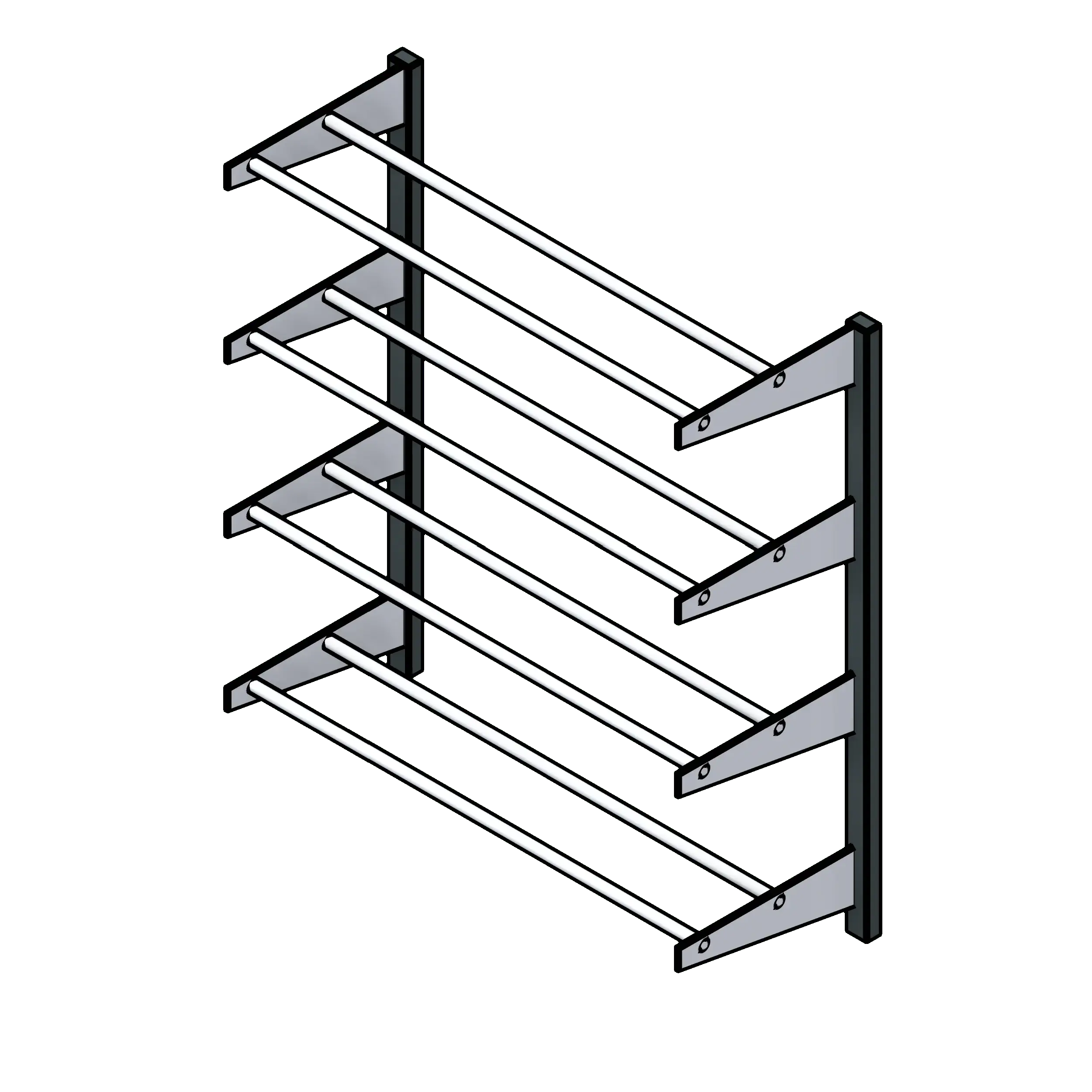
Cantilever Racks
Open-arm racks for long, bulky, or oversized items like lumber, piping, or furniture. No vertical obstructions, easy forklift access.
Explore Cantilever Racks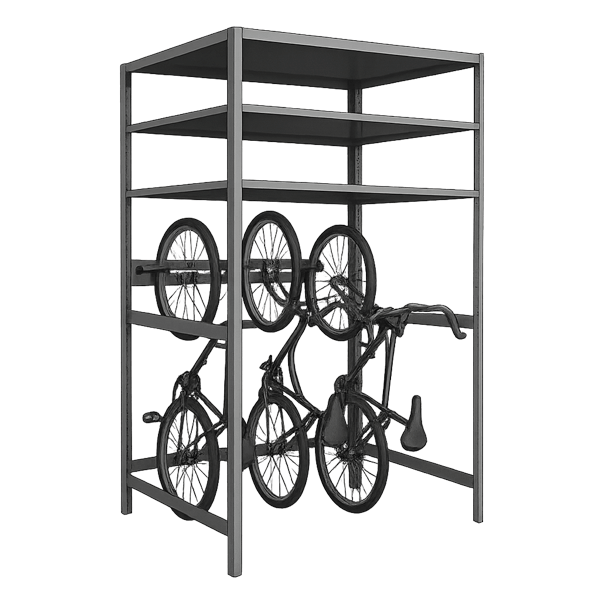
Bike Storage Rack
Heavy-duty bike racks with wall-mounted and motorized options designed for secure, high-density storage in police garages, schools, and civic buildings.
Explore Bike Storage Racks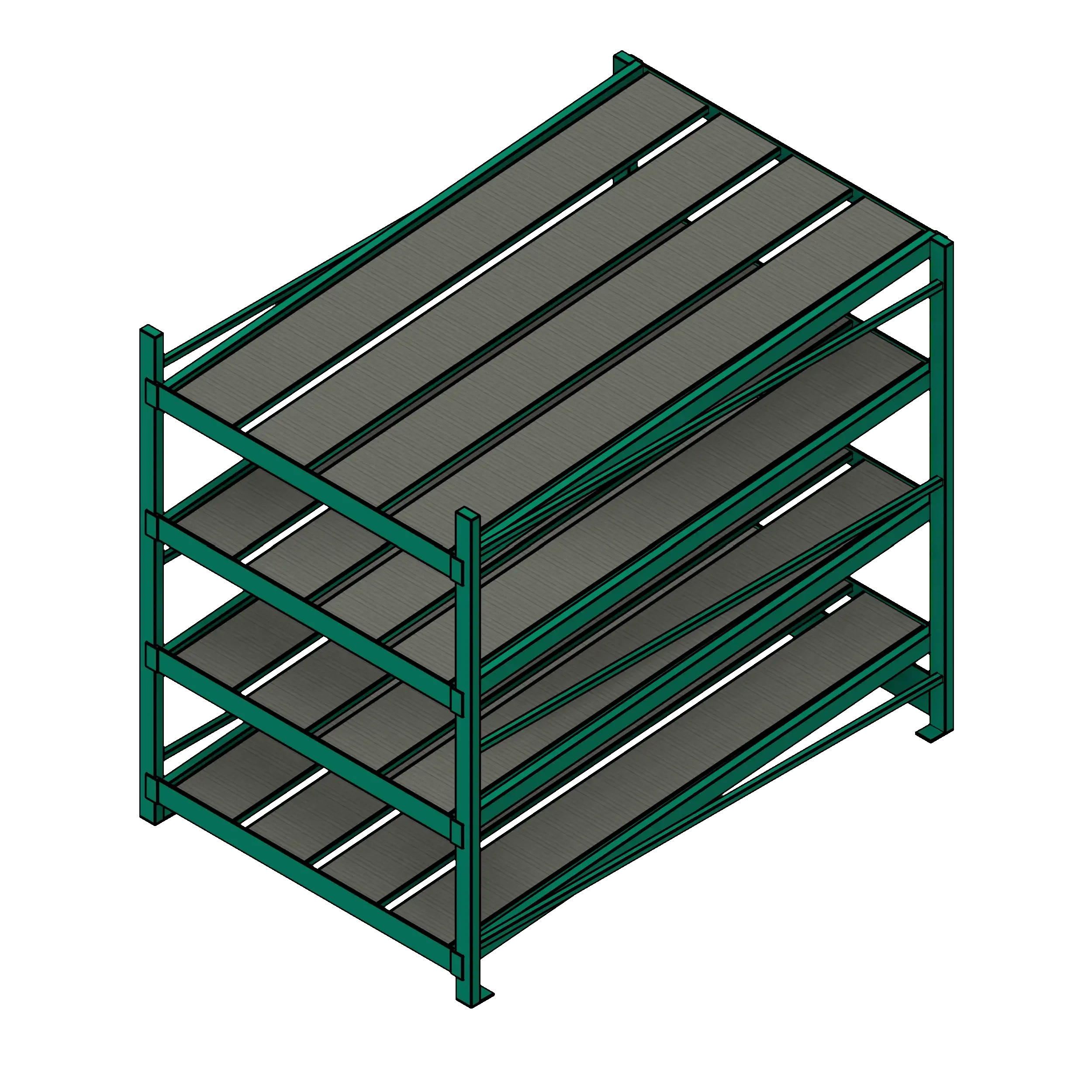
Gravity Flow Racks
Sloped flow racks keep inventory moving forward for FIFO picking. Ideal for cold storage, staging areas, and high-turnover goods.
Explore Gravity Flow Racks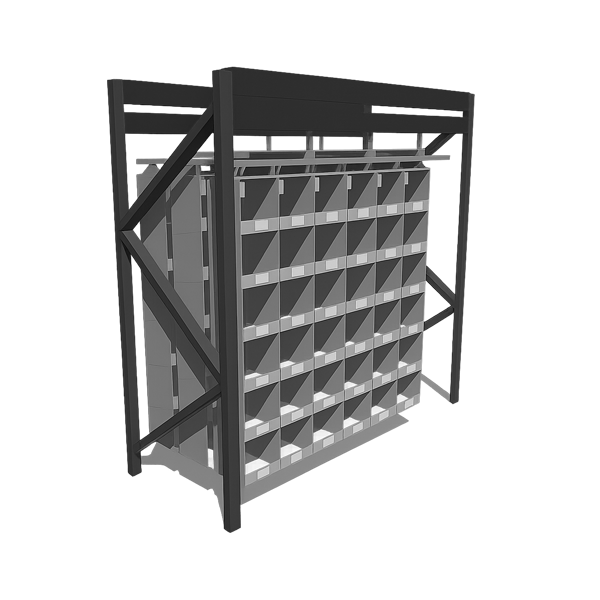
Pallet Rack Bins
Durable bin systems that fit standard pallet racks for organized storage of small parts, supplies, or boxed items.
Explore Pallet Rack Bins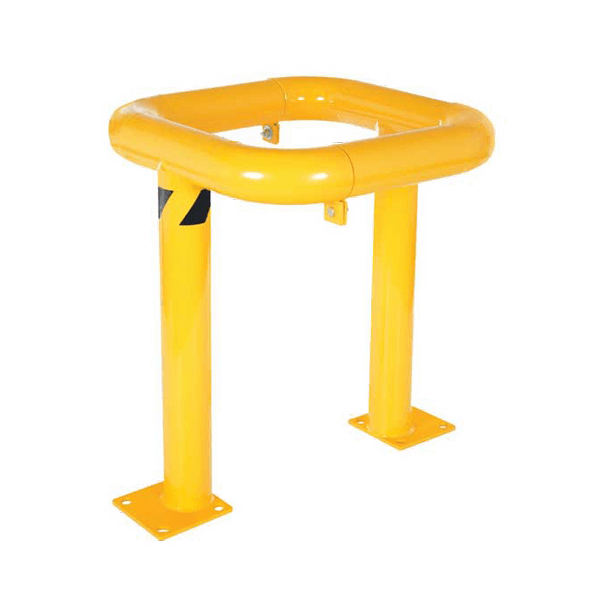
Pallet Rack Guards
Protect your pallet racking from forklift impacts with durable pallet rack guards, end-of-row barriers, and backing panels that improve safety and reduce damage.
Explore Pallet Rack Guards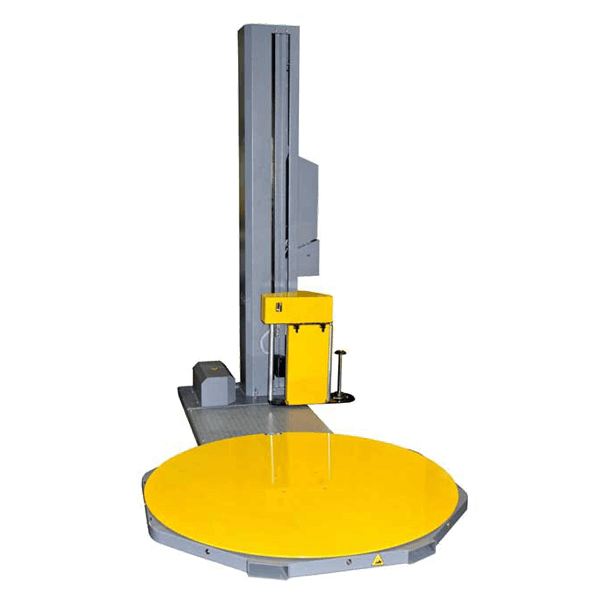
Automatic Pallet Wrapper
Boost warehouse efficiency with a remote-operated pallet wrap machine that automates film application, stretch, and cut—wrap up to 200 pallets a day.
Explore Automatic Pallet Wrappers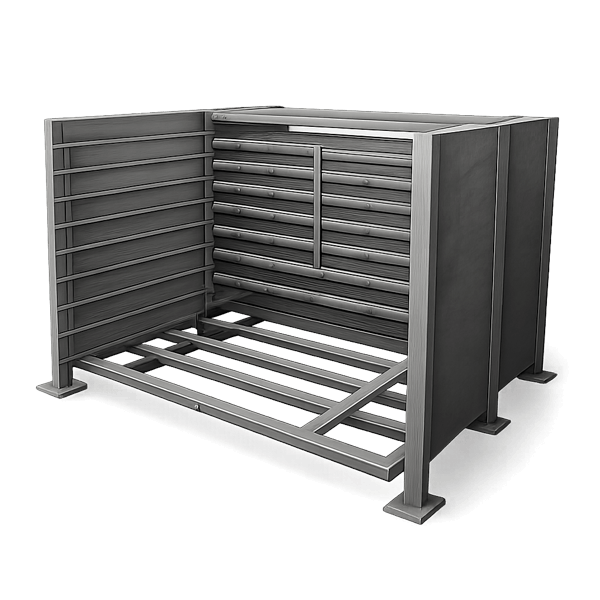
Sheet Metal Racks
Durable sheet metal racks with pull-out shelves or vertical lifts provide ergonomic access, save space, and streamline storage for industrial materials.
Explore Sheet Metal Racks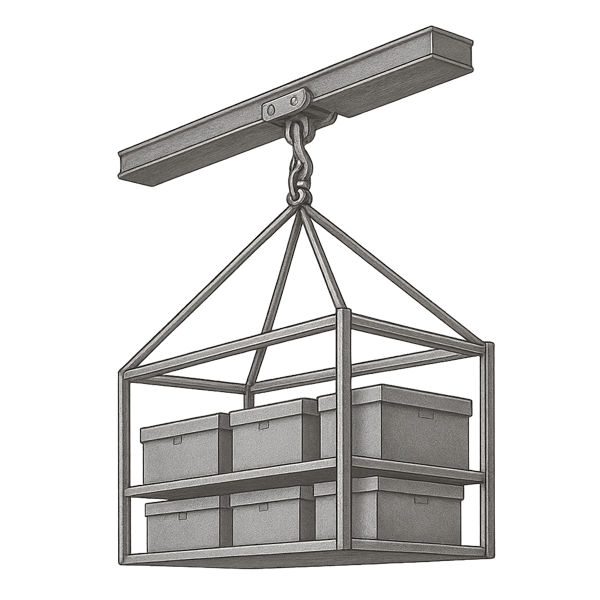
Overhead Storage Racks
Engineered overhead racks free floor space by storing pallets and parts safely above aisles, docks, and workcells.
Explore Overhead Storage Racks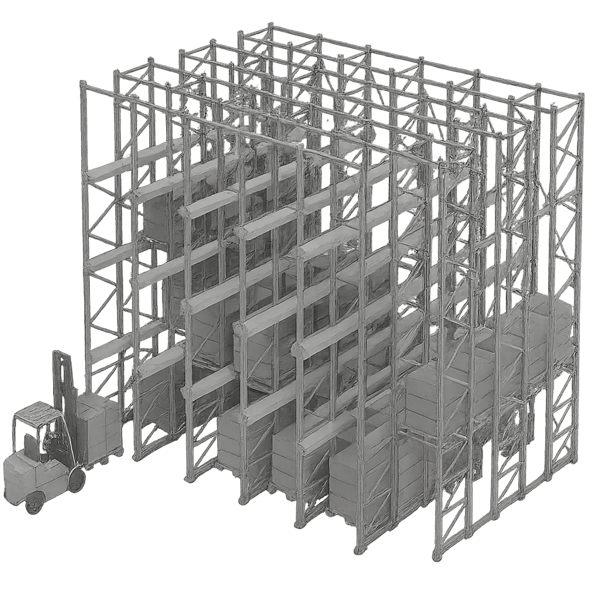
Drive In Racking
Drive-in racking maximizes pallet density with deep lanes for LIFO storage, ideal for cold storage, 3PL peaks, and manufacturing buffers.
Explore Drive In RackingDesign a Push Back Pallet Racking System That Works as Hard as You Do
From high volume distribution centers to manufacturing lines, push back pallet racking delivers deep lane density with reliable access to mixed SKUs.
Our team will design lane depth, capacity, and aisle layout to match your inventory profile and throughput goals. Let’s create a custom system that fits your facility’s needs.
Call us at (800) 803-1083 or Contact Us to schedule your free consultation today.
REQUEST A FREE CONSULTATION