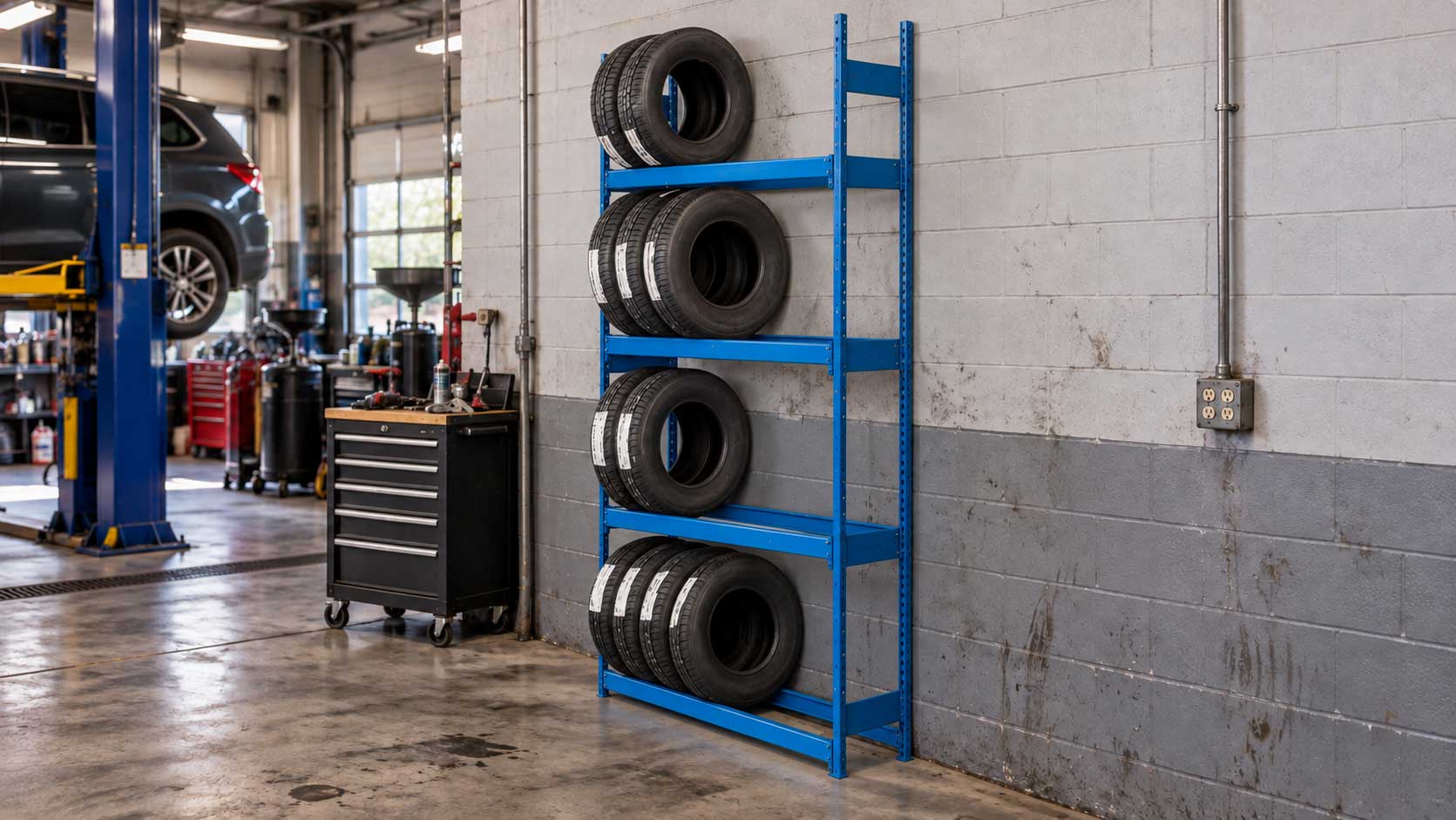
Tire Storage Racks for Organized Passenger and Truck Tire Inventory
Tire storage racks provide structured, accessible storage for passenger and truck tires in dealerships, fleet maintenance shops, and warehouse storage areas. Plan the rack layout around tire size, available space, and daily access so inventory stays organized and manageable.
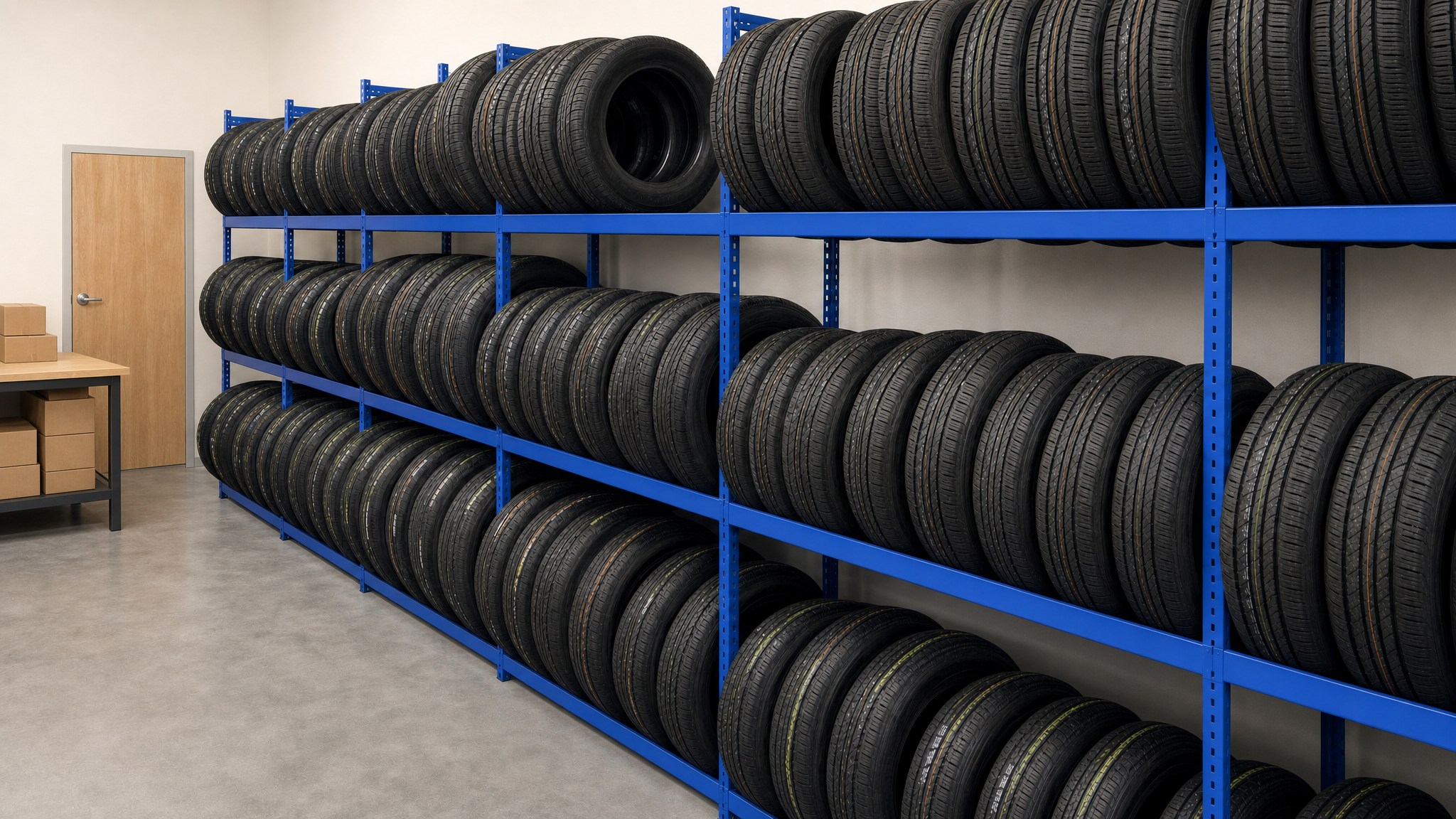
What Tire Storage Racks Do
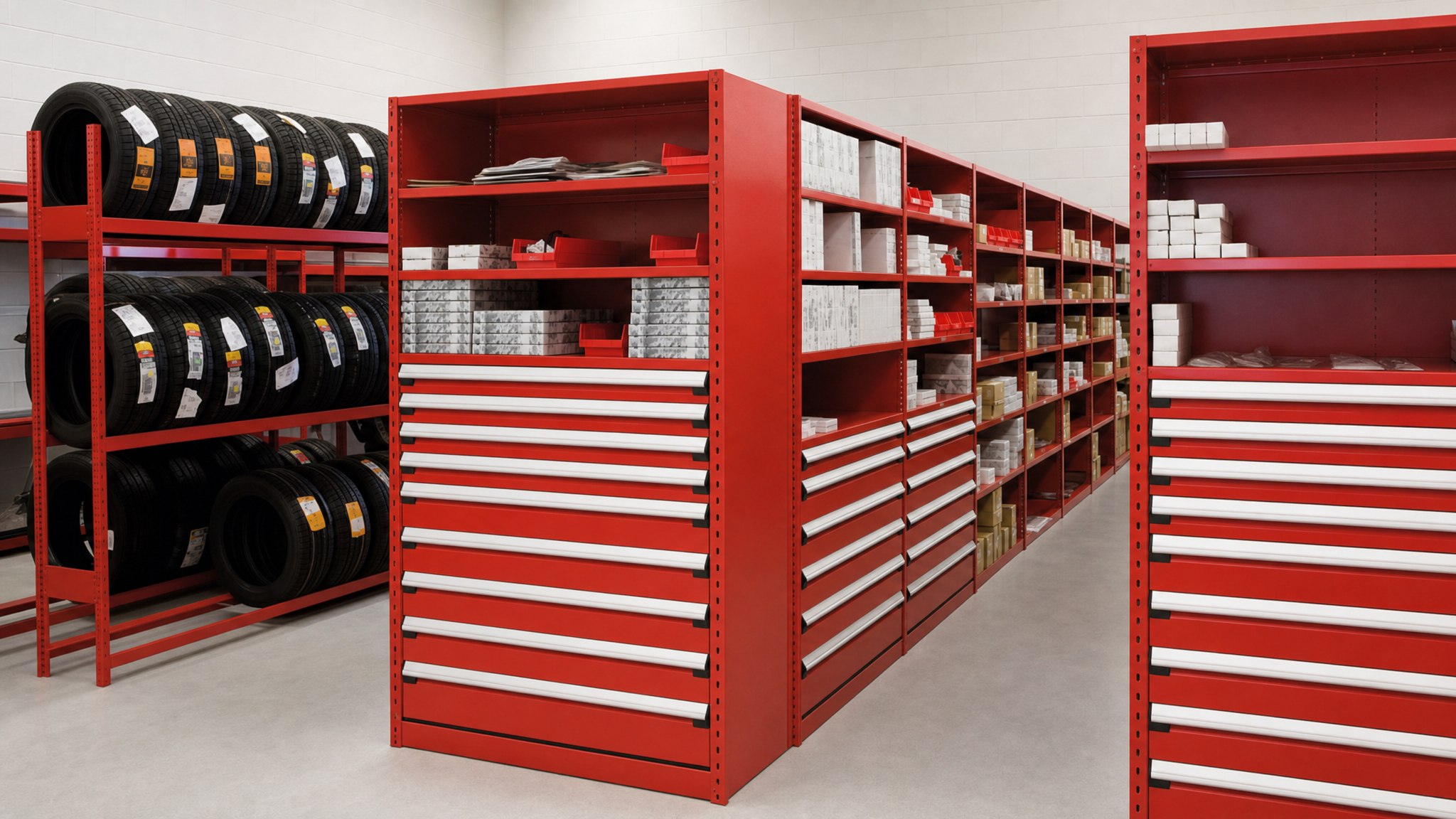
Tire storage racks are static racking systems that hold passenger and truck tires in upright, accessible positions. Also called tire racking or tire shelving, they create defined bays so automotive teams can separate inventory by size, category, or service need.
These racks are used in dealerships, fleet maintenance facilities, tire shops, and warehouse parts rooms where staff need organized tire storage without treating powered carousels or lift systems as the same equipment.
Planning Rack Size, Tire Count, and Load Capacity
Selecting the right tire storage rack requires evaluating tire diameter, tire width, assembly weight, rack width, level load, and the total number of tires to be stored. Passenger and truck tire racks should be planned separately because truck tires can require different rack widths and heavier-duty configurations.
Depending on the model, fixed rack features can include heavy-duty steel construction, boltless horizontal beams, adjustable shelf positions, rack-to-wall brackets for stabilization, and a gray powder coat finish. Confirm tire count and load rating for the specific rack width, tire type, and inventory mix before ordering.
- Tire type, such as passenger, light truck, bus, or semi-truck.
- Tire diameter, width, and wheel assembly weight.
- Required rack width, number of levels, level load, and storage footprint.
- Access routes for receiving, retrieval, and replenishment.
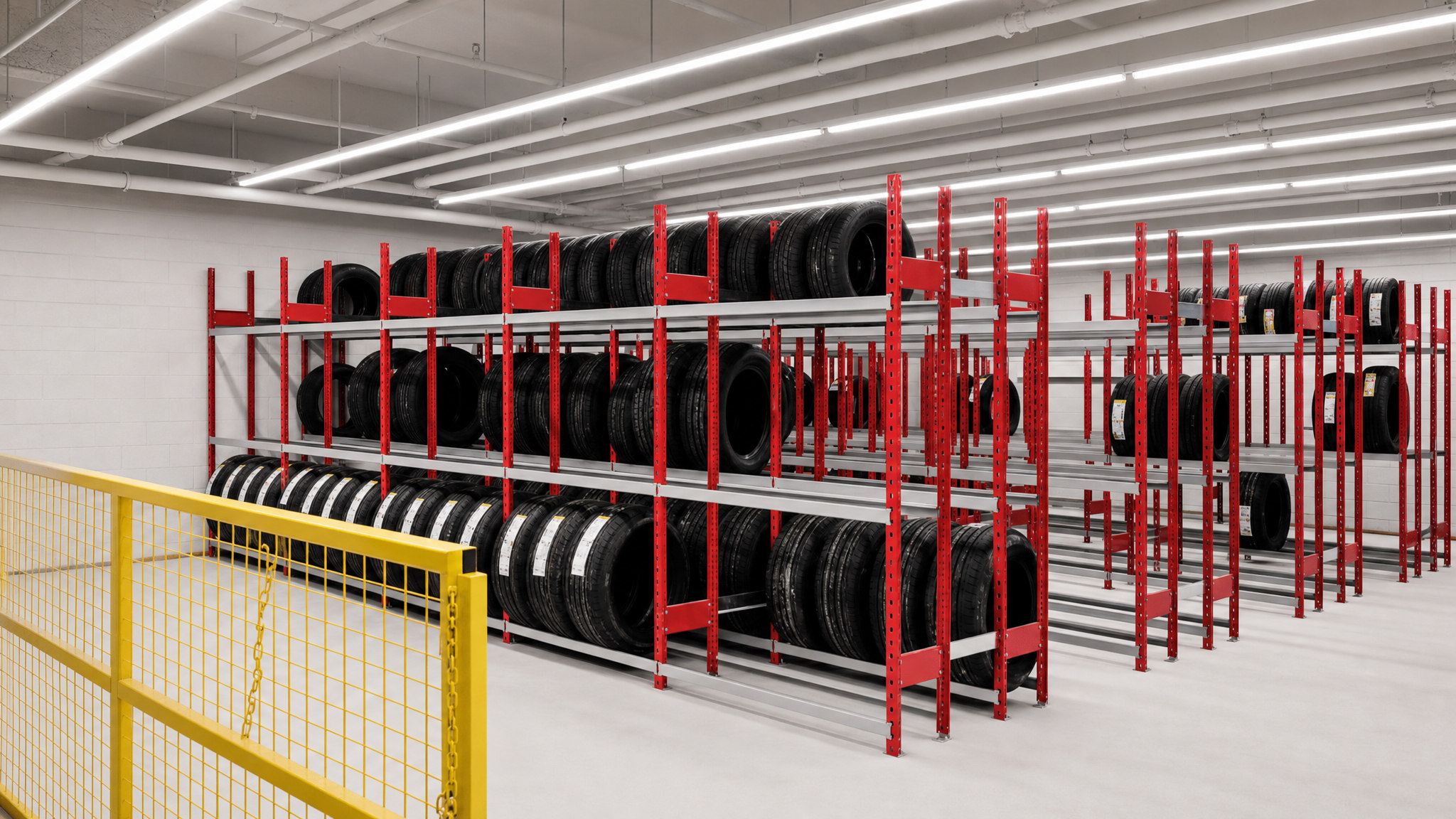
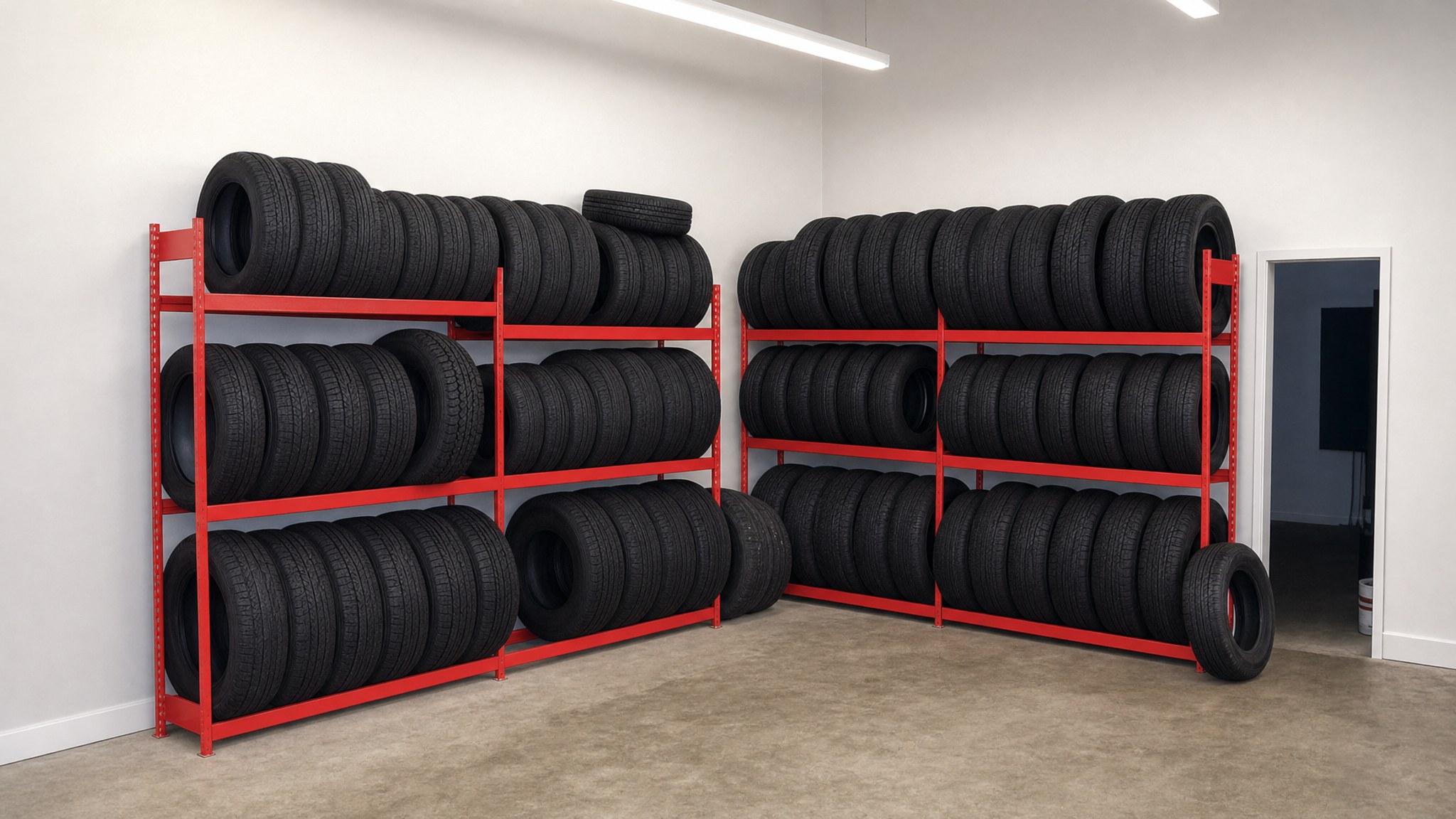
Tire Rack Features and Configuration Options
Tire storage racks are available as fixed steel rack configurations with adjustable beam positions and optional wall attachment for added stabilization where the layout requires it. Wall attachment is different from a true wall-mounted tire rack, so installation requirements should be confirmed for the selected model and facility conditions.
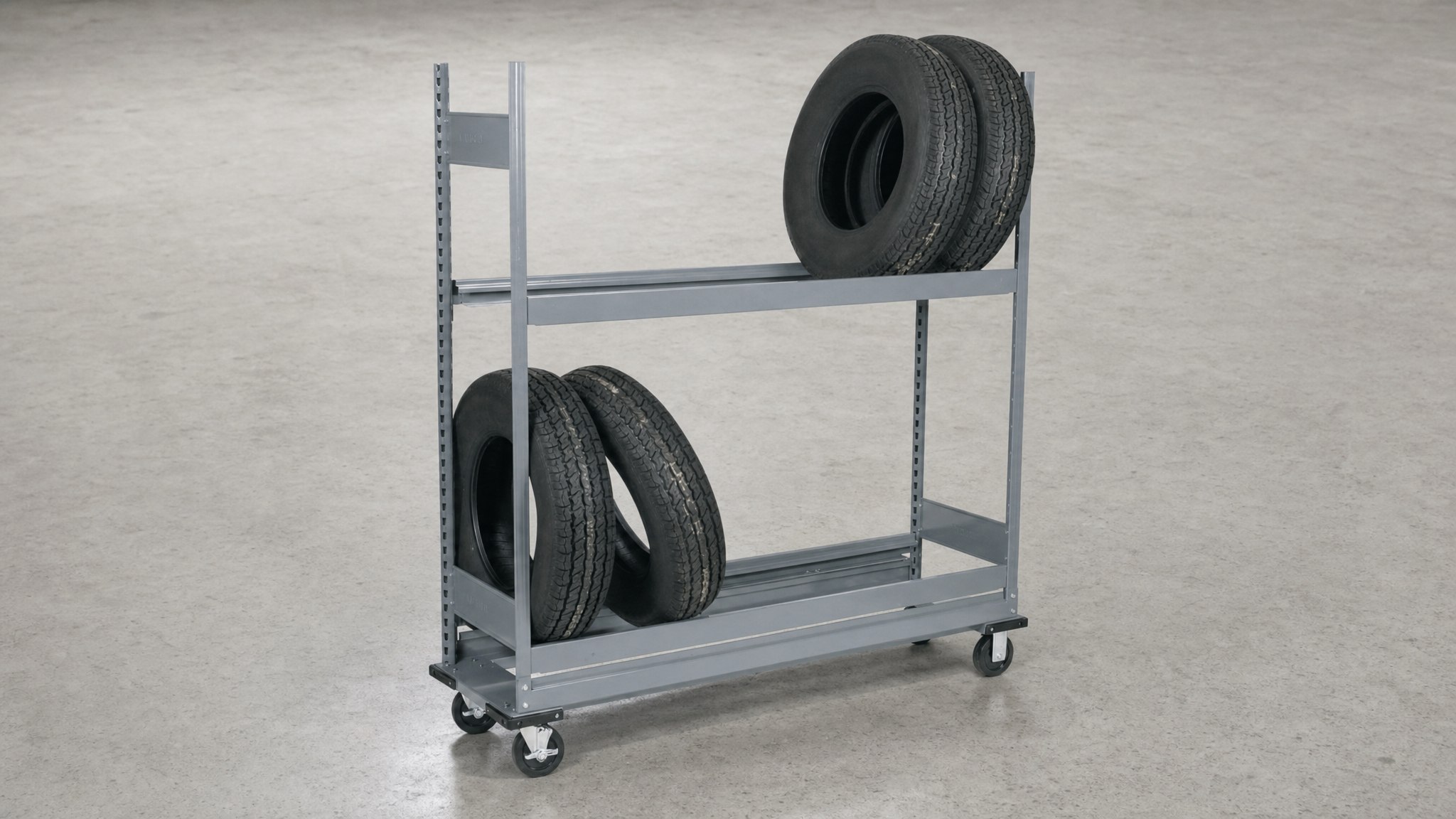
Mobile tire racks, portable tire racks, and rolling tire storage should be evaluated only when the offered model supports that handling approach. For most projects, the main decisions are rack width, level spacing, bay labeling, access clearances, and whether the layout serves passenger tires, truck tires, or both.
- Fixed steel tire racks for standard tire rooms, parts rooms, and warehouse tire storage.
- Heavy duty tire racks for larger tire categories when confirmed by model and load requirements.
- Bay labeling for stock identification and set separation.
- Wall ties for stabilization when specified by the rack supplier.
Where Tire Storage Racks Fit in the Facility
Tire racks are commonly used in dealership parts departments, fleet maintenance shops, tire shops, and warehouse storage zones. They support assigned bay locations, stock identification, and access routes for staff who receive, stage, retrieve, and replenish tire inventory.
- Dealership parts rooms and service tire areas.
- Fleet maintenance spaces that need truck tire racks.
- Warehouse tire racks for organized staging and replenishment.
How to Plan a Tire Rack Project
Before requesting a quote or purchasing tire storage racks, gather the tire types, dimensions, inventory counts, available footprint, ceiling and aisle constraints, and access needs for the storage area. Consultation is especially useful for truck tires, mixed tire categories, and layouts that must coordinate receiving, staging, and replenishment.
Standard tire racks for sale may be appropriate when rack requirements are already known. For custom tire storage systems, confirm model compatibility, installation needs, wall-tie requirements, and handling clearances with the rack supplier.
- Passenger and truck tire counts by category.
- Rack bay assignments and labeling needs.
- Whether fixed racking or a separate carousel or lift should be evaluated.
Automotive Dealership Tire Inventory
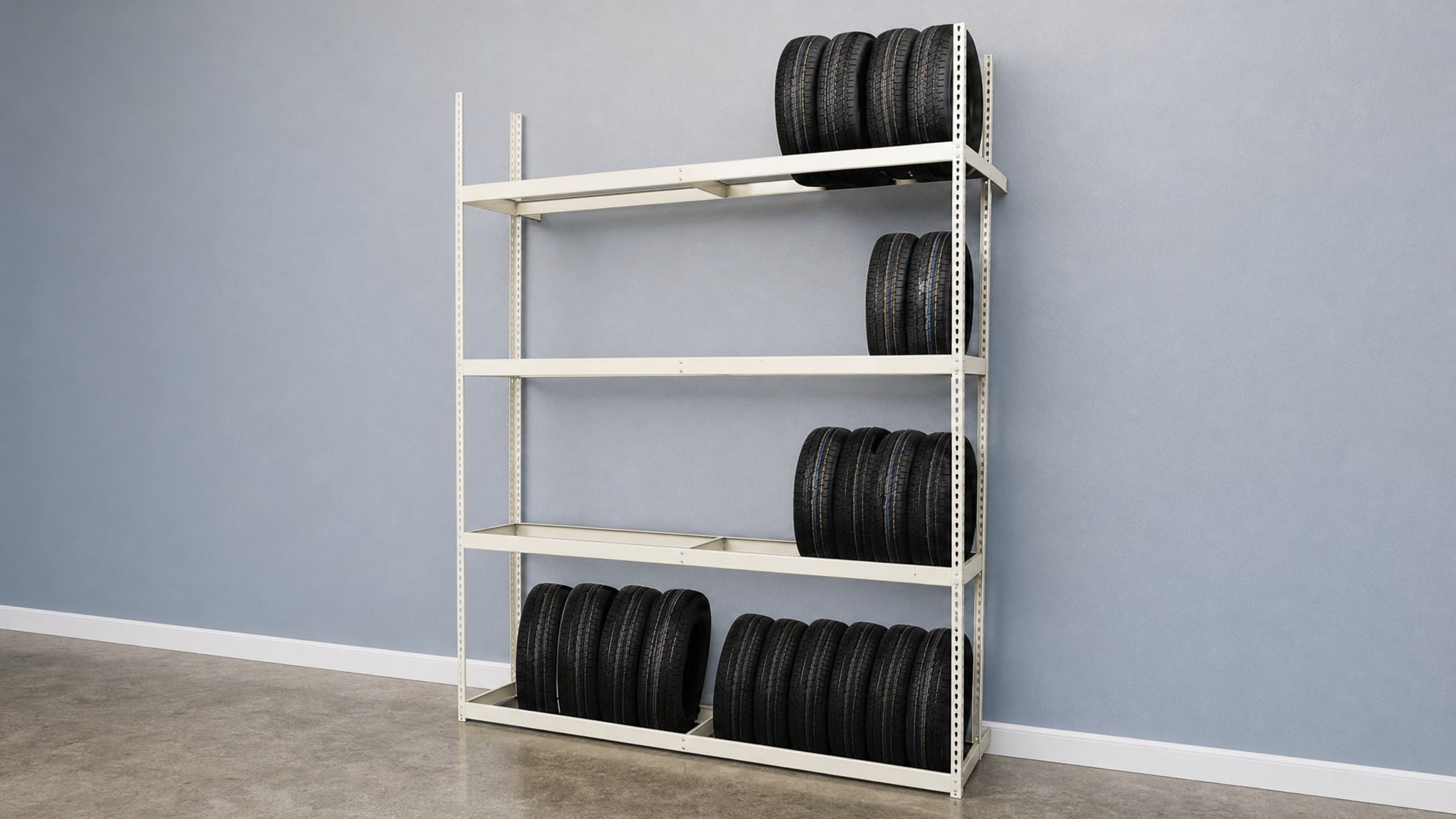
Automotive dealerships use tire storage racks to assign rack bays for seasonal, replacement, and service tires near parts or service departments. Bay labels help staff match tires to the correct customer vehicle or service ticket before the technician needs them.
- Supports visible organization of passenger tire inventory.
- Helps separate seasonal and replacement tire stock.


Planning Your Tire Storage Rack Layout
Use these planning decisions to match tire storage racks to the tire category, rack layout, access pattern, and buying path without confusing static racks with separate powered equipment.
| Planning Decision | Why It Matters | What to Confirm |
|---|---|---|
| Tire category | Facilities storing passenger tires, truck tires, or a mixed inventory. | Confirm tire diameter, width, assembly weight, and inventory count for each tire category before selecting rack widths and levels. |
| Rack width and level load | Buyers comparing standard tire shelving, heavy-duty tire racks, and commercial tire racks. | Level load and tire count depend on the selected rack width and tire type, so passenger-tire examples should not be reused for truck tire storage. |
| Bay identification | Dealerships, tire shops, and warehouses that retrieve tires by customer, size, route, or stock category. | Plan labeling and bay assignments around how staff receive, find, and replenish tire inventory. |
| Fixed or mobile handling | Facilities deciding between fixed tire racks and mobile tire storage systems. | Fixed racks are the standard static storage approach; mobile tire racks or portable tire racks should be verified by model before being specified. |
| Purchase path | Buyers who know their rack requirements or need help with a custom tire storage solution. | Use quick purchase for straightforward standard racks, and request design support for truck tires, mixed inventories, or custom layouts. |
Southwest Solutions Near You
With 7 offices in Texas, Oklahoma, Kansas and Colorado, plus teams covering every major metro area nationwide, Southwest Solutions Group provides expert sales, design, installation, and maintenance support for tire storage racks wherever you need it.
Tire Storage Racks Service Areas
Texas
- Dallas
- Austin
- Houston
- San Antonio
- Waco
- Tyler
- Amarillo
- Lubbock
- El Paso
- Ft Worth
- Corpus Christi
- Midland
Oklahoma
- Oklahoma City
- Tulsa
- Norman
- Lawton
- Enid
- Stillwater
- McAlester
- Muskogee
- Guymon
Kansas
- Wichita
- Overland Park
- Topeka
- Kansas City
- Lawrence
- Manhattan
- Salina
- Hays
- Dodge City
- Garden City
Colorado
- Denver
- Colorado Springs
- Fort Collins
- Grand Junction
- Pueblo
- Durango
- Alamosa
- Steamboat Springs
- Greeley
Alabama
- Huntsville
- Birmingham
- Montgomery
- Mobile
- Tuscaloosa
- Hoover
- Dothan
- Decatur
Alaska
- Anchorage
- Fairbanks
- Juneau
- Sitka
- Ketchikan
- Kodiak
- Bethel
- Nome
Arizona
- Phoenix
- Tucson
- Flagstaff
- Yuma
- Prescott
- Lake Havasu City
- Sierra Vista
- Kingman
Arkansas
- Little Rock
- Fayetteville
- Fort Smith
- Jonesboro
- Hot Springs
- Pine Bluff
- Texarkana
- Bentonville
- Arkadelphia
California
- Los Angeles
- San Diego
- San Francisco
- Sacramento
- Fresno
- Redding
- Bakersfield
- San Bernardino
- San Jose
Connecticut
- Hartford
- New Haven
- Stamford
- Bridgeport
Delaware
- Wilmington
- Dover
- Newark
- Rehoboth Beach
Florida
- Jacksonville
- Tallahassee
- Orlando
- Tampa
- Miami
- West Palm Beach
- Fort Myers
- Pensacola
Georgia
- Atlanta
- Savannah
- Augusta
- Columbus
- Macon
- Athens
- Valdosta
- Gainesville
- Albany
Hawaii
- Honolulu
- Hilo
- Kahului
- Kailua-Kona
- Lihue
Idaho
- Boise
- Coeur d'Alene
- Twin Falls
- Idaho Falls
- Pocatello
- Lewiston
- McCall
- Sandpoint
- Moscow
Illinois
- Chicago
- Springfield
- Rockford
- Peoria
- Champaign
- Bloomington
- Carbondale
- Moline
- Quincy
Indiana
- Indianapolis
- Fort Wayne
- South Bend
- Evansville
- Lafayette
- Bloomington
- Terre Haute
- Gary
- Muncie
Iowa
- Des Moines
- Cedar Rapids
- Davenport
- Sioux City
- Iowa City
- Waterloo
- Council Bluffs
- Ames
- Mason City
Kentucky
- Louisville
- Lexington
- Bowling Green
- Owensboro
- Covington
- Paducah
- Ashland
- Richmond
- Frankfort
- Pikeville
- Florence
Louisiana
- New Orleans
- Baton Rouge
- Shreveport
- Lafayette
- Lake Charles
- Monroe
- Alexandria
- Houma
Maine
- Portland
- Bangor
- Augusta
- Lewiston
- Waterville
- Presque Isle
- Bar Harbor
- Biddeford
- Rockland
Maryland
- Baltimore
- Annapolis
- Frederick
- Hagerstown
- Salisbury
Massachusetts
- Boston
- Worcester
- Springfield
- Pittsfield
Michigan
- Detroit
- Grand Rapids
- Lansing
- Ann Arbor
- Flint
- Traverse City
- Marquette
- Kalamazoo
- Saginaw
Minnesota
- Minneapolis
- St. Paul
- Duluth
- Rochester
- Mankato
- St. Cloud
- Bemidji
- Moorhead
Mississippi
- Jackson
- Gulfport
- Hattiesburg
- Biloxi
- Southaven
- Meridian
- Tupelo
- Natchez
- Greenville
- Oxford
Missouri
- Jefferson City
- St. Louis
- Kansas City
- Springfield
- Columbia
- Joplin
- Cape Girardeau
- St. Joseph
- Rolla
Montana
- Helena
- Billings
- Missoula
- Great Falls
- Bozeman
- Kalispell
- Havre
- Miles City
Nebraska
- Lincoln
- Omaha
- Grand Island
- Kearney
- Scottsbluff
- Norfolk
- North Platte
- Fremont
- South Sioux City
Nevada
- Las Vegas
- Reno
- Carson City
- Elko
- Pahrump
- Henderson
- Winnemucca
- Mesquite
- Fallon
New Hampshire
- Concord
- Manchester
- Portsmouth
- Keene
- Nashua
New Jersey
- Newark
- Jersey City
- Trenton
- Atlantic City
New Mexico
- Santa Fe
- Albuquerque
- Las Cruces
- Roswell
- Farmington
- Gallup
- Carlsbad
- Clovis
New York
- Albany
- New York City
- Buffalo
- Rochester
- Syracuse
- Binghamton
- Ithaca
- Plattsburgh
North Carolina
- Raleigh
- Charlotte
- Greensboro
- Asheville
- Wilmington
- Fayetteville
- Boone
- Greenville
North Dakota
- Bismarck
- Fargo
- Grand Forks
- Minot
- Dickinson
- Williston
- Jamestown
- Devils Lake
Ohio
- Columbus
- Cleveland
- Cincinnati
- Toledo
- Dayton
- Akron
- Youngstown
- Athens
Oregon
- Portland
- Salem
- Eugene
- Hermiston
- Baker City
- Medford
- Bend
- Klamath Falls
Pennsylvania
- Harrisburg
- Philadelphia
- Pittsburgh
- Erie
- Scranton
- State College
- Allentown
- Williamsport
Rhode Island
- Providence
- Warwick
- Newport
- Woonsocket
South Carolina
- Columbia
- Charleston
- Greenville
- Myrtle Beach
- Hilton Head Island
- Spartanburg
- Florence
- Rock Hill
South Dakota
- Pierre
- Sioux Falls
- Rapid City
- Aberdeen
- Watertown
- Brookings
- Mitchell
- Yankton
Tennessee
- Memphis
- Jackson
- Nashville
- Clarksville
- Cookeville
- Chattanooga
- Knoxville
- Johnson City
Utah
- Salt Lake City
- Ogden
- Logan
- Provo
- St. George
- Cedar City
- Moab
- Vernal
Vermont
- Montpelier
- Burlington
- Rutland
- Brattleboro
Virginia
- Richmond
- Norfolk
- Virginia Beach
- Roanoke
- Lynchburg
- Harrisonburg
- Fredericksburg
- Bristol
Washington
- Olympia
- Seattle
- Spokane
- Yakima
- Bellingham
- Wenatchee
- Kennewick
- Vancouver
West Virginia
- Charleston
- Huntington
- Morgantown
- Wheeling
- Parkersburg
- Beckley
- Martinsburg
- Bluefield
Wisconsin
- Madison
- Milwaukee
- Green Bay
- Eau Claire
- La Crosse
- Wausau
- Appleton
- Superior
Wyoming
- Cheyenne
- Casper
- Laramie
- Gillette
- Sheridan
- Rock Springs
- Jackson
- Cody
District of Columbia
- Washington D.C.
Frequently Asked Questions
Passenger tire racks and truck tire racks are planned separately based on tire dimensions, weight, rack width, level load, and access needs. Truck tire racks may require heavier-duty configurations, and passenger-tire count examples should not be used for truck tire sizing.
You will need tire types, diameters, widths, assembly weights, inventory counts, available storage space, rack width requirements, desired bay assignments, and access route needs.
Tire storage racks can be planned for commercial truck tires when the selected rack configuration matches the tire size, weight, and handling requirements. Confirm compatibility with the rack supplier before ordering.
No. Mobile tire racks, portable tire racks, and rolling tire racks are handling configurations that should be verified by model. Fixed tire storage racks are static systems used for most tire rooms, parts rooms, and warehouse tire storage areas.
No. Wall ties or rack-to-wall brackets provide stabilization for applicable rack installations, but they do not make the system a true wall-mounted tire rack. Confirm wall attachment requirements with the rack supplier.
Consider a carousel or lift when the project requires a powered or overhead tire-handling mechanism rather than static tire racking. Those systems should be evaluated as separate equipment from standard tire storage racks.
If you already know your rack requirements, standard tire racks may be reviewed through the quick-purchase path. For truck tires, mixed tire inventories, or custom layouts, a consultation helps confirm the correct configuration.
Product image gallery
Explore More Shelving Products

Tennis Racket Storage
Tennis racket storage racks organize shared rackets for clubs, schools, and recreation centers, keeping equipment visible and accessible.
Explore tennis racket storage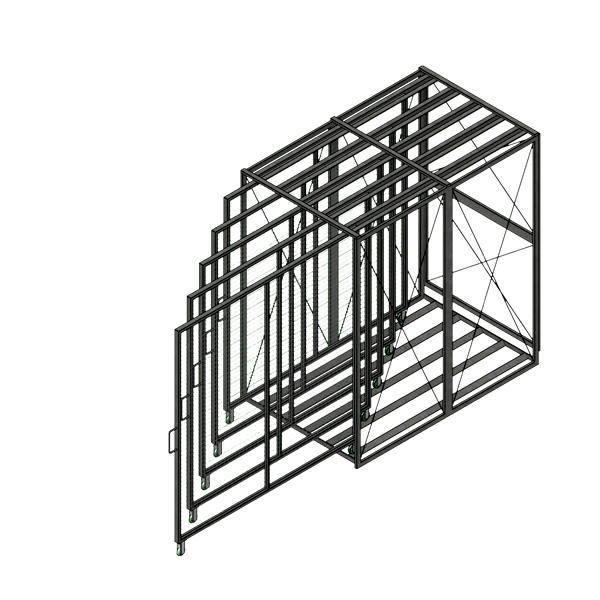
Art Storage Rack
Store framed and unframed pieces with pullout panels, flat files, and art racks for museums, archives, and galleries.
Explore Art Storage Rack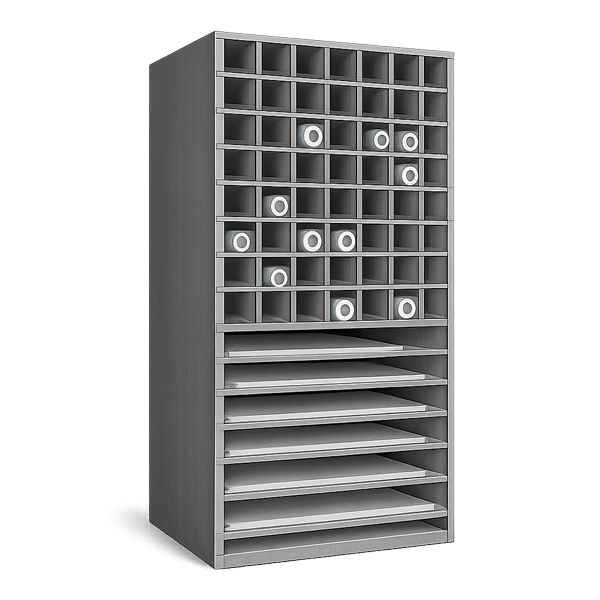
Blueprint Storage
Organize rolled drawings and flat plans in one compact, durable unit. Ideal for architecture, engineering, and construction blueprint storage.
Explore Blueprint Storage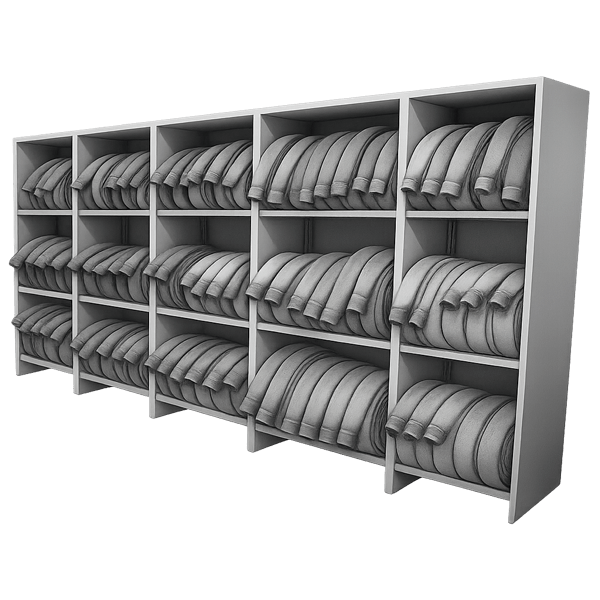
Fire Hose Racks
Heavy-duty fire hose racks organize, protect, and store hoses for quick deployment. Ideal for fire stations, industrial sites, and safety facilities.
Explore Fire Hose Racks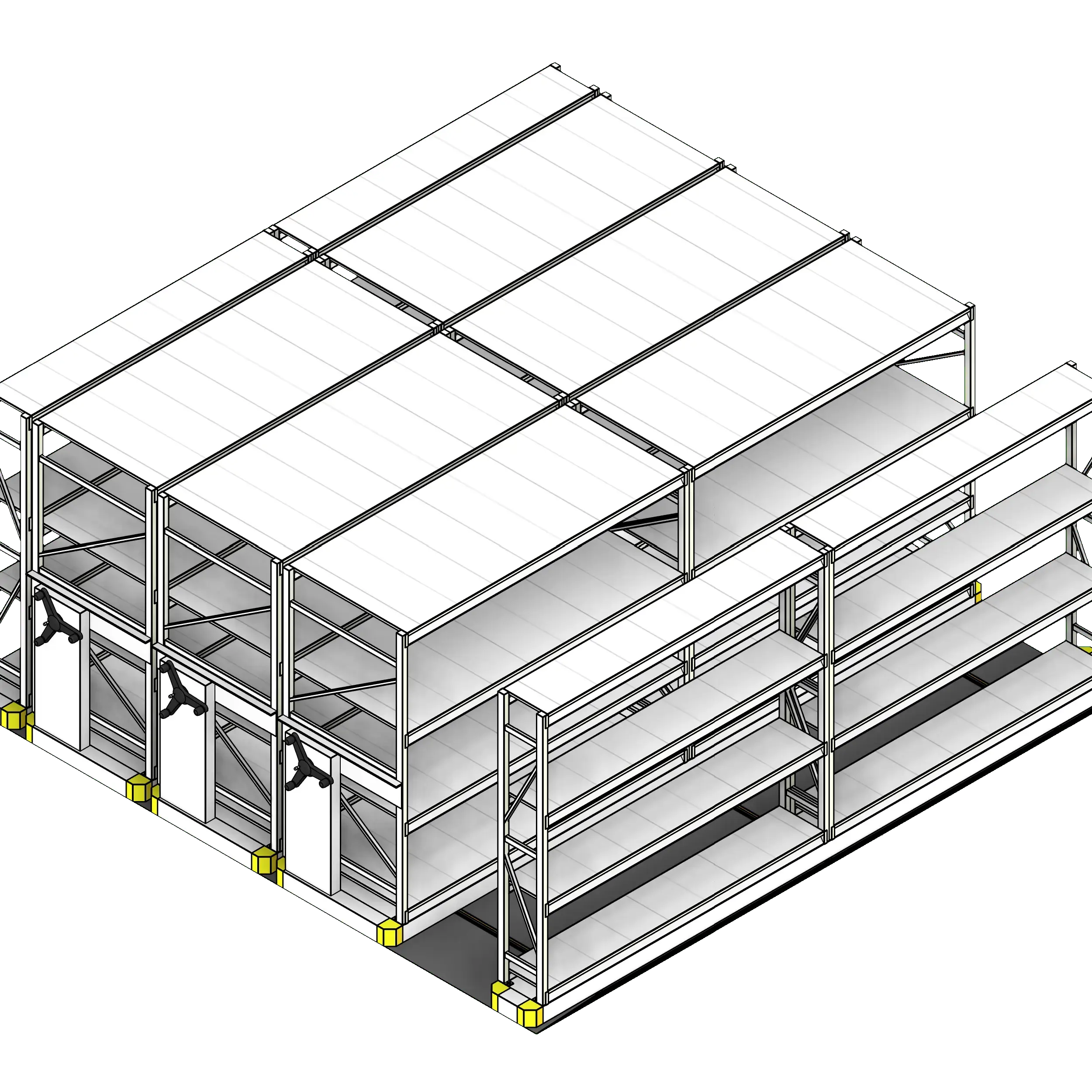
Industrial Shelving
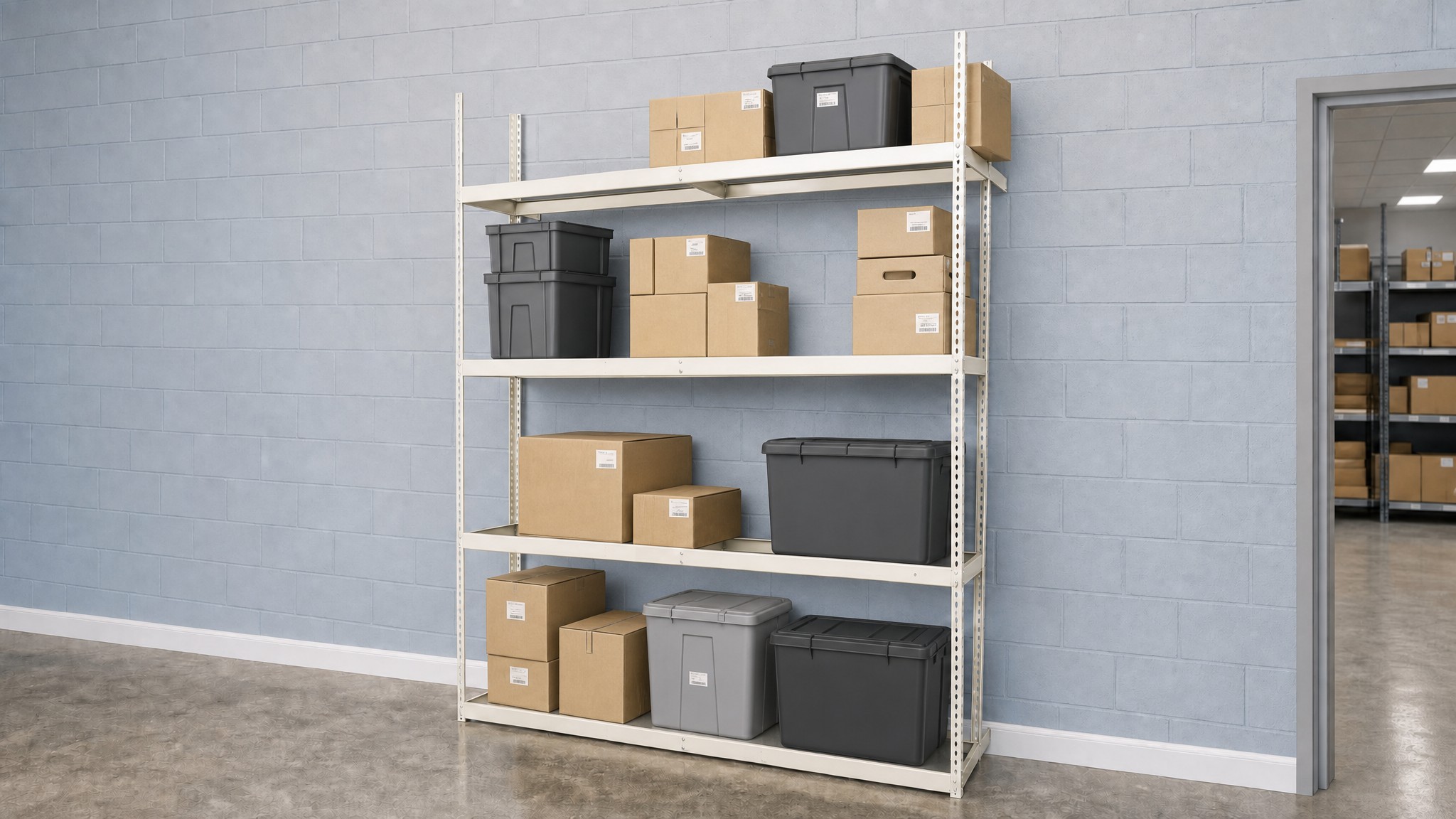
Steel shelving organizes tools, parts, and backroom supplies with configurable frames, reinforcements, and bin-compatible layouts.
Explore Industrial Shelving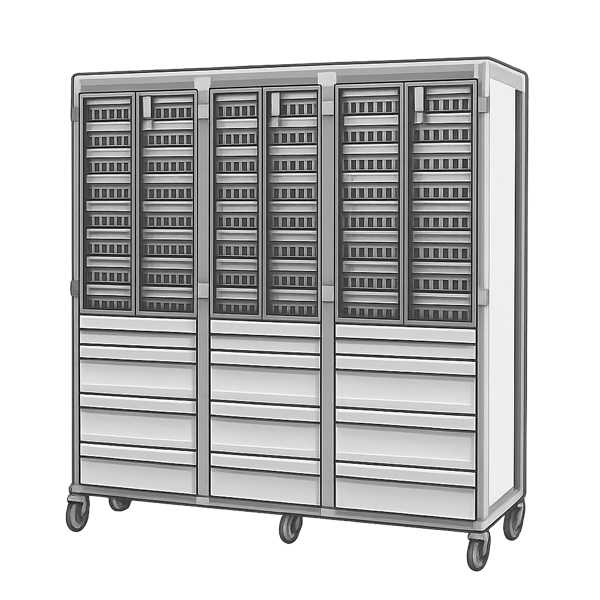
Kanban Inventory System
RFID-enabled Kanban inventory system simplifies medical inventory with automatic restocking, two-bin switching, and seamless integration into clinical workflows.
Explore Kanban Inventory System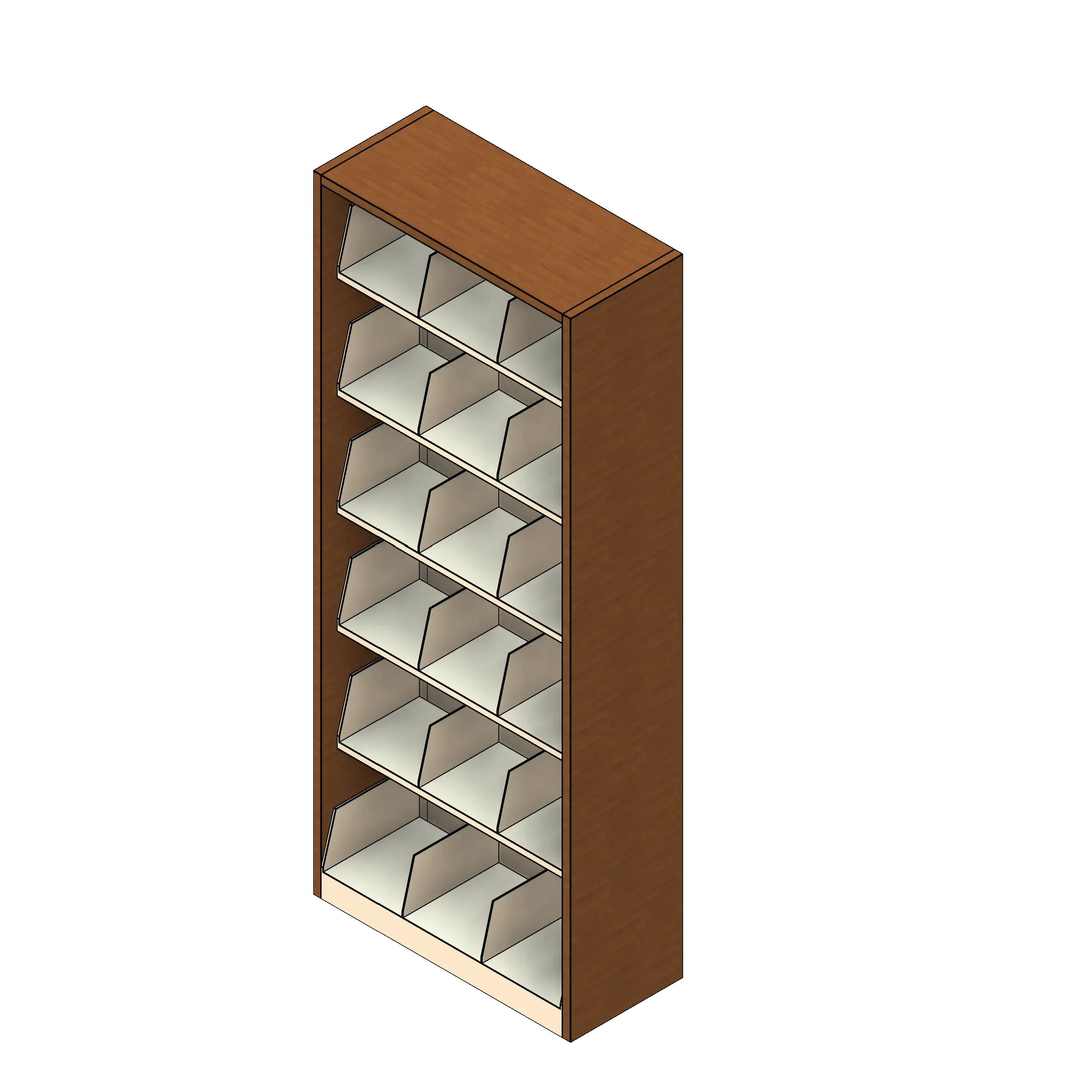
Library Shelving
Steel or wood library shelving for books, journals, and media. Available in wall, mobile, or freestanding units for public and academic libraries.
Explore Library Shelving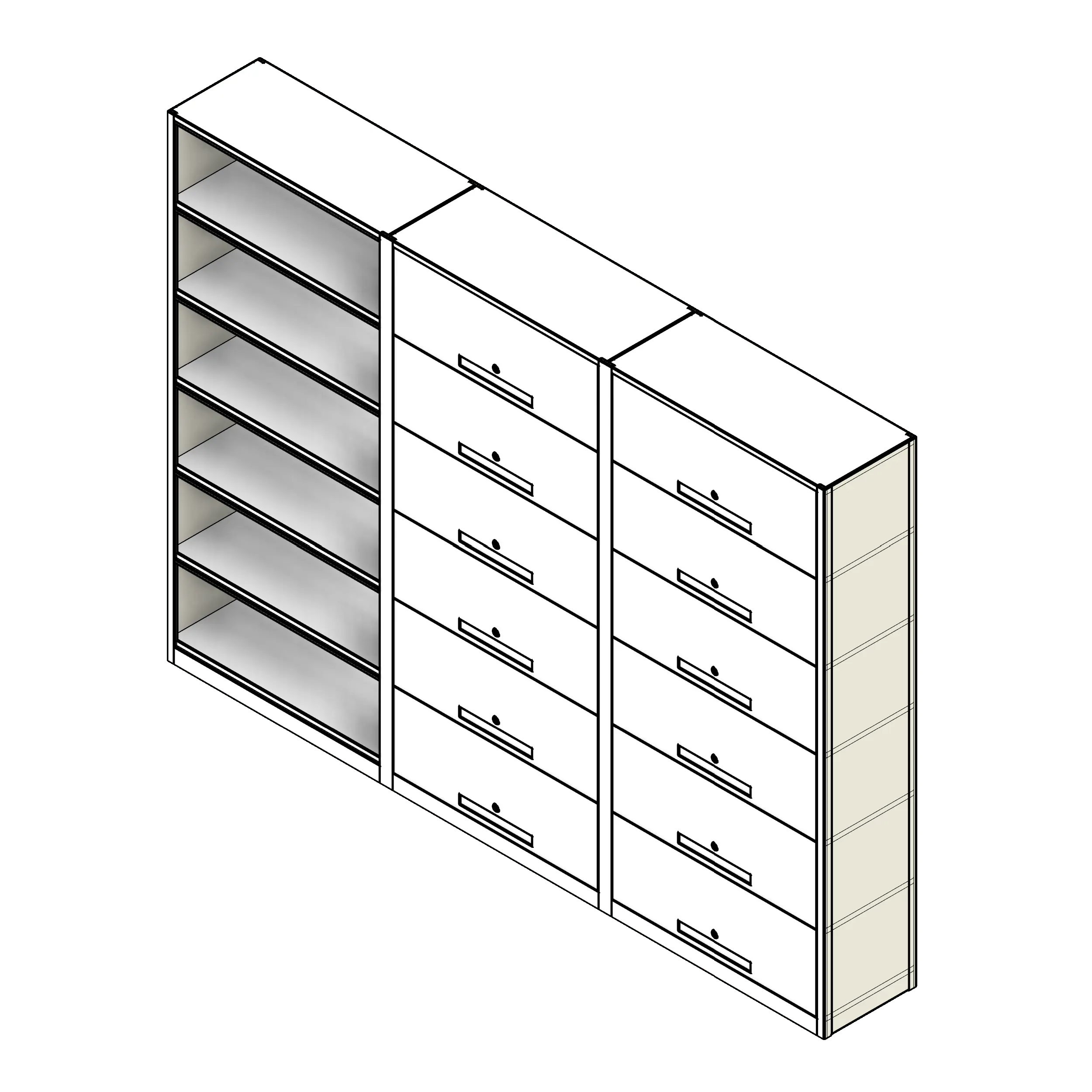
Office Shelving
Organized file and document storage for admin offices, archives, or law firms. Adjustable options fit binders, folders, or legal-size boxes.
Explore Office Shelving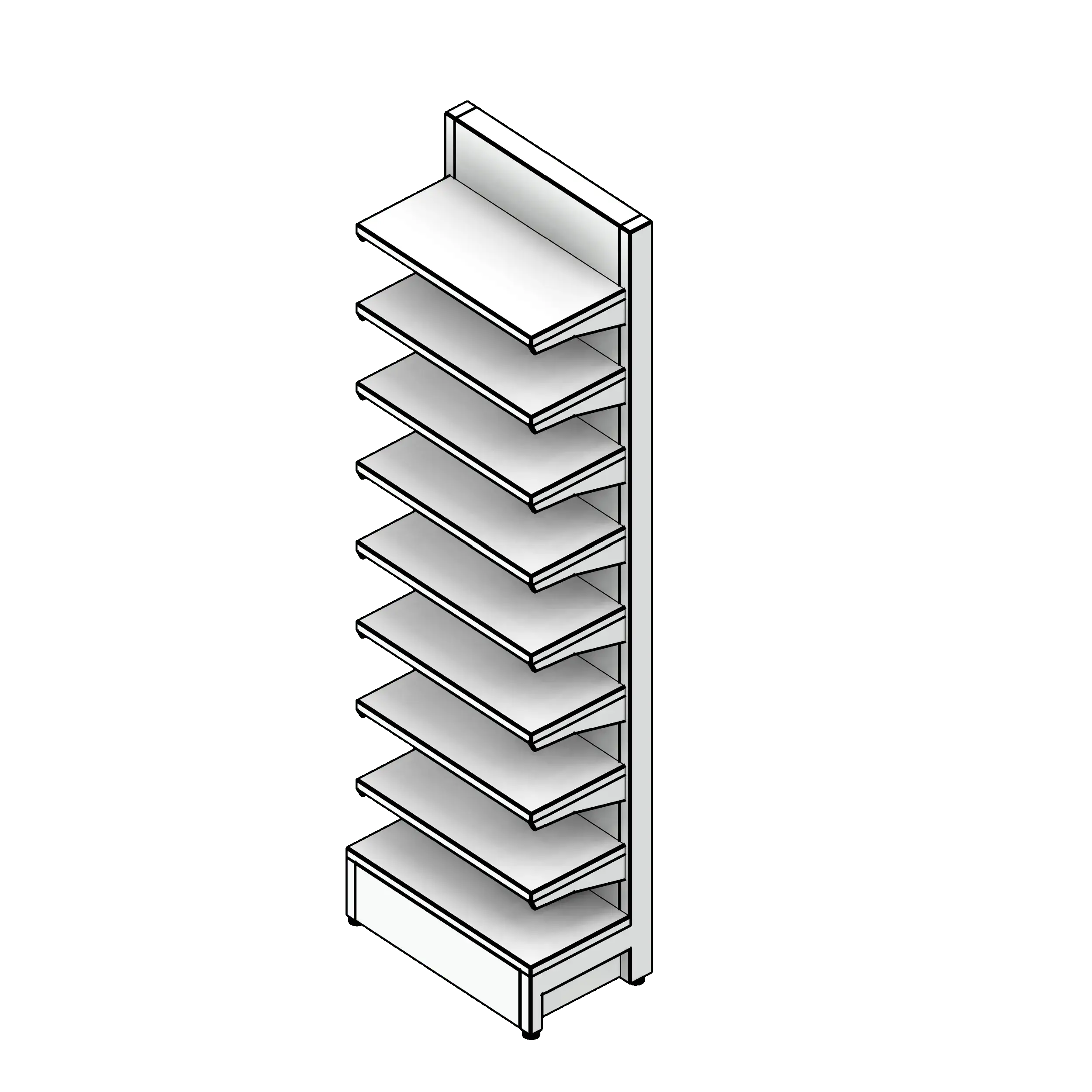
Pharmacy Shelving
Compact shelving organizes prescription inventory and picking areas with modular bins and drawers for hospital and retail pharmacies.
Explore Pharmacy Shelving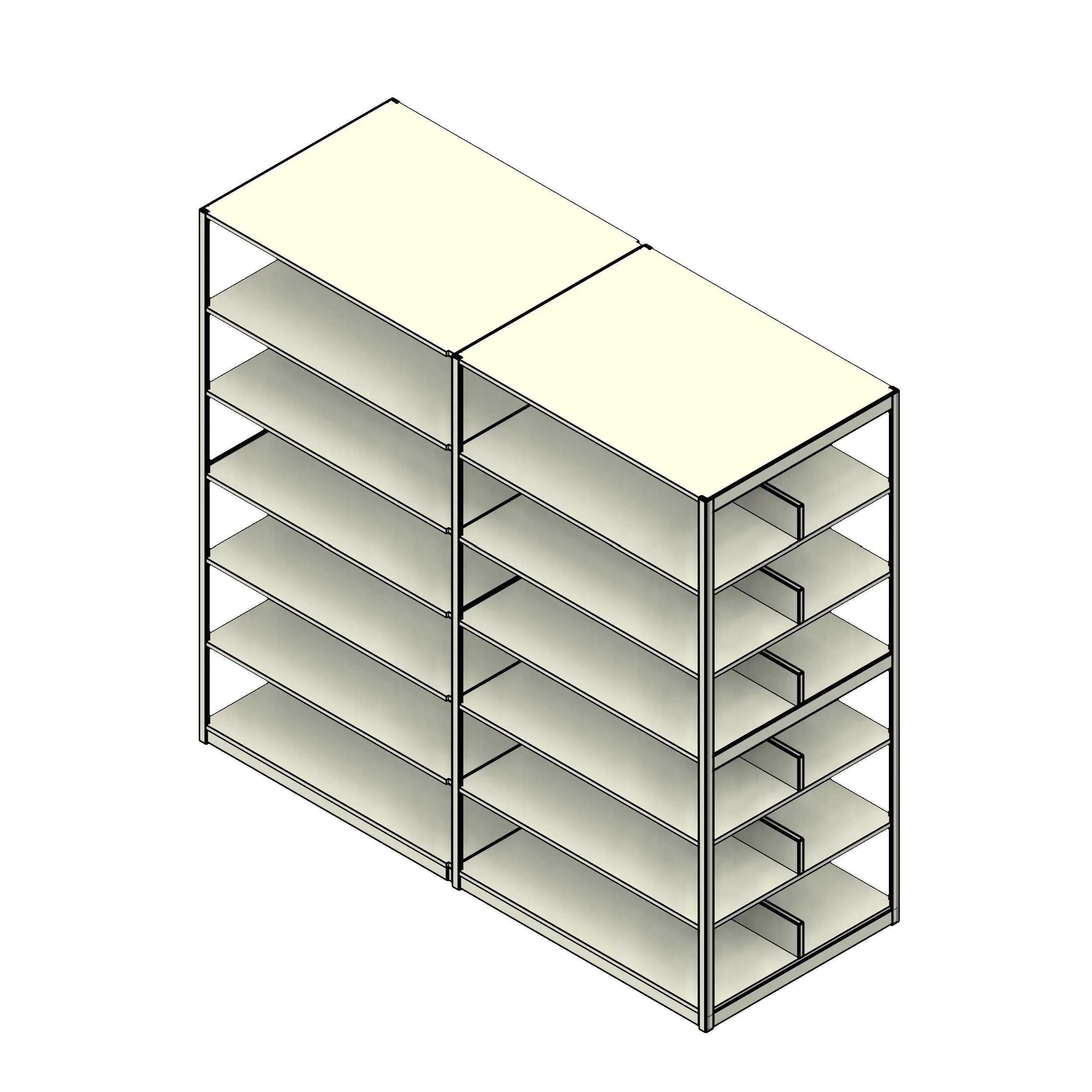
Storage Shelves for Boxes
Optimized shelving for record boxes, banker's boxes, and cartons. Ideal for document storage rooms and archival spaces.
Explore Storage Shelves for BoxesExplore Tire Storage Racks for Your Facility
Organize passenger, warehouse, and truck tires with racks selected for tire size, rack layout, and daily access needs.
Request design support for a custom layout, or use the quick-purchase path when your rack requirements are already known.
Call us at (800) 803-1083 or Contact Us to schedule your free consultation today.
Explore Tire Storage Racks