Garment Carousel for Hanging Apparel Storage and Retrieval
A garment carousel stores hanging apparel on vertically rotating carriers and brings garments to a defined access point. Southwest Solutions Group helps plan the layout around garment length, hanger spacing, retrieval frequency, controls, and facility space.
What Is a Garment Carousel?
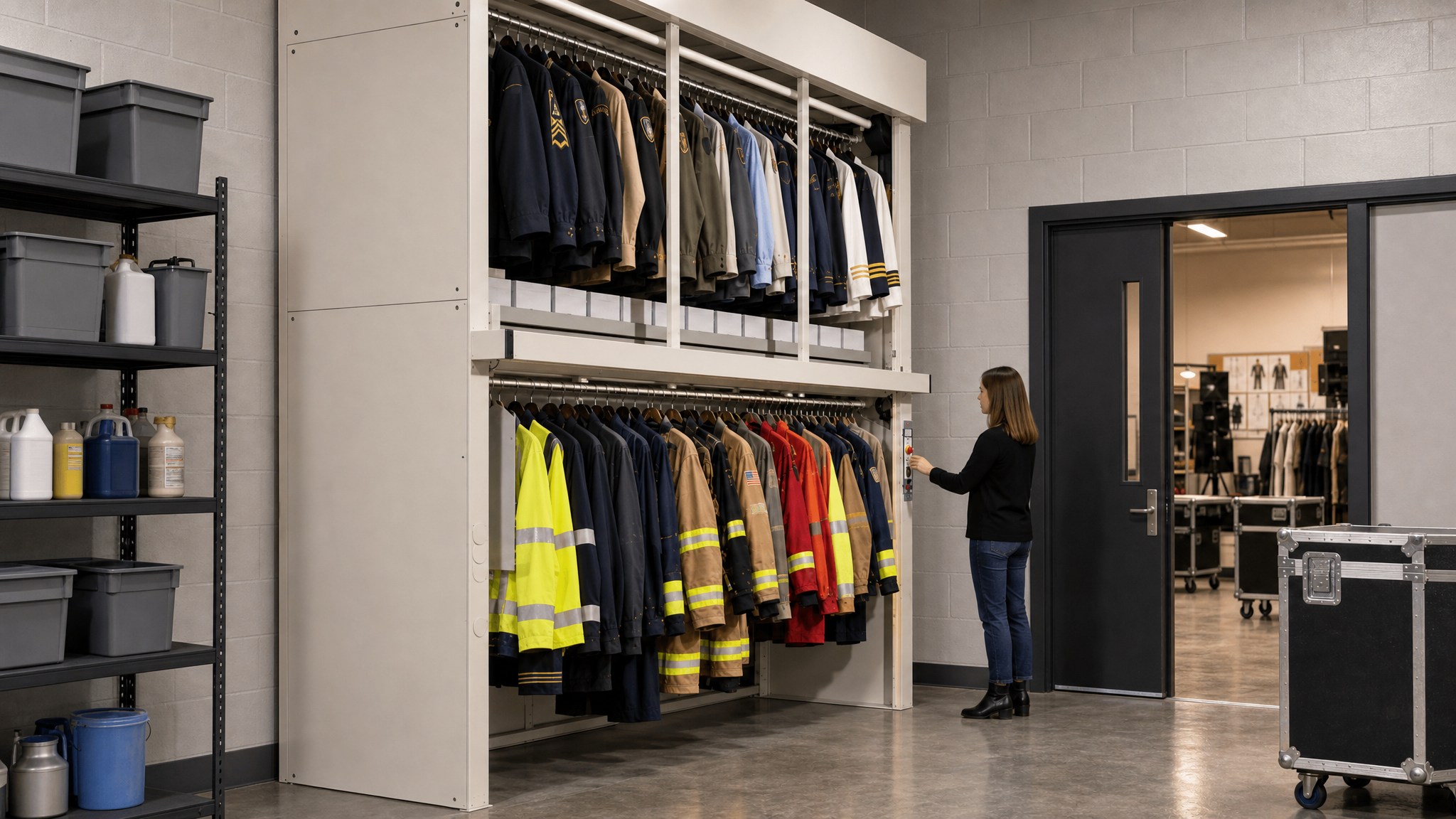
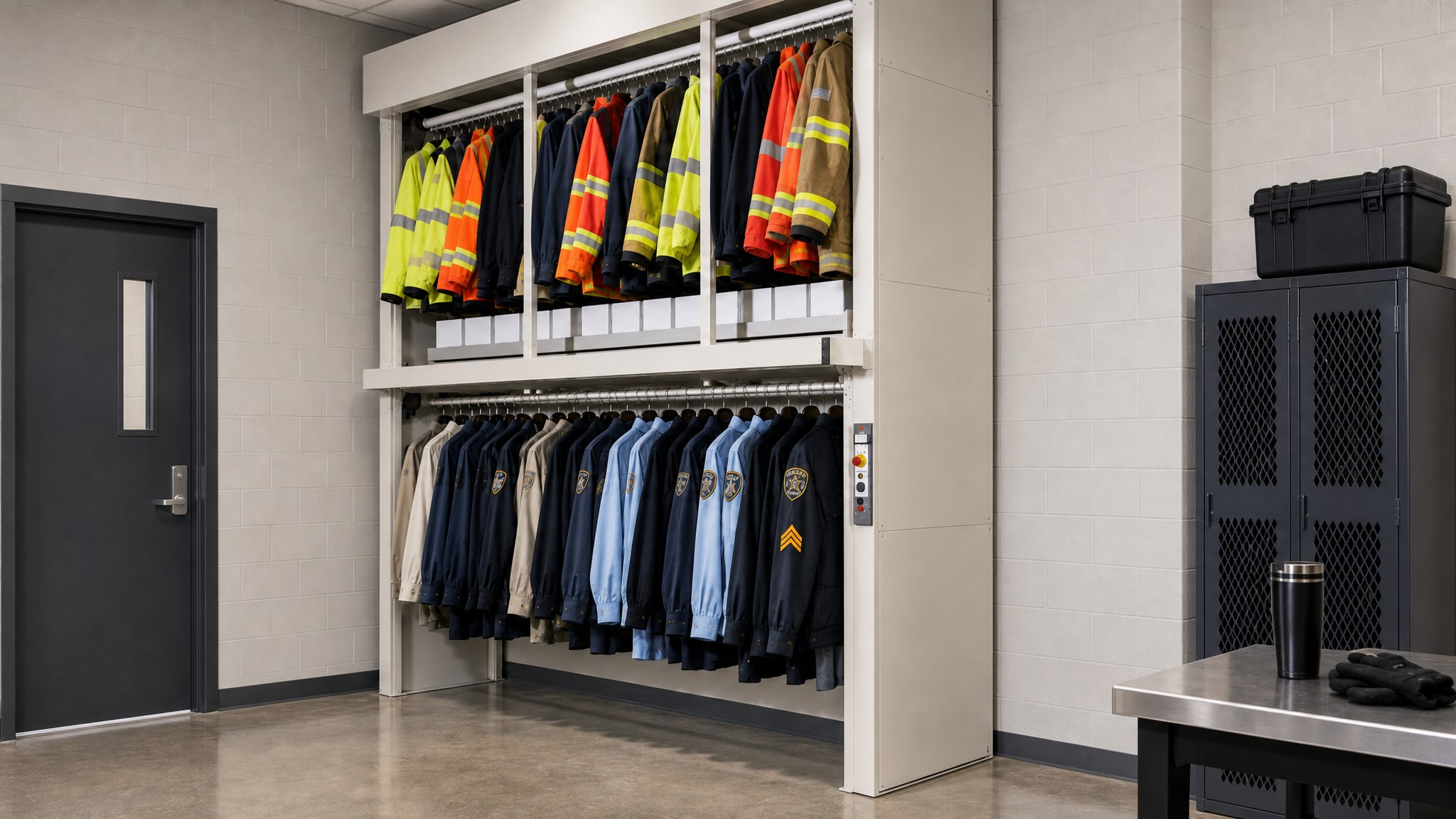
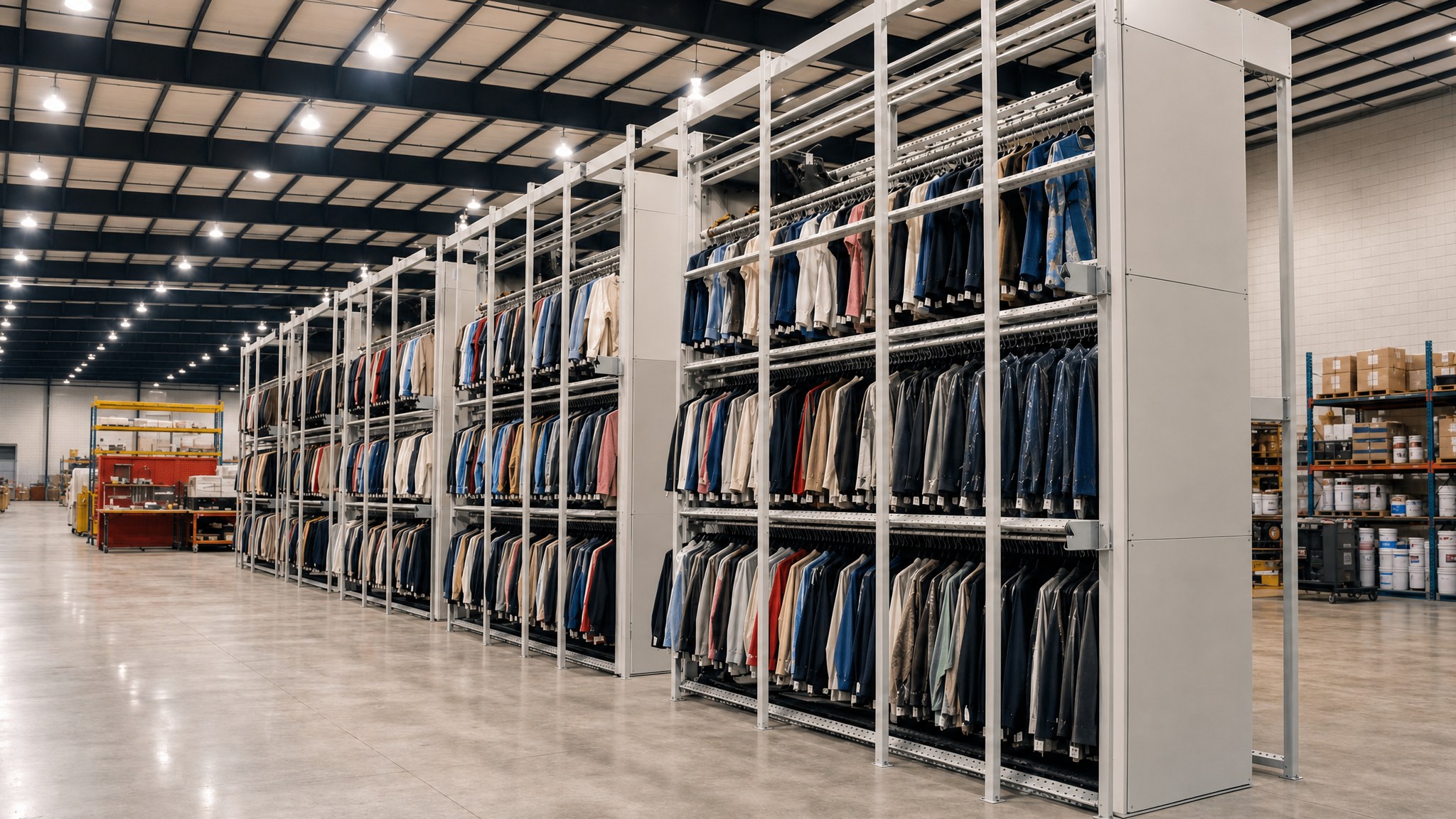
A garment carousel is automated garment handling equipment that stores hanging apparel on vertically circulating carriers. Instead of spreading garments across long rows of fixed racks, the carousel presents the selected carrier at an access point for staff to retrieve or return items.
This equipment is used for hanging garments such as uniforms, costumes, retail apparel, and other items that need to stay on hangers rather than being folded or boxed.
Sizing a Garment Carousel for Your Apparel Inventory
Garment carousel sizing depends on the apparel being stored and the space available for the equipment. Review garment length, hanger spacing, item bulk, load per carrier, total quantity, and retrieval frequency before relying on any nominal garment count.
Usable capacity can vary from a simple item count because thick coats, long costumes, mixed garment sizes, and required spacing affect how many items fit comfortably on each carrier. Building height, footprint, access clearance, service clearance, and electrical planning should be reviewed during layout development.
- Garment types, lengths, hanger spacing, and item bulk
- Total hanging garment quantity and expected retrieval frequency
- Available building height, footprint, access point location, and service clearance
- Carrier loading assumptions and electrical planning needs
Garment Carousel Controls and Software Options
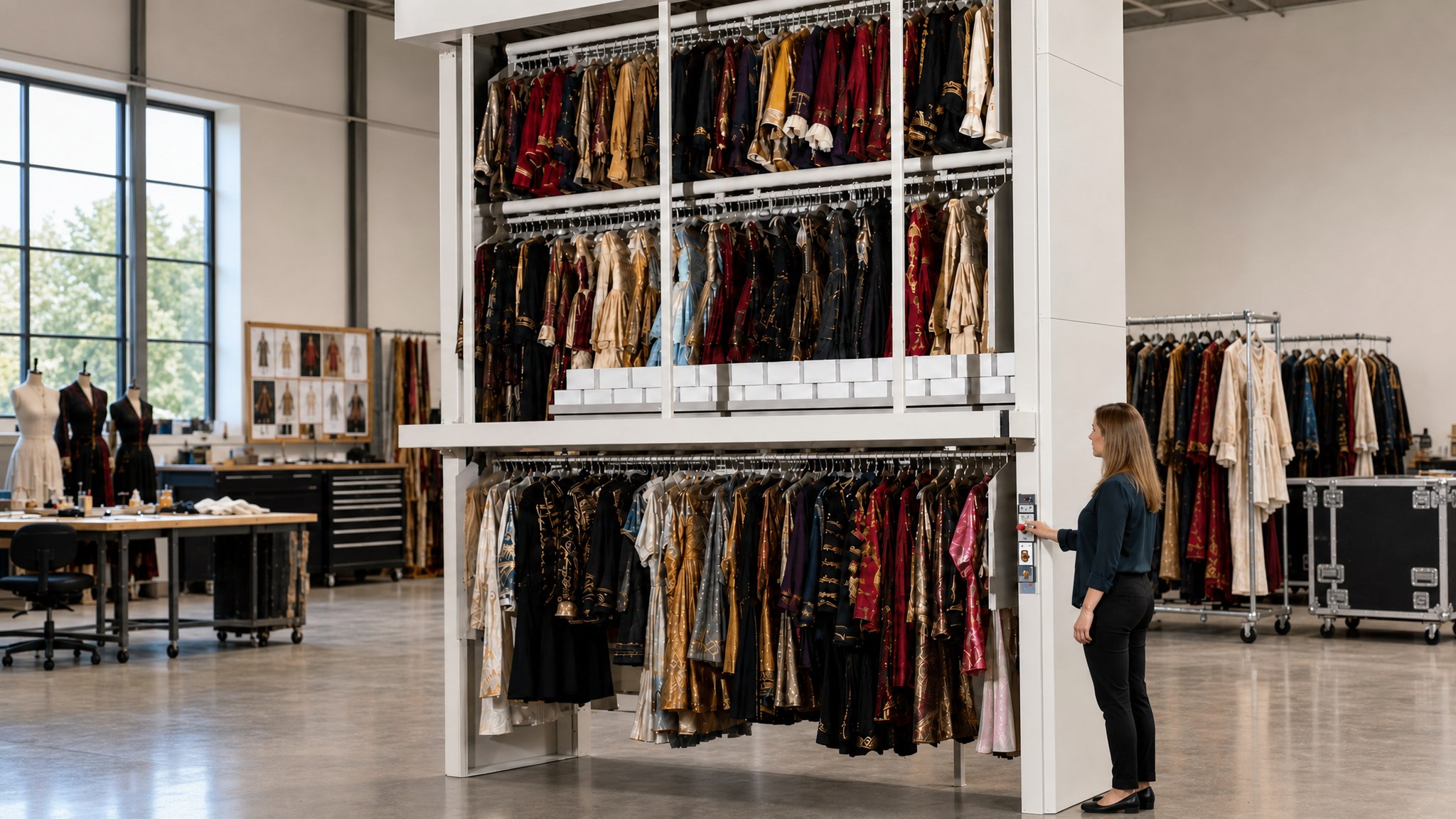
Controls should match how staff identify, retrieve, and return garments. A project may use basic motion controls for carousel movement, while optional inventory software or identification tools can be evaluated when the workflow requires more detailed garment tracking.
If barcode, RFID, ERP, WMS, or inventory management integration is important, define that requirement during planning so the controller and software scope can be matched to the retrieval process.
For a broader look at automated carousel equipment, see Vertical Carousels (VSR) to compare general vertical carousel applications.
- Motion control approach for the selected carousel configuration
- Garment identification needs, such as labels, barcode, or RFID planning
- Inventory software requirements for issue, return, or stockroom tracking
- Access point workflow for the staff who will handle garments
Where Garment Carousels Are Used
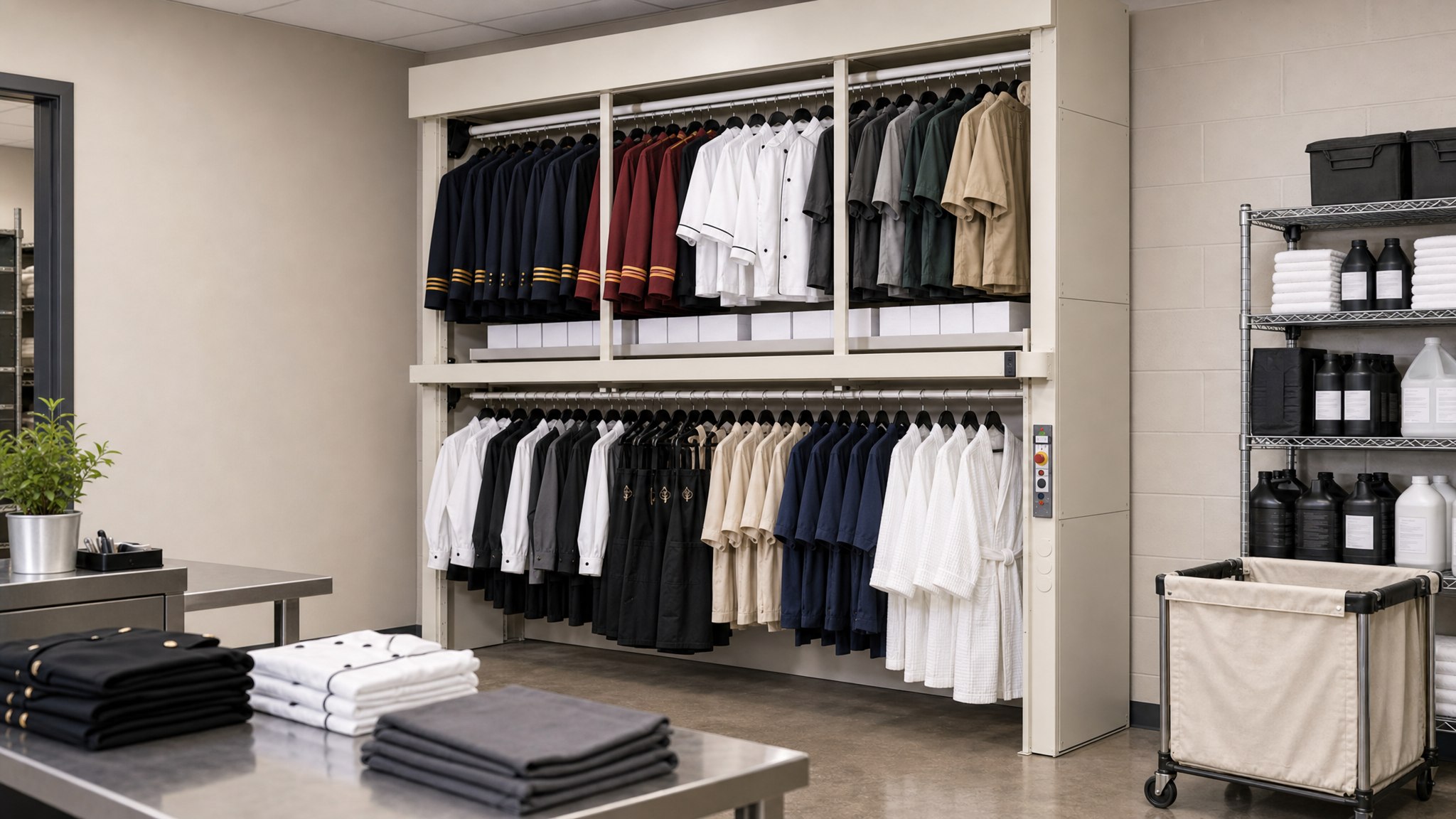
Garment carousels are used where staff need organized access to hanging apparel in a smaller, more controlled storage area than long fixed rack runs typically require. Common applications include apparel stockrooms, uniform issue rooms, costume departments, and backroom fulfillment areas.
The right configuration depends on the garment mix and retrieval workflow. A uniform room may prioritize recurring issue and return activity, while a costume department may need spacing for longer or bulkier pieces.
For other rotating storage equipment used in specialized applications, visit Specialty Carousels for related carousel categories.
- Apparel stockrooms managing changing hanging inventory
- Uniform rooms with recurring garment issue and return activity
- Costume departments storing mixed lengths and specialty apparel
- Retail or fulfillment backrooms handling garments that remain on hangers
Planning a Garment Carousel Project
A successful garment carousel project starts with the actual apparel inventory and the facility conditions around it. Confirm garment dimensions, hanger spacing, carrier loading, retrieval workflow, building height, footprint, access point location, service clearance, and electrical requirements.
Project planning should also address whether the system is going into new construction or a retrofit. A Revit model is available to support early layout coordination.
If your team is comparing multiple automated storage approaches, review Automated Storage for a broader equipment overview.
- Document garment types, lengths, quantities, and retrieval frequency
- Measure available space and note building height and clearances
- Determine the access point location and service access needs
- Identify control, software, and electrical planning requirements
Apparel Stockrooms

Retail and distribution stockroom staff use a garment carousel to manage hanging items that need to remain visible, organized, and accessible for selection. The vertically rotating clothes rack brings carriers to an access point, which helps staff work from a defined retrieval position instead of searching through extended fixed rack rows.
- Supports mixed apparel that stays on hangers
- Keeps retrieval activity focused at a defined access point
- Works for stockrooms where item mix and retrieval frequency affect sizing


Planning Your Garment Carousel Configuration
Use these planning decisions to define the right garment carousel layout, controls, and workflow before requesting a quote.
| Planning Decision | Why It Matters | What to Confirm |
|---|---|---|
| Garment Mix | Projects with uniforms, costumes, retail apparel, or mixed hanging garments. | Confirm garment length, bulk, hanger spacing, and whether items must remain on hangers throughout storage and retrieval. |
| Capacity Planning | Facilities comparing nominal garment counts against real usable storage. | Review total quantity, load per carrier, spacing needs, and retrieval frequency rather than relying on a garment count alone. |
| Facility Layout | New construction, retrofit projects, and rooms with limited footprint. | Confirm building height, available floor space, access point location, service clearance, and electrical planning requirements. |
| Controls and Tracking | Operations that need anything beyond basic carousel movement. | Define whether the project needs inventory software, barcode, RFID, ERP, or WMS coordination before the controller is selected. |
| Adjacent Storage Methods | Buyers comparing a garment carousel with fixed racks, mobile wardrobe storage, or conveyor-style circulation. | Compare the mechanism and workflow carefully: static racks, floor-track wardrobe storage, and garment conveyors are different approaches from a vertical garment carousel. |
Southwest Solutions Near You
With 7 offices in Texas, Oklahoma, Kansas and Colorado, plus teams covering every major metro area nationwide, Southwest Solutions Group delivers expert garment carousel sales, design, installation, and maintenance support wherever you need it.
Garment Carousel Service Areas
Texas
- Dallas
- Austin
- Houston
- San Antonio
- Waco
- Tyler
- Amarillo
- Lubbock
- El Paso
- Ft Worth
- Corpus Christi
- Midland
Oklahoma
- Oklahoma City
- Tulsa
- Norman
- Lawton
- Enid
- Stillwater
- McAlester
- Muskogee
- Guymon
Kansas
- Wichita
- Overland Park
- Topeka
- Kansas City
- Lawrence
- Manhattan
- Salina
- Hays
- Dodge City
- Garden City
Colorado
- Denver
- Colorado Springs
- Fort Collins
- Grand Junction
- Pueblo
- Durango
- Alamosa
- Steamboat Springs
- Greeley
Alabama
- Huntsville
- Birmingham
- Montgomery
- Mobile
- Tuscaloosa
- Hoover
- Dothan
- Decatur
Alaska
- Anchorage
- Fairbanks
- Juneau
- Sitka
- Ketchikan
- Kodiak
- Bethel
- Nome
Arizona
- Phoenix
- Tucson
- Flagstaff
- Yuma
- Prescott
- Lake Havasu City
- Sierra Vista
- Kingman
Arkansas
- Little Rock
- Fayetteville
- Fort Smith
- Jonesboro
- Hot Springs
- Pine Bluff
- Texarkana
- Bentonville
- Arkadelphia
California
- Los Angeles
- San Diego
- San Francisco
- Sacramento
- Fresno
- Redding
- Bakersfield
- San Bernardino
- San Jose
Connecticut
- Hartford
- New Haven
- Stamford
- Bridgeport
Delaware
- Wilmington
- Dover
- Newark
- Rehoboth Beach
Florida
- Jacksonville
- Tallahassee
- Orlando
- Tampa
- Miami
- West Palm Beach
- Fort Myers
- Pensacola
Georgia
- Atlanta
- Savannah
- Augusta
- Columbus
- Macon
- Athens
- Valdosta
- Gainesville
- Albany
Hawaii
- Honolulu
- Hilo
- Kahului
- Kailua-Kona
- Lihue
Idaho
- Boise
- Coeur d'Alene
- Twin Falls
- Idaho Falls
- Pocatello
- Lewiston
- McCall
- Sandpoint
- Moscow
Illinois
- Chicago
- Springfield
- Rockford
- Peoria
- Champaign
- Bloomington
- Carbondale
- Moline
- Quincy
Indiana
- Indianapolis
- Fort Wayne
- South Bend
- Evansville
- Lafayette
- Bloomington
- Terre Haute
- Gary
- Muncie
Iowa
- Des Moines
- Cedar Rapids
- Davenport
- Sioux City
- Iowa City
- Waterloo
- Council Bluffs
- Ames
- Mason City
Kentucky
- Louisville
- Lexington
- Bowling Green
- Owensboro
- Covington
- Paducah
- Ashland
- Richmond
- Frankfort
- Pikeville
- Florence
Louisiana
- New Orleans
- Baton Rouge
- Shreveport
- Lafayette
- Lake Charles
- Monroe
- Alexandria
- Houma
Maine
- Portland
- Bangor
- Augusta
- Lewiston
- Waterville
- Presque Isle
- Bar Harbor
- Biddeford
- Rockland
Maryland
- Baltimore
- Annapolis
- Frederick
- Hagerstown
- Salisbury
Massachusetts
- Boston
- Worcester
- Springfield
- Pittsfield
Michigan
- Detroit
- Grand Rapids
- Lansing
- Ann Arbor
- Flint
- Traverse City
- Marquette
- Kalamazoo
- Saginaw
Minnesota
- Minneapolis
- St. Paul
- Duluth
- Rochester
- Mankato
- St. Cloud
- Bemidji
- Moorhead
Mississippi
- Jackson
- Gulfport
- Hattiesburg
- Biloxi
- Southaven
- Meridian
- Tupelo
- Natchez
- Greenville
- Oxford
Missouri
- Jefferson City
- St. Louis
- Kansas City
- Springfield
- Columbia
- Joplin
- Cape Girardeau
- St. Joseph
- Rolla
Montana
- Helena
- Billings
- Missoula
- Great Falls
- Bozeman
- Kalispell
- Havre
- Miles City
Nebraska
- Lincoln
- Omaha
- Grand Island
- Kearney
- Scottsbluff
- Norfolk
- North Platte
- Fremont
- South Sioux City
Nevada
- Las Vegas
- Reno
- Carson City
- Elko
- Pahrump
- Henderson
- Winnemucca
- Mesquite
- Fallon
New Hampshire
- Concord
- Manchester
- Portsmouth
- Keene
- Nashua
New Jersey
- Newark
- Jersey City
- Trenton
- Atlantic City
New Mexico
- Santa Fe
- Albuquerque
- Las Cruces
- Roswell
- Farmington
- Gallup
- Carlsbad
- Clovis
New York
- Albany
- New York City
- Buffalo
- Rochester
- Syracuse
- Binghamton
- Ithaca
- Plattsburgh
North Carolina
- Raleigh
- Charlotte
- Greensboro
- Asheville
- Wilmington
- Fayetteville
- Boone
- Greenville
North Dakota
- Bismarck
- Fargo
- Grand Forks
- Minot
- Dickinson
- Williston
- Jamestown
- Devils Lake
Ohio
- Columbus
- Cleveland
- Cincinnati
- Toledo
- Dayton
- Akron
- Youngstown
- Athens
Oregon
- Portland
- Salem
- Eugene
- Hermiston
- Baker City
- Medford
- Bend
- Klamath Falls
Pennsylvania
- Harrisburg
- Philadelphia
- Pittsburgh
- Erie
- Scranton
- State College
- Allentown
- Williamsport
Rhode Island
- Providence
- Warwick
- Newport
- Woonsocket
South Carolina
- Columbia
- Charleston
- Greenville
- Myrtle Beach
- Hilton Head Island
- Spartanburg
- Florence
- Rock Hill
South Dakota
- Pierre
- Sioux Falls
- Rapid City
- Aberdeen
- Watertown
- Brookings
- Mitchell
- Yankton
Tennessee
- Memphis
- Jackson
- Nashville
- Clarksville
- Cookeville
- Chattanooga
- Knoxville
- Johnson City
Utah
- Salt Lake City
- Ogden
- Logan
- Provo
- St. George
- Cedar City
- Moab
- Vernal
Vermont
- Montpelier
- Burlington
- Rutland
- Brattleboro
Virginia
- Richmond
- Norfolk
- Virginia Beach
- Roanoke
- Lynchburg
- Harrisonburg
- Fredericksburg
- Bristol
Washington
- Olympia
- Seattle
- Spokane
- Yakima
- Bellingham
- Wenatchee
- Kennewick
- Vancouver
West Virginia
- Charleston
- Huntington
- Morgantown
- Wheeling
- Parkersburg
- Beckley
- Martinsburg
- Bluefield
Wisconsin
- Madison
- Milwaukee
- Green Bay
- Eau Claire
- La Crosse
- Wausau
- Appleton
- Superior
Wyoming
- Cheyenne
- Casper
- Laramie
- Gillette
- Sheridan
- Rock Springs
- Jackson
- Cody
District of Columbia
- Washington D.C.
Frequently Asked Questions
A garment carousel is an automated storage system that uses vertically circulating carriers to store hanging apparel and present garments at an access point for retrieval or return.
Yes, long or bulky garments can be planned for, but sizing should be based on actual garment length, bulk, hanger spacing, carrier loading, and the mix of items being stored.
Useful sizing details include garment dimensions, hanger spacing, item bulk, total quantity, retrieval frequency, available building height, footprint, access clearance, service clearance, and electrical planning needs.
Inventory software is a project-specific option. If barcode, RFID, ERP, WMS, or other tracking requirements are needed, they should be defined during planning so the controller and software scope can be matched to the workflow.
A garment carousel uses vertically circulating carriers to present hanging garments at an access point. A garment conveyor moves garments along a conveyor path, so the mechanism and workflow are different.
Static clothing racks stay in fixed rows and require staff to browse the rack area. A garment carousel rotates hanging carriers to an access point, which changes how staff retrieve and return apparel.
Yes, a garment carousel can be configured for uniform storage and issue rooms. The layout should be planned around uniform types, quantities, retrieval frequency, and the facility's issue and return process.
Explore More Automated Storage Products
Carpet Carousel
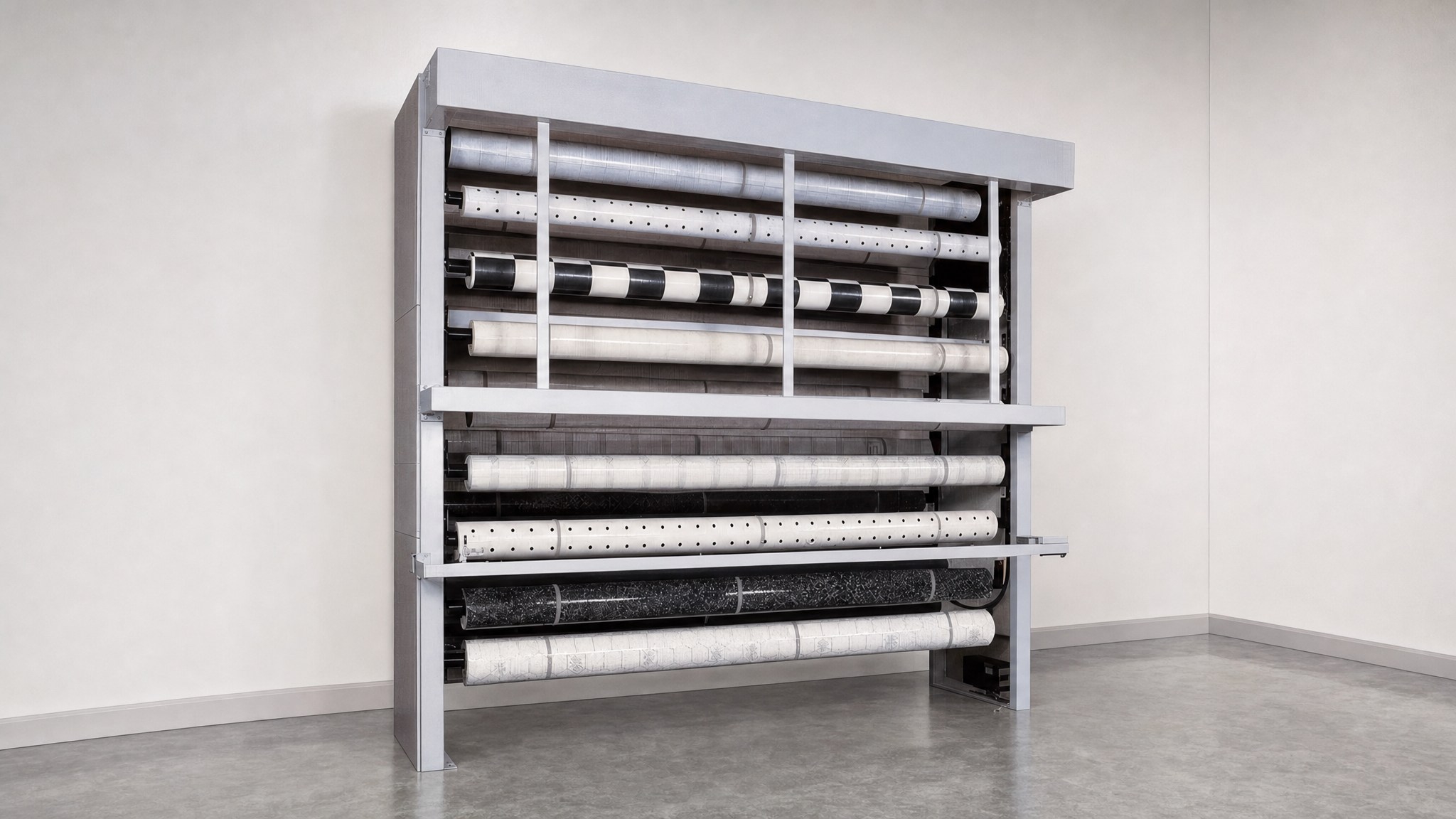
A vertical carpet carousel organizes rolls on rotating carriers and delivers selected materials to an access point for efficient handling, retrieval, and space utilization.
Explore Carpet Carousel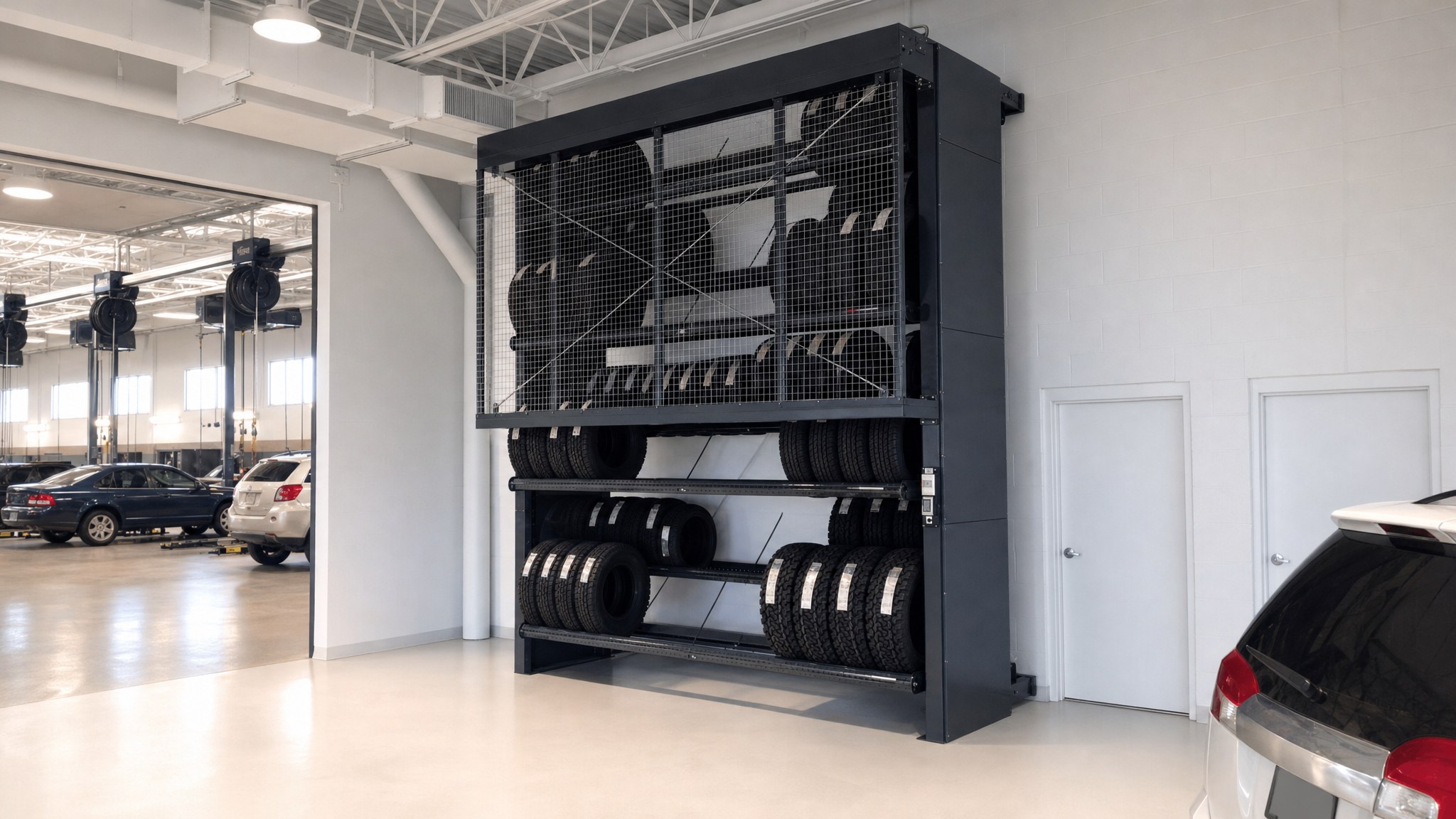
Tire Carousel
This motorized vertical storage system organizes tires on rotating carriers and delivers them to ground-level access points for efficient handling and space-saving storage.
Explore Tire Carousel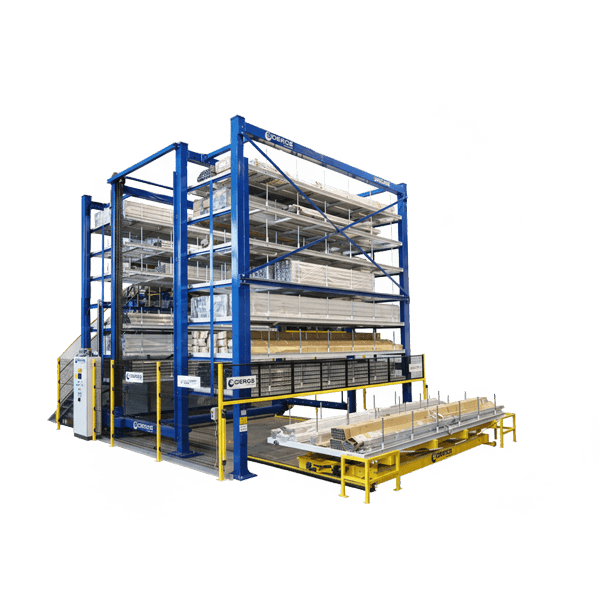
Bar Stock Storage
Store long, bulky items like pipes, bars, and tubes with an automated bar stock storage system that improves safety and maximizes space.
Explore Bar Stock Storage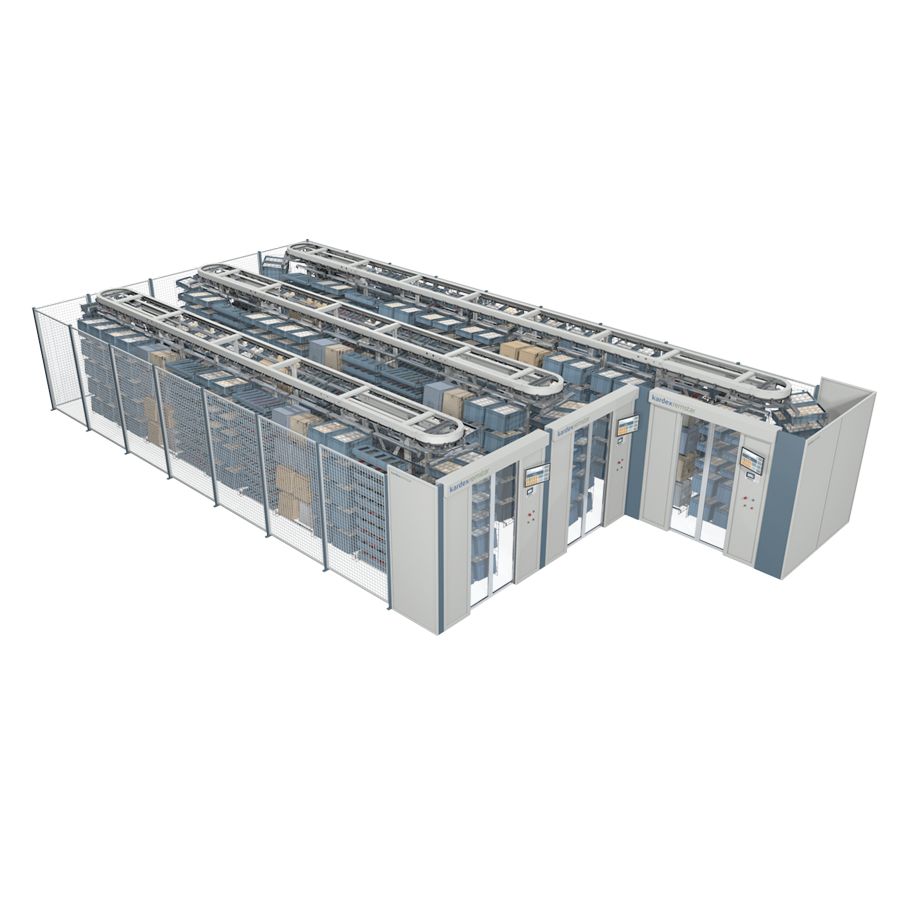
Horizontal Carousels
Bins rotate around a horizontal track for fast order picking. Boost throughput with pick-to-light and software integration.
Explore Horizontal Carousels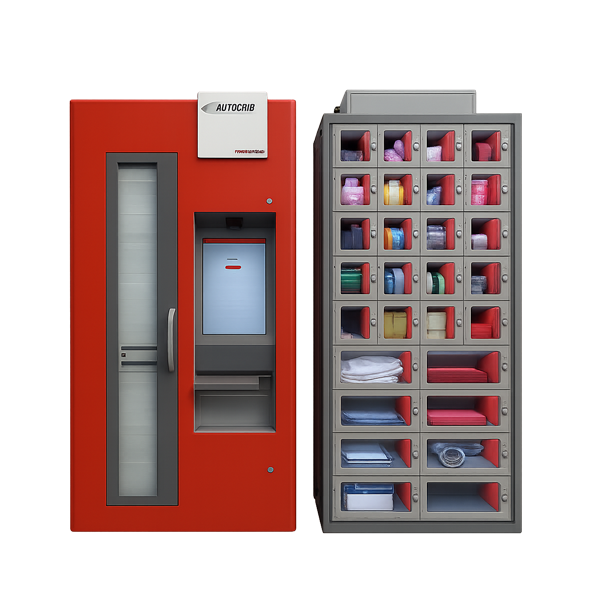
Industrial Vending Machines
Dispense PPE, tools, or supplies with badge access. These systems track usage by user or job code to reduce waste and improve control.
Explore Industrial Vending Machines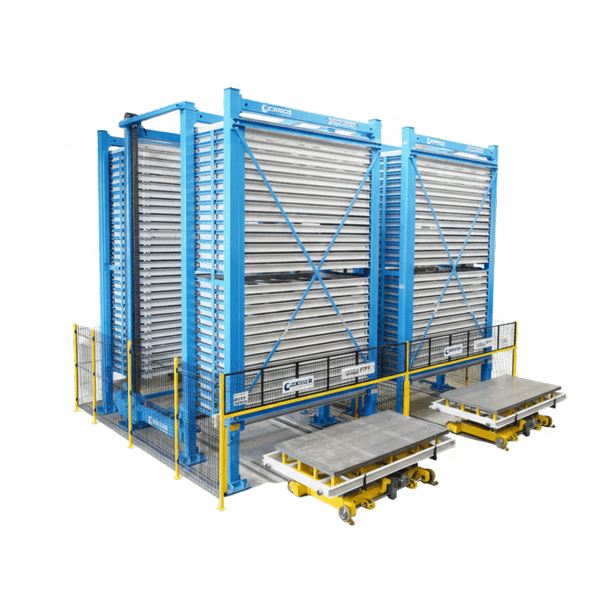
Sheet Metal Racking System
Store and retrieve large sheet metal with our sheet metal racking system that improves safety, reduces damage, and optimizes space.
Explore Sheet Metal Racking System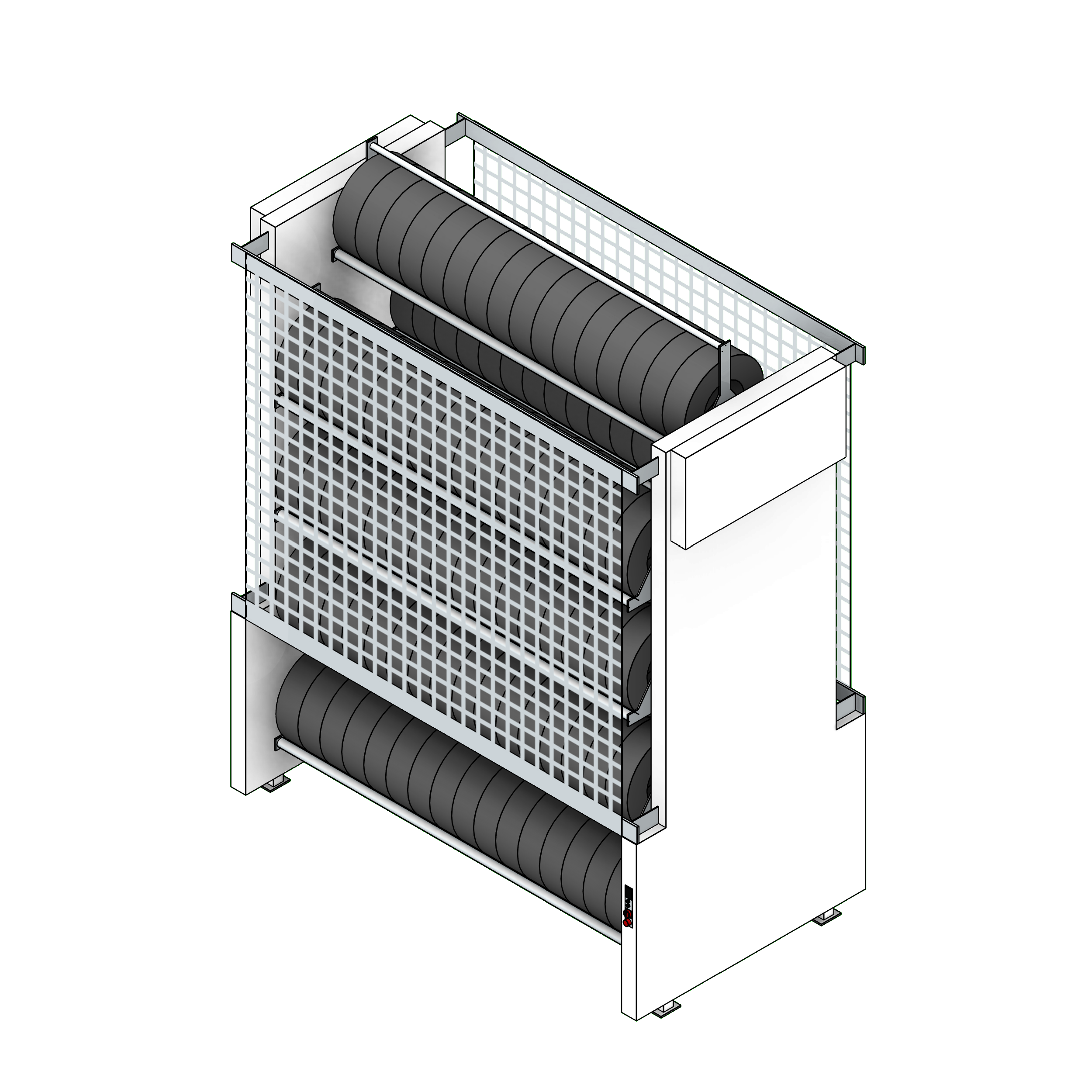
Specialty Carousels
Automate bulky-item storage with rotating carousels for tires, uniforms, reels, and more. These systems help prevent tangling and overstacking.
Explore Specialty Carousels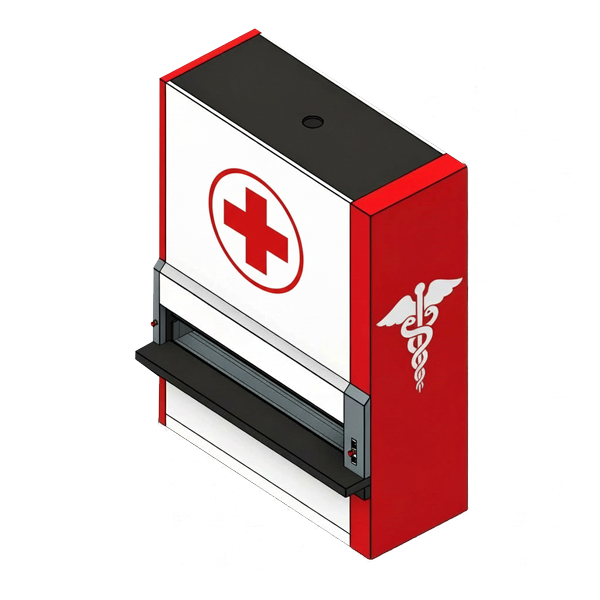
Sterile Storage Carousel
Sterile storage carousels protect packaging, save space, and deliver trays ergonomically while tracking inventory for SPD, OR, pharmacy, and sterile core teams.
Explore Sterile Storage Carousel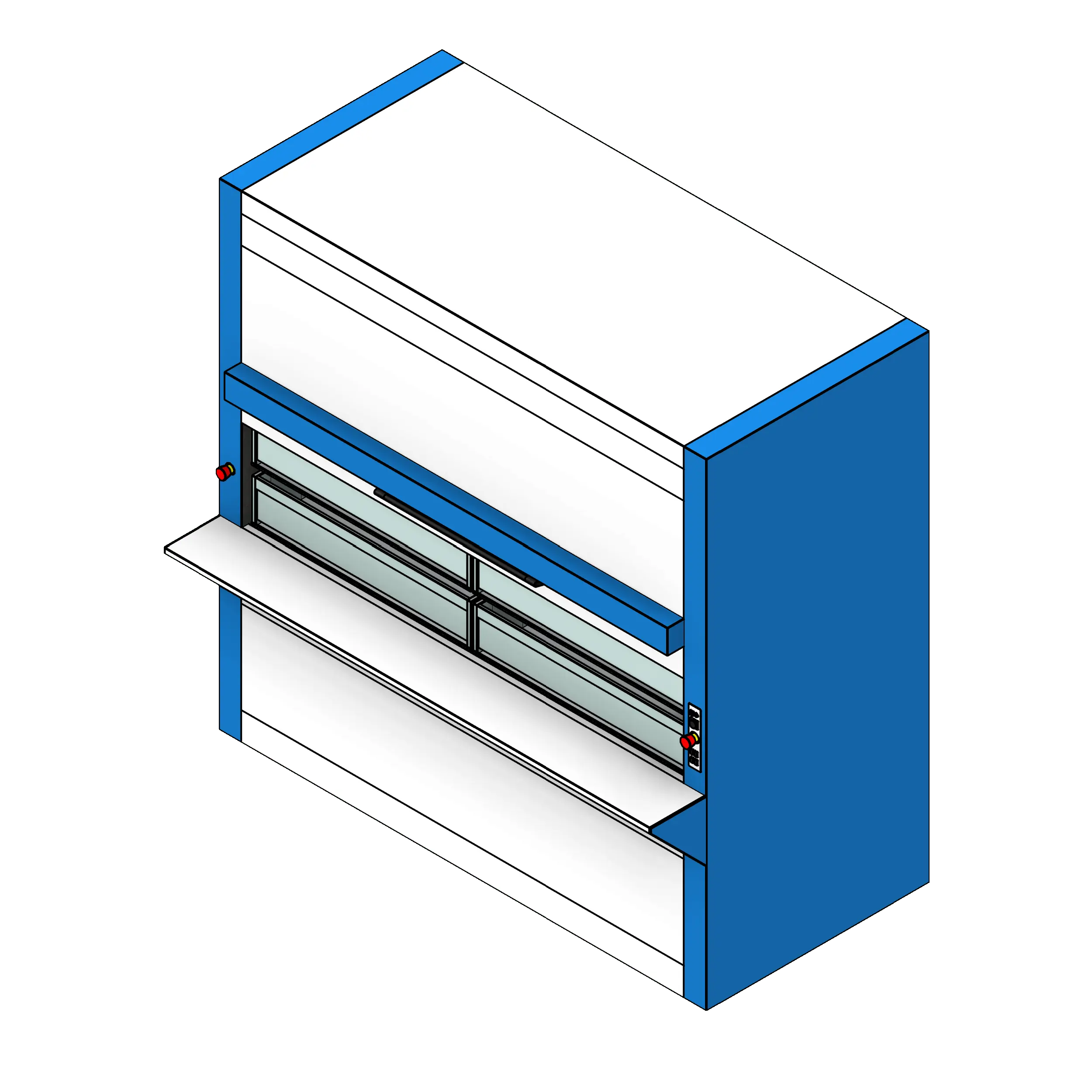
Vertical Carousel Filing Machines
Store and retrieve files or media with ADA-compliant automated access. The system keeps records organized, secure, and easy to reach.
Explore Vertical Carousel Filing Machines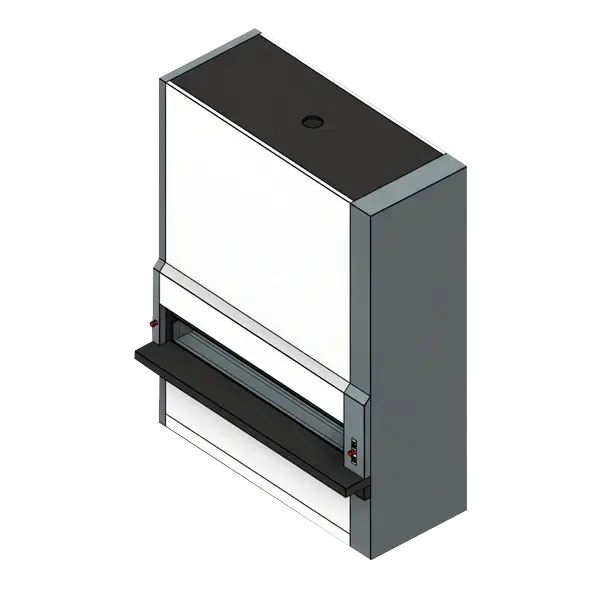
Vertical Carousels
Automated vertical rotation brings supplies or files to user level. Ideal for medical, office, or part-picking environments.
Explore Vertical Carousels
Vertical Lift Modules
Enclosed storage towers deliver trays on demand, save floor space, improve security, and speed up small-part retrieval.
Explore Vertical Lift ModulesPlan a Garment Carousel for Your Hanging Apparel
Share your garment mix, quantities, facility dimensions, and retrieval workflow to start planning a carousel configuration.
Southwest Solutions Group can help you evaluate sizing, controls, layout, and software requirements for your hanging apparel storage project.
Call us at (800) 803-1083 or Contact Us to schedule your free consultation today.
Get Custom Design